notification-icon Kailash Mansarovar Tour booking open for 2026

Losar Festival in Nepal: Everything About the Himalayan Buddhist New Year

The Losar Festival in Nepal is not just a calendar event. It is a living, breathing tapestry of ancient Buddhist traditions, mountain community identity, and joyful cultural expression. Whether you call it Losar Nepal, refer to it as Lhosar in Nepali, or are specifically researching Tamu Losar 2026, this complete guide reveals everything you need to know about one of the Himalayas’ most extraordinary New Year celebrations. From monastery rituals performed at dawn in remote Himalayan villages to the thunderous sound of sacred drums echoing around Baudhanath Stupa in Kathmandu, the Losar Festival in Nepal holds secrets that even seasoned travelers rarely discover.

What Is Losar Festival in Nepal?

The Losar Festival in Nepal is the Tibetan Buddhist New Year celebration observed by multiple Himalayan ethnic communities across the country. The word “Losar” comes from the Tibetan language. “Lo” means year, and “Sar” means new, making it literally the new year festival of the Himalayan Buddhist world.

Known as Lhosar in Nepali colloquial usage, this festival is deeply embedded in the cultural and spiritual fabric of communities such as the Sherpa, Tamang, Gurung (Tamu), Hyolmo, Thakali, and Tibetan diaspora living across Nepal’s mountain districts and Kathmandu Valley.
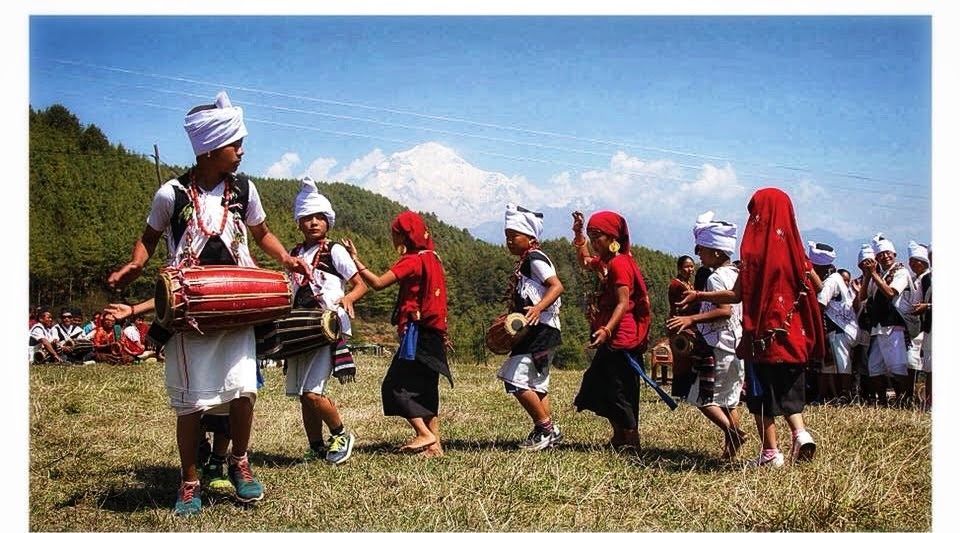
losar festival in nepal

Unlike a single fixed celebration, Losar in Nepal is actually celebrated in three distinct waves across the calendar year, each corresponding to a different ethnic community’s lunar calendar. This makes Nepal one of the most unique countries in the world where the Buddhist New Year is observed three separate times by three separate groups. This fact surprises even many Nepali people living outside the Himalayan regions.

The Three Types of Losar in Nepal

Tamu Losar is celebrated by the Gurung or Tamu community between December and January. The key celebration locations are Pokhara, Gorkha, and Kathmandu.
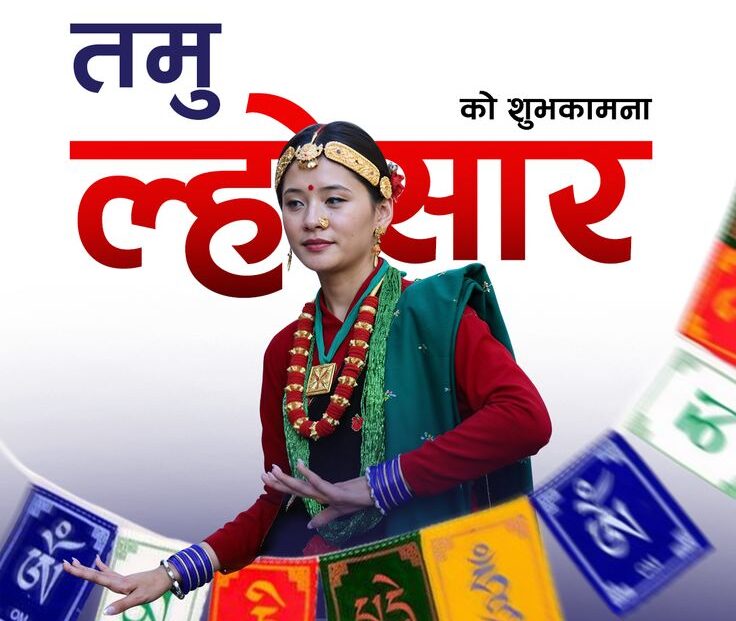
losar festival in nepal

Sonam Losar is celebrated by the Tamang and Magar communities between January and February. The key celebration locations are Rasuwa, Sindhupalchok, and Kathmandu.
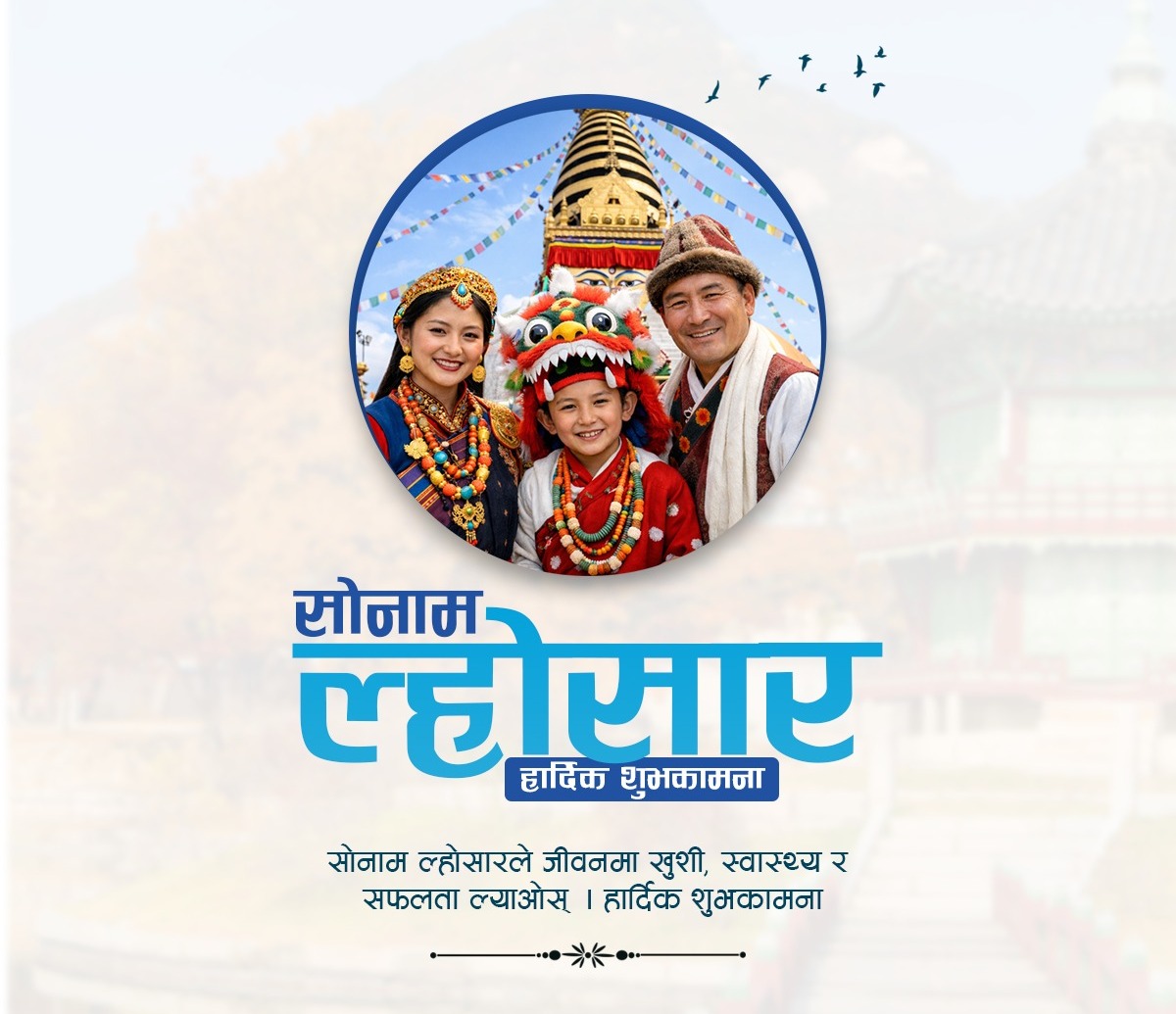
losar festival in nepal

Gyalpo Losar is celebrated by the Sherpa and Tibetan communities between February and March. The key celebration locations are Solukhumbu, Mustang, and Baudhanath.
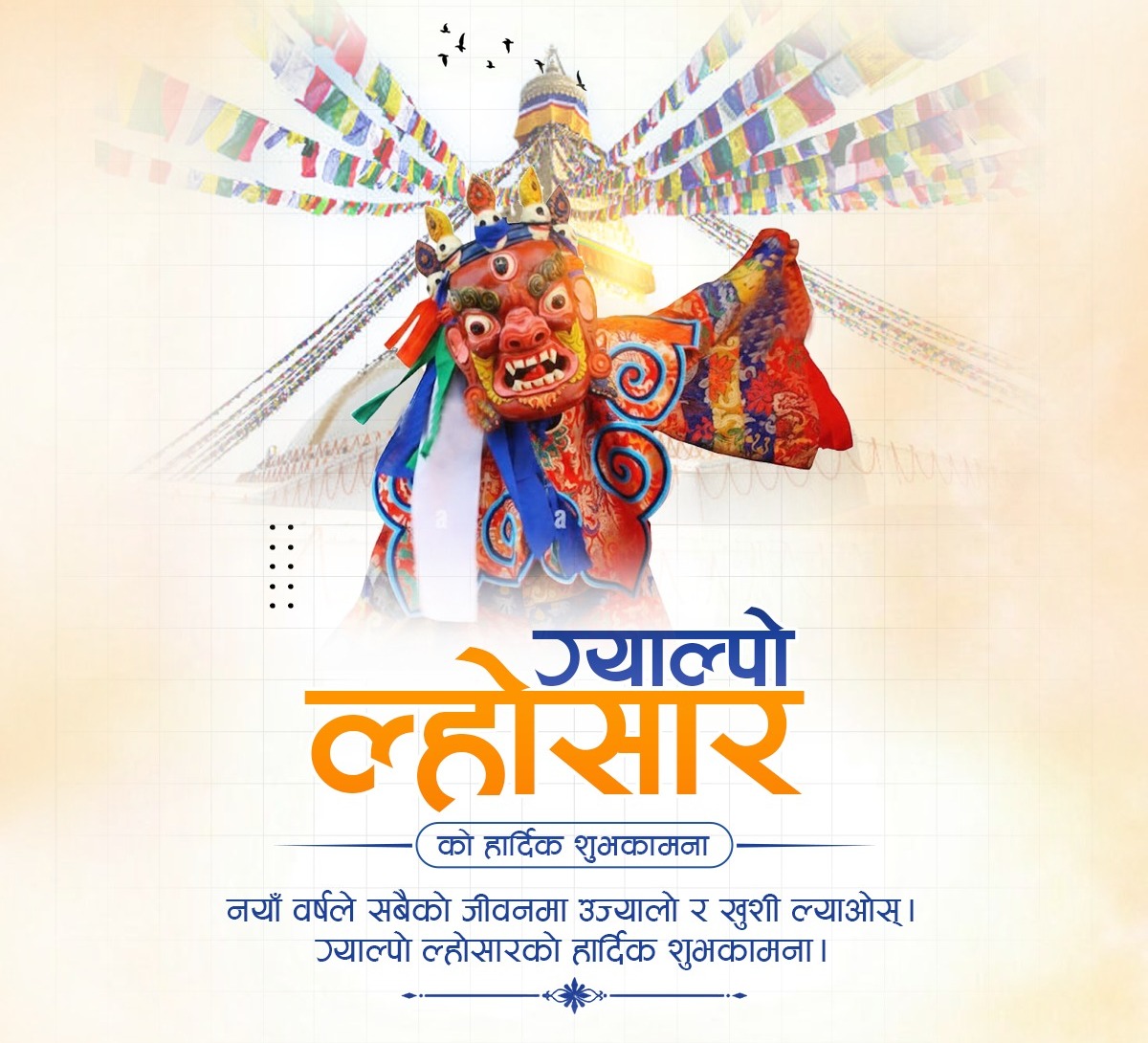
losar festival in nepal

Losar Nepal 2026: Key Dates

Tamu Losar 2026 falls on December 30, 2025, with multi-day celebrations continuing into January 2026. This is the Gurung New Year.

Sonam Losar 2026 falls in January to February 2026. This is the Tamang and Magar New Year.

Gyalpo Losar 2026 falls in February to March 2026. This is the Sherpa and Tibetan New Year.

Please note that exact dates follow the Tibetan lunar calendar and may vary by one to two days. Always confirm with local monastery announcements or the Nepal Tourism Board for the precise date each year.

Why Nepal Celebrates Three Different Losar Festivals

One of the most remarkable facts about the Losar Festival in Nepal is that it is not a single holiday but a tri-annual celebration. Nepal’s extraordinary ethnic diversity, specifically its Gurung, Tamang, and Sherpa communities, has given rise to three distinct New Year festivals. Each festival carries its own date, rituals, and deep cultural significance that cannot be found anywhere else on earth.

Tamu Losar 2026, celebrated by the Gurung community, typically falls in late December or early January according to the Tamu lunar calendar. This is followed by Sonam Losar, the Tamang New Year, in January or February. After that comes Gyalpo Losar, the Sherpa and Tibetan New Year, in February or March.

This layering of New Year celebrations means that for nearly three months every year, somewhere in Nepal is actively celebrating Losar Nepal with dances, feasts, monastery ceremonies, and vibrant community gatherings. No other country in the world offers travelers this extended and immersive window into Himalayan Buddhist New Year traditions across multiple distinct ethnic cultures.

Why Three Separate New Years?

Each community follows its own ancestral lunar calendar rooted in different astrological systems brought by their ancestors from the Tibetan plateau and surrounding highland regions centuries ago. The Government of Nepal officially recognizes all three as gazetted public holidays. This is a powerful testament to the country’s extraordinary multicultural identity and its constitutional commitment to inclusivity.

Pre-Losar Rituals in Nepal: What Tourists Often Miss

Most visitors who attend the Losar Festival in Nepal focus entirely on the main celebration day. However, the most spiritually powerful rituals happen in the days leading up to it. Understanding this pre-Losar period is the key to experiencing Lhosar in Nepali culture at its deepest and most authentic level.

Chhewar: The Purification Ritual

In the days before Losar, homes are thoroughly cleaned from floor to ceiling. This ritual purification is called “Chhewar,” and it is performed to sweep away the misfortunes of the old year and welcome fresh positive energy into the household. Special protective symbols called Kalachakra are painted on walls using sacred materials. Families also begin preparing large quantities of Khapse, the traditional fried bread used as offerings for both home shrines and local monasteries.

Torma Offering at Monasteries

At Buddhist monasteries and gompas throughout Nepal’s mountain districts, monks spend days preparing elaborate Torma. These are ritual sculptures made from barley flour and butter, shaped into deity forms and offered to dispel the negative forces accumulated over the past year. These ceremonies are called “Nangso,” and they culminate with the dramatic burning of the Torma sculpture. This burning symbolizes the complete destruction of the old year’s evil forces and obstacles.

If you are planning to attend Tamu Losar 2026 or any Nepal celebration, arriving two to three days early will reward you with these rarely photographed pre-festival ceremonies that most tourists completely miss.

History of Tamu Losar in Nepal

Among all the Losar Festival in Nepal variations, Tamu Losar, celebrated by the Gurung people, holds special historical distinction. It is believed to be the oldest continuously observed Losar tradition in the country. Cultural anthropologists trace its origins back over 3,500 years to pre-Buddhist animistic mountain religious practices that were later integrated with Tibetan Buddhist philosophy.
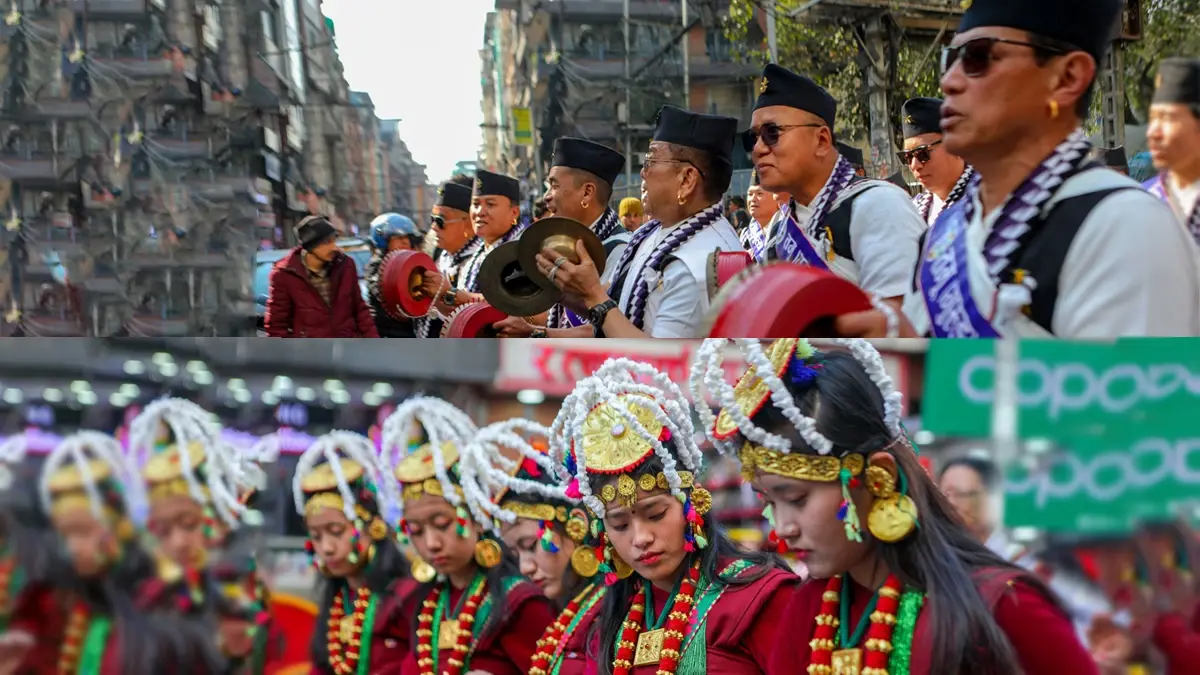
losar festival in nepal

The Gurung people of western Nepal are concentrated in Gorkha, Kaski, Lamjung, Syangja, and Tanahu districts. They follow the ancient Tamu calendar system, which divides the year into 12 months named after animals. While similar to the Chinese zodiac, this system carries distinctly Himalayan cultural interpretations tied to agricultural cycles, hunting seasons, and spiritual observances specific to mountain life.

The Ghatu Dance: A Living Intangible Heritage

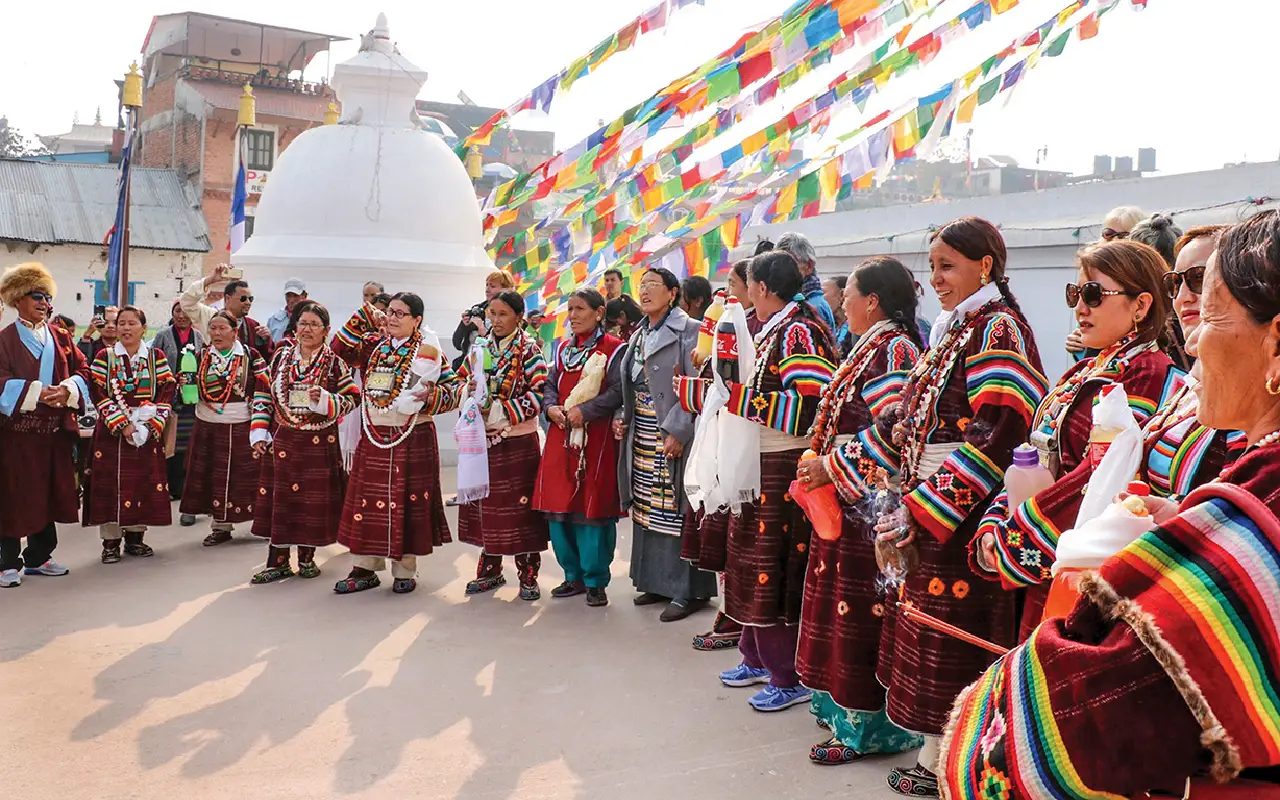
During Tamu Losar 2026, one of the most extraordinary performances you will witness is the Ghatu dance. This is a sacred trance-like ritual performance performed exclusively by Gurung women called Ghatu singers. These women spend years memorizing thousands of verses from an ancient oral epic passed down through generations entirely by memory, without any written text. The Ghatu dance is listed as an Intangible Cultural Heritage of Nepal by the Department of Archaeology and is performed only during Tamu Losar celebrations at no other time of year.
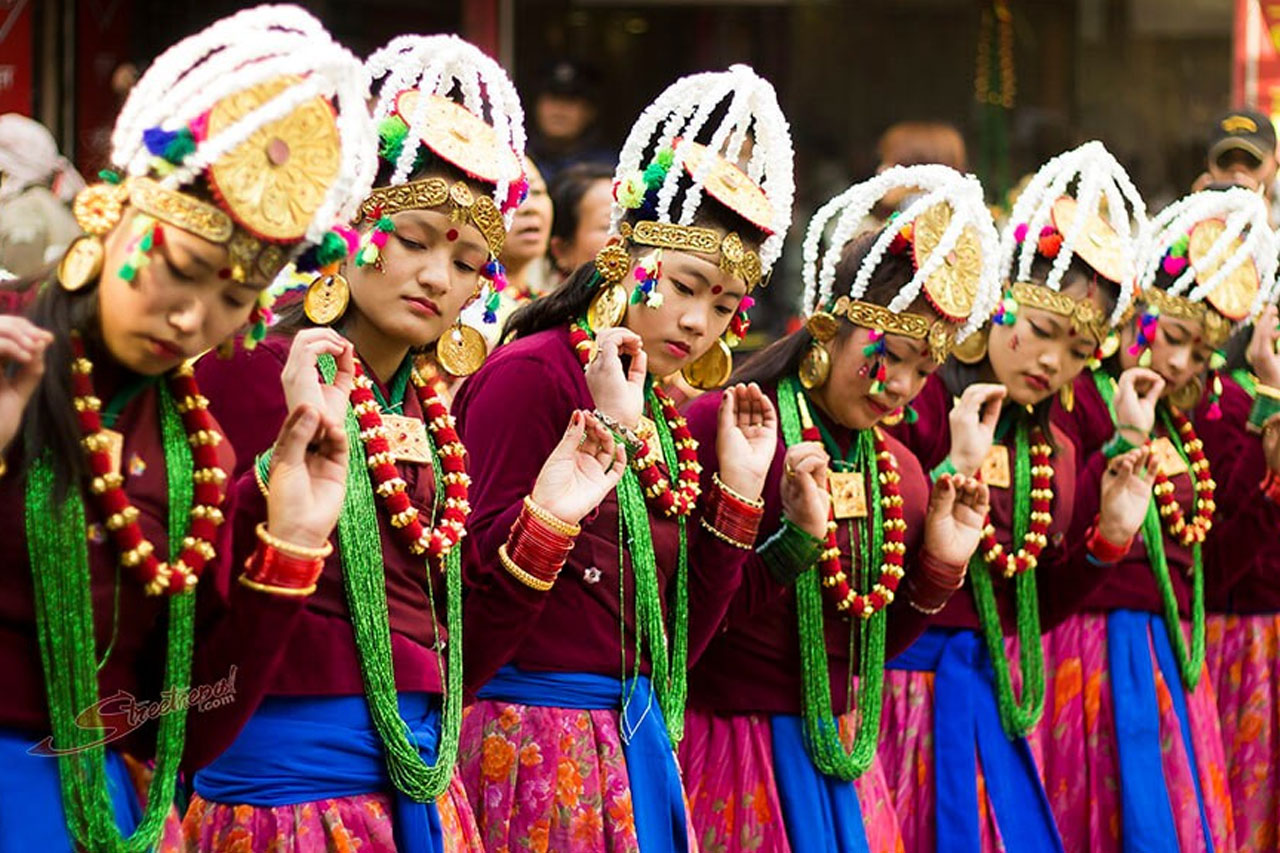
losar festival in nepal

For those researching Lhosar in a Nepali cultural context, Tamu Losar offers unparalleled insight into pre-Buddhist animistic mountain traditions that have been seamlessly woven together with Tibetan Buddhist practices over three and a half millennia.

Boudhanath Stupa During Losar: Kathmandu’s Grand Celebration Hub

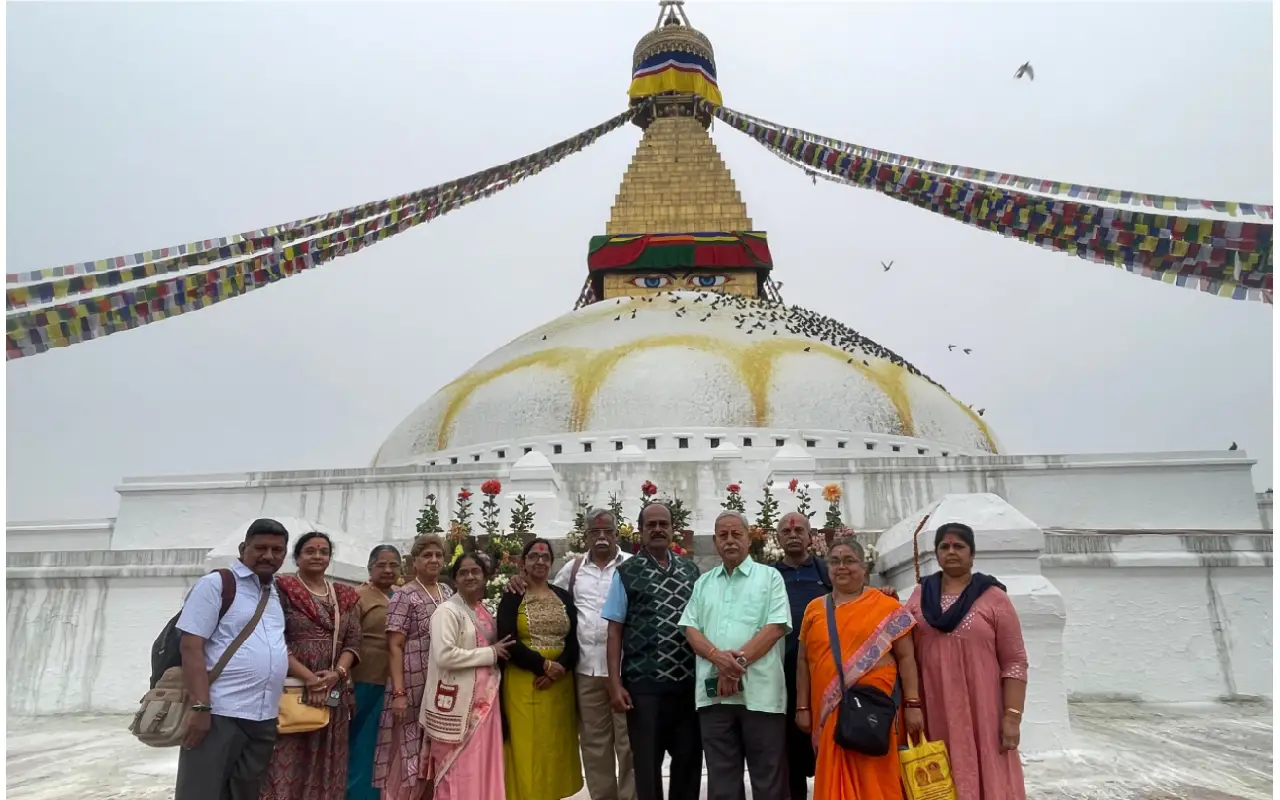
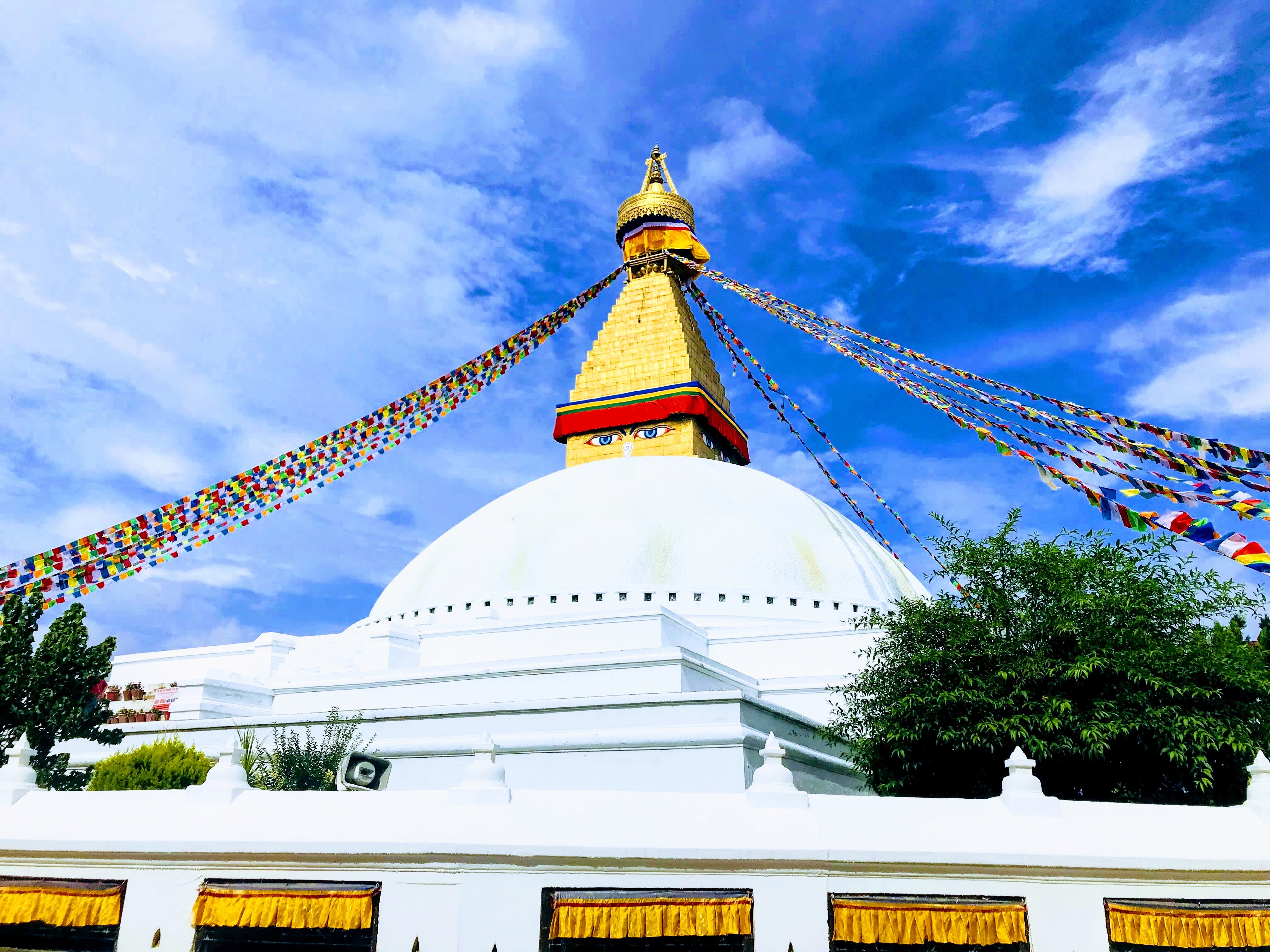
When most people think of Losar Nepal celebrations, they immediately imagine remote mountain villages tucked between Himalayan peaks. However, the most visually overwhelming celebration of the Losar Festival in Nepal actually takes place in the heart of Kathmandu at Baudhanath Stupa. This is one of the world’s largest Buddhist stupas and a UNESCO World Heritage Site since 1979.

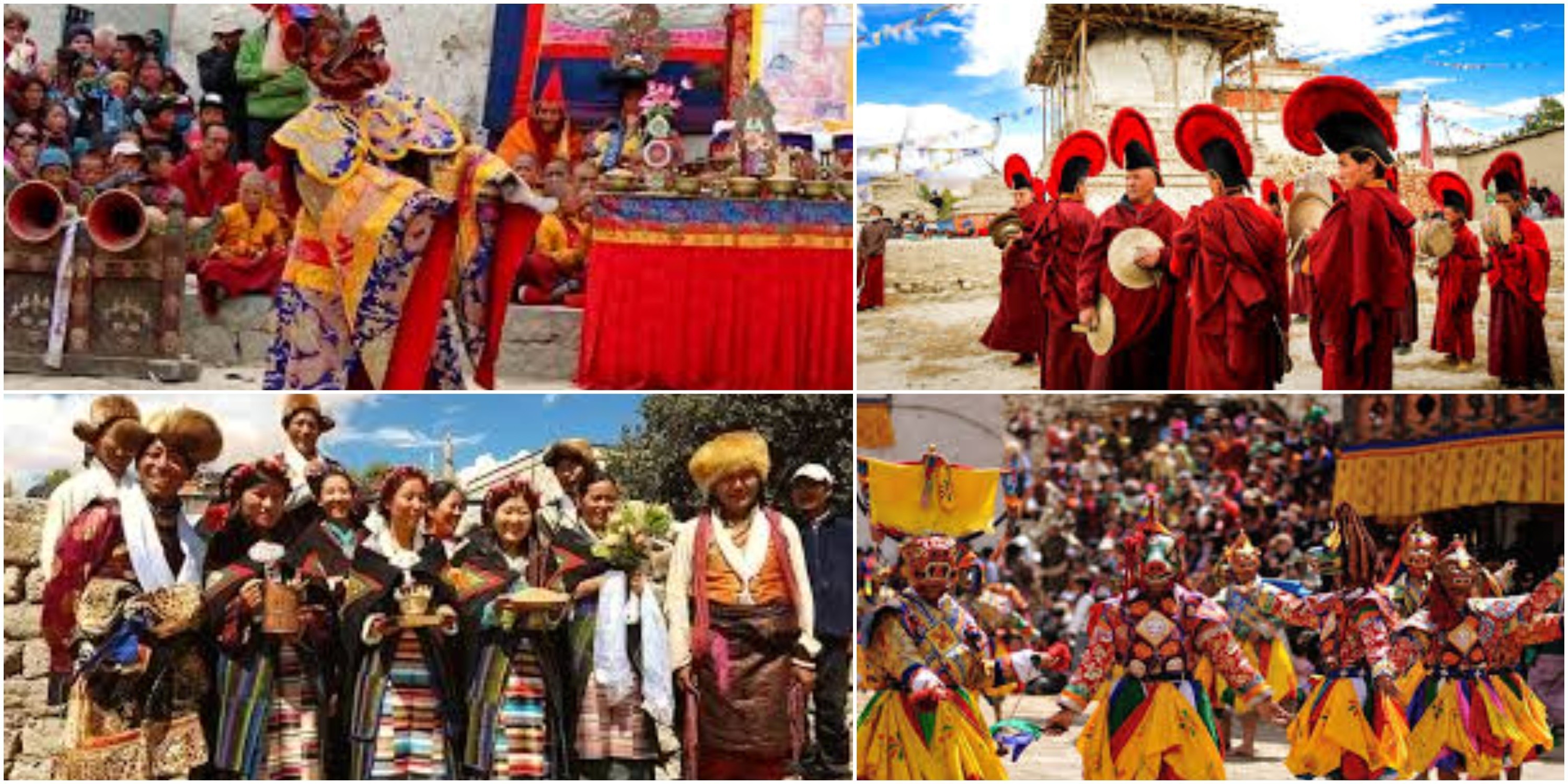
During Gyalpo Losar, Baudhanath becomes an extraordinary spectacle unlike anything else in South Asia. Tens of thousands of butter lamps are lit simultaneously, surrounding the massive white dome of the stupa in a golden sea of flickering light visible from miles away across the Kathmandu Valley. Monks from dozens of monasteries gather in ceremonial robes of deep crimson, saffron, and gold. The air fills with the haunting sound of conch shells, the deep resonance of long ceremonial horns called Dungchen, and the rhythmic beat of Damaru drums.

The Cham Masked Dance: Sacred Buddhist Theatre

Central to the Gyalpo Losar Festival in Nepal at Baudhanath is the Cham masked dance. This is a sacred Buddhist ritual performance in which trained monks wearing elaborate papier-mâché deity masks and layered brocade costumes enact cosmic battles between protective dharma forces and demonic negative energies. Each character in the Cham performance represents a specific deity, demon, or dharma protector from Tibetan Buddhist cosmology. The entire performance serves simultaneously as a collective prayer, a spiritual purification ceremony, and a teaching on Buddhist philosophy for the lay community gathered to observe.
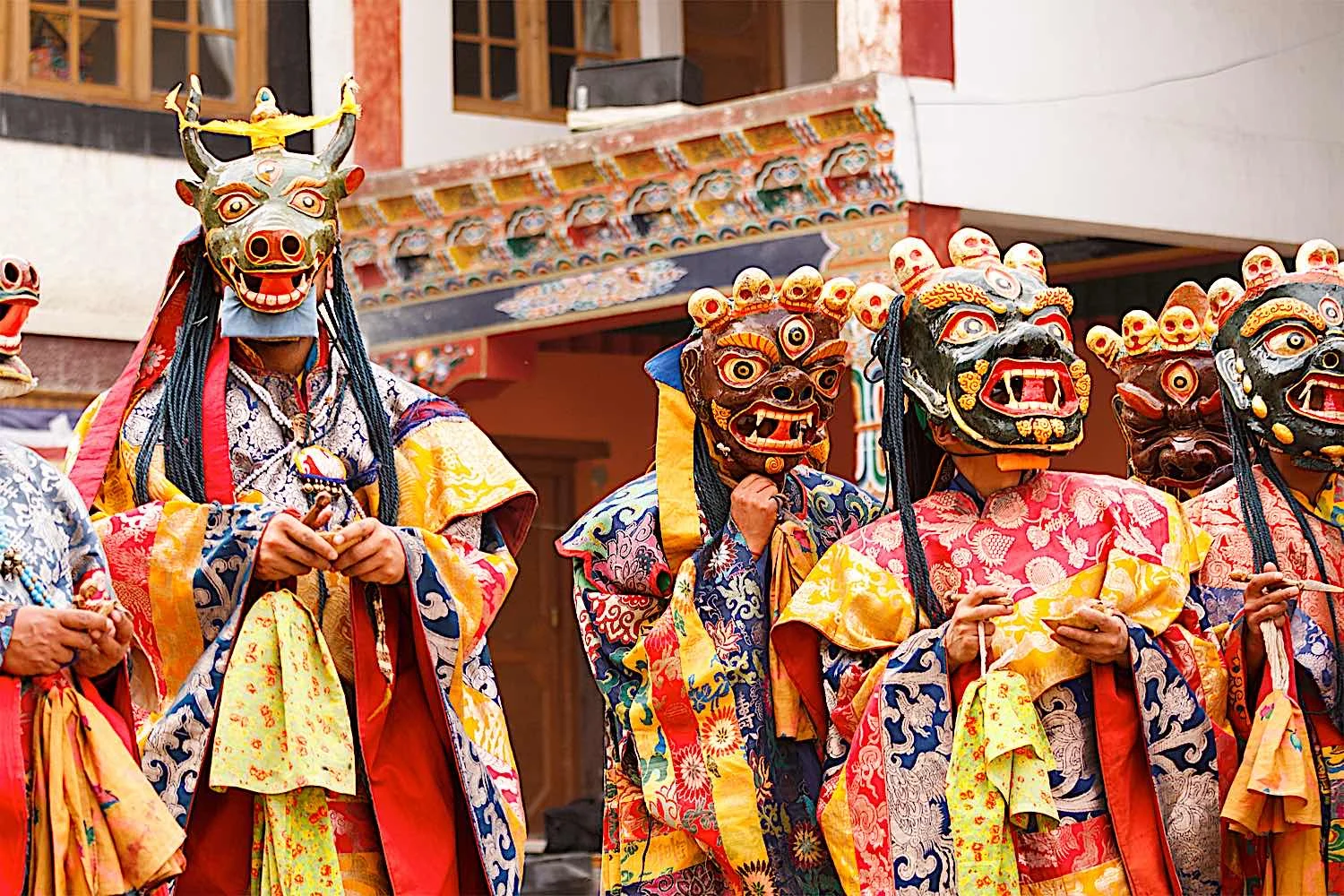
losar festival in nepal

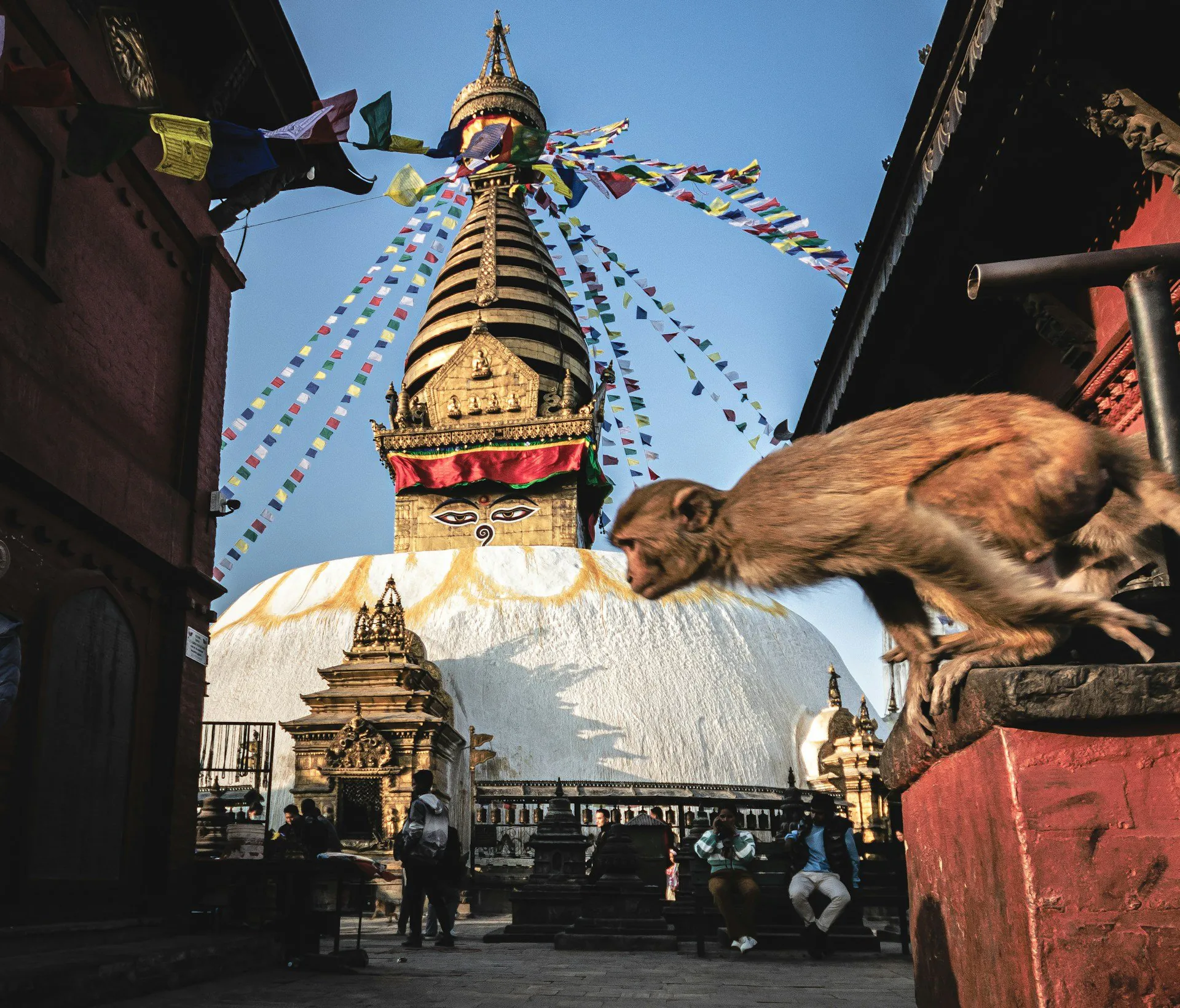
Swayambhunath Stupa, also known as the Monkey Temple, is another major venue for Lhosar in Nepali capital celebrations. It is particularly popular with Newar Buddhist families and international visitors who want a slightly less crowded but equally beautiful setting for witnessing Losar ceremonies.

Traditional Foods of Losar in Nepal and Their Spiritual Meaning

The culinary dimension of the Losar Festival in Nepal is far more than festive eating. It is an entire language of spiritual intention, where every food prepared and shared during Losar in Nepal carries specific symbolic meaning rooted in Buddhist philosophy, Himalayan agricultural tradition, and community generosity practices that go back centuries.

Khapse: The Sacred Festival Bread

Khapse is the iconic deep-fried dough bread of Losar, and it comes in distinctly shaped forms that each carry their own symbolic meaning. A twisted khapse represents infinity and the continuity of eternal life. Flat tongue-shaped versions are believed to silence enemies and dispel the energy of negative speech. The knot-shaped khapse symbolizes the unbreakable ties of family and community. Families spend entire days preparing khapse in large batches, both for home consumption and to present as formal offerings at nearby monasteries.

Chang: The Sacred Millet Beer of the Himalayas

Chang, also called Chyang or Tongba when served hot, is the traditional fermented barley or millet beverage that is absolutely central to Tamu Losar 2026 and to all Lhosar in Nepali mountain communities. Offering Chang to guests during Losar is a profound act of hospitality deeply embedded in Himalayan social culture. Graciously accepting the drink when offered, even in small amounts, is an important gesture of respect and participation in the shared spirit of the festival.

Additional traditional Losar Festival in Nepal foods include the following:

Dresi is sweet saffron rice that is always offered first to household deities at the family shrine before any human consumption. It represents gratitude and the acknowledgment of spiritual blessings.

Selroti is a ring-shaped rice flour bread that symbolizes the unbroken cycle of life, time, and renewal central to the New Year’s spiritual message.

Thukpa is a hearty Tibetan-style noodle soup representing warmth, family connection, and the nourishment that community provides through even the coldest Himalayan winter months.

Tingmo is fluffy steamed bread served alongside spicy achar, or pickles. It is a symbol of Tibetan cultural identity that has become inseparable from all Losar celebrations across Nepal.

Dried yak meat is prepared months in advance during the autumn season and carefully stored. It symbolizes the family’s prudence, preparation, and practical wisdom in planning for the year ahead.

Where to Experience Losar Festival in Nepal

The Losar Festival in Nepal is celebrated across the country, but certain locations offer particularly immersive and accessible experiences for visitors and cultural enthusiasts.

Baudhanath Stupa in Kathmandu is the grandest venue for Gyalpo Losar. It offers spectacular butter lamp ceremonies, Cham dance performances, and the largest gathering of Sherpa and Tibetan Buddhist monks in the country.

Swayambhunath Stupa in Kathmandu offers family-friendly Lhosar celebrations on the hilltop temple complex with panoramic views of the entire Kathmandu Valley and excellent opportunities for photography.

Pokhara in Kaski District is the cultural heartland of the Gurung people and the best place in Nepal to experience authentic Tamu Losar 2026 celebrations, including Ghatu dance performances and large community feasts.

Namche Bazaar in Solukhumbu offers authentic Sherpa Gyalpo Losar celebrations in the shadow of Mount Everest, one of the world’s most dramatic festival settings at 3,440 meters above sea level.

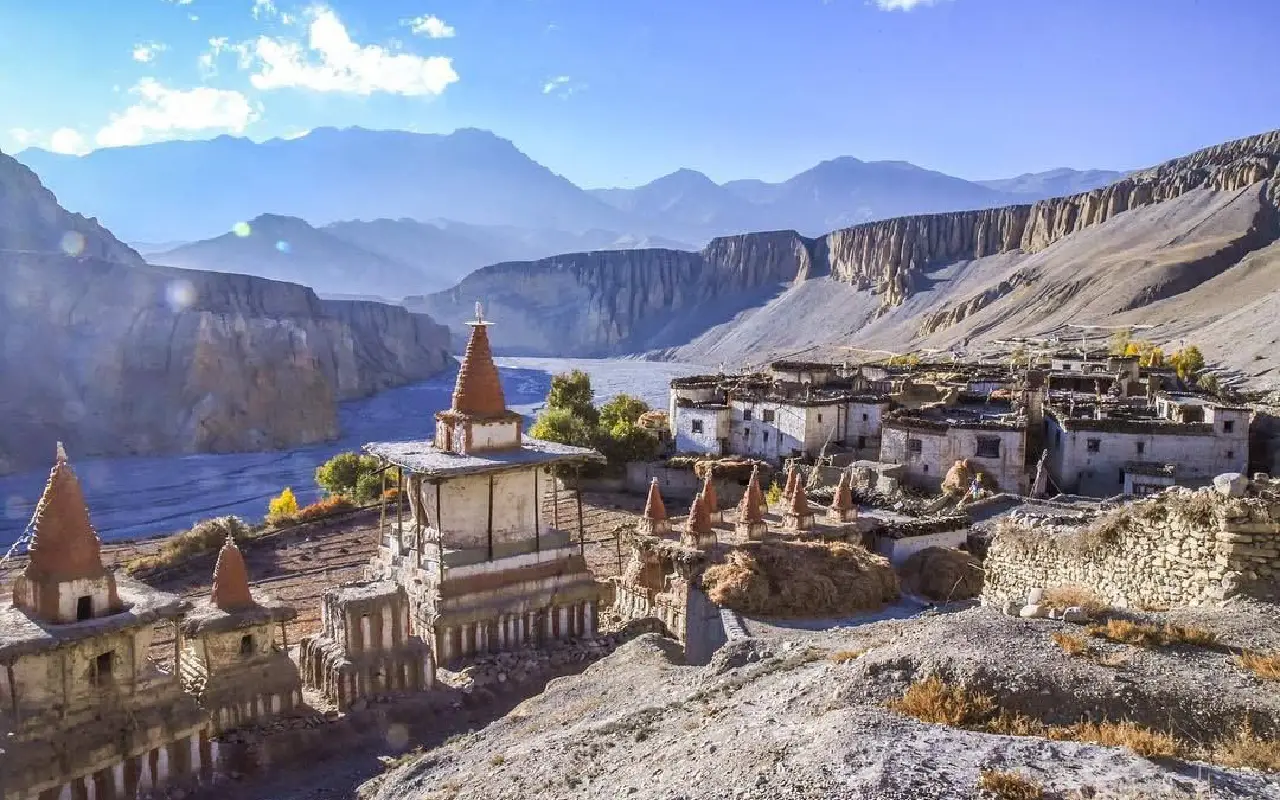
Lo Manthang in Upper Mustang is one of Nepal’s most remote and culturally pristine Losar celebrations, accessible only with a special Restricted Area Permit and extraordinarily rare in its traditional character.

Rasuwa District in Langtang Valley offers Tamang Sonam Losar celebrations set against the backdrop of the stunning Langtang Himal, combining festival culture with world-class trekking.

Travel Tips for Attending Losar Nepal

Best Time to Visit

Planning your trip around the Losar Festival in Nepal requires some calendar flexibility since dates shift each year with the lunar calendar. Tamu Losar 2026 falls in late December to early January, which is excellent timing that coincides with Nepal’s peak winter trekking season when mountain views are at their clearest. Gyalpo Losar in February to March aligns perfectly with the pre-spring trekking season when rhododendrons begin to bloom at lower elevations, making the journey to celebration venues as beautiful as the festival itself.

Cultural Etiquette During Lhosar in Nepal

Greet every person you meet with “Tashi Delek,” the traditional Losar blessing meaning good luck, good health, and prosperity, and you will immediately be welcomed into the spirit of the celebration.

Always remove your shoes before entering monastery compounds and prayer halls during Losar ceremonies.

Always ask for permission before photographing religious ceremonies, family rituals, or individual participants. Most people are happy to be photographed, but asking first is a mark of deep respect.
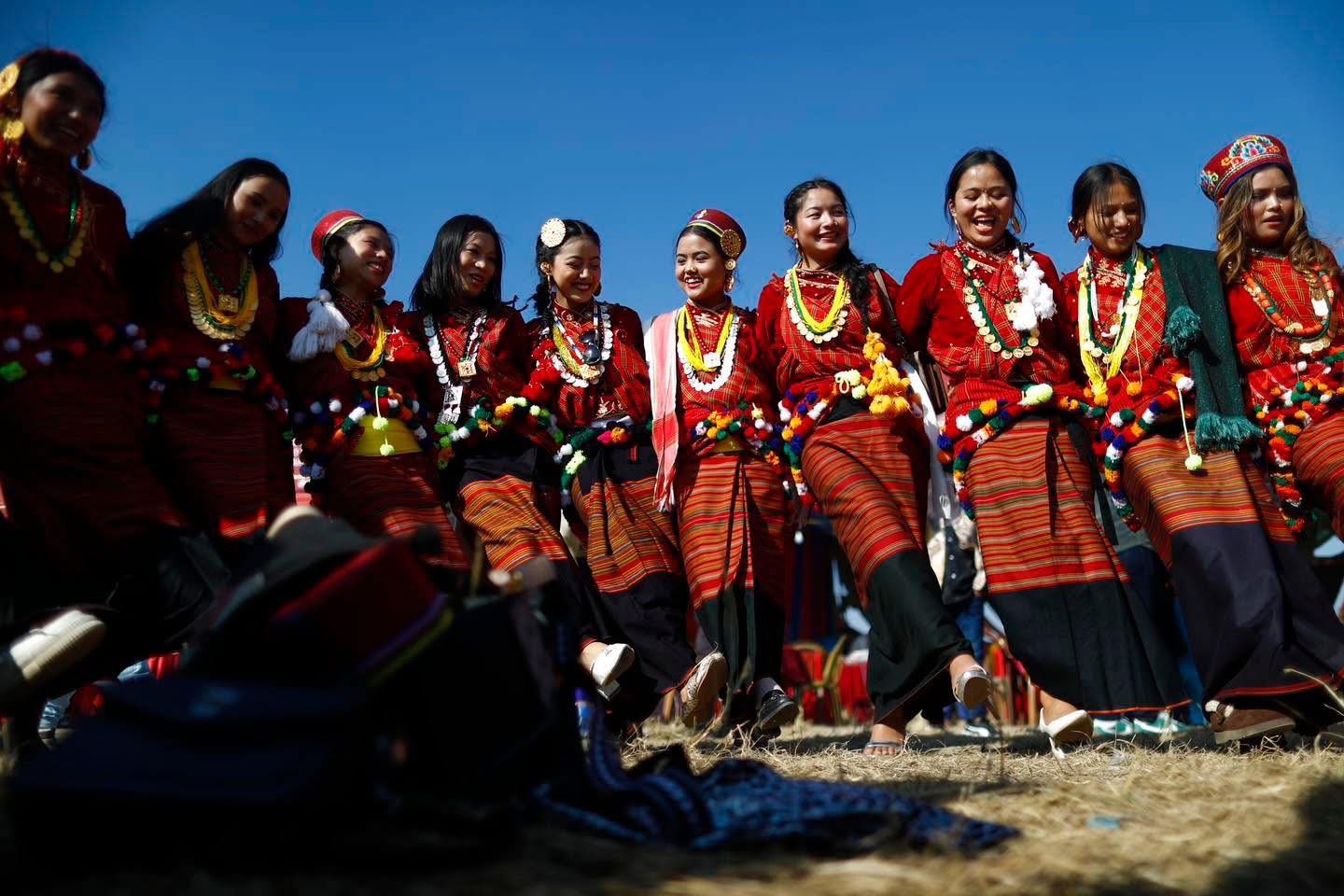
losar festival in nepal

Accept Khapse and Chang when they are offered to you by hosts. Even a small taste communicates that you honor and appreciate their hospitality and cultural traditions.

Dress modestly when attending monastery events and cover your shoulders and knees as a mark of respect for the sacred space.

Always walk clockwise around stupas, chortens, mani walls, and prayer wheels. This is the correct direction in Buddhist tradition and is followed universally across all Losar Festival in Nepal celebrations.

Frequently Asked Questions About Losar Festival in Nepal

What is Losar Festival in Nepal?

The Losar Festival in Nepal is the Buddhist New Year celebrated by Sherpa, Tamang, Gurung, and Tibetan communities. It is observed three times a year by different ethnic groups and is one of the most important cultural festivals in the Himalayan region.

When is Tamu Losar 2026?

Tamu Losar 2026 falls on approximately December 30, 2025. Celebrations continue into early January 2026. The exact date follows the Tamu lunar calendar, so always confirm locally before traveling.

What does Lhosar mean in Nepali?

“Lhosar” in Nepali is the local spelling of “Losar.” It combines “Lho,” meaning year, and “Sar,” meaning new. It refers to all three Himalayan New Year festivals celebrated across Nepal.

How many types of Losar are celebrated in Nepal?

There are three types of Losar festivals in Nepal. These are Tamu Losar celebrated by the Gurung community, Sonam Losar celebrated by the Tamang community, and Gyalpo Losar celebrated by the Sherpa and Tibetan communities.

Where is Losar celebrated in Nepal?

Losar in Nepal is celebrated at Baudhanath Stupa and Swayambhunath in Kathmandu, in Pokhara for Tamu Losar, in Namche Bazaar for Gyalpo Losar, and across mountain districts including Mustang, Rasuwa, Solukhumbu, and Gorkha.

What are the main rituals of Losar?

The main rituals of the Losar Festival in Nepal include Chhewar house cleaning, Torma monastery offerings, lighting butter lamps, performing the Cham masked dance, the Ghatu trance dance during Tamu Losar, and sharing traditional foods like khapse and chang.

Is Losar a public holiday in Nepal?

Yes. All three Losar celebrations are gazetted public holidays in Nepal. The government officially recognizes Tamu Losar, Sonam Losar, and Gyalpo Losar to honor Nepal’s multicultural Himalayan heritage.

What foods are eaten during Losar in Nepal?

Traditional foods of the Losar Festival in Nepal include Khapse fried bread, Selroti rice bread, Chang millet beer, Thukpa noodle soup, Tingmo steamed bread, Dresi saffron rice, and dried yak meat. Each food carries spiritual symbolism connected to the Buddhist New Year.

Conclusion: Experience Losar Festival in Nepal

The Losar Festival in Nepal is a celebration of resilience, community, and spiritual renewal forged in the rarefied air of the world’s highest mountains. It has been sustained through centuries of Buddhist tradition and Himalayan cultural pride that remains vibrantly alive today. Whether you attend Tamu Losar 2026 in Pokhara, witness Gyalpo Losar at Baudhanath’s glowing stupa, or discover Lhosar in Nepali mountain villages along ancient trade routes, you will encounter something far beyond a festival. You will find a living, breathing connection to one of humanity’s oldest and most beautiful spiritual traditions, one that reminds us that every new year is a chance to begin again with gratitude, generosity, and joy.
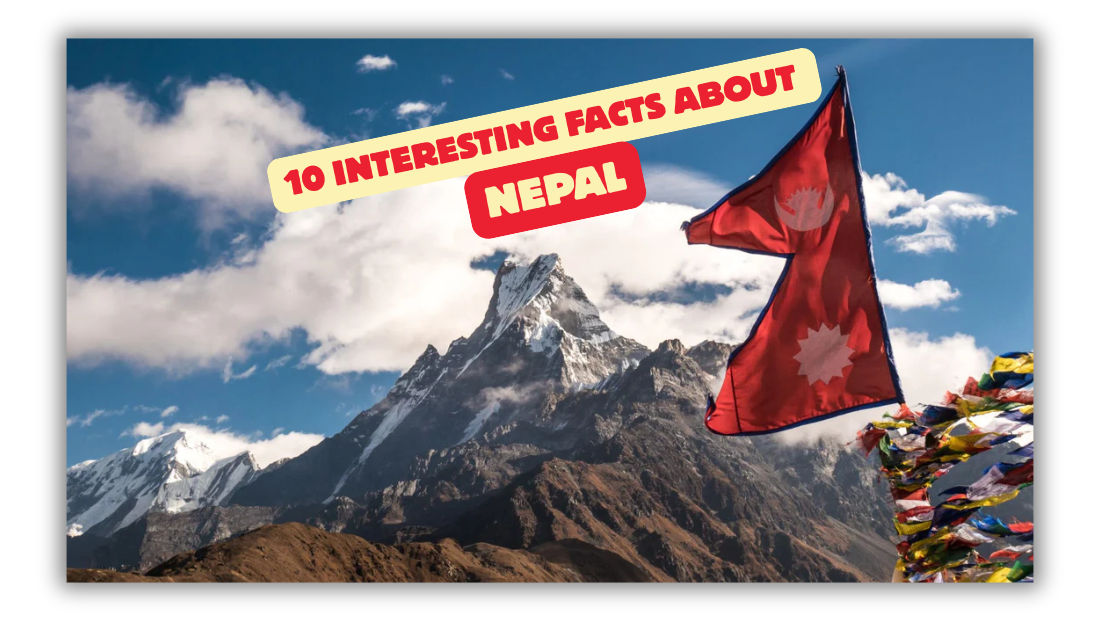
Interesting Facts About Nepal: 10 Amazing Things You Must Know

Nepal is a country that never stops surprising the world. Tucked between two of the planet’s largest nations, India and China, this small Himalayan kingdom packs more wonder, history, and cultural richness into its borders than countries ten times its size. From the roof of the world to the steaming jungles of the Terai, the interesting facts about Nepal go far beyond Mount Everest and prayer flags. Whether you are a traveler planning your first visit, a student curious about South Asian geography, or simply someone who loves discovering the world’s hidden treasures, these Amazing Facts of Nepal will genuinely change the way you see this extraordinary country.
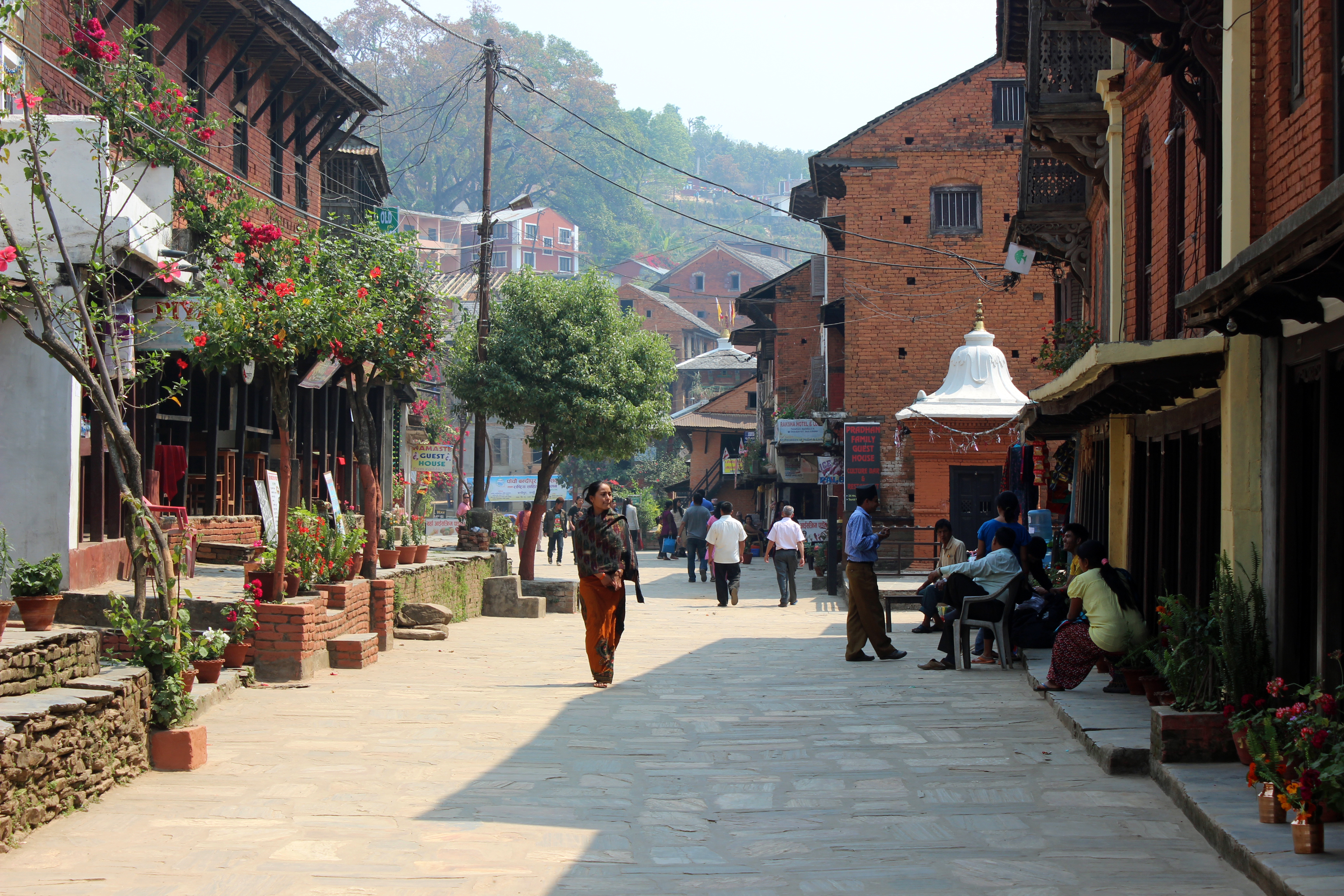
Interesting facts about Nepal that most people have never heard, including fascinating insights into interesting facts about Nepal culture, the symbolism packed into the interesting facts about the Nepal flag, and much more that will leave you astonished.
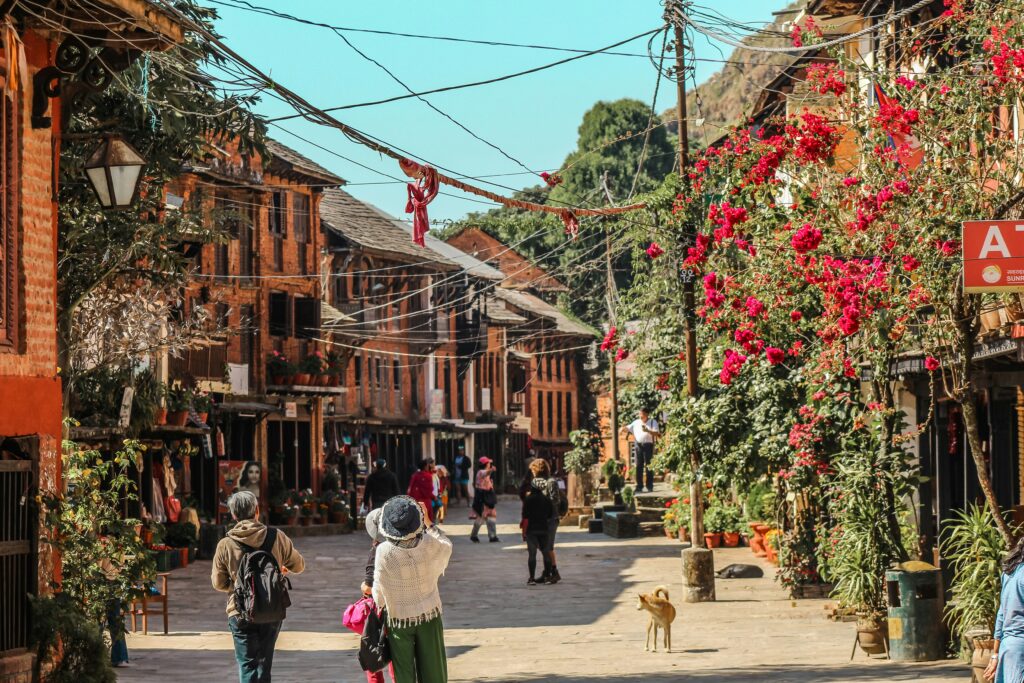
Why Nepal Is One of the Most Unique Countries on Earth

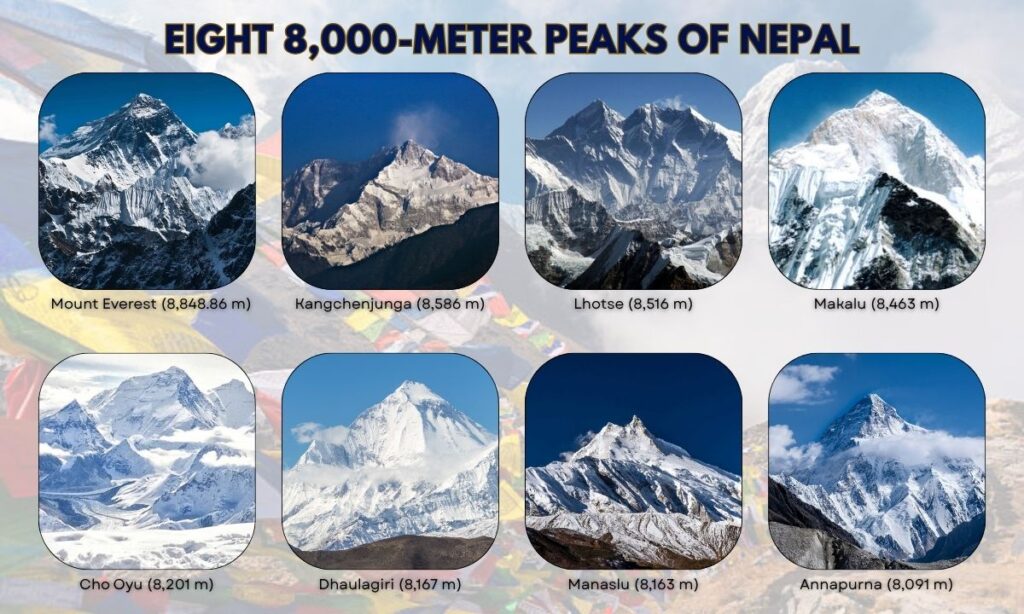
Before diving into the facts, it is important to understand just how extraordinary Nepal truly is. Nepal is home to eight of the world’s ten highest mountains, including Mount Everest. It is the birthplace of Siddhartha Gautama, the founder of Buddhism, one of the world’s most widely followed spiritual traditions. It is also one of the only countries in the world that has never been colonized by a foreign power, a fact that fills every Nepali citizen with immense pride.

These interesting facts about Nepal are not just trivia. They reflect the soul of a nation shaped by geography, spirituality, and an unbreakable cultural identity that has endured for thousands of years.

Fact 1: Nepal Is Home to Eight of the World’s Ten Highest Mountains

One of the most amazingly stunning facts about Nepal is its extraordinary concentration of high-altitude peaks. Nepal shares the Himalayan mountain range with Tibet and India but holds the greatest density of extreme altitude peaks on the planet. Mount Everest, at 8,848.86 meters, is the tallest point on earth and sits on the Nepal-Tibet border. Alongside Everest, Nepal is home to Kangchenjunga, Lhotse, Makalu, Cho Oyu, Dhaulagiri, Manaslu, and Annapurna, all of which exceed 8,000 meters.

Interesting Facts About Nepal

These mountains are not just geographical records. For the people of Nepal, they are sacred entities, home to gods and spirits, and the foundation of an entire cultural, spiritual, and economic identity. The mountain trekking and climbing industry brings hundreds of thousands of visitors to Nepal every year, making the Himalayas the heartbeat of Nepal’s tourism economy.

For those researching interesting facts about Nepal, the mountain story goes deeper than altitude records. The Sherpa community of the Solukhumbu district has developed a unique high-altitude physiology over centuries of living above 3,000 meters, with genetic adaptations that allow their bodies to use oxygen far more efficiently than lowland populations anywhere in the world.

Fact 2: Nepal Is the Birthplace of the Buddha

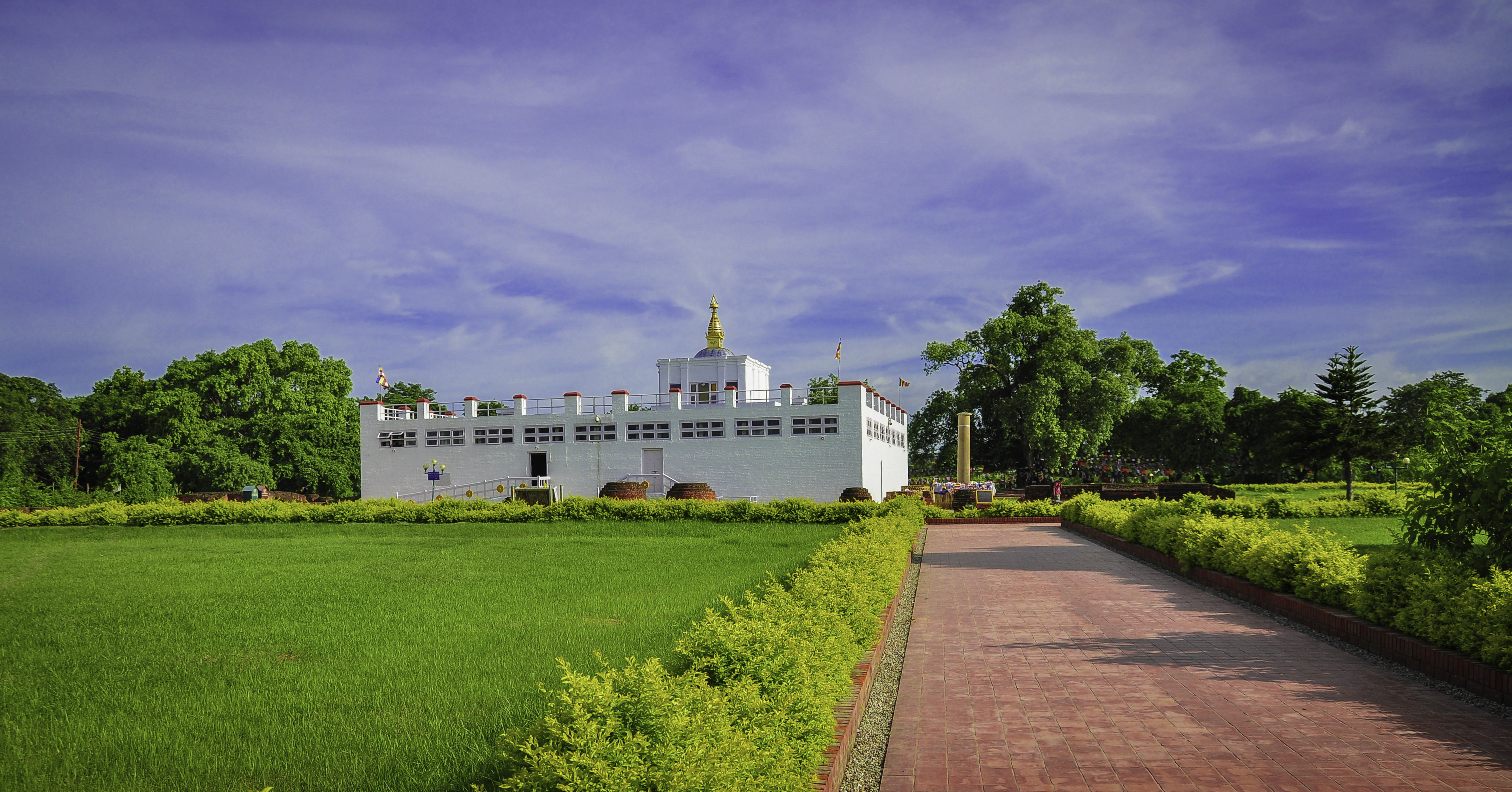
Among all the interesting facts about Nepal, perhaps the most spiritually significant is that Lumbini, located in the Rupandehi district of southern Nepal’s Terai region, is the verified birthplace of Siddhartha Gautama, who later became Gautama Buddha, the founder of Buddhism.

Lumbini is a UNESCO World Heritage Site and one of the most sacred pilgrimage destinations on earth for the world’s estimated 500 million Buddhists. Archaeological excavations at Lumbini have confirmed human habitation and religious activity dating back to at least the third century BCE, when the Emperor Ashoka of the Maurya Empire visited and erected a commemorative pillar that still stands today.

Interesting Facts About Nepal


This single fact elevates Nepal to a position of extraordinary global spiritual significance. When exploring interesting facts about Nepalese culture, Lumbini represents the point where Nepalese geography and world religious history intersect in a way that is absolutely unique among all nations.

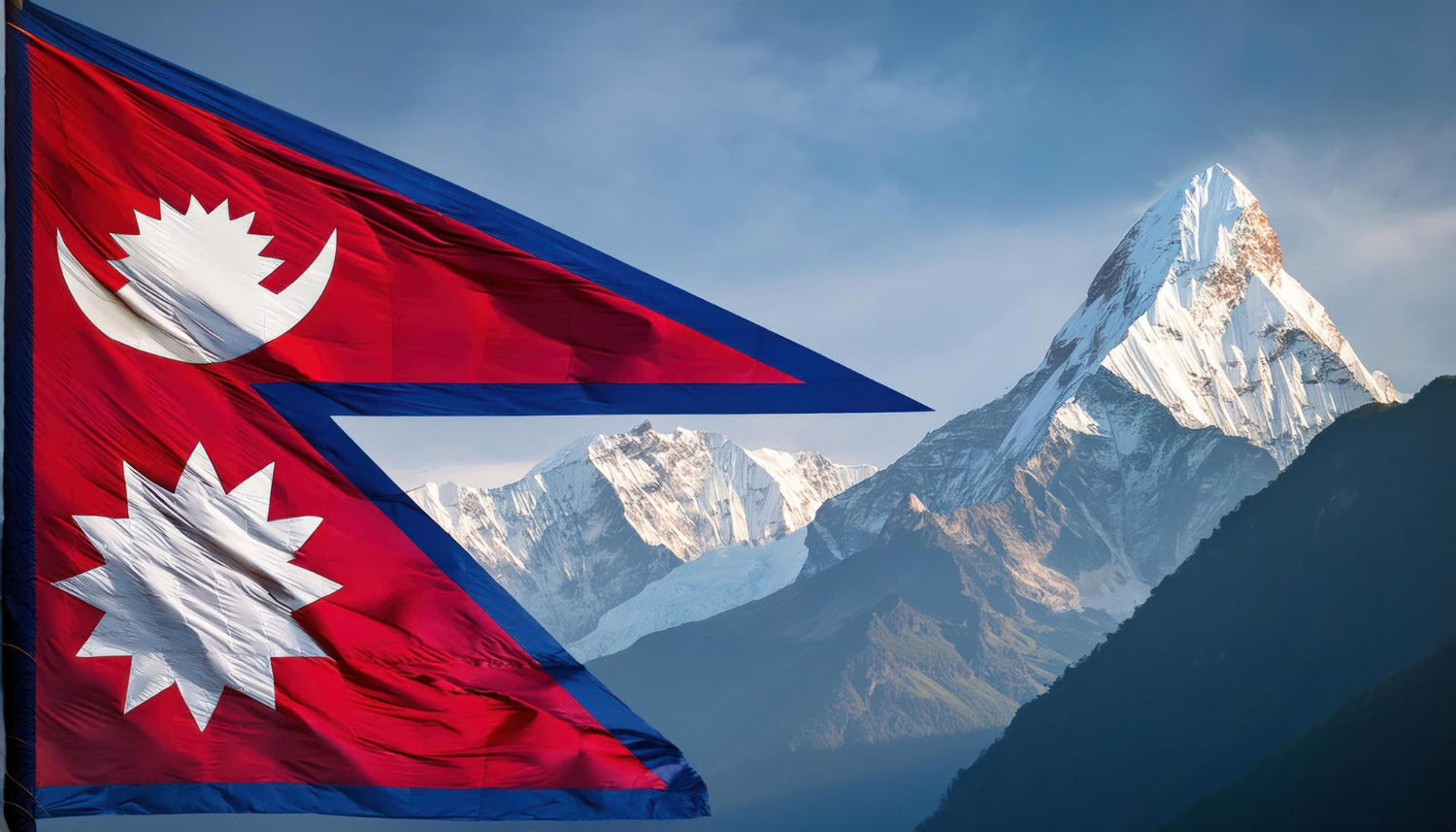
Fact 3: The Nepal Flag Is the Only Non-Rectangular National Flag in the World

This is one of the most visually striking and widely cited interesting facts about the Nepal flag. While every other country on earth uses a rectangular or square flag, Nepal’s national flag is a double pennant shape formed by two stacked triangular pennons. This unique design makes the Nepal flag instantly recognizable and completely one of a kind among the flags of all 195 recognized nations.

The interesting facts about the Nepal flag go much deeper than its shape. The flag’s crimson red background represents the color of the rhododendron, Nepal’s national flower, as well as the bravery and valor of the Nepali people. The deep blue border symbolizes peace and harmony. The white moon symbol in the upper pennon represents the cool nature of the Nepali people and the hope that Nepal will last as long as the moon endures. The white sun in the lower pennon represents the fierce resolve of Nepali warriors and the hope that Nepal will last as long as the sun shines.

Interesting Facts About Nepal

Before 1962, the moon and sun symbols on the Nepal flag had human faces. The modern simplified version removed the faces but retained the deep astronomical and cultural symbolism that makes this flag one of the most meaning-packed national symbols in the entire world.

Fact 4: Nepal Has Never Been Colonized

Among the most pride-inspiring amazing facts of Nepal is the remarkable historical truth that Nepal has never been colonized or formally ruled by any foreign power. During the era of British imperial expansion across South Asia in the 18th and 19th centuries, Nepal’s rugged Himalayan terrain, fierce Gurkha military resistance, and shrewd diplomatic maneuvering allowed it to maintain full sovereignty.

The Anglo-Nepalese War of 1814 to 1816 resulted in the Sugauli Treaty, which did impose some territorial concessions and established British influence over Nepal’s foreign affairs. However, Nepal was never formally annexed or made a colony, retaining its internal self-governance throughout the colonial period.

Interesting Facts About Nepal

This historical independence is a cornerstone of interesting facts about Nepal’s culture and national identity. The pride of never having been colonized runs deep in Nepali society and is reflected in the culture’s fierce sense of independence, the legendary reputation of Gurkha soldiers, and the country’s strong traditions of self-reliance.

Fact 5: Nepal Is the World’s Only Hindu Kingdom That Became a Federal Democratic Republic

For centuries Nepal held the distinction of being the world’s only officially declared Hindu kingdom, a status it maintained until 2008, when a newly elected Constituent Assembly formally abolished the monarchy and declared Nepal a Federal Democratic Republic.

This transformation is one of the most significant interesting facts about Nepal in modern history. The change came after a decade-long Maoist insurgency from 1996 to 2006, a people’s movement that brought hundreds of thousands of citizens into the streets of Kathmandu, and ultimately a peace process that reshaped the country’s entire political structure.

Interesting Facts About Nepal

Today Nepal is a secular state with a constitution that guarantees freedom of religion. Despite the official change in status, Hinduism remains the most widely practiced religion in Nepal, followed by approximately 81 percent of the population. This creates a fascinating cultural landscape where ancient Hindu traditions, Buddhist practices, and indigenous animistic beliefs coexist and interweave in ways that are deeply unique to Interesting Facts About Nepal Culture.

Fact 6: Nepal Has More UNESCO World Heritage Sites Per Square Kilometre Than Almost Any Other Country

When considering Amazing Facts of Nepal, its extraordinary concentration of UNESCO World Heritage Sites is impossible to overlook. Nepal has ten UNESCO World Heritage Sites in total, including seven cultural heritage sites and three natural heritage sites.

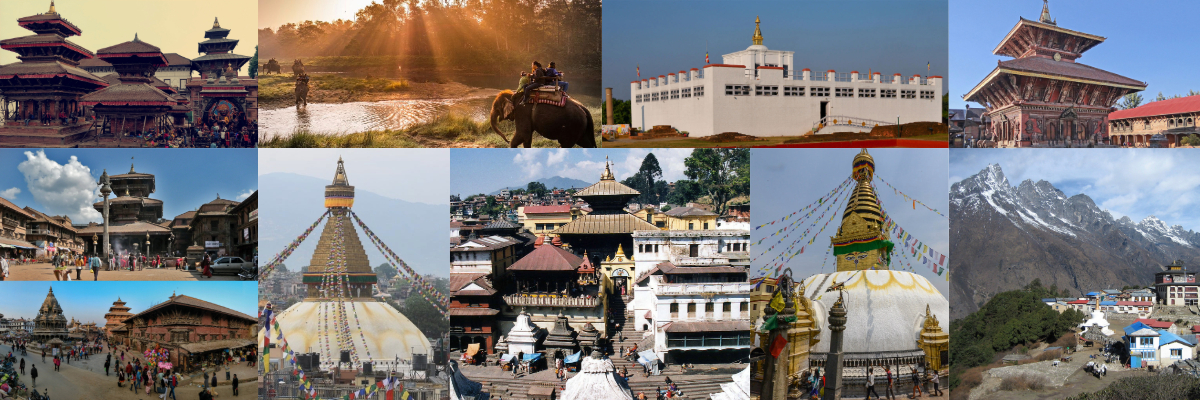
The seven cultural heritage sites are all located within or near the Kathmandu Valley and include Pashupatinath Temple, Baudhanath Stupa, Swayambhunath Stupa, Changu Narayan Temple, Bhaktapur Durbar Square, Patan Durbar Square, and Kathmandu Durbar Square. The three natural heritage sites are Chitwan National Park, Sagarmatha National Park, and Lumbini.

Interesting Facts About Nepal

For a country of only 147,181 square kilometers, this concentration of world heritage is extraordinary. When you explore interesting facts about Nepal culture through these sites, you encounter living temples that have been continuously used for religious ceremonies for over a thousand years; medieval palace squares that still function as the administrative and social hearts of ancient cities; and jungle reserves that protect the Bengal tiger, the one-horned rhinoceros, and hundreds of bird species found nowhere else.

Fact 7: Nepal Is the World’s Deepest River Gorge Country

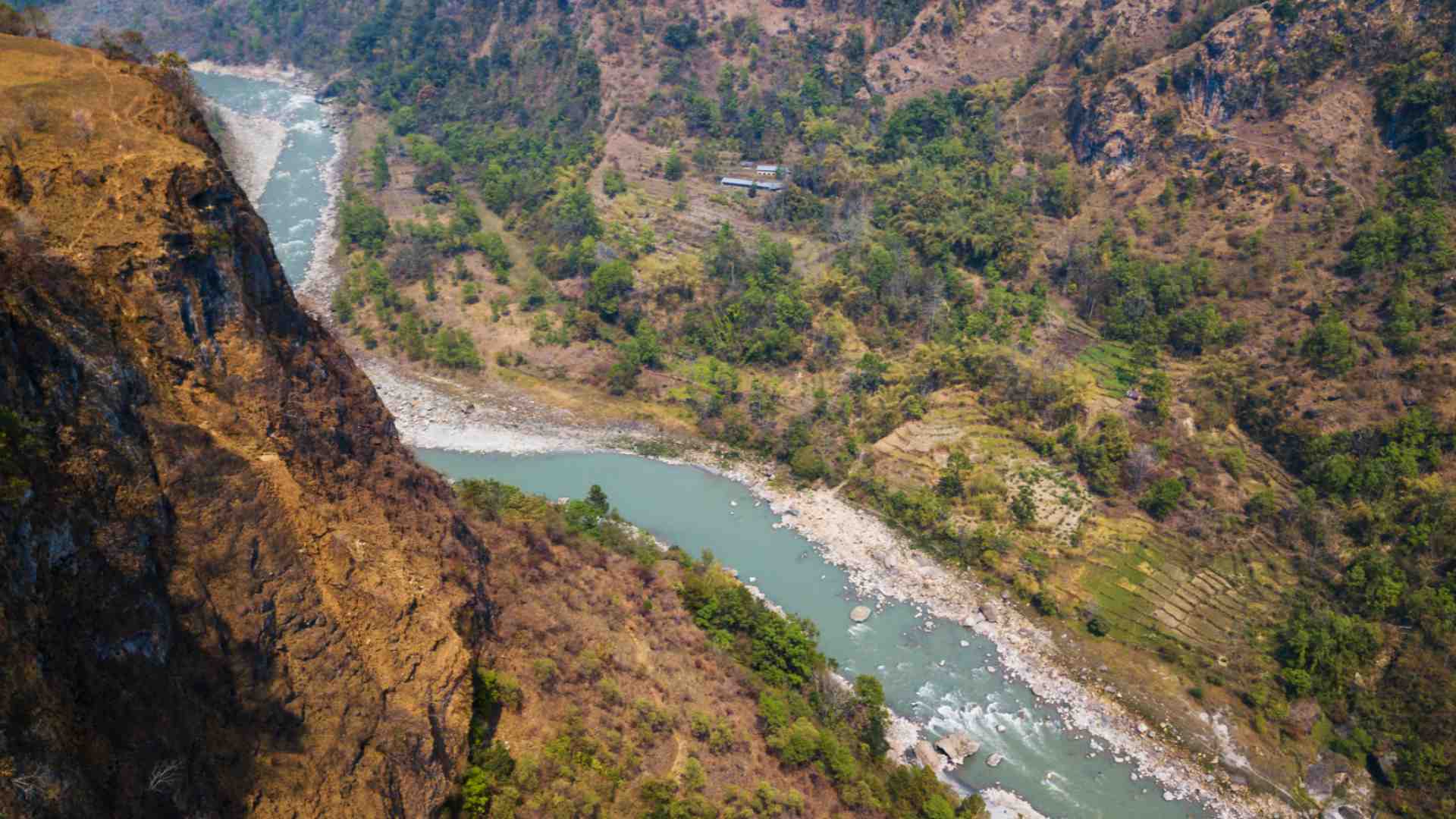
One of the lesser-known interesting facts about Nepal is that it contains the deepest river gorge on earth. The Kali Gandaki Gorge, carved by the Kali Gandaki River between the peaks of Dhaulagiri and Annapurna in the Mustang district of central Nepal, reaches a depth of approximately 5,571 meters from the riverbed to the summit of the adjacent peaks.

This makes the Kali Gandaki Gorge significantly deeper than the more famous Yarlung Tsangpo Grand Canyon in Tibet and the Grand Canyon in the United States. The gorge is also an ancient trade and pilgrimage route connecting the Himalayan highlands of Mustang with the lowland valleys of Pokhara and beyond, used by traders carrying salt, grain, and spices for thousands of years.

Interesting Facts About Nepal

This geological wonder adds another extraordinary dimension to the Amazing Facts of Nepal story, demonstrating that Nepal’s record-breaking geography is not limited to the heights of its mountains but extends into the extraordinary depths of its river valleys as well.

Fact 8: Nepal Has 123 Living Languages

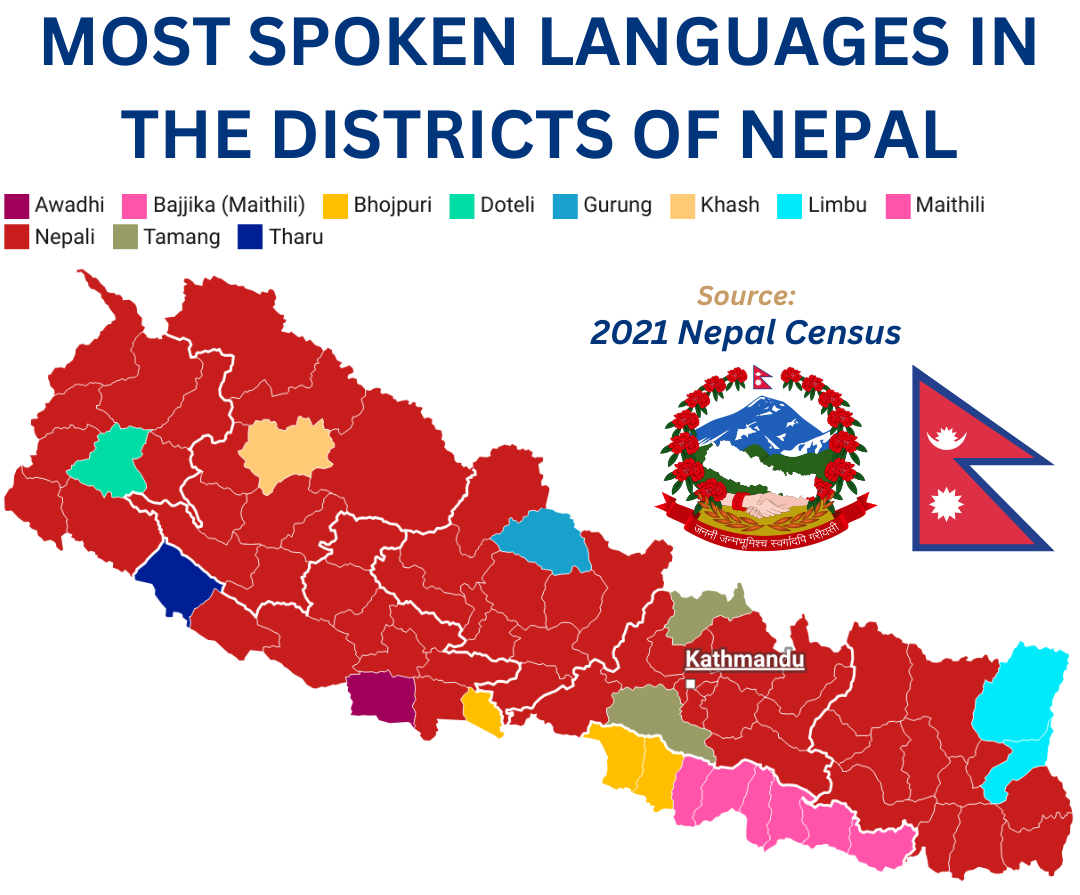
Among the most remarkable and interesting facts about Nepal’s culture is the country’s extraordinary linguistic diversity. According to Nepal’s national census, the country recognizes 123 living languages spoken as mother tongues by its roughly 30 million citizens. These languages belong to four major language families, including Indo-Aryan, Tibeto-Burman, Austro-Asiatic, and Dravidian.

Nepali is the official language and lingua franca that connects these diverse linguistic communities, but languages such as Maithili, Bhojpuri, Tharu, Tamang, Newar, Magar, Doteli, Urdu, and Avadhi each have hundreds of thousands or even millions of speakers. Many of these languages carry their own distinct literary traditions, folk music, oral epics, and cultural knowledge systems that are entirely separate from mainstream Nepali cultural life.

Interesting Facts About Nepal

This linguistic diversity is a living testament to the fact that Nepal is not a single culture but a mosaic of dozens of distinct peoples, traditions, and worldviews who have built a shared national identity while preserving their individual heritage. This is one of the most profound and underappreciated interesting facts about Nepal for people encountering the country for the first time.

Fact 9: Nepal Celebrates More Festivals Than Almost Any Other Country

One of the most joyful, amazing facts of Nepal is that it celebrates more official festivals per year than virtually any other country on earth. Nepal has over 50 nationally recognized festivals throughout the year, and many more are celebrated at regional and community levels across its 77 districts.

Interesting Facts About Nepal

These festivals span Hindu, Buddhist, animistic, and syncretic religious traditions and include world-famous celebrations such as Dashain, the biggest Hindu festival in Nepal lasting 15 days; Tihar, the festival of lights celebrating the bond between humans and animals; Indra Jatra, the ancient Kathmandu Valley chariot festival; Teej, the women’s festival of fasting and dance; Chhath Puja, the sun worship festival of the Terai; and Losar, the Tibetan Buddhist New Year celebrated three separate times by Gurung, Tamang, and Sherpa communities.

When exploring interesting facts about Nepalese culture, this festival calendar reveals a society where communal celebration, spiritual practice, and cultural identity are inseparable parts of everyday life throughout the entire year.

Fact 10: Nepal Is the Only Country Where the Cow Is the National Animal

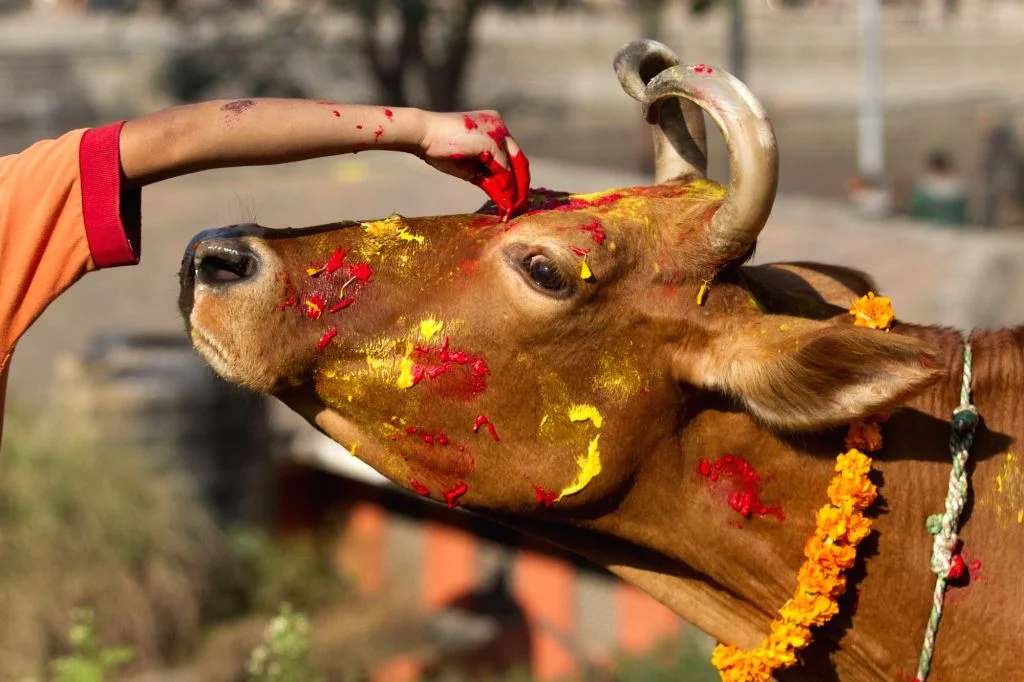
Rounding out our list of interesting facts about Nepal is a fact that surprises almost every international visitor. Nepal is the only country in the world that has declared the cow as its national animal. The domestic cow holds the status of a sacred animal in Hinduism and is revered as a symbol of wealth, motherhood, and abundance.

Cows are given extraordinary respect in Nepali Hindu culture. They are allowed to roam freely through city streets, markets, and even busy urban intersections in Kathmandu and other major cities. Harming or killing a cow was historically a criminal offense in Nepal under the Hindu kingdom, and while the legal framework has changed since the country became a secular republic, the cultural reverence for cows remains deeply embedded in daily life.

Interesting Facts About Nepal

This is one of those amazing facts of Nepal that perfectly illustrates how ancient spiritual traditions and modern national identity continue to coexist in this extraordinary country in ways that are completely unlike anywhere else in the world.

Interesting Facts About Nepal Culture: A Deeper Look

Beyond the ten facts above, Interesting Facts About Nepal Culture reveals a society of extraordinary warmth, complexity, and depth. Nepal’s caste system, while officially abolished, continues to shape social structures in many communities. The Newari people of the Kathmandu Valley have preserved a unique urban civilization dating back over 2,000 years, complete with their own language, architecture, festivals, cuisine, and artistic traditions. The Tharu people of the Terai have developed remarkable resistance to malaria over centuries of living in the lowland jungle regions. The Rai and Limbu peoples of eastern Nepal preserve shamanic Kirat traditions that predate both Hinduism and Buddhism in the region.

Nepal’s cuisine reflects this cultural diversity beautifully. While dal bhat, the traditional lentil soup with rice, is the national staple eaten twice daily by most Nepali households, the country’s culinary landscape includes Newari feasts, Tibetan-influenced mountain foods, Tharu jungle cuisine, and Madhesi dishes of the southern plains, creating one of South Asia’s most varied and underexplored food cultures.

Interesting Facts About Nepal Flag: Complete Symbolism Guide

The interesting facts about the Nepal flag deserve their own dedicated summary. No other flag in the world tells as complete a story about its nation through design alone.

The double pennon shape comes from the two separate triangular pennons that were historically carried by different branches of Nepal’s royal and prime ministerial households, merged into a single unified flag over time. The crimson red is the color of the rhododendron, Nepal’s national flower, found blooming across the country’s middle hill regions every spring.

The blue border represents peace, a value deeply embedded in both the Hindu and Buddhist traditions that define Nepalese spiritual life. The white crescent moon in the upper pennon represents the cool-tempered, peaceful, and patient character of the Nepali people. The white sun in the lower pennon represents the energy, heat, and fierce determination of the Nepalese warrior spirit. Together the moon and sun express the hope that Nepal will endure as long as these celestial bodies continue to shine.

Amazing Facts of Nepal: Quick Reference

Nepal is the world’s highest country by average elevation. It contains 8 of the world’s 10 highest peaks. It is the birthplace of Buddha. It has the world’s only non-rectangular national flag. It has never been colonized. It has 123 living languages. It celebrates over 50 official festivals annually. It has 10 UNESCO World Heritage Sites. It contains the world’s deepest river gorge. It is the only country with the cow as its national animal.

Frequently Asked Questions About Interesting Facts About Nepal

What are the most interesting facts about Nepal?

Nepal is home to Mount Everest, the birthplace of Buddha, the world’s only non-rectangular flag, and 123 living languages, and it has never been colonized. These are among the most compelling, interesting facts about Nepal that define the country’s unique identity.

What are interesting facts about Nepali culture?

Interesting facts about Nepal’s culture include its 50-plus annual festivals, 123 spoken languages, the ancient Newari civilization of the Kathmandu Valley, the sacred status of the cow, and the coexistence of Hindu, Buddhist, and indigenous animistic traditions in daily life.

What are the interesting facts about the Nepal flag?

The interesting facts about the Nepal flag include its unique double-pennon shape, the only non-rectangular national flag in the world. Its crimson red represents the rhododendron and bravery. The blue border represents peace. The moon symbolizes calm, and the sun symbolizes strength.

What are the amazing facts of Nepal?

Amazing facts of Nepal include being home to 8 of the world’s 10 highest mountains, containing the world’s deepest river gorge, celebrating more festivals than almost any other country, and holding 10 UNESCO World Heritage Sites in a country smaller than many individual states.

Is Nepal the only country with a non-rectangular flag?

Yes. Nepal is the only country in the world whose national flag is not rectangular or square in shape. This is one of the most widely cited interesting facts about Nepal’s flag and makes Nepal’s flag completely unique among all nations on earth.

Why is Nepal famous?

Nepal is famous for Mount Everest and Himalayan trekking, as the birthplace of Buddha, for its unique flag, its extraordinary cultural diversity, its ancient temples and UNESCO heritage sites, and for the legendary bravery of its Gurkha soldiers. All of these contribute to the interesting facts about Nepal that draw millions of visitors every year.

Conclusion: Discover the Incredible Interesting Facts About Nepal

The Interesting Facts About Nepal reveal a country that stands completely apart from every other nation on earth. From the physical grandeur of its Himalayan peaks and the spiritual weight of Lumbini to the symbolic richness of its one-of-a-kind flag and the extraordinary diversity of its cultural traditions, Nepal is a place that rewards curiosity at every level of exploration.

The interesting facts about Nepali culture show a society where ancient traditions remain vibrantly alive in modern times. The interesting facts about the Nepal flag tell a story of sovereignty, spirituality, and national pride unlike any other flag in the world. And the Amazing Facts of Nepal gathered in this article represent only the beginning of what this remarkable country has to offer those who take the time to look deeper.

Nepal is not just a destination. It is an experience that stays with you forever; for a more thrilling experience, visit Leaf Holiday.

Maha Shivaratri 2026: 8 Powerful Traditions, Sacred Story & Grand Nepal Celebrations

Introduction to Maha Shivaratri

Few festivals in the Hindu calendar carry the spiritual weight and cultural depth of Maha Shivaratri. Translated from Sanskrit as “The Great Night of Shiva,” this sacred occasion is observed with unmatched devotion by millions of Hindus across the world. In Nepal, it holds a place unlike anywhere else, not just as a religious observance but as a powerful national experience that unites pilgrims, sadhus, families, and even curious travelers under the same moonless sky.

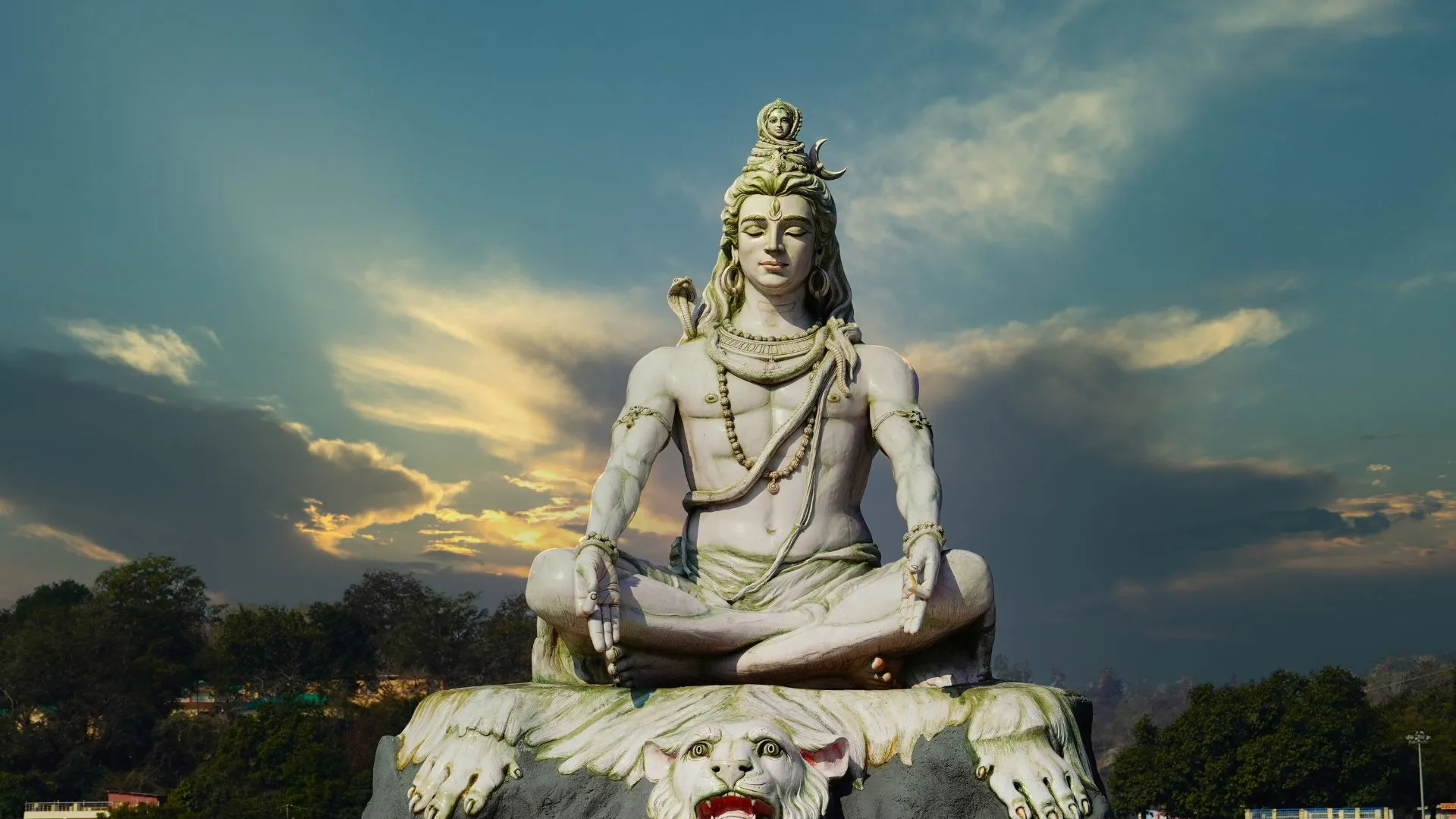
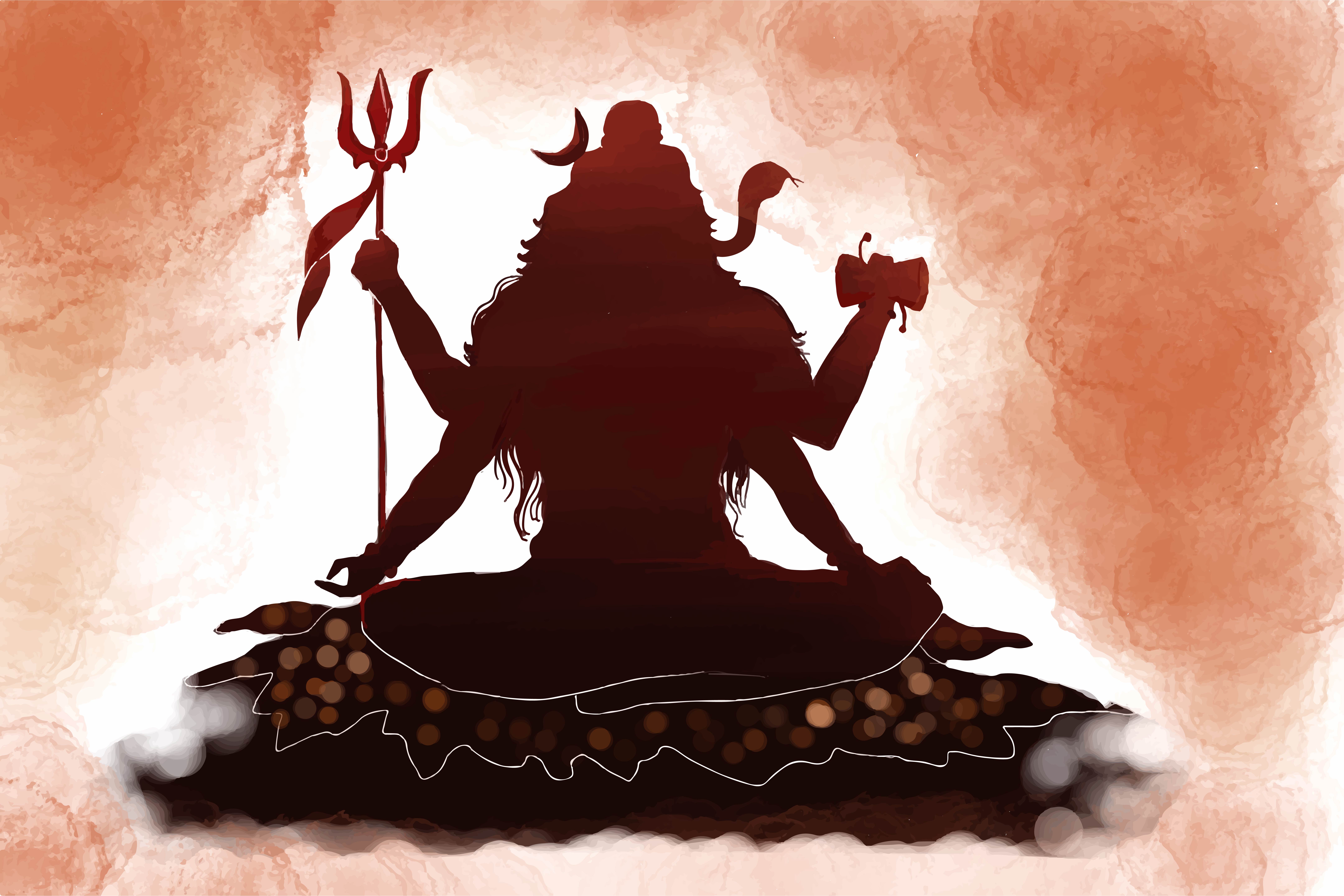
Maha Shivaratri is a night dedicated to Lord Shiva, one of the principal deities of Hinduism and the supreme god of the Shaiva tradition. He is revered as Mahadev the Great God who finds serenity in cremation grounds, beauty in ashes, and truth in stillness. On this one night each year, devotees believe the cosmic energy of Lord Shiva is most accessible to human consciousness, making prayers, meditation, and fasting exponentially more potent.

maha shivaratri

What makes Nepal’s celebration particularly extraordinary is its authenticity. There are no flashy advertisements or corporate sponsors driving the event. The only commerce visible is simple people selling flowers, lamps, and food for offerings. It is a festival by the people, not a business event. From the ancient ghats of Pashupatinath to remote mountain temples, Maha Shivaratri is lived and breathed with raw, heartfelt devotion that is genuinely rare in the modern world.

Whether you are a devout Hindu, a spiritual seeker, or a traveler drawn to living culture, understanding how Maha Shivaratri is celebrated in Nepal opens a doorway into one of humanity’s oldest and most profound traditions.

Maha Shivaratri 2026 Date and Timing

Maha Shivaratri 2026 falls on Falgun 03 according to the Nepali calendar, which corresponds to Sunday, February 15, 2026, in the English calendar.

The lunar calendar dictates the timing of this sacred festival, falling on the 14th day of the waning moon, Krishna Paksha, in the month of Falgun. The festivities begin at dawn on Sunday and reach their spiritual peak during the Nishita Kaal (the midnight hour), continuing until the sun rises on Monday.

For those planning to perform puja, understanding the specific time windows is essential. The most auspicious puja window, Nishita Kaal, falls between 12:09 AM and 1:01 AM on February 16. This 52-minute window is considered optimal for direct communion with Lord Shiva.

Shivaratri puja can be performed one time or four times during the night. The whole night duration can be divided into four to get four Prahar (प्रहर) for performing Shiva puja at each stage of the night. Serious devotees who wish to stay awake through all four Prahars dedicate each watch of the night to a different aspect of Lord Shiva’s energy.

maha shivaratri

The Parana, or the breaking of the fast, is traditionally done the following morning after sunrise, completing the cycle of devotion from one dawn to the next. Fasting begins at sunrise on February 15 and traditionally breaks the next morning after puja.

Mark your calendar and plan your visit early if you intend to attend celebrations at major temples. Maha Shivaratri 2026 is a public holiday in Nepal, and temple towns like Kathmandu will see extraordinary crowds.

Maha Shivaratri Story and Significance

The Maha Shivaratri story is not a single legend but a tapestry of sacred myths, each revealing a different dimension of Lord Shiva’s divine nature.

The most widely celebrated legend centers on the sacred union of Shiva and Goddess Parvati. Most famously, Maha Shivaratri marks the night Shiva married Goddess Parvati. This union represents the perfect balance of Purusha (consciousness) and Prakriti (nature). Devotees celebrate this cosmic marriage as a symbol of harmony between the masculine and feminine forces of the universe. In Nepal, married women observe fasts and offer prayers for the long life of their husbands, while unmarried women pray to be blessed with a partner who embodies the compassionate and virtuous qualities of Lord Shiva himself.

A second profound legend relates to the Samudra Manthan, the great churning of the cosmic ocean by gods and demons. When a deadly poison called Halahala emerged and threatened to destroy all of creation, Lord Shiva stepped forward and consumed it to save the universe. Legend tells us that Lord Shiva saved the world by drinking poison on this sacred night. Goddess Parvati held his throat to prevent the poison from spreading through his body, turning his throat blue and earning him the name Neelkanth, the Blue-Throated One. Maha Shivaratri is celebrated as a remembrance of this ultimate act of sacrifice.

Maha Shivaratri Story and Significance

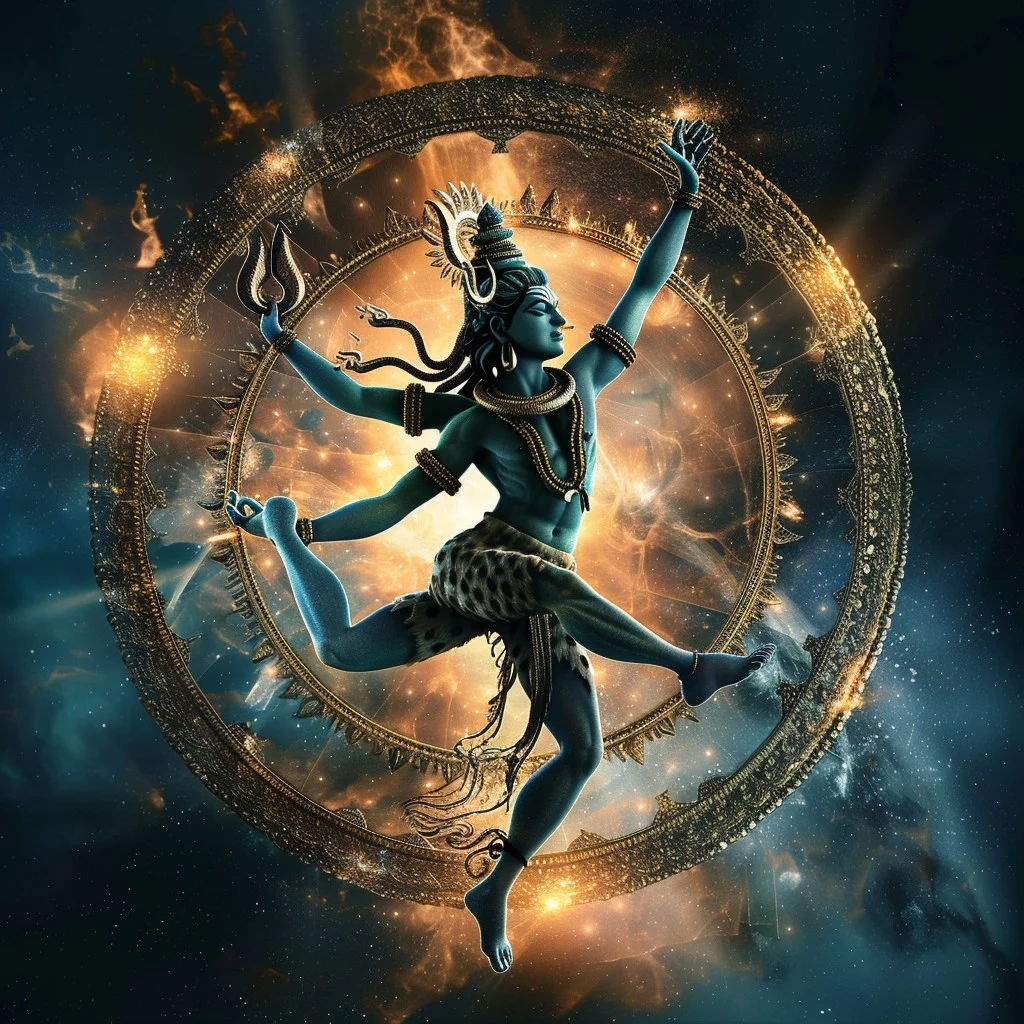
A third legend speaks of the cosmic dance. It is regarded as the day when Shiva performed the Tandava, the cosmic dance to discard negative power. The Tandava is the rhythm of creation, preservation, and destruction, and it is said that the very pulse of existence flows from this divine movement.

Beyond mythology, the spiritual significance of Maha Shivaratri is profound. The dark night of Krishna Paksha on which it falls is symbolic; devotees are invited to transcend the darkness of ignorance through devotion, wakefulness, and inner stillness. It is the most spiritually powerful night of the Hindu calendar, the night when Lord Shiva’s consciousness is most accessible to human awareness, making meditation, mantra chanting, and spiritual practice exponentially more potent.

How is Maha Shivaratri Celebrated in Nepal

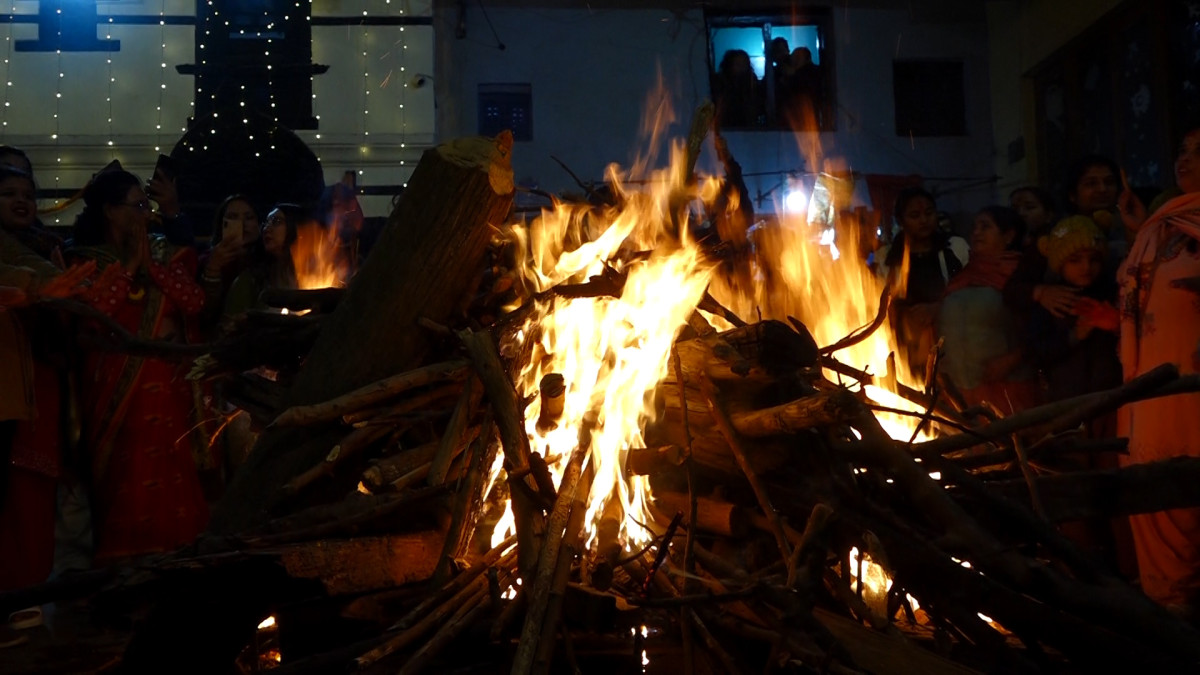
Nepal is considered one of the holiest lands in the world for Shaivism, and how Maha Shivaratri is celebrated here reflects that deep spiritual heritage. The country transforms on this day; cities slow down, temples overflow, and the air carries the scent of incense and woodsmoke from ritual bonfires called “Dhuni.” “

Devotees typically fast, offer prayers, and engage in rituals throughout the day and night. They visit Shiva temples, light oil lamps, chant hymns, and perform Abhishekam, the ritual bathing of the Shiva Lingam with milk, honey, water, and sacred offerings.

The Shiva Lingam, which represents the formless cosmic energy of Lord Shiva, is the central object of worship. Devotees bring Bilva leaves (Bel patra), flowers, fruits, and sacred water from the Bagmati River as offerings. The act of pouring water or milk over the Lingam while chanting “Om Namah Shivaya” is considered one of the most purifying rituals in Hindu practice.

maha shivaratri

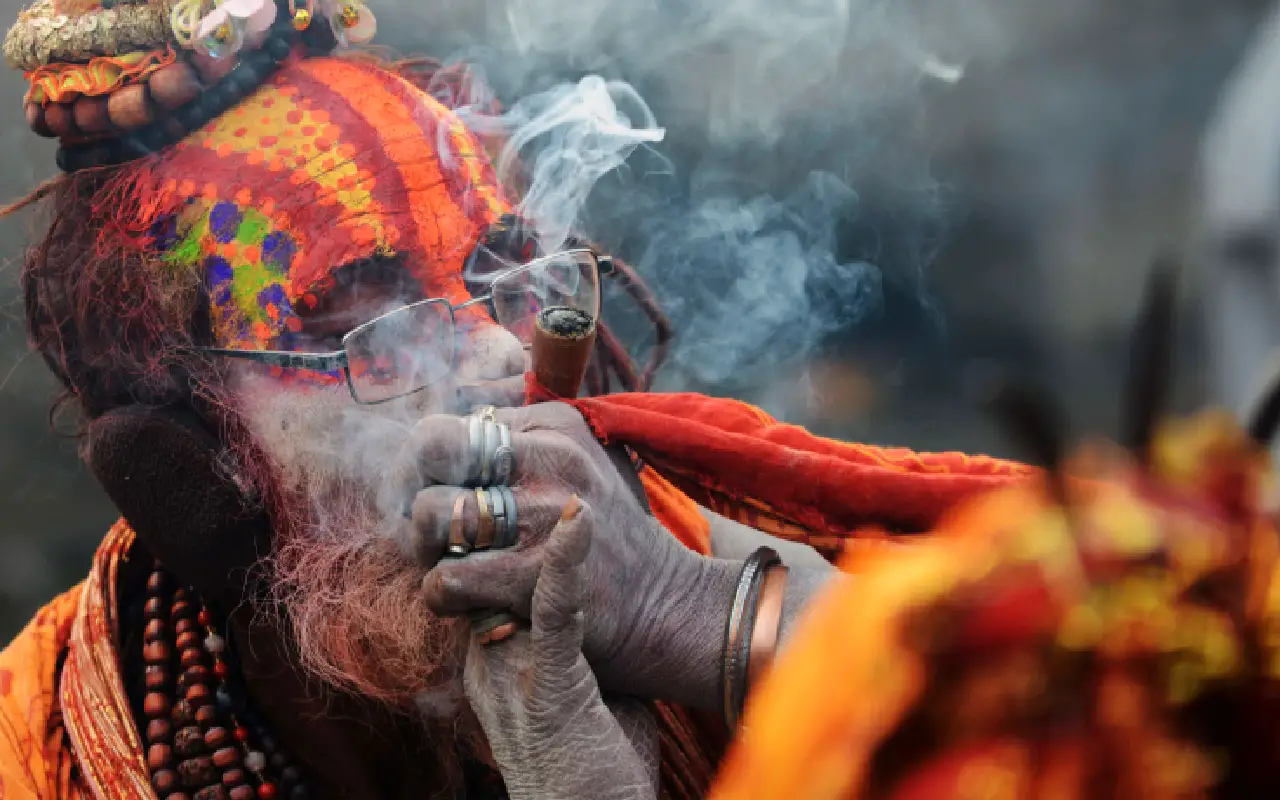
One of the most visually striking aspects of Maha Shivaratri in Nepal is the gathering of Sadhus, Hindu ascetics who renounce worldly life. During Maha Shivaratri, Pashupatinath Temple witnesses a considerable surge of devotees and Sadhus offering their worship. These holy men, some covered in ash and adorned with Rudraksha beads, come from across Nepal and India to observe the festival at this holiest of shrines. Their presence adds a mystical, ancient quality to the celebrations that is unlike anything else.

Nepal’s celebrations are special because they bring together many spiritual practices. Devotees fast, stay up all night, and keep chanting “Om Namah Shivaya” to awaken their inner consciousness. The festival goes beyond religious boundaries and encourages unity among people of all backgrounds who come to honor Lord Shiva.

Holy rituals related to sacred bathing, fasting, chanting Shiva mantras, Sandhya Arati, bonfires, and more weave together to create an atmosphere that is simultaneously solemn and deeply energizing. Children participate by blowing sugarcane in open fires, young people gather around Dhunis singing devotional songs, and elders spend the night in meditation and prayer.

maha shivaratri

Beyond Kathmandu, Maha Shivaratri is observed at hundreds of Shiva temples across Nepal from Gokarneshwar Mahadev in the Kathmandu Valley to Doleshwar Mahadev to remote highland shrines in mountain districts. Most of the sacred sites are easily accessible by vehicle, but if you’re interested in trekking, you can reach even higher-altitude regions where these temples are located. For more cultural and religious festivals, visit Nepal Trekking.

Pashupatinath Temple Celebration

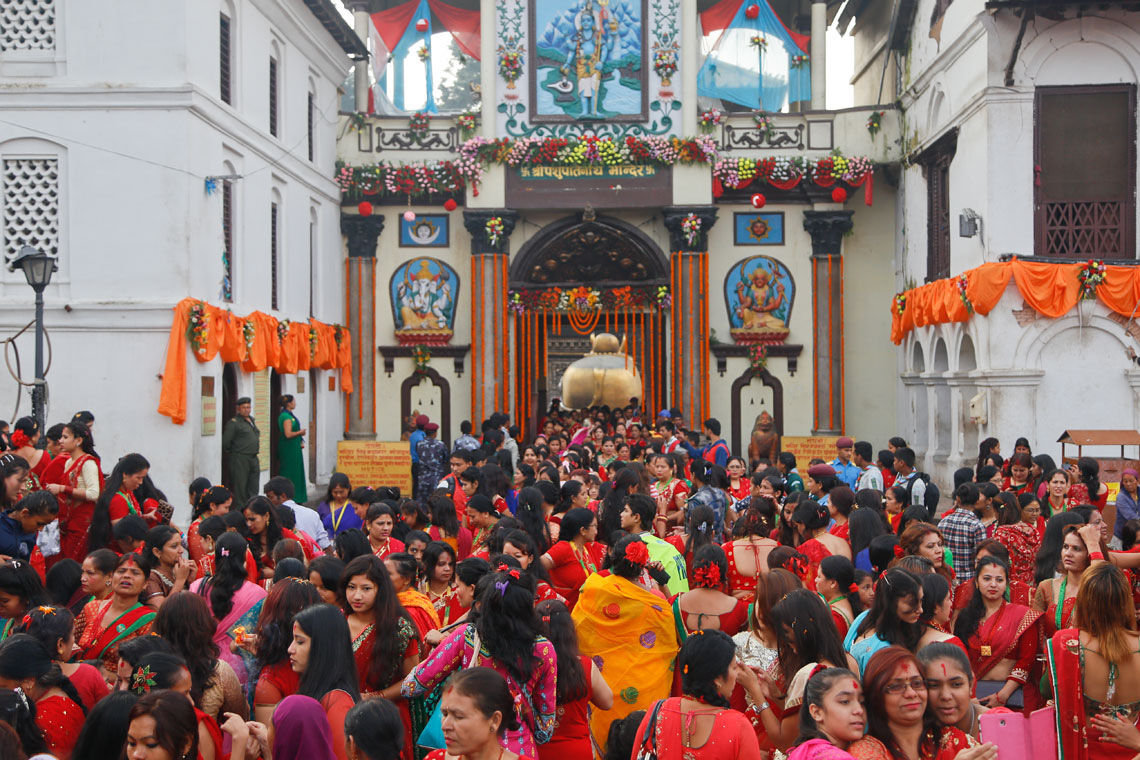
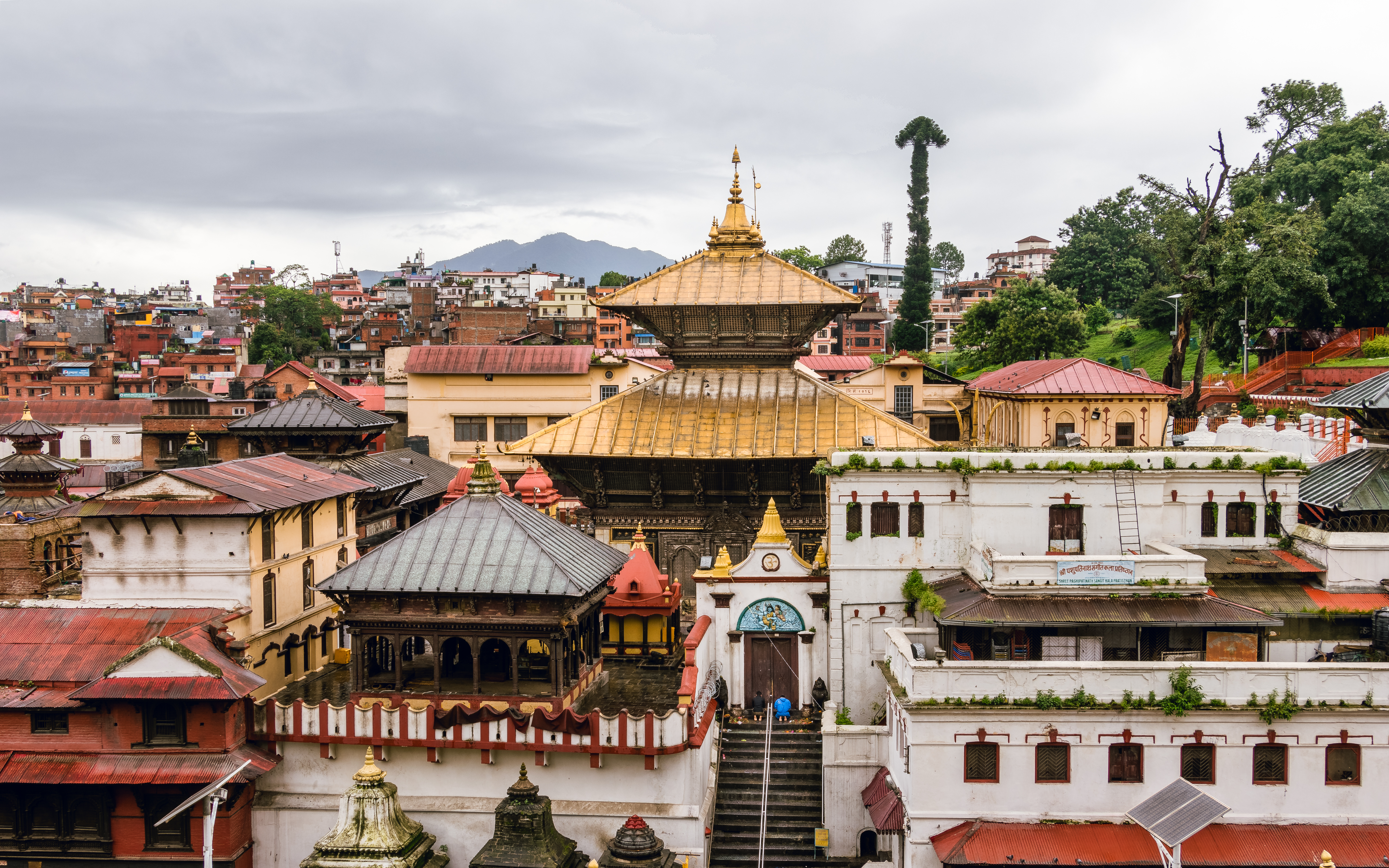
Of all the places in Nepal where Maha Shivaratri is observed, Pashupatinath Temple in Kathmandu stands in a class of its own. This UNESCO World Heritage Site on the banks of the sacred Bagmati River is not just Nepal’s most important Hindu temple; it is one of the most revered Shiva shrines on Earth.

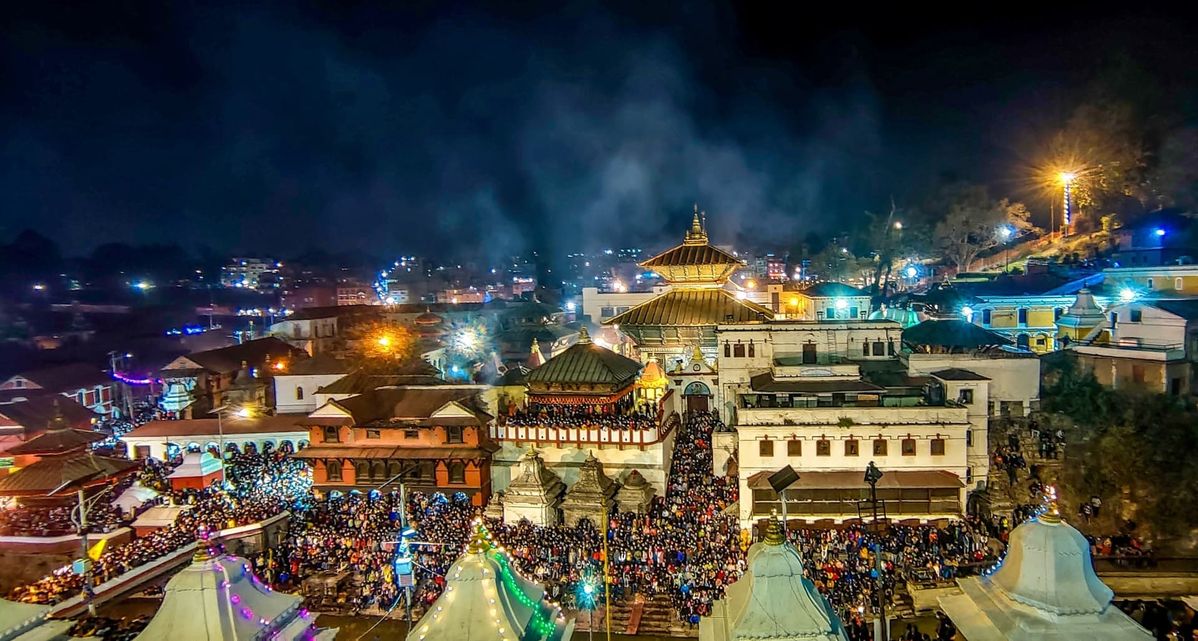
Pashupatinath Temple welcomes approximately 1.5 million devotees during Maha Shivaratri, creating Nepal’s biggest religious gathering. The rituals here have been performed the same way for centuries. There is no “touristy” version; everything is done with genuine devotion.

On Maha Shivaratri, the Pashupatinath Temple is a very special place; incense is everywhere, bells ring continuously, and devotional songs fill the entire temple complex.

The main temple boasts four primary doors covered with silver sheets and features a cubic structure housing the sacred Shiva Lingam. Only Hindus may enter the inner sanctum, where highly qualified South Indian Bhatt priests perform intricate Vedic rituals. Non-Hindu visitors can observe the celebrations from designated areas and still absorb the incredible atmosphere of the festival.

maha shivaratri

The real magic happens at night. The temple complex is illuminated by millions of sparks from ritual bonfires (Dhuni), where devotees stay awake (Jagaran) to overcome darkness and ignorance.

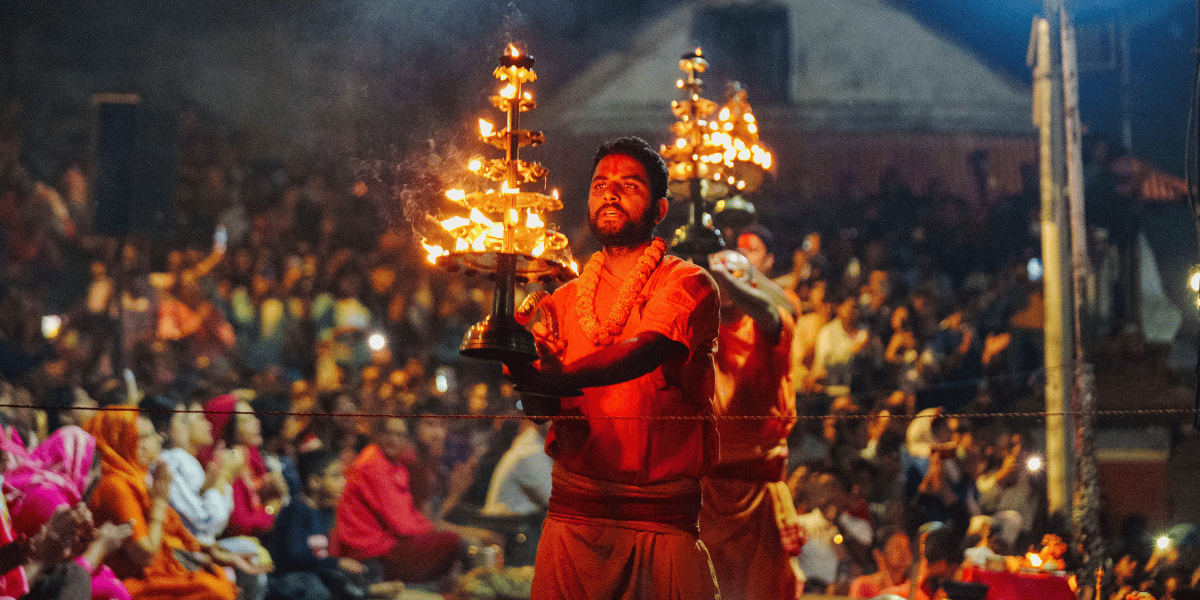
Sandhya Aarti, an auspicious ritual, is held at the banks of the Bagmati River on the eastern side of Pashupatinath Temple. As the priests perform the evening fire ritual with synchronized movements of lamps and incense, the scene is nothing short of breathtaking.

For those seeking a slightly less crowded but equally spiritually significant experience, Doleshwar Mahadev offers a more serene but equally potent experience. It is believed that this temple is the “head” portion of the Kedarnath deity in India, making it a must-visit for serious spiritual seekers.

Maha Shivaratri at Pashupatinath also coincides with Nepal’s Army Day, which adds military parades and cultural shows to the festival’s energy, making it a uniquely layered celebration of both spiritual and national identity.

Maha Shivaratri Fasting Rules

Maha Shivaratri fasting is one of the most significant and disciplined observances in Hinduism. It is not merely about abstaining from food; it is a complete practice of physical purification, mental focus, and spiritual surrender.

Maha Shivaratri fasting is one of the strictest Hindu fasts, observed to seek Lord Shiva’s blessings, spiritual purification, and self-discipline. Devotees prepare a day before by eating a sattvic meal, avoiding grains, onion, garlic, and non-vegetarian food. The next day, after taking a ritual bath, they begin the fast with full devotion.

maha shivaratri

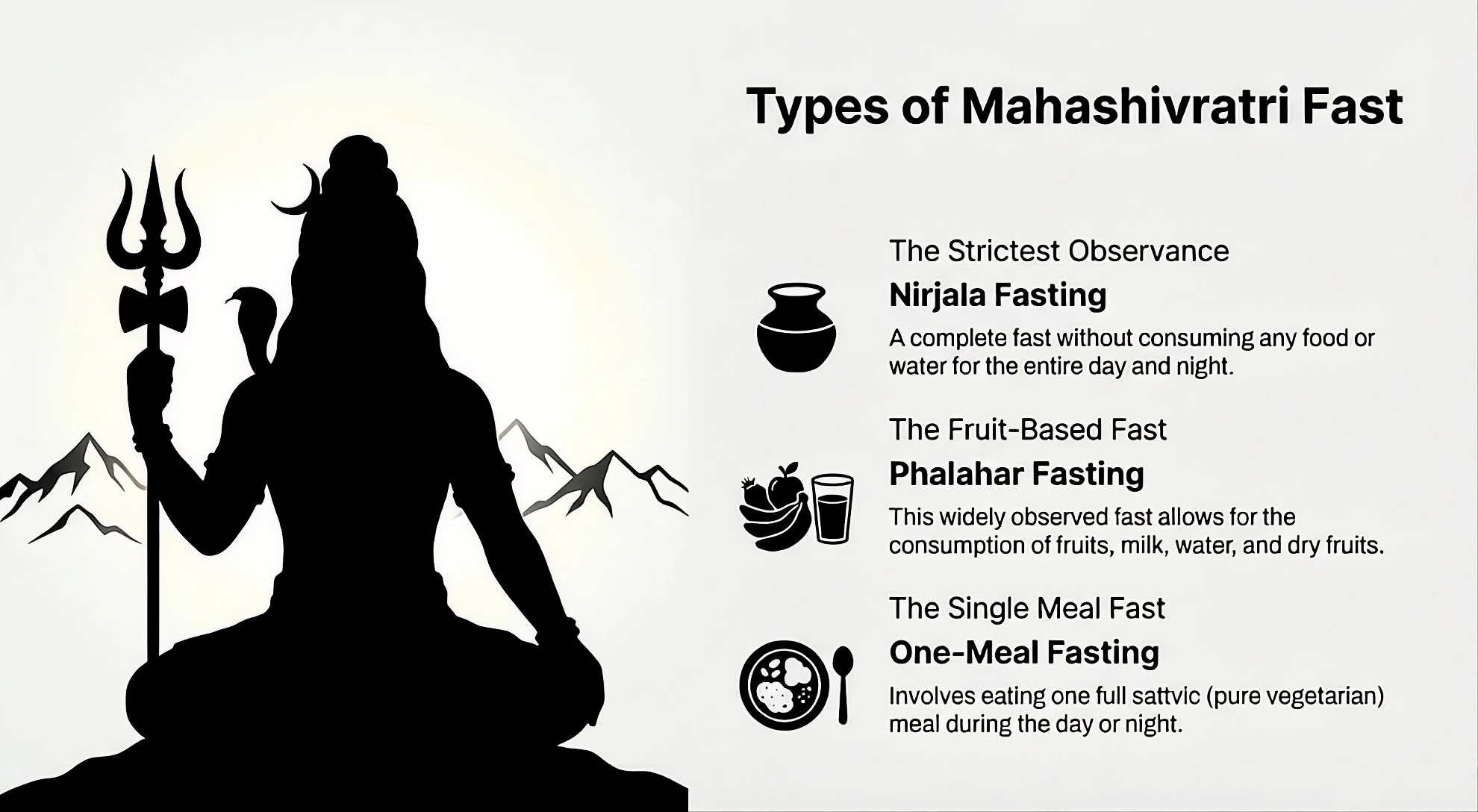
There are three main types of Maha Shivaratri fasting that devotees observe based on their health and spiritual commitment:

Nirjala Upvas—The strictest form. Those following the strictest rule abstain from eating, drinking, and even sleeping for 24 hours, dedicating the entire time to meditation, mantra chanting, and prayer.

Phalahari Upvas — A moderate fast where devotees consume only fruits, milk, and water while refraining from grains, salt, and cooked food.

Water Fasting — Consuming only water throughout the day and night, maintaining awareness and focus without complete food abstinence.

Those who fast typically avoid wheat, rice, salt, certain vegetables, and pulses. Non-vegetarian foods, onion, and garlic are strictly avoided, even by those who are not fasting.

Staying awake through the night, called Jaagran, is considered as important as the fast itself. According to the Shiva Purana, the soul that remains wakeful and devoted through all four prahars of Maha Shivaratri receives the same merit as performing a year of daily puja. The waking state also maintains heightened consciousness during the night when Shiva’s energy is most accessible.

Observing Maha Shivaratri fasting detoxifies the body, while chanting and meditation bring mental clarity. The cosmic energy shift during this time enhances concentration, improves emotional balance, and strengthens spiritual resolve.

The fast is broken the following morning, typically after performing morning puja and receiving the blessings of Lord Shiva. Fruits, milk, and light sattvic foods are consumed first before gradually returning to a regular diet.

Maha Shivaratri Wishes and Quotes

Sharing blessings on Maha Shivaratri is a beautiful tradition that brings the spiritual energy of the festival into everyday relationships. Here are some meaningful wishes and quotes to share with loved ones:

Wishes:

  • “May Lord Shiva bless you with strength, wisdom, and peace on this auspicious night of Maha Shivaratri. Om Namah Shivaya!”
  • “On this holy occasion of Maha Shivaratri 2026, may the divine grace of Mahadev remove all obstacles from your path and fill your life with joy and prosperity.”
  • “Wishing you a spiritually uplifting Maha Shivaratri. May Lord Shiva’s blessings be with you and your family always. Har Har Mahadev!”
  • “May this Maha Shivaratri bring inner peace, good health, and the courage to face life with devotion. Jai Bholenath!”
  • “As you fast, pray, and reflect on this sacred night, may Lord Shiva guide your heart toward truth, love, and liberation. Happy Maha Shivaratri 2026!”

Quotes to inspire reflection:

  • “The Shiva within you is eternal. On Maha Shivaratri, awaken that consciousness and let it illuminate every corner of your life.”
  • “Maha Shivaratri teaches us that the darkest nights are not to be feared; they are to be transformed through devotion and awareness.”
  • “In the stillness of this sacred night, hear the silence speak. That is Shiva.”

Maha Shivaratri Songs and Bhajans

Music and devotion are inseparable during Maha Shivaratri. Across Nepal’s temples, neighborhoods, and homes, the night comes alive with the sound of sacred hymns, bhajans, and mantras dedicated to Lord Shiva. These songs are not mere entertainment; they are a form of worship, a way of keeping the mind focused and the heart open through the long vigil of the night.

maha shivaratri

Popular Maha Shivaratri Bhajans and Songs:

Om Namah Shivaya — The most universally chanted Shiva mantra, often set to devotional melodies. It is the simplest and most powerful way to connect with Lord Shiva during the festival night.

Shiv Tandav Stotram — A powerful Sanskrit hymn composed by Ravana in praise of Lord Shiva’s cosmic dance. Its rhythm mirrors the energy of the Tandava itself and is widely sung during Maha Shivaratri.

Har Har Mahadev — A call-and-response chant that fills the air at Pashupatinath and Shiva temples across Nepal during the festival. Its simplicity and energy make it perfect for group chanting.

Bhole Bhandari — A beloved Nepali devotional song that praises Lord Shiva in the colloquial and heartfelt language of the people. It is commonly heard in the lanes near Pashupatinath during the festival.

Rudrashtakam — A classical Sanskrit hymn from the Ramayana composed by Tulsidas, singing of Lord Shiva’s formless and omnipresent nature. It is considered deeply meditative when chanted slowly.

Mahamrityunjaya Mantra—”Om Tryambakam Yajamahe…” This ancient mantra is chanted for healing, liberation, and protection. On Maha Shivaratri, it is offered as one of the most auspicious forms of prayer.

In Nepal, local folk traditions also bring unique bhajans and devotional songs that blend classical Shaiva hymns with the musical heritage of Newar, Brahmin, and hill communities, making the celebration a rich cultural tapestry as much as a spiritual one.

FAQs About Maha Shivaratri

Q1. When is Maha Shivaratri 2026?

Maha Shivaratri 2026 falls on Sunday, February 15, 2026, corresponding to Falgun 03 in the Nepali calendar. The most auspicious time for puja, Nishita Kaal, is between 12:09 AM and 1:01 AM on February 16.

Q2. What is the story behind Maha Shivaratri?

The Maha Shivaratri story includes several sacred legends: the marriage of Shiva and Parvati; Lord Shiva drinking the cosmic poison to save the universe during Samudra Manthan; and his performance of the Tandava, the cosmic dance of creation and destruction.

Q3. How is Maha Shivaratri celebrated in Nepal?

In Nepal, Maha Shivaratri is celebrated through fasting, night-long vigils, bathing and anointing the Shiva Lingam, chanting mantras, visiting temples, especially Pashupatinath in Kathmandu, and gathering around sacred bonfires called Dhuni. It is one of the country’s most important public holidays.

Q4. What are the Maha Shivaratri fasting rules?

Fasting on Maha Shivaratri involves avoiding grains, salt, non-vegetarian food, onion, and garlic. Devotees can observe a complete fast (Nirjala), a fruit-and-milk fast (Phalahari), or a water-only fast. Staying awake through the night is considered an essential part of the observance.

Q5. Can non-Hindus attend Maha Shivaratri at Pashupatinath?

Yes, non-Hindus are welcome to witness the celebrations at Pashupatinath from the outer precincts and along the Bagmati River. However, the inner sanctum of the main temple is accessible only to Hindu devotees.

Q6. What should I wear to Maha Shivaratri celebrations?

Modest, traditional clothing is recommended, preferably in white or saffron, which are sacred colors in Shaiva tradition. Avoid revealing attire out of respect for the deeply religious nature of the event.

Q7. Is Maha Shivaratri a public holiday in Nepal?

Yes. Maha Shivaratri is a recognized public holiday in Nepal, with government offices, schools, and many businesses closed for the day.

Q8. What is the best way to experience Maha Shivaratri in Nepal as a visitor?

Arrive early at Pashupatinath, respect temple etiquette, wear modest clothing, and try to stay through the evening Sandhya Aarti and into the night for the full spiritual experience. Joining a guided cultural tour can also help you understand the deeper meaning behind each ritual.

Bungee Jumping Tour Packages for Ultimate Adventure

Introduction to Bungee Jumping in Nepal

If you are looking for one of the most breathtaking adventure experiences on the planet, bungee jumping in Nepal should be at the very top of your bucket list. Nestled between the towering Himalayas and carved with deep river gorges and wild valleys, Nepal has transformed itself into one of the premier destinations for extreme adventure tourism in Asia, and bungee jumping sits right at the heart of it.

Nepal, often celebrated for its majestic mountains and trekking trails, has steadily emerged as a hotspot for adventure activities. Among these, bungee jumping has carved out a special niche for adrenaline junkies, from leaping off suspension bridges over roaring rivers to free-falling against the backdrop of snow-capped peaks.

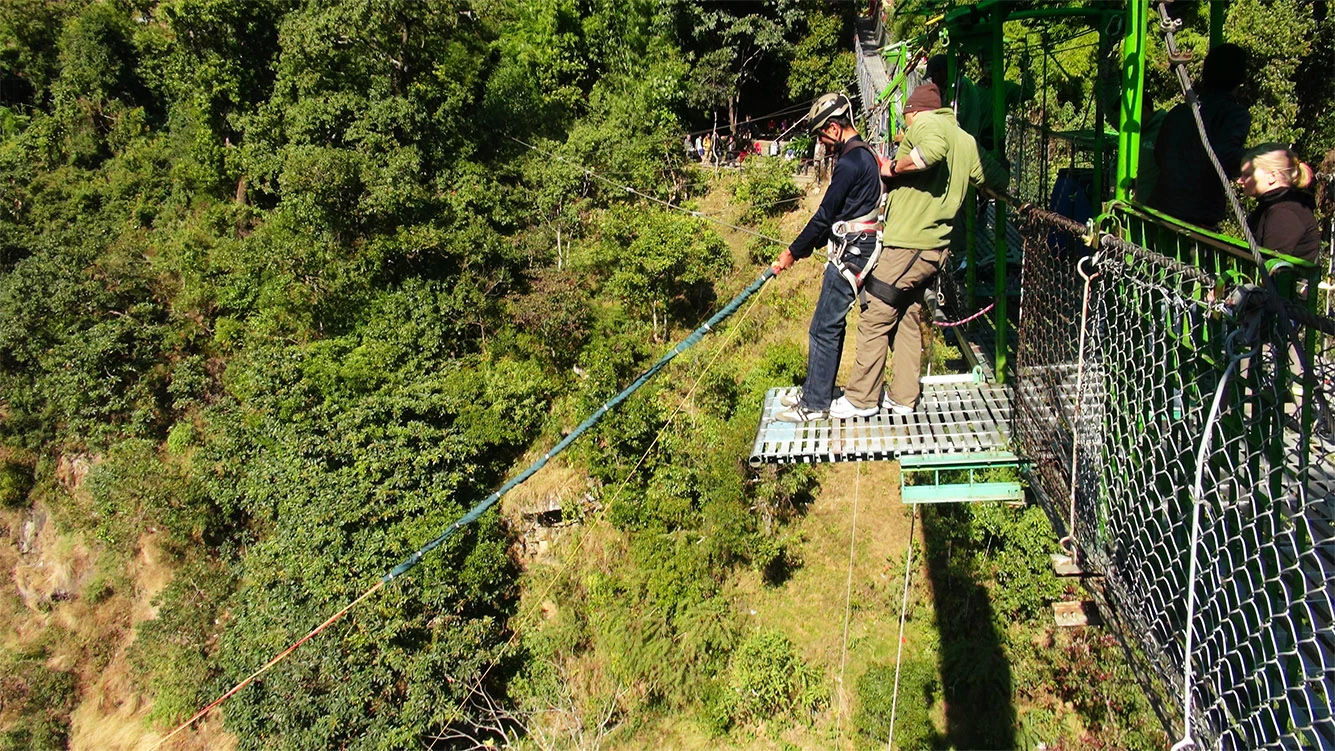
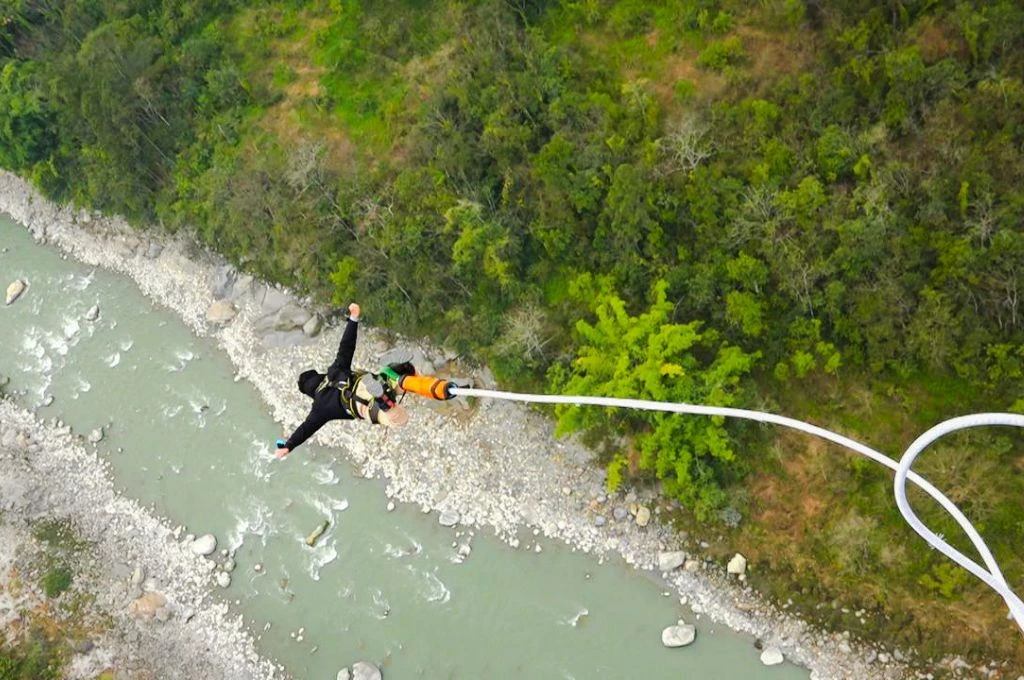
bungee jump kushma

What makes Nepal truly special for bungee jumping is what lies beneath your feet when you jump. Most bungee jumping destinations in the world use cranes or manmade towers. Nepal is different; you jump over natural river gorges, ancient suspension bridges, and Himalayan landscapes that make the experience unforgettable even before you leave the platform.

Whether you are a first-time thrill-seeker or a seasoned adventure traveler, Nepal has a jump for every level of courage. From the world-famous Bhotekoshi site near the Tibetan border to the record-breaking heights of Kushma in western Nepal, this guide covers everything you need to plan your perfect bungee jumping adventure.

Why Choose Nepal for Bungee Jumping?

There are hundreds of bungee sites around the world, but very few offer the raw, immersive experience that bungee jumping in Nepal delivers. The combination of dramatic natural landscapes, world-class safety standards, and genuinely affordable pricing makes Nepal a category of its own.

Operators in Nepal are certified to international safety standards and fitted with New Zealand-grade equipment, and sites are open almost year-round with peak seasons offering perfect weather conditions.

Nepal is also home to two of the highest bungee jumps in all of Asia. Nepal has a jump that ideally matches every degree of courage and every budget from beginner-friendly spots in Pokhara to one of the tallest bungee jumps on the planet at Kushma.

bungee jumping in nepal 3751

The adventure does not end at the jump. Nepal’s bungee sites are embedded within stunning natural environments where you can combine your jump with canyon swinging, white-water rafting, canyoning, zip-lining, and overnight resort stays. Few places on Earth pack this much adventure into a single destination.

Top Bungee Jumping Locations in Nepal

1. Bhotekoshi Bungee Jump — The Original Thrill

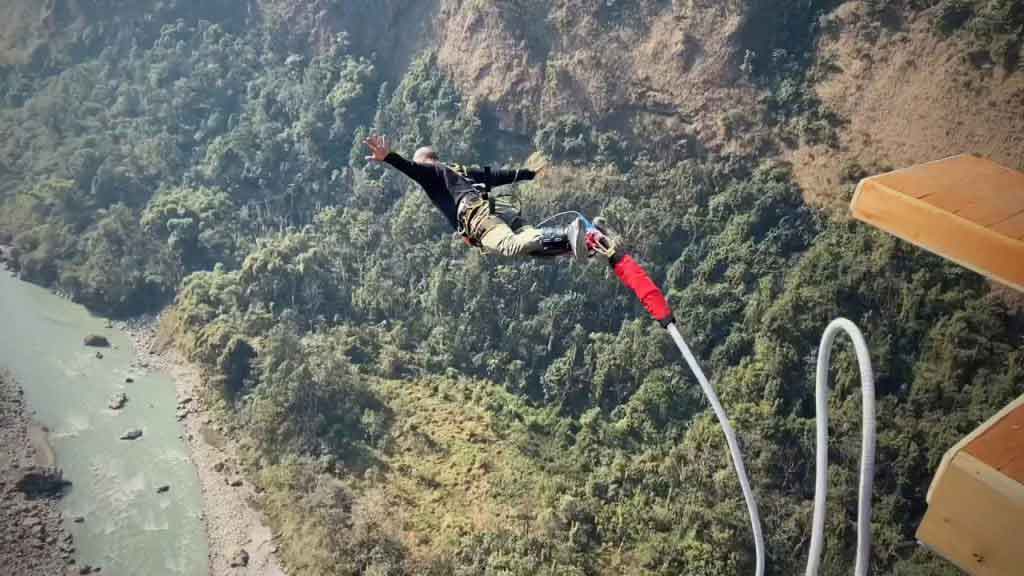
Bungee jumping in Nepal started in the early 1990s, and the first site was at the Bhote Koshi River. It remains a top spot for bungee jumping to this day, with stunning Himalayan views.

The Last Resort, situated on the Araniko Highway in the Nepal-Tibet border area, is still the most iconic place for bungee jumping in Nepal, with a dramatic 160-meter drop over the Bhote Koshi River. The narrow gorge makes the fall more intense and exciting than open platform jumps, ideal for both beginners and experienced jumpers.

bungy

It is located 100 kilometers northeast of Kathmandu, at a height of 3,600 feet above sea level. The Bhotekoshi bungee bridge was built exclusively for bungee jumping according to Swiss requirements, with a 4x safety factor and a loading factor of 41,500 kg.

You can also combine your bungee jumping here with canyoning, rafting, or an overnight resort stay, making it one of the most complete adventure packages in Nepal.

2. Kushma Bungee Jump — The Highest in Nepal

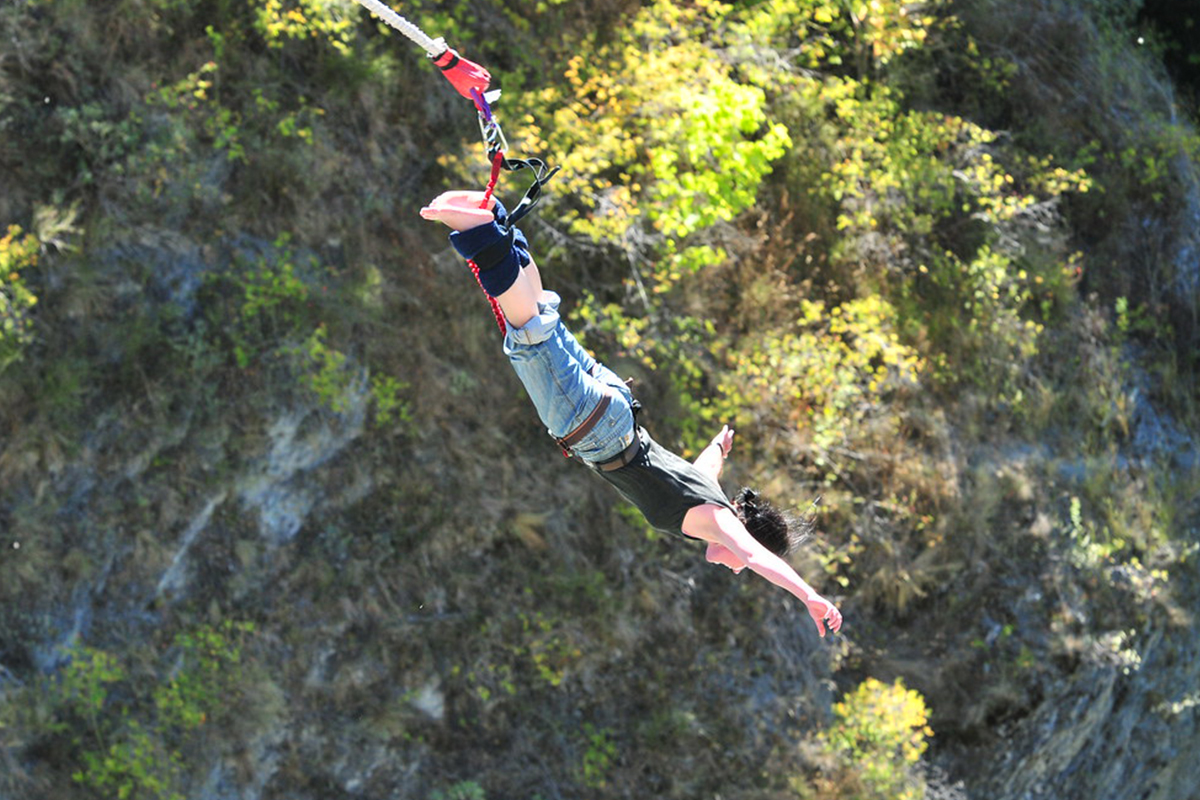
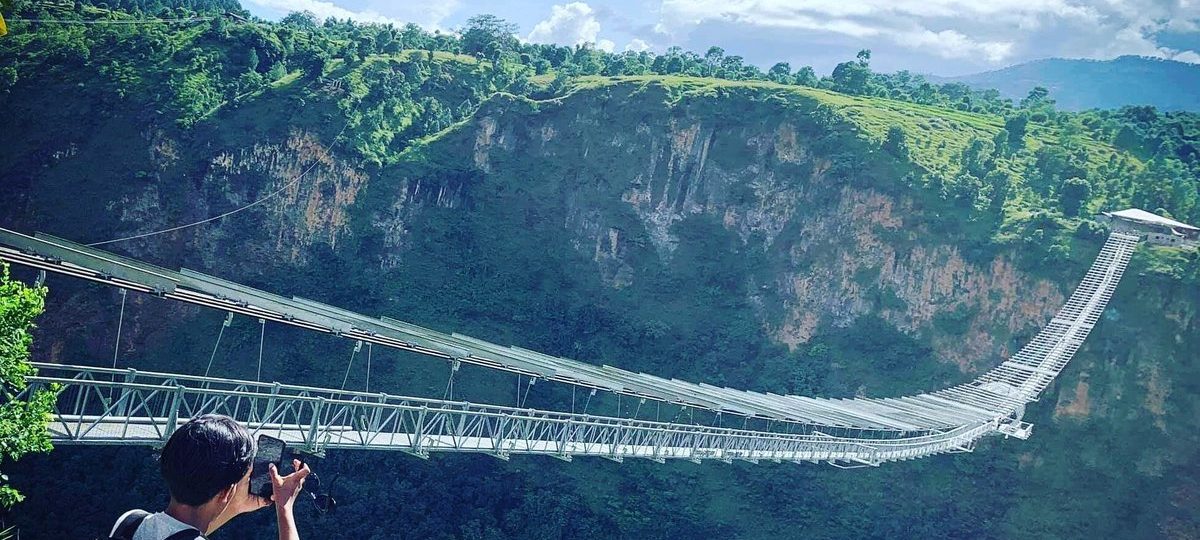
For those who want the absolute maximum, Kushma is the answer. Located near the town of Kushma in the Parbat district, the Kushma bungee offers an adrenaline-pumping experience with a jump from one of the highest suspension bridges in the world at 228 meters (748 feet) above the ground.

Located between Baglung and Parbat districts, Kushma is home to the highest bungee jump in Nepal and the second-highest in the world. The jump takes place from a 520-meter-long suspension bridge connecting Kushma in Parbat with Balewa in Baglung, with panoramic views of the Kali Gandaki valley and the Annapurna and Dhaulagiri mountain ranges stretching endlessly in the background.

how to reach kushma bungee jump

For those who fall in love with the rush, the second jump comes at a 50% discount, making it a favorite for repeat jumpers. The third jump is priced even lower, and the fourth is offered free.

3. Pokhara Bungee Jump — The Tower Jump by the Himalayas

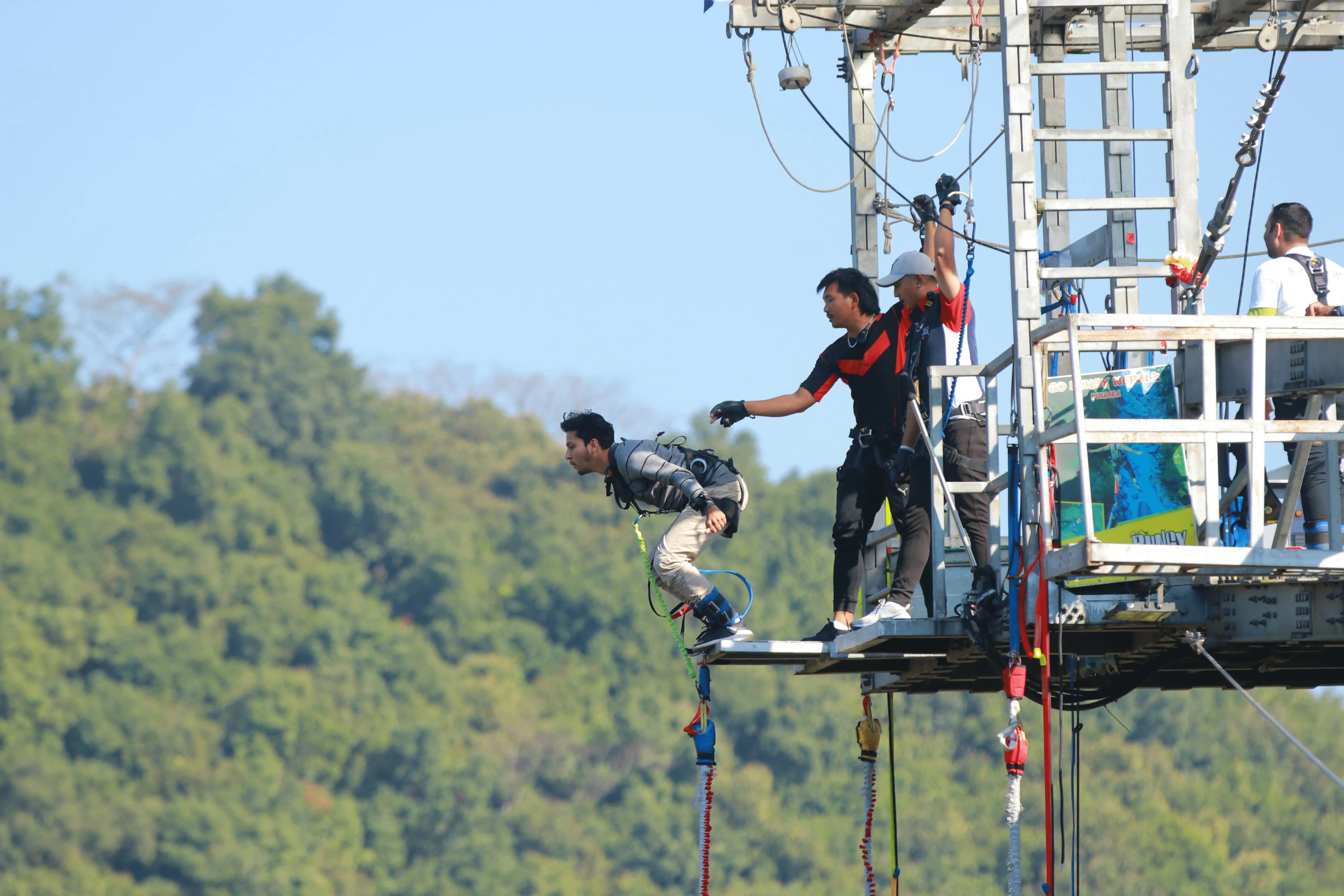
Bungee jumping in Pokhara is a perfect choice for anyone who loves daring adventures. Jumping from an altitude of 80 meters into the gorge offers a feeling of risky adventure. The Hemja station is home to Nepal’s first tower bungee jump, the only tower bungee in Nepal.

The Pokhara bungee experience is unique because it drops you straight toward the Seti River gorge with a jaw-dropping frame of Himalayan peaks in the background. All year round, except for the rainy season, Pokhara bungee jumping tours depart daily, with the best bungee cord made by HighGround and the safest technologies available.

153304943

For travelers already visiting Pokhara for trekking or paragliding, adding a bungee jump here is a natural and unforgettable extension of the adventure.

Bungee Jumping Tour Packages Nepal — What’s Included?

When you book bungee jumping in Nepal, most operators offer comprehensive packages that take the logistical stress completely off your plate. Here is what standard bungee jumping tour packages in Nepal typically include:

Standard Day Trip Package — Most popular for Bhotekoshi and Pokhara. Includes round-trip transportation from Kathmandu or Pokhara, safety briefing, one bungee jump, and basic snacks or a meal. This is the most affordable entry point for first-time jumpers.

Adventure Combo Package — For those who want more, operators bundle bungee jumping with canyon swinging, zip-lining, white-water rafting on the Bhotekoshi or Trishuli River, and in some cases an overnight stay at a resort. You can combine your bungee jumping experience with canyoning, rafting, or an overnight stay at The Last Resort.

Photography and Video Add-on — The cost for videography and photography typically ranges from around NPR 1,500 to NPR 2,000, covering both services. This is purely additional and optional.

Couple/Tandem Bungee Package — What people call “couple bungee” in Nepal is officially a tandem swing, where two participants are securely seated side by side and released from the same platform. It has become a go-to for honeymooners, anniversary duos, or birthday thrill-seekers. The Cliff Nepal in Kushma is the only place in Nepal offering tandem swings for couples.

When you book bungee jumping in Nepal online, always confirm what is included in the base price before payment. Transportation, meals, photos, and videos are often sold separately.

Bungee Jumping Cost in Nepal — Full Price Guide

Understanding the bungee jumping cost in Nepal upfront helps you plan your adventure without surprises. Prices vary based on location, nationality, and what is included in the package.

Bhotekoshi (The Last Resort): At The Last Resort, the price of bungee jumping for Nepali citizens is Rs. 6,300; NPR 9,000 for Indian, Chinese, and SAARC visitors; and USD 92 for other foreign nationals. The resort also offers occasional discount packages combining bungee, canyon swing, and rafting.

Kushma Bungee: The cost of the Kushma Bungee Jump for Nepali is Rs. 7,500 per person, with an additional Rs. 1,500 for a video of your jump. The cost for foreigners is approximately Rs. 8,500 per person. Kushma’s bungee with video and photography runs approximately NPR 10,000.

Pokhara (Hemja Tower Bungee): The current bungee price in Pokhara is 7,500 Nepalese Rupees. The couple’s bungee and tandem bungee price is 13,000 rupees, and the price is the same for all nationalities.

As a general international reference, Bhotekoshi bungee jumping is priced around USD 130 per person, Pokhara bungee around USD 75 per person, and Kushma bungee around USD 80 per person. Transportation costs are extra and are provided separately by local travel agencies.

Bungee Jumping Tickets Nepal Price — How to Book Online

Securing your bungee jumping tickets Booking Nepal in advance is strongly recommended, especially during peak tourist seasons when spots fill up fast. Here is how to book:

Official Operator Websites — Both The Last Resort (Bhotekoshi) and The Cliff Nepal (Kushma) have official websites where you can browse packages, check availability, and confirm your jump date. Online booking usually requires a deposit to hold your spot.

Registered Nepal Travel Agencies — Many government-registered adventure travel companies in Kathmandu and Pokhara offer bundled bungee jumping tour packages in Nepal at competitive rates. These agencies, including Nepal trekking companies, handle transportation, permits, and coordination, making them ideal for international visitors who want a hassle-free experience.

Book bungee jumping in Nepal online via aggregators—travel platforms and adventure booking portals now list Nepal bungee packages with user reviews and verified pricing. Always check that the operator is Nepal Tourism Board registered before making payment.

Walk-in Booking — For Pokhara bungee at Hemja, walk-in bookings are possible on the day, but availability is not guaranteed on weekends and public holidays.

Your jump day typically begins with registration and equipment fitting. Subsequently, comprehensive safety briefings explain all procedures and equipment functions. Additionally, you will watch demonstrations and have opportunities to ask questions. The entire process usually takes 2-3 hours from arrival to completion.

Bungee Jumping Safety in Nepal — What You Need to Know

Safety is naturally the first question for anyone considering bungee jumping in Nepal for the first time. The good news is that Nepal’s established bungee sites maintain excellent safety records backed by international standards and experienced professionals.

The jump at Bhotekoshi is from a suspension bridge of Swiss design built exclusively for bungee jumping, with a 4x safety factor. At Kushma, the bridge engineering also follows Swiss design principles, ensuring structural integrity even under maximum load.

Weight and age requirements apply at all sites. Most sites require jumpers to be at least 13-16 years old with parental consent for minors. The weight requirements typically range from 40 to 100 kg, though some sites accommodate up to 110 kg. Health restrictions include pregnancy, heart conditions, high blood pressure, and recent surgeries. Always declare medical conditions during booking.

What to wear: Closed-toe shoes are mandatory. Wear comfortable, fitted clothing; avoid loose items like scarves, jewelry, or wide sleeves that can interfere with the harness. Leave valuables in the locker provided at the site.

Follow your instructor throughout the process and ask anything that comes to mind. They are trained individuals who know how to handle situations in case of an emergency. If you are too scared for your first jump but don’t want to miss out, ask the instructor to go along with you as a double jump.

No prior experience is required to bungee jump in Nepal. Operators provide full instructions and safety briefings before the jump, making it accessible to first-time jumpers.

Best Time for Bungee Jumping in Nepal

Timing your visit correctly can make all the difference between a clear, exhilarating jump and a weather-cancelled disappointment.

The best time to go for bungee jumping in Nepal is March–May and September–November, when the weather is dry and cool. Avoid the monsoon season regardless of what the tour company offers, as weather changes abruptly during June to August.

The post-monsoon period provides spectacular visibility and comfortable temperatures. Clear skies during these seasons provide better photography and video opportunities, maximizing your overall experience.

Spring (March–May) is ideal if you want lush green landscapes, blooming rhododendron forests, and manageable temperatures at both Bhotekoshi and Kushma. This season also coincides with peak trekking season, making it easy to combine bungee jumping with a trek in the same trip.

Autumn (September–November) is arguably the best season overall. Skies are crystal clear after the monsoon rains, the air is crisp, and the Himalayan views from the Kushma Bridge are at their most spectacular. This is peak adventure season in Nepal.

Tips for First-Time Bungee Jumpers in Nepal

These practical tips will help you get the most out of your bungee jumping experience in Nepal:

Book in advance: Especially for weekends and peak season dates, bungee jumping tickets fill up fast. When you book bungee jumping in Nepal online ahead of time, you also have more flexibility to choose your preferred date and package.

Eat light beforehand: Have a light meal at least two hours before your jump. A heavy stomach and an adrenaline spike do not mix well.

Arrive early: Getting to the site early means you complete registration, briefing, and harness fitting without rushing, and you get to watch other jumpers before it is your turn, which actually helps calm the nerves.

Bring cash: While online booking handles the base fee, on-site add-ons like video packages, extra jumps, or merchandise are often cash-only at many Nepal bungee sites.

Capture the memory: The photo and video packages are genuinely worth it. You will want proof of what you accomplished, and the footage of a 160-meter or 228-meter free fall is remarkable.

Combine activities: Nepal’s bungee sites are adventure hubs. Combining bungee jumping with canyon swinging, rafting, or zip-lining on the same day through a bundled bungee jumping tour package in Nepal maximizes your investment and your fun.

Frequently Asked Questions About Bungee Jumping in Nepal

Q1. What is the highest bungee jump in Nepal?

The Kushma bungee jump, at 228 meters, is the highest bungee jump in Nepal and the second-highest in the world.

Q2. What is the bungee jumping cost in Nepal for foreigners?

Costs vary by location. Bhotekoshi is approximately USD 92 per person, Kushma around USD 80, and Pokhara around USD 75. Transportation and photography are typically charged separately.

Q3. How do I book bungee jumping in Nepal online?

You can book directly through official operator websites, registered Nepal travel agencies, or adventure booking platforms. Always confirm the operator’s Nepal Tourism Board registration before paying.

Q4. Is bungee jumping in Nepal safe?

Yes. All operators follow strict international safety protocols. Safety gear is always looked after to keep everyone safe, and no prior experience is needed.

Q5. What is the best time for bungee jumping in Nepal?

Spring (March–May) and autumn (September–November) are the best seasons. Avoid the monsoon months of June through August.

Q6. What is the minimum age for bungee jumping in Nepal?

The age limit varies by operator. Most sites require participants to be at least 16–18 years old. Minors may be permitted with a guardian’s written consent at certain locations.

Q7. Can couples do bungee jumping together in Nepal?

Yes, The Cliff Nepal in Kushma offers tandem swings (couple bungee jumping), and it is the only place in Nepal where you can do a couple jump side by side.

Q8. How far is the Bhotekoshi bungee from Kathmandu?

The journey to The Last Resort is approximately 4 hours and about 100 km east of Kathmandu. The drive itself follows the scenic Arniko Highway along the Bhotekoshi River.

Q9. What should I wear for bungee jumping in Nepal?

Comfortable, fitted clothing and closed-toe shoes are essential. Avoid loose clothing, jewelry, and scarves. Keep your pockets empty and store valuables in the lockers provided on-site.

7 Amazing Kathmandu World Heritage Tour Sites to Explore

Introduction to Kathmandu World Heritage Tour

Few destinations on Earth offer the kind of cultural and spiritual density that a Kathmandu World Heritage Tour delivers. In a single valley, barely 25 kilometers wide, you will find seven UNESCO-listed monuments that span over fifteen centuries of human civilization: royal palaces built by ancient dynasties, sacred Buddhist stupas that predate written history, and living Hindu temples that have never stopped receiving pilgrims since the day they were consecrated.

When you step into the Kathmandu Valley, you aren’t just visiting a city; you are entering a living, breathing museum that has survived centuries of dynastic shifts, trade route expansions, and seismic upheavals. The Kathmandu World Heritage sites represent the pinnacle of Newari craftsmanship, a unique architectural style that seamlessly blends Hindu and Buddhist ideologies into a single cultural fabric.

Kathmandu World Heritage Tour

The Kathmandu Valley was inscribed as a serial property on the UNESCO World Heritage List in 1979. It consists of seven distinct monument zones that showcase the heights of the Malla and Licchavi periods. Whether you are a history enthusiast, a spiritual seeker, a photography lover, or simply a traveler who wants to experience something genuinely extraordinary, the Kathmandu World Heritage Tour is an experience unlike anything else in Asia.

This complete guide covers all seven UNESCO heritage sites, the best Kathmandu sightseeing tour packages, detailed itinerary options, city tour pricing, and practical tips to help you plan an unforgettable journey through Nepal’s greatest cultural treasures.

Why the Kathmandu World Heritage Tour Belongs on Every Traveler’s List

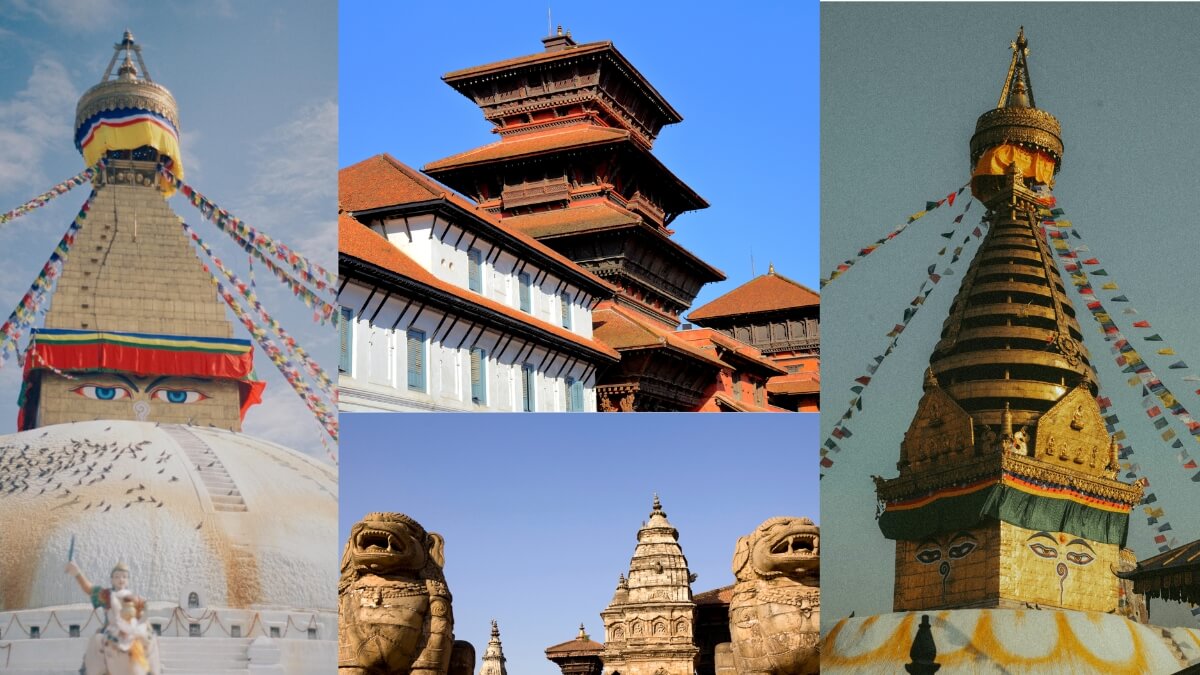
Nepal is home to ten UNESCO World Heritage Sites in total. Seven of those ten are located right here in the Kathmandu Valley covering the Durbar Squares of Kathmandu, Patan, and Bhaktapur; the Buddhist stupas of Swayambhunath and Boudhanath; and the Hindu temples of Pashupatinath and Changu Narayan.

What makes this concentration of heritage truly remarkable is that these are not frozen museum exhibits. Kathmandu offers a mixed cultural and traditional experience for travelers, as the entire valley is an open, living museum. The seven UNESCO heritage sites provide living and lively experiences. The medieval palaces, temples, and Buddhist stupas are popular, well-maintained sites preserved under conservation acts.

Surrounded by hills, the Kathmandu Valley is a diverse land with seven UNESCO sites that can be visited within a single day, covering majestic historical, cultural, and religious sites that carry a glimpse of the entirety of Nepal in one tour.

For international travelers, combining the Kathmandu World Heritage Tour with trekking, rafting, or other adventure activities makes Nepal one of the most rewarding multi-experience destinations in the world.

The 7 UNESCO World Heritage Sites in Kathmandu

1. Swayambhunath Stupa — The Sacred Monkey Temple

Perched on a hilltop 3 kilometers west of the city center, Swayambhunath is one of the oldest and most iconic sites on any Kathmandu World Heritage Tour. Commonly known as the Monkey Temple due to the hundreds of holy monkeys that inhabit its grounds, this ancient Buddhist stupa is believed to be over 2,500 years old.

Swayambhunath is symbolic of the harmony between Hinduism and Buddhism and offers panoramic views of the valley. Visitors explore its whitewashed stupa, golden spires, prayer flags, and numerous shrines. It is a favorite destination for heritage day tours, sunset views in Kathmandu, and Buddhist cultural exploration.

Kathmandu World Heritage Tour

The eyes of the Buddha painted on all four sides of the golden spire gaze out across the entire Kathmandu Valley, an image that has become the most recognizable symbol of Nepal. The climb up 365 stone steps, lined with prayer wheels and statues of deities, is itself a meditative experience.

Entry fee: Approximately NPR 200 for foreigners. The hilltop views alone justify the short climb. For more inquiries, contact Leaf Holiday.

2. Pashupatinath Temple — The Holiest Hindu Shrine in Nepal

No Kathmandu World Heritage Tour is complete without visiting Pashupatinath, Nepal’s most sacred Hindu temple and one of the most important Shiva shrines in all of Asia.

Pashupatinath Temple is the holiest Hindu temple worshipping Lord Shiva. Millions of devout Shaivism pilgrims visit this site, and thousands of tourists travel here for its affluent heritage and religious history. It beckons with a stronger allure through its traditional structures brimming with the tranquility of an oasis amidst the city.

The main structure is built in pagoda style with two levels of copper roofs with gold covering and four doors covered with silver sheets, topped with a gold pinnacle (Gajur). Situated on the banks of the sacred Bagmati River, the temple complex also houses cremation ghats, ashrams, and dozens of smaller shrines that together create an atmosphere of profound spiritual intensity.

Kathmandu World Heritage Tour

Non-Hindu visitors are not permitted inside the main temple but can observe the complex in full from the eastern bank of the Bagmati River, where the view of the entire complex, especially during the evening Aarti, is breathtaking.

3. Boudhanath Stupa — The Heart of Tibetan Buddhism in Nepal

Boudhanath is the largest stupa in Nepal and one of the largest in the world, and it is a centerpiece of every serious Kathmandu sightseeing tour package. Located about 8 kilometers from the city center, this massive white dome surrounded by a ring of monasteries and prayer wheels is the spiritual hub of Tibetan Buddhism outside of Tibet.

Boudhanath is the spiritual center of Tibetan Buddhism, and the entrance fees are used for maintenance of the large stupa and monastery complex surrounding it. Visitors can enjoy a peaceful environment to meditate or observe the ritual of walking around the stupa in prayer.

Kathmandu World Heritage Tour

The circumambulation (kora) around the stupa at dawn and dusk when hundreds of monks, nuns, and pilgrims walk in a clockwise direction chanting mantras and spinning prayer wheels is one of the most moving experiences available anywhere in the Kathmandu Valley.

The ring of colorful Tibetan restaurants, thangka galleries, and craft shops around the stupa makes Boudhanath a wonderful place to spend a few hours absorbing the living culture of the valley.

4. Kathmandu Durbar Square — The Royal Heart of the Capital

Kathmandu Durbar Square is the heart of the city’s royal history and spiritual traditions and is often the first stop for many travelers on a Kathmandu World Heritage Tour.

Also known as Hanuman Dhoka or Basantapur Durbar Square, this complex at the center of the old city was the seat of the ancient Malla and later Shah kings of Nepal. Kathmandu Durbar Square features over 50 ancient structures, including temples and the Tribhuvan Museum, which houses royal artifacts and offers a glimpse into Nepal’s rich history.

Kathmandu World Heritage Tour

Among the highlights within the square is the Kumari Ghar, the palace of the Living Goddess Kumari, a prepubescent girl venerated as the earthly incarnation of the goddess Taleju. On auspicious occasions, the Kumari appears at the ornately carved wooden window of her palace, offering blessings to waiting devotees below.

The square suffered significant damage in the 2015 earthquake, and ongoing restoration efforts have become a story of remarkable cultural resilience. Visiting today means witnessing both the grandeur of medieval Newari architecture and the living process of its preservation.

5. Patan Durbar Square — A Masterpiece of Newari Architecture

Just across the Bagmati River from Kathmandu lies Patan, the ancient city of artisans, and its Durbar Square is widely considered the finest example of Newari architectural craftsmanship in the entire valley.

Patan Durbar Square is a UNESCO World Heritage site known for its intricate Newari architecture, featuring the ancient royal palace, temples, museum, artisan shops, and local markets.

Kathmandu World Heritage Tour

Patan Durbar Square was declared a World Heritage Site in 1979 and is a popular site in the middle of the city, once home to the Patan kings. The square is anchored by the 17th-century royal palace on the eastern side and ringed by an extraordinary collection of temples, including the beautiful Krishna Mandir built entirely of stone in the shikhara style and the Bhimsen Temple, dedicated to the god of traders and artisans.

The Patan Museum, housed within the old palace complex, is considered one of the finest museums in South Asia and is essential viewing for anyone wishing to understand the depth of the Kathmandu Valley’s artistic heritage.

6. Bhaktapur Durbar Square — The City Frozen in Medieval Time

Of all the sites on the Kathmandu World Heritage Tour itinerary, Bhaktapur offers the most intact and atmospheric medieval experience. Located 13 kilometers east of Kathmandu, this ancient city has preserved its traditional lifestyle, architecture, and crafts to a degree that genuinely feels like stepping back in time.

Bhaktapur Durbar Square is the living representation of how the entire valley would have looked during medieval periods. The city has glorious architecture, sky-high pagoda-style temples, fine clay pottery, and massive royal courtyards dating back to the 12th century.

Kathmandu World Heritage Tour

Bhaktapur is home to the 55-Window Palace, Vatsala Temple, and the famous Nyatapola Temple, one of the tallest pagodas in Nepal. It is well-known for its Newar culture, pottery squares, and traditional festivals, making it a prime destination for photography tours, heritage walking tours, and exploring Nepali culture.

Bhaktapur’s famous Juju Dhau, the “King’s Curd,” is a must-try on any visit. The creamy, slightly tangy yogurt served in traditional clay pots is as iconic to Bhaktapur as the architecture itself.

7. Changu Narayan Temple — Nepal’s Oldest Hindu Temple

The final and often most overlooked gem of the Kathmandu World Heritage Tour is Changu Narayan, and that relative obscurity is precisely what makes it so special for those who make the journey.

Dating back to the 4th century, Changu Narayan is widely considered to be the oldest Hindu temple in the Kathmandu Valley and one of the oldest in Nepal. Built on top of a high hill about seven miles directly east of Kathmandu, the temple is dedicated to Vishnu, although shrines to Lord Shiva, Ashta Matrika, and Krishna are also found within the wider temple complex.

Kathmandu World Heritage Tour

Changu Narayan Temple features stone inscriptions, intricate wooden carvings, and historic statues. Located near Bhaktapur, it is ideal for travelers interested in history, art, and religious traditions.

The stone inscription found here, dating to the 5th century AD, is the oldest in Nepal. The temple itself is a treasure trove of ancient sculpture, including masterpiece carvings of Vishnu in his various incarnations, and the hilltop setting offers serene views across the valley.

Kathmandu World Heritage Tour Itinerary — One Day vs Two Days

One-Day Kathmandu Sightseeing Tour Package (4 Sites)

For travelers with limited time, a focused Kathmandu sightseeing tour package covering the four most prominent sites is the ideal choice.

The one-day Kathmandu city tour package covers the four UNESCO heritage sites of Kathmandu Durbar Square, Swayambhunath, Pashupatinath, and Boudhanath Stupa. It is ideal for all age groups and includes sightseeing tours of tourist attractions while traveling in a private car.

A typical one-day itinerary runs as follows:

7:30–8:00 AM Hotel pickup. Begin with Swayambhunath at sunrise for the best light and fewest crowds. 9:30–11:00 AM Kathmandu Durbar Square and the old bazaars of Indra Chowk and Ason. 12:00–1:30 PM  Pashupatinath Temple. Time the visit for the late morning when ritual activity is at its peak. 2:30–4:30 PM Boudhanath Stupa. Ideal for late afternoon circumambulation. 5:30 PM Drop-off at hotel.

Two-Day Kathmandu World Heritage Tour Itinerary (All 7 Sites)

For a complete Kathmandu World Heritage Tour itinerary covering all seven UNESCO sites, two days is the recommended duration.

The Seven World Heritage Kathmandu Tour is a two-day package that covers visiting all seven sites, including transportation, a knowledgeable guide, and entrance fees to all sites for a hassle-free experience. If you are short on time, you can join the one-day Kathmandu city tour package that covers four UNESCO heritage sites.

Day 1 covers the four Kathmandu city sites: Swayambhunath, Pashupatinath, Boudhanath, and Kathmandu Durbar Square.

Day 2 takes you to the valley’s outer sites, Patan Durbar Square in the morning, followed by a drive to Bhaktapur Durbar Square, and finally up to the hilltop at Changu Narayan in the late afternoon.

The full-day Seven Heritage tour typically starts with hotel pick-up at 8:30 AM and concludes with drop-off around 5:45 PM, making it a roughly 9-hour daily excursion that allows ample time to explore each site, with guided visits and leisure time for photography, meals, and cultural immersion.

Kathmandu City Tour Price — Complete Cost Breakdown

Understanding the Kathmandu city tour price helps you plan your budget accurately before you arrive. Here is a clear breakdown of what to expect in 2026:

Tour Package Costs: The cost for a comprehensive Seven World Heritage Kathmandu tour package ranges from USD 50 to USD 160 per person, depending on group size and specific requirements. This package includes transportation, a knowledgeable guide, and entrance fees to all sites.

Entrance Fees (per site, foreigners): The total entrance fees across all seven sites come to approximately NPR 6,000 (roughly USD 45) per person for access to all sites, unless these are included in an all-inclusive package. Individual site fees to note:

  • Bhaktapur Durbar Square: approximately NPR 1,500 (valid for 3 days, covering the palace, temples, and courtyards)
  • Changu Narayan: NPR 300 for foreign nationals
  • Pashupatinath Temple: NPR 1,000 for foreigners (non-Hindus observe from the outer complex)
  • Boudhanath Stupa: approximately NPR 400 for foreigners
  • Swayambhunath: approximately NPR 200 for foreigners

What is typically included in a Kathmandu sightseeing tour package: Private transportation throughout the day, an English-speaking licensed guide, all entrance fees (in all-inclusive packages), hotel pickup and drop-off, and bottled water. Meals and personal expenses are almost always excluded.

What is typically not included: lunch, dinner, tips for the guide and driver, personal shopping, and any additional activity fees.

UNESCO Seven World Heritage Tour in Kathmandu — Practical Tips

These tips will help you get the very best out of your UNESCO seven world heritage tour in Kathmandu:

Dress respectfully. All seven sites are active places of worship. Shoulders and knees should be covered. Many temples provide wraps at the entrance if needed, but coming prepared shows respect and saves time.

Start early. The best light for photography and the calmest atmosphere at all seven sites is in the early morning hours, particularly at Swayambhunath, Pashupatinath, and Boudhanath.

Hire a licensed guide. Hiring a local guide is strongly recommended. A knowledgeable guide transforms a walk through ancient monuments into a deeply meaningful cultural experience, connecting the stories, symbols, and history of each site in ways a map never can.

Book your tour package in advance. Peak tourist seasons, October through November and March through May, see high demand for quality guides and private vehicles. Booking your Kathmandu sightseeing tour package at least a week ahead guarantees availability and often better pricing.

Carry cash in Nepalese rupees. While some operators accept cards, most entrance fee counters and market vendors within heritage zones are cash-only.

Respect photography rules. Make sure to ask permission or look for any prohibited signs before taking pictures. Photography inside the inner sanctums of many temples, particularly at Pashupatinath, is either restricted or strictly prohibited.

Best time to visit: The best time to visit the Kathmandu heritage sites is during Nepal’s dry season, from October to April. During this period, the weather is pleasant, with clear skies and mild temperatures, perfect for exploring outdoor sites. Temperatures typically range from 15°C to 25°C during the day, making it comfortable for walking and sightseeing.

How to Book a Kathmandu World Heritage Tour

Booking your Kathmandu World Heritage Tour with Leaf Holiday is straightforward, with multiple reliable options available:

Nepal Tourism Board-registered agencies are the most trustworthy route. These agencies offer vetted guides, comfortable private transportation, and clearly structured Kathmandu sightseeing tour packages with transparent pricing. Look for the NTB registration number on the operator’s website.

Online booking platforms Several reputable adventure and cultural travel platforms now list Kathmandu city tour packages with verified reviews, transparent inclusions, and instant confirmation.

Always read what is and is not included before confirming, and for a trusted and well-structured experience, consider booking directly through The Nepal Trekking.

Hotel concierge services Most tourist-district hotels in Thamel and Lazimpat can arrange a private Kathmandu World Heritage Tour with one day’s notice. Prices tend to be slightly higher, but the convenience is unmatched.

Private customized tours For families, couples, or small groups with specific interests, whether architecture, religion, photography, or cuisine, many operators offer fully customizable Kathmandu heritage itineraries that let you spend more time at the sites that matter most to you.

FAQs About the Kathmandu World Heritage Tour

Q1. How many UNESCO World Heritage Sites are in Kathmandu?

The Kathmandu Valley listing covers seven individual monuments and landmarks: the Durbar Squares of Kathmandu, Patan, and Bhaktapur; the Buddhist stupas of Swayambhunath and Boudhanath; and the Hindu temples of Pashupatinath and Changu Narayan.

Q2. Can all seven sites be visited in one day?

Surrounded by hills, the Kathmandu Valley is a diverse land with seven UNESCO sites that can technically be visited within a single day. However, for a meaningful and unhurried experience, a two-day itinerary is strongly recommended.

Q3. What is the Kathmandu city tour price for foreigners?

A comprehensive package covering all seven sites typically costs between USD 50 and USD 160 per person, depending on group size and inclusions. Entrance fees across all sites add up to approximately NPR 6,000 (USD 45) per person.

Q4. Is a guide necessary for the Kathmandu World Heritage Tour?

Not legally required, but strongly recommended. A licensed guide brings the history, mythology, and architecture of each site to life in ways that independent exploration simply cannot match.

Q5. What should I wear when visiting the heritage sites?

Modest clothing covering shoulders and knees is appropriate at all seven sites. Remove shoes before entering temple interiors. Carry a light scarf or shawl to wrap as needed.

Q6. Are the sites accessible for elderly visitors or those with mobility limitations?

Most sites involve some walking on uneven surfaces and stairs. Swayambhunath requires climbing 365 steps, though an alternate vehicle road is available. Boudhanath, Patan, and Boudhanath Stupa’s main areas are relatively accessible. Changu Narayan involves an uphill walk.

Q7. What is the best season for the Kathmandu World Heritage Tour?

October through November (autumn) and March through April (spring) are the best seasons—clear skies, mild temperatures, and excellent visibility for photographs.

Q8. Is it possible to book a Kathmandu sightseeing tour package online?

Yes. Multiple registered Nepal travel agencies and international booking platforms offer online reservations for both half-day and full-day Kathmandu World Heritage Tour packages, with instant confirmation and flexible cancellation policies.

Hiking In Bandipur

Introduction to Bandipur Nepal Tourism

If there is one destination in Nepal that consistently surprises travelers with its quiet magic, it is Bandipur. Tucked away on a ridge between Kathmandu and Pokhara, this beautifully preserved hilltop town offers everything that Nepal’s busier tourist hubs do not: an unhurried pace, traffic-free streets, and authentic Newari culture with jaw-dropping Himalayan views right from the main street. This Bandipur travel guide is your complete resource for planning a perfect visit to one of Nepal’s most charming hidden gems.

Nepal’s only preserved traffic-free Newari town with red brick buildings and wooden balconies, Bandipur offers stunning Annapurna mountain views and authentic cultural experiences just three to four hours from Kathmandu or Pokhara.

Known as the Queen of Hills, Bandipur is a beautiful hill station located at an elevation of 1,030 meters above sea level. It lies 143 kilometers west of Kathmandu and 80 kilometers east of Pokhara, sitting 8 kilometers up the hill from Dumre Bazaar on the Prithivi Highway. Originally a Magar village, the settlement of Newars in the past transformed it into a Newari town, and today it is home to multiple ethnicities, including Magar, Newar, Gurung, Brahmin, and Chhhetri communities.

bandipur travel guide

Bandipur Nepal tourism has grown steadily over recent years, and for good reason. Bandipur had been attracting approximately 100,000 tourists annually, and the Bandipur rural municipality declared 2026 as the Adventure Tourism Year, reflecting the town’s growing reputation as a premier destination for cultural and outdoor experiences in Nepal.

Whether you are booking a Bandipur tour package as a standalone trip or adding this hilltop gem as a scenic stopover between Kathmandu and Pokhara, this Bandipur travel guide gives you everything you need for an unforgettable visit.

Is Bandipur Worth Visiting?

This is the first question most travelers ask when researching a Bandipur trip, and the answer is an unequivocal yes.

Bandipur is one of Nepal’s best-kept secrets and absolutely worth visiting. This traffic-free hilltop town offers stunning Annapurna mountain views, preserved Newari architecture, and authentic cultural experiences. Plan to stay two to three days to fully explore the town and surrounding viewpoints.

What sets Bandipur, Nepal, tourism apart in an increasingly homogenized travel landscape is its genuine authenticity. Bandipur is quieter and more curated than Pokhara, cheaper than Kathmandu’s trendiest corners, and social in a low-key way with a couple of hostels, terrace cafes, early nights, and easy conversations, but not a party scene.

The old center is fully walkable. You will wander past Newari houses, tiny temples, and viewpoints where the Annapurnas appear on clear mornings. It is not just a stopover; it is a chance to recharge and engage with local culture, making it a genuinely worthwhile part of your journey through Nepal.

bandipur travel guide

For travelers exhausted by the noise of Kathmandu or the tourist-heavy streets of Thamel, a Bandipur trip delivers something rare: the feeling of discovering Nepal as it actually is. There are no entrance fees to visit Bandipur or its main attractions. The municipality’s recurring proposal to charge tourists has been consistently rejected by local businesses and residents. Only Siddha Gupha caves require a 150 NPR entrance fee.

Every serious Bandipur travel guide will tell you the same thing this town punches far above its weight, and most visitors wish they had stayed longer.

Things to Do in Bandipur

Bandipur rewards slow exploration. The entire old bazaar area is compact enough to walk in in twenty minutes, yet rich enough to occupy you for days. Here are the top things to do in Bandipur that no visitor should miss.

Explore the Old Bazaar and Newari architecture.

The old bazaar street is Bandipur’s beating heart and the perfect starting point for your Bandipur trip. Lined with centuries-old red brick buildings, ornately carved wooden windows, and traditional Newari facades, this traffic-free street feels unlike anywhere else in Nepal. The main bazaar area is completely walkable, with the town’s compact size making it perfect for exploration on foot. The central area spans just about 200 meters along the main street, lined with traditional Newari buildings.

bandipur travel guide

Wandering through the bazaar is one of the most rewarding things to do in Bandipur and should never be rushed; every doorway and carved window tells a story.

Visit Khadga Devi Mandir

Khadga Devi Mandir is Bandipur’s most important temple and the spiritual center of the town. The location is historically significant as the home of an ancient sword relic that is displayed once a year, drawing devotees from across the region. Visiting this temple is one of the essential things to do in Bandipur for anyone interested in the town’s living religious traditions.

bandipur travel guide

Bindebasini Temple

A short walk from the bazaar brings you to Bindebasini Temple, one of the most visited religious sites in the area. Bindebasini Temple is one of the notable religious landmarks in Bandipur, well worth a visit alongside the town’s other temples and cultural attractions. The temple is particularly lively during festivals and morning prayer hours.

bandipur travel guide

Tundikhel — The Open Meadow Viewpoint

Tundikhel is a large open meadow at the edge of Bandipur, Nepal, that offers one of the most spectacular unobstructed views of the Annapurna and Himalayan ranges available anywhere in the valley. Tundikhel is one of the best places to begin your exploration of Bandipur’s natural and cultural beauty. Sunrise and sunset here, when the peaks turn golden in the early light, are genuinely unforgettable moments and a highlight of any Bandipur travel guide itinerary.

bandipur travel guide

Siddha Gupha — Nepal’s Largest Cave

No Bandipur travel guide would be complete without highlighting Siddha Gupha, one of the most extraordinary natural attractions in all of Bandipur, Nepal, tourism. Siddha Cave, located near Bandipur, is one of the largest and most impressive caves in Nepal. Stretching over 437 meters in length and reaching a height of approximately 50 meters at its highest point, this massive cave offers a fascinating underground adventure.

bandipur travel guide

Siddha Cave is a limestone cave and one of the holiest places in Nepal. It was used by siddhas and ascetics for meditation and spiritual practices, and locals believe it has healing properties. Hiring a local guide at the entrance is strongly recommended to navigate the dramatic chambers filled with stalactites, stalagmites, and bats. Explore some more holy places around Kathmandu.

Padma Library and Cultural Sites

The historic Padma Library, one of the oldest libraries in Nepal, is another unique attraction and a must-see on any Bandipur trip. Its collection of manuscripts and preserved texts speaks to the town’s long tradition as a center of learning and culture, a reminder that Bandipur was once a prosperous trading hub on the old Tibet-India route. Visiting the library is one of the most overlooked yet rewarding things to do in Bandipur for culturally curious travelers.

bandipur travel guide

Silk Farm Visit

The Bandipur silk farm offers guided tours that explain each stage of silk production in detail, providing insight into traditional techniques and the significance of silk in local culture. Visitors can purchase silk products directly from the farm, including scarves, shawls, and handcrafted items, allowing them to take home a piece of Bandipur’s rich heritage. This is one of the most distinctive and memorable things to do in Bandipur and is particularly popular with travelers interested in traditional crafts and sustainable tourism.

bandipur travel guide

Best Hiking in Bandipur

For trekkers and nature lovers, the best hiking in Bandipur is among the most rewarding low-altitude walking in all of Nepal. The trails around Bandipur, Nepal, are well-maintained, the scenery is consistently stunning, and the experiences are intimate and authentic. Whether you have two hours or a full day, there is a hike in Bandipur perfectly suited to your pace.

Thani Mai Temple Hike — The Best Viewpoint in Bandipur

A short, steep 30 to 40-minute hike from the bazaar takes you to Thani Mai Temple, perched atop Gurungche Hill. This is arguably the best viewpoint in Bandipur. Aim to be here for sunrise or sunset. On a clear day, you will be rewarded with breathtaking panoramic views of the Himalayan range, including Dhaulagiri, Annapurna, Manaslu, Ganesh Himal, and Langtang Lirung. The valley below often fills with mist, creating a surreal sea of clouds effect.

bandipur travel guide

The Thani Mai hike is the single most recommended activity in every Bandipur travel guide because it perfectly captures what makes Bandipur Nepal tourism so special: extraordinary natural beauty reached on foot, without crowds, in under an hour.

Gurungche Hill Circuit

The Gurungche Hill Circuit is a moderate two to three-hour loop around the hills surrounding Bandipur, passing through small settlements and offering panoramic views throughout. The hiking trail to the top is well-marked and offers a moderately challenging climb. This is one of the best hiking in Bandipur options for travelers who want more than the short Thani Mai walk but are not committing to a full-day trek.

bandipur travel guide

Siddha Cave Trek

One of the best things to do in Bandipur is the trek to Siddha Cave. The cave is located around 15 kilometers from Bandipur and takes around three to four hours to reach by foot. It is a beautiful trek through rural Nepal, passing small villages, terraced fields, and dense forest, with great views of the Himalayas along the way.

bandipur travel guide

Alternatively, the cave is accessible via a 1.5-hour downhill hike from Bandipur or a short drive down to the Prithvi Highway and then a short walk up. Local guides can be hired at the cave entrance to navigate its dark chambers. The Siddha Cave trek consistently ranks among the best hiking in Bandipur for adventurous visitors.

Ramkot Village Hike

The Ramkot Village Hike is a four- to five-hour round trip that takes you through terraced fields and forests to reach the traditional Magar village of Ramkot. The trail offers stunning views of the Annapurna and Langtang ranges along the way.

bandipur travel guide

Once in Ramkot, the village feels very authentic and quiet, with traditional houses and panoramic views. On clear days you may even catch distant views of the Himalayas. It is not a difficult hike and can easily be done in a few hours round trip from Bandipur. This is one of the most culturally immersive examples of the best hiking in Bandipur available to visitors.

Raniban Forest Walk

The Raniban Forest Walk is a gentle hike through the “Queen’s Forest” east of Bandipur Bazaar. This peaceful sal forest is perfect for birdwatching and enjoying the serene natural environment. It is ideal for those on a Bandipur trip who prefer a relaxed nature walk over a demanding climb.

bandipur travel guide

Kathmandu to Bandipur — How to Get There

Getting from Kathmandu to Bandipur is straightforward once you understand the route options. Bandipur is 143 kilometers from Kathmandu, and the only way to get there is by road. By car, the journey usually takes around four to five hours, depending on traffic and road conditions. Here is a complete breakdown of every way to travel from Kathmandu to Bandipur.

By Tourist Bus

The most budget-friendly option for Kathmandu to Bandipur travel is taking a tourist bus toward Pokhara or Chitwan and getting off at Dumre. Tourist buses traveling from Kathmandu to Pokhara or Chitwan pass through Dumre, the town at the base of the hill leading to Bandipur. You will need to ask the bus driver to drop you at Dumre, and then arrange for a jeep or taxi to take you uphill to Bandipur. Buses are reasonably comfortable and include rest stops along the way.

By Private Car or Jeep

Arranging a private transfer is the easiest and most convenient option for the Kathmandu to Bandipur journey. Many travelers book a private transfer, which can be arranged independently in Kathmandu or through your accommodation in Bandipur. A private car or jeep from Kathmandu costs between USD 120 and USD 180 depending on vehicle type and group size, with a flexible departure time and the option for custom stops along the route: Kathmandu, Mugling, Dumre, and Bandipur. This is the most recommended option in any Bandipur travel guide for families, couples, or small groups.

Via Pokhara (Fly and Drive)

There is no airport in Bandipur, so if you prefer to minimize road travel on the Kathmandu to Bandipur route, you can fly from Kathmandu to Pokhara, a 30-minute flight, and then take a road transfer to Bandipur. The road transfer from Pokhara to Bandipur takes approximately 2.5 to 3 hours, covering 80 kilometers, with flight plus taxi costing between USD 140 and USD 185.

Local buses also leave Kathmandu throughout the day and can take you to Dumre. Most Bandipur accommodations can arrange a private transfer from Dumre to Bandipur with advance booking.

Bandipur Itinerary — Day-by-Day Plan

A well-planned Bandipur itinerary ensures you make the most of every hour in this beautiful hilltop town. Here is a practical day-by-day Bandipur itinerary that covers the best of the town and surrounding areas without feeling rushed.

Day 1: Arrival and Old Town Exploration

Arrive in Bandipur in the afternoon after your journey from Kathmandu. Check into your guesthouse, then spend the golden hour walking the length of the old bazaar street, stopping at Khadga Devi Mandir, and browsing the local craft shops and the silk farm. Head to Tundikhel just before sunset for your first panoramic view of the Annapurna range. Dinner at one of the terrace restaurants. This first evening sets the tone for the entire Bandipur trip: slow, beautiful, and deeply satisfying.

Day 2: Thani Mai Sunrise and Siddha Cave

Start Day 2 of your Bandipur itinerary with a sunrise hike to Thani Mai Temple from the bazaar, a 30-minute climb that delivers the most spectacular morning view in all of Bandipur, Nepal, tourism. After breakfast, head to Siddha Gupha, either on the full hiking trail or by vehicle to the base followed by a walk into the cave. A Day 2 plan can conclude with a late afternoon departure, with the option of continuing to Pokhara or returning toward Kathmandu.

Day 3: Ramkot Village and Raniban Forest (Optional Extension)

For travelers who want to linger, and most do once they arrive, Day 3 of the Bandipur itinerary is ideal for the Ramkot Village hike in the morning, a half-day journey through terraced fields and traditional Magar villages, followed by a leisurely Raniban Forest walk in the afternoon. Evening departure for Pokhara or Kathmandu completes the perfect Bandipur trip.

Bandipur Tour Package — What Is Available

Several well-structured Bandipur travel packages are available through registered Nepal travel agencies, ranging from simple overnight stays to comprehensive multi-day cultural and hiking experiences. Choosing the right Bandipur tour package depends entirely on how much time you have and what kind of traveler you are.

Standard Bandipur Weekend Package (2 nights and 3 days): The most popular Bandipur tour package format. Includes private transportation from Kathmandu, accommodation in a traditional Newari guesthouse, a guided old town walk, the Thani Mai sunrise hike, and a Siddha Cave visit. Meals are typically included for dinners and breakfasts.

Bandipur Hiking Package: Designed specifically for trekking enthusiasts, this Bandipur travel package combines the Gurungche Hill Circuit, Ramkot Village hike, and Siddha Cave trek with an experienced local hiking guide. A Bandipur hiking package typically includes all ground transport; one highly experienced hiking guide and his expenses; three meals, including breakfast, lunch, and dinner with hot drinks; and accommodation in Bandipur.

Bandipur and Pokhara Combo Package: A popular Bandipur travel package that treats Bandipur as a scenic overnight stop en route to Pokhara, combining old town exploration and the Thani Mai hike with several days in Pokhara for lakeside relaxation and further adventure. This is one of the most value-packed ways to experience Bandipur, Nepal, tourism alongside western Nepal’s other highlights.

Homestay Circuit Package: The Bandipur-Keshavtar Homestay Circuit spans approximately 75 kilometers and encompasses 14 homestays spread across over 20 villages, inviting visitors to experience the diverse cultures of Gurung, Magar, Newar, and other communities for a deeply immersive experience of Nepali rural life. This is one of the most unique Bandipur tour packages available for travelers seeking authentic cultural connection.

Custom Private Packages: Most operators offer fully customized Bandipur travel packages for families, couples, or small groups wanting a specific pace or combination of activities.

Best Time to Visit Bandipur

Timing your Bandipur trip correctly makes a significant difference in what you experience, particularly in terms of mountain visibility and trail conditions. Every Bandipur travel guide recommends planning your visit around the seasons carefully.

The best time to visit Bandipur is October through April for clear mountain views, while May through September brings lush greenery during the monsoon season.

October to November (Autumn): The undisputed best season for a Bandipur trip. Skies are crystal clear after the monsoon, temperatures are pleasantly cool, and the views of the Annapurna and Dhaulagiri ranges from Tundikhel and Thani Mai are at their most spectacular. This is peak Bandipur, Nepal, tourism season and the most rewarding time for the best hiking in Bandipur.

December to February (Winter): Cool, clear mornings with excellent mountain visibility make this a great season for Bandipur travel. Nights can be cold, but daytime temperatures are comfortable for hiking. The town is quieter, accommodation is easier to book, and the Himalayan views on clear mornings are magnificent. A warm jacket and layers are essential.

March to April (Spring): Warm, pleasant weather with blooming wildflowers on the trails and strong mountain views. This is the second-best season for the best hiking in Bandipur, and the town begins to feel more lively as domestic tourism picks up.

May to September (Monsoon): The hills around Bandipur, Nepal, turn intensely green, and the landscape becomes lush and photogenic. However, rain and cloud cover frequently obscure mountain views, and hiking trails can be slippery. Visiting during this period is possible, but Himalayan panoramas are far less reliable.

Practical Tips for Your Bandipur Travel Guide

These tips will help ensure your Bandipur trip goes smoothly from arrival to departure.

Cash is essential in Bandipur.

While some larger establishments accept cards, it is best to carry enough Nepali rupees, as ATMs are not readily available in Bandipur itself. You can find ATMs in Dumre at the base of the hill.

Wear comfortable footwear.

You will be doing a lot of walking in Bandipur, often on uneven stone paths and uphill trails. Dress modestly, especially when visiting temples; cover shoulders and knees.

Book accommodation in advance for weekends.

Friday and Saturday nights see an influx of Nepali domestic tourists, so guesthouses fill up faster than expected. Weekday visits to Bandipur, Nepal, offer more tranquility and easier availability for both accommodation and Bandipur tour packages.

Bring a torch for Siddha Cave.

The cave’s interior is dark and vast. A good flashlight or headlamp is essential for exploring the chambers properly, even with a local guide.

Start the Thani Mai hike early.

The walk to Thani Mai viewpoint rewards you with spectacular 360-degree views of the surrounding mountains and valleys. Start early in the morning for the best visibility and to catch the sunrise illuminating the Himalayan peaks.

Connectivity:

Wi-Fi is available in most guesthouses and cafes in Bandipur, though speeds vary. A local SIM card gives better data connectivity for navigation and communication on the trails.

Book your Kathmandu to Bandipur transfer in advance. Especially during peak season, private vehicles and tourist bus seats fill quickly. Confirming your Kathmandu to Bandipur transportation before departure prevents unnecessary delays or last-minute price hikes. For more adventurous treks, visit Nepal Trekking.

FAQs About Bandipur Nepal

Q1. Is Bandipur worth visiting?

Absolutely. Bandipur is one of Nepal’s best-kept secrets—a traffic-free hilltop town with preserved Newari architecture, panoramic Annapurna views, and authentic cultural experiences just three to four hours from Kathmandu. Every Bandipur travel guide agrees it is one of the most rewarding destinations in Nepal.

Q2. How do I get from Kathmandu to Bandipur?

The most convenient option for Kathmandu to Bandipur travel is a private transfer, taking four to five hours. Tourist buses toward Pokhara also pass through Dumre, from where a jeep takes you up the hill to Bandipur.

Q3. What is the best time to visit Bandipur?

October through November is ideal for clear mountain views and the best hiking in Bandipur. March through April is the second-best season. Avoid the monsoon months of June through August if Himalayan panoramas are important to your Bandipur trip.

Q4. How many days do I need in Bandipur?

A minimum of two days is recommended, with three days being ideal for day hikes and thorough cultural exploration. Most Bandipur tour packages are structured around a two to three-night stay.

Q5. Is there an entrance fee for Bandipur?

There is no entrance fee to enter Bandipur or visit its main attractions. Only the Siddha Gupha cave charges a 150 NPR entrance fee.

Q6. What are the best hiking trails in Bandipur?

The top options for the best hiking in Bandipur are the Thani Mai Temple sunrise hike (30 to 40 minutes), the Gurungche Hill Circuit (2 to 3 hours), the Siddha Cave trek (3 to 4 hours), and the Ramkot Village hike (4 to 5 hours round trip).

Q7. Are Bandipur tour packages available from Kathmandu?

Yes. Multiple registered Nepal travel agencies offer structured Bandipur travel packages include private transport from Kathmandu to Bandipur, accommodation, meals, guided hikes, and cultural experiences ranging from weekend getaways to multi-day itineraries combined with Pokhara.

Q8. Is Bandipur suitable for families and older travelers?

Yes. The old bazaar is fully flat and walkable; the short Thani Mai hike is accessible to most fitness levels; and the town’s traffic-free layout makes Bandipur, Nepal, tourism safe and easy for all ages. The Bandipur Thani Mai Temple hike is suitable for beginner hikers, providing a relatively easy and enjoyable experience.

Bandipur does not demand your energy; it earns your heart quietly. Whether you come for the mountain views, the ancient Newari streets, the cave explorations, or simply the rare pleasure of discovering a Nepal that has not been overrun, this hilltop town will give you something to carry home long after your Bandipur trip ends. Use this Bandipur travel guide to plan your perfect visit, book your Bandipur tour package, and experience one of the most beautiful corners of Nepal for yourself.

Trekking In Langtang Valley

Trekking In Langtang Valley

Nothing fairly like the hiking experiment offered by the Himalayas – are you ready to prevail it?? More than just Everest Base Camp, this trek in the Kathmandu Valley gives people a diverse standpoint on the valleys and peaks of Nepal. Hike up through the ever-changing scenery of flower-filled arenas and lavish green forests before developing among monasteries and villages. Take in the remarkable view of the Langtang Glacier and stay in rustic villages and monasteries, as a reward. If you’re longing to get off the congested track from Base Camp, this exclusive hike is the flawless resolution.

It is a lovely trip in Nepal that begins with tours of Kathmandu’s UNESCO World Heritage Sites. We Leaf Holidays Treks and Expedition welcome you with all heart to be part of our trek and feel the Adventure with us.

First Trekking experience

First Trekking experience

First trekking experience in nepal

When I was Trekking Guide, In 2004 April, the first time I went to Langtang Trek. I was surprised by knowing Langtang Trekking which includes amazing Himalayan views in various areas. The word Langtang is a combined word of Lang which means Ox and another word Tang means stomach with lots of meals.

I was very happy, our trek was of total eight days but the fourth day, was a very memorable day for me because, on that very day, I got a great opportunity to visit Kanging Gumba of Langtang village, which was a very beautiful place. My client who was from the U.S.A. woke up early in the morning we observed very clear weather, and the environment was calling us to catch up with its natural beauty. We started Our destination from the Langtang village. The Kanging Gumba trekking route was also an amazing gumba I have seen ever. We were surrounded by snowy mountains from both sides which were willing to touch the sky and touch the white clouds.

On the way, the jungle consisting small trees like: – Sunpati (a small tree of rhododendron which is a national flower in Nepal) and many kinds of flora and fauna. There was very beautiful scenery. Beside this, a river named Langtang Khola which was flowing with clean water. It comes from mountainous areas by melting the snow of it. On the way, we saw many yaks (Himalayan Buffaloes) living at higher altitudes. We found Dahi (yogurt) and yak cheeses made from yak milk, it was very tasty and healthy too. Big hills were observed. We saw real Tamang culture, and metal made many local things. Finally, I like to suggest that in once everyone needs to go to Langtang Trek to observe Nepal’s naturality, lifestyle, and culture of that area.

Why Everest Base Camp Trek?

Why Everest Base Camp Trek?

Everest Base Camp, The Everest Base Camp trek is the grandest walk in the land of the Himalayas. Trekking through the Everest region offers outstanding mountain views, and opportunities to get a glimpse into the life of world-famous climbers. The trek further offers the opportunities to go sightseeing around Sagarmatha National Park, a world heritage site that is home to a variety of Himalayan floras and faunas, to get a closer look at the highest Buddhist monasteries in the world, and of course, the most gratifying of them all, the trip to Everest Base Camp itself.

It is an opportunity on an epic journey that Sir Edmund Hillary and Tenzing Norgay set off by climbing Mt. Everest. But nothing beats the thrill and sense of accomplishment that grips travelers on seeing the power and grace of the mighty Everest closely. Lastly, the most popular climbing system with views of a white mass of snow.

Trek To Mustang

Trek To Mustang

Mustang trekking is one of Nepal’s maximum enigmatic and tiniest recognized kingdoms. The scenery of Mustang is a sterile moonscape of battered sandstone supports and irregular rubble promenades, which together extant a colorful assortment made up chiefly of earthen reds, yellows, and brown. It is a moderately relaxed trekking along the legalized route to Lo Manthang, which lies in the very heart of Mustang. The trek to Mustang is through an almost treeless unfertile landscape. Strong winds normally scream through the area in the afternoon, mostly dropping at night. Existence in the rain shadow of the Himalayas, Mustang has much fewer rains than the rest of Nepal. Our trip is about 11-12 days.

“Leaf Holidays Treks and Expedition Presents you the tremendous opportunity to feel the unbelievable beauty and even to be a part of our Adventurous trip”.