
- Mt. Kailash Tour
- Kailash Mansarovar Overland Tour
- Kailash Mansarovar Yatra by Helicopter – Complete Spiritual Journey Guide
- Kailash Yatra via Lucknow
- Kailash Mansarovar Tour via Lhasa
- Kailash Lhasa EBC Tour From Beijing
- Kailash Heli Tour via Kerung: Complete Spiritual Journey Guide
- Kailash Tour via Lhasa In Kerung Out
- Lhasa EBC Kailash Tour
- Kailash Heli Tour
- Kailash Mansarovar Yatra
- Kailash Nandi Kora
- Kailash Tour via Humla Simikot – 20 Days
- Mount Kailash Tour : Best Package and Cost for 2025
- Trekking
- Tours
-
-
- Day Tours
- Rickshaw–a three-wheeler Tour
- Day tour to Chobhar & Dakshinkali
- Historical Tour
- Kathmandu Temple Tour
- Nagarkot Tour
- Bhaktapur City Tour
- Kathmandu City Tour – Complete Heritage & Cultural Experience in Nepal
- Chandragiri Hill: A Scenic Himalayan Escape Near Kathmandu
- Chitlang Hiking
- Shivapuri to Sundarijal Day Hiking
- Kulekhani Dam Day Tour — Complete Travel Guide
- Day Tours
-
- Package Tours
- Mustang Tour on Jeep
- 10 Days, Nepal Tour
- Muktinath Tour: Complete Guide to Nepal’s Sacred Himalayan Pilgrimage
- 3N,4D Kathmandu Pilgrimage Tour
- 7 Days,Nepal pilgrimage tour
- 5N,6D Nepal Pilgrimage Tour
- 7 Nights, 8 Days Nepal Tour
- Districts tour of Nepal
- Janakpur Tour Package: Price, Family Tour & Travel Guide from Kathmandu 2026
- Short Hike in Nepal
- Package Tours
-
-
- Outbound
-
- Activities
- Company
- Travel Info
- Blogs
- Contact


WhatsApp
+977-9851035239

Email Us
[email protected]
Annapurna Base Camp: 15 Amazing Trek Facts & Route (2026)



Trip Difficulty
Moderate
Activity
Tour, Sightseeing
Destination
Nepal
Accommodation
3-4-star hotel in kathmandu
Price starts
US$ 2200
We offer group discounts
-
1 -
1 person
US$ 3000
-
2 -
3 person
US$ 2200
-
3 over
9999
US$ 1500
Total Cost:
US$ 3000

Need Help?
Ask to Travel Expert
Trip Overview of Annapurna Base Camp: 15 Amazing Trek Facts & Route (2026)
If you’re dreaming of standing among the majestic Himalayan peaks, Annapurna Base should be at the top of your travel bucket list. Nestled in the heart of the Annapurna Conservation Area, this iconic trekking destination attracts thousands of trekkers every year with its breathtaking mountain scenery, rich Gurung culture, diverse landscapes, and unforgettable adventure.
Whether you’re an experienced trekker or planning your first Himalayan journey, the Base Camp Trek offers an incredible combination of natural beauty, authentic mountain villages, rhododendron forests, glacial rivers, and panoramic views of some of the world’s highest mountains.
Before planning your adventure, it’s important to understand the Annapurna Base Camp height, trekking route, weather conditions, itinerary, and the best time to visit. This complete guide covers everything you need to know, including the Annapurna Base Camp Trek Route, altitude, difficulty, weather, costs, heli tour options, packing tips, and expert travel advice for 2026
What is Annapurna Base Camp?
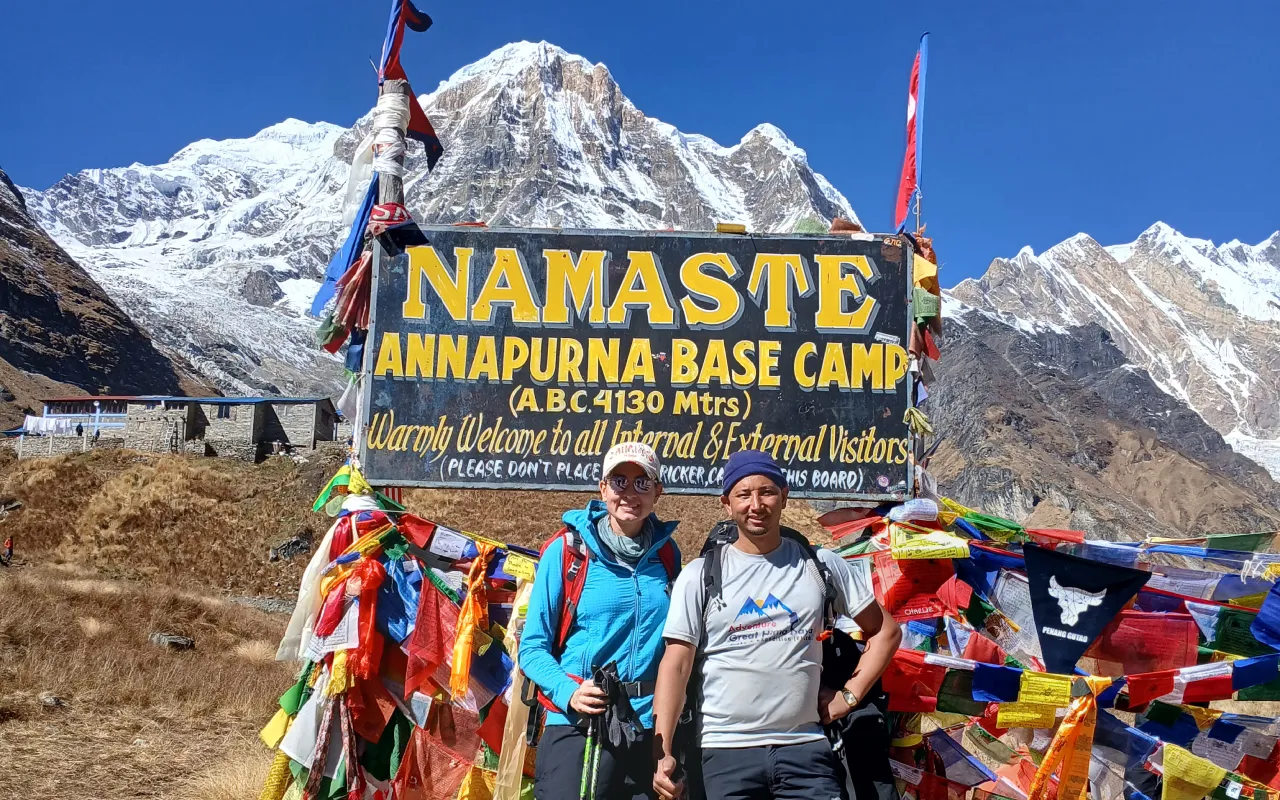
Annapurna Base Camp, commonly known as ABC, is one of Nepal’s most famous trekking destinations. Located beneath the towering Annapurna Massif, the base camp provides trekkers with spectacular 360-degree views of snow-capped peaks, glaciers, and alpine landscapes.
Unlike many high-altitude expeditions that require technical climbing skills, the Base Camp Trek is a non-technical trek suitable for anyone with good physical fitness and proper preparation.
The journey passes through traditional villages, terraced farmlands, bamboo forests, waterfalls, and alpine meadows before reaching the famous base camp surrounded by Himalayan giants.
Highlights of the trek include:
- Spectacular sunrise over the Annapurna range
- Traditional Gurung and Magar villages
- Rhododendron forests
- Natural hot springs at Jhinu Danda
- Diverse wildlife within the Annapurna Conservation Area
- Panoramic Himalayan mountain views
- A rewarding trek suitable for beginners and experienced hikers alike
For many adventure lovers, the Annapurna Base Camp Trek is one of the most rewarding trekking experiences in Nepal.
Annapurna Base Camp: Which Country?
Many first-time travelers ask, “Annapurna Base Camp, which country?”
The answer is simple: Base Camp is located in Nepal, a Himalayan country in South Asia renowned for its towering peaks, rich culture, and world-famous trekking routes.
Situated within the Annapurna Conservation Area, the base camp lies in the Kaski District of Gandaki Province. It forms part of the larger Annapurna mountain range, which includes several peaks exceeding 7,000 and 8,000 meters.
Nepal is home to eight of the world’s fourteen highest mountains, making it one of the world’s leading destinations for trekking and mountaineering.
Annapurna Base Camp Location
The Annapurna Base Camp location is approximately 40 kilometers north of Pokhara within the Annapurna Conservation Area.
Most trekkers begin their journey from Pokhara, Nepal’s adventure capital, before driving to trailheads such as Nayapul, Jhinu Danda, Siwai, or Ghandruk.
The trail passes through charming Himalayan settlements, including:
- Ghandruk
- Chhomrong
- Bamboo
- Dovan
- Himalaya
- Deurali
- Machhapuchhre Base Camp (MBC)
- Annapurna Base Camp
Each village offers comfortable teahouses, local hospitality, and stunning mountain scenery, making the journey just as memorable as the destination itself.
Annapurna Base Camp Height & Altitude
One of the most frequently searched questions is about the Annapurna Base Camp height.
The official Annapurna Base Camp altitude is
Annapurna Base Camp Height
4,130 meters (13,549 feet) above sea level
Although this altitude is considerably lower than Everest Base Camp, proper acclimatization is still important to reduce the risk of altitude sickness.
Altitude Overview
| Location | Altitude |
|---|---|
| Pokhara | 822 m |
| Ghandruk | 1,940 m |
| Chhomrong | 2,170 m |
| Bamboo | 2,310 m |
| Dovan | 2,600 m |
| Deurali | 3,230 m |
| Machhapuchhre Base Camp | 3,700 m |
| Annapurna Base Camp | 4,130 m |
Reaching the Annapurna Base Camp height rewards trekkers with breathtaking panoramic views of:
- Annapurna I (8,091 m)
- Annapurna South
- Machhapuchhre (Fishtail Mountain)
- Hiunchuli
- Gangapurna
- Tent Peak
The dramatic amphitheater of towering Himalayan peaks surrounding the base camp is one of the main reasons why the Annapurna Base Camp Trek remains among Nepal’s most popular trekking adventures.
Why Choose the Annapurna Base Camp Trek?
The Annapurna Base Camp Trek offers much more than simply reaching a destination. It is a complete Himalayan experience that combines adventure, culture, nature, and breathtaking scenery.
Unlike many high-altitude expeditions, this trek allows travelers to experience the Himalayas without requiring technical climbing skills or specialized mountaineering equipment.
Why trekkers love Annapurna Base Camp:
- Moderate trekking difficulty suitable for most hikers
- Incredible Himalayan mountain panoramas
- Diverse landscapes from subtropical forests to alpine terrain
- Authentic Gurung and Magar culture
- Comfortable teahouse accommodation
- Accessible from Pokhara
- Excellent photography opportunities
- Rich biodiversity within the Annapurna Conservation Area
- Opportunity to visit Machhapuchhre Base Camp
- Relaxing natural hot springs at Jhinu Danda
Whether you’re looking for breathtaking mountain views, cultural immersion, or an unforgettable trekking adventure, Annapurna Base Camp delivers an experience that stays with you long after you’ve returned home.
Annapurna Base Camp Photos & Views
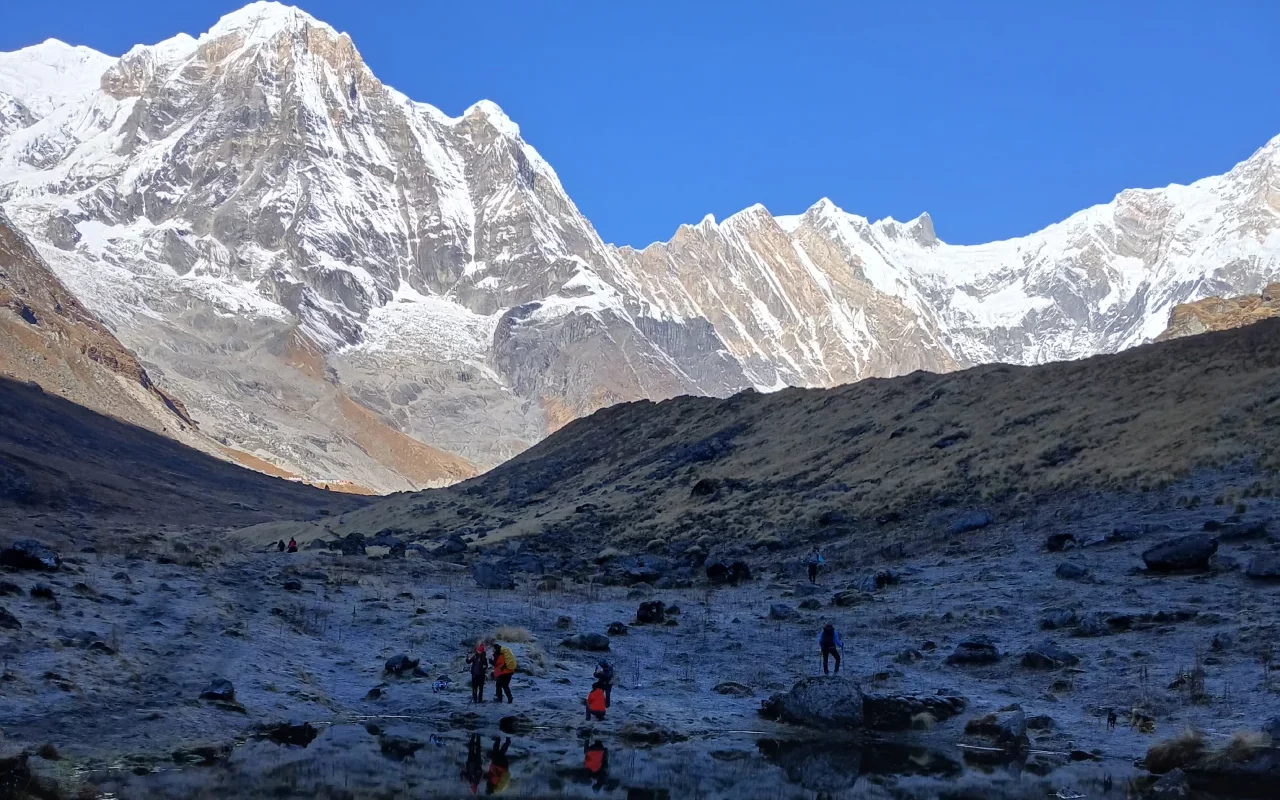
One of the highlights of visiting Annapurna Base Camp is the unforgettable scenery that surrounds you. The panoramic mountain amphitheater offers spectacular sunrise and sunset views, making it a paradise for photographers and nature lovers alike.
From the base camp, you’ll witness towering peaks rising dramatically above glaciers and snowfields, creating one of the most iconic Himalayan landscapes in Nepal.
Popular photography spots include:
- Annapurna Base Camp viewpoint
- Machhapuchhre Base Camp
- Chhomrong village
- Jhinu Danda
- Bamboo forest trail
- Annapurna Sanctuary
The incredible Annapurna Base Camp view is one of the biggest reasons why thousands of trekkers choose this route every year.
Annapurna Base Camp Trek Route
The Annapurna Base Camp Trek Route is one of Nepal’s most scenic trekking trails, taking you through picturesque mountain villages, lush rhododendron forests, cascading waterfalls, terraced farmlands, and alpine landscapes before reaching the heart of the Annapurna Sanctuary.
Most trekkers begin the journey from Pokhara, followed by a short drive to the trailhead at Nayapul, Siwai, or Jhinu Danda, depending on the itinerary. The trail gradually ascends through traditional Gurung villages, allowing trekkers to acclimatize while enjoying spectacular Himalayan scenery.
A typical Annapurna Base Camp trek route includes the following destinations:
- Pokhara
- Nayapul / Siwai
- Ghandruk
- Chhomrong
- Bamboo
- Dovan
- Himalaya
- Deurali
- Machhapuchhre Base Camp (MBC)
- Annapurna Base Camp
- Jhinu Danda
- Pokhara
This well-established route is supported by comfortable teahouses, local restaurants, and experienced trekking guides, making it one of Nepal’s most accessible high-altitude adventures.
Annapurna Base Camp Trek Map with Distance
Below is an approximate trekking distance for the classic Annapurna Camp Trek.
| Trek Section | Distance | Walking Time |
|---|---|---|
| Pokhara – Nayapul (Drive) | 42 km | 1.5 Hours |
| Nayapul – Ghandruk | 10 km | 5–6 Hours |
| Ghandruk – Chhomrong | 9 km | 5 Hours |
| Chhomrong – Bamboo | 8 km | 5 Hours |
| Bamboo – Deurali | 10 km | 6 Hours |
| Deurali – Machhapuchhre Base Camp | 4 km | 2 Hours |
| MBC – Annapurna Base Camp | 2 km | 2 Hours |
| ABC – Bamboo | 16 km | 7 Hours |
| Bamboo – Jhinu Danda | 9 km | 5 Hours |
| Jhinu Danda – Siwai | 5 km | 2 Hours |
| Siwai – Pokhara (Drive) | 55 km | 2.5 Hours |
The total trekking distance is approximately 70–80 kilometers, depending on your starting point and chosen itinerary.
Annapurna Base Camp Trek Difficulty
Many travelers wonder whether the Annapurna Base Camp Trek is suitable for beginners.
The answer is yes.
The trek is considered moderately challenging, making it achievable for anyone with a reasonable level of fitness and proper preparation.
Several factors influence the difficulty level:
Daily Walking Hours
Expect to walk between 5 and 7 hours each day across varying terrain.
Altitude
The highest point of the trek is Annapurna Camp at 4,130 meters, where thinner air may affect some trekkers.
Terrain
The trail includes:
- Stone staircases
- Suspension bridges
- Forest paths
- Rocky mountain trails
- Snow-covered sections during winter
Although the trek does not require technical climbing, regular walking, light cardio training, and leg-strength exercises before your trip can make the journey much more enjoyable.
Best Time to Visit Annapurna Base Camp
Choosing the right season greatly enhances your trekking experience.
Spring (March – May)
Spring is considered one of the best seasons for the Annapurna Camp Trek.
Highlights include:
- Rhododendron forests in full bloom
- Mild temperatures
- Crystal-clear mountain views
- Longer daylight hours
Autumn (September – November)
Autumn is the most popular trekking season.
Trekkers enjoy:
- Stable weather
- Excellent visibility
- Comfortable temperatures
- Dry trails
- Magnificent Himalayan panoramas
Winter (December – February)
Winter trekking is possible but requires warmer clothing and proper preparation.
Advantages include:
- Fewer trekkers
- Snow-covered landscapes
- Peaceful trails
However, temperatures at higher elevations can fall well below freezing.
Monsoon (June – August)
Although the trail remains open, monsoon season brings the following:
- Heavy rainfall
- Leeches
- Slippery trails
- Limited mountain views
Unless you enjoy off-season trekking, spring and autumn remain the recommended seasons.
Annapurna Base Camp Weather
The Annapurna Base Camp weather changes significantly with altitude.
Lower elevations experience pleasant temperatures throughout most of the year, while the base camp remains much colder, especially during mornings and nights.
Weather conditions can also change rapidly, making layered clothing essential.
Morning departures usually provide the clearest mountain views before afternoon clouds develop.
Annapurna Base Camp Temperature by Season
Understanding the Annapurna Base Camp temperature helps you pack appropriately.
| Season | Day Temperature | Night Temperature |
|---|---|---|
| Spring | 10°C to 20°C | -5°C to 5°C |
| Summer | 15°C to 25°C | 5°C to 10°C |
| Autumn | 10°C to 18°C | -5°C to 3°C |
| Winter | -5°C to 10°C | -15°C to -5°C |
Temperatures at Annapurna are always considerably colder than in Pokhara due to the high altitude.
Why the Annapurna Base Camp Trek is So Popular
The popularity of the Annapurna Base Camp Trek comes from its incredible diversity.
Within a few days, trekkers experience the following:
- Traditional Himalayan villages
- Dense bamboo forests
- Rhododendron woodlands
- Alpine landscapes
- Glacial valleys
- Snow-covered peaks
- Rich cultural experiences
- Natural hot springs
- Spectacular sunrise and sunset views
Unlike many high-altitude treks, the Annapurna Camp Trek combines accessibility, comfort, and breathtaking scenery, making it an excellent choice for both first-time visitors and experienced trekkers.
Annapurna Base Camp Trek from Pokhara
Almost every trek begins from Pokhara, Nepal’s adventure capital.
Trekkers usually spend a night in Pokhara before driving to the trailhead.
Starting your Base Camp Trek from Pokhara offers several advantages:
- Easy transportation
- Wide range of hotels
- Equipment rental shops
- Experienced trekking agencies
- Beautiful lakeside atmosphere
- Convenient domestic flight connections from Kathmandu
For most travelers, Pokhara serves as the perfect gateway to the Annapurna region.
Trip Reviews
Price starts
US$ 2200
Need Help?
Ask to Travel Expert