
- Mt. Kailash Tour
- Kailash Mansarovar Overland Tour
- Kailash Mansarovar Yatra by Helicopter – Complete Spiritual Journey Guide
- Kailash Yatra via Lucknow
- Kailash Mansarovar Tour via Lhasa
- Kailash Lhasa EBC Tour From Beijing
- Kailash Heli Tour via Kerung: Complete Spiritual Journey Guide
- Kailash Tour via Lhasa In Kerung Out
- Lhasa EBC Kailash Tour
- Kailash Heli Tour
- Kailash Mansarovar Yatra from Nepal 2027: Cost & Itinerary
- Kailash Nandi Kora
- Kailash Tour via Humla Simikot – 20 Days
- Mount Kailash Tour: 7 Amazing Experiences in 2027
- Trekking
-
-
- Everest Region
- Luxury Everest Base Camp Trek: 7 Unforgettable Highlights
- Everest Base Camp Trek 2026: Cost, Route, and Complete Guide
- Everest Three Passes Trek 2027: Cost, Route & Itinerary
- Everest Base Camp Short Trek
- Everest Panorama Trek: Amazing 10-Day Cost & Itinerary
- Everest Base Camp Island Peak Trek: Complete 19-Day Guide
- Gokyo Valley Trekking 2027: Easy Guide to Cost & Itinerary
- Mera Peak Climbing 2027: Complete Cost & Itinerary Guide
- Rolwaling Valley Trek: 23-Day Itinerary, Cost, Permits & Difficulty
- Dolpo Region Trek
- Everest Region
-
- Annapurna Region
- Annapurna Base Camp Trekking
- Annapurna Circuit Trek
- Annapurna Base Camp Trek: 7 Amazing Cost & Route Tips
- Mardi Himal Trek: 7 Amazing Highlights & Complete Guide
- Annapurna Alternative Combine Trek: 18 Amazing Days
- Mohare Dada Trek
- Ghorepani Poon Hill Trek: 7 Unforgettable Highlights
- Khopra Ridge Community Trek: 13-Day Ultimate Adventure
- Damodar Kunda Trek: 10-Day Ultimate Sacred Adventure
- Upper Mustang Trek: 10 Amazing Sights : Ultimate Guide
- Jomsom Muktinath Trek: Amazing 12-Day Ultimate Guide
- Ghale Gaun Trek: 7 Amazing Reasons : Ultimate Guide
- Dhampus Sarangkot Trek: 7 Incredible Experiences
- Dhaulagiri Region
- Annapurna Region
-
-
- Tours
-
-
- Day Tours
- Rickshaw–a three-wheeler Tour
- Pharping Dakshinkali Day Tour: 7 Amazing Highlights
- Historical Tour: 7 Amazing Places to Explore
- Kathmandu Temple Tour: 7 Amazing Spiritual Places
- Nagarkot Tour
- Bhaktapur City Tour: 7 Amazing Places to Explore
- Kathmandu City Tour – Complete Heritage & Cultural Experience in Nepal
- Chandragiri Hill: A Scenic Himalayan Escape Near Kathmandu
- Chitlang Hiking
- Shivapuri to Sundarijal Day Hiking
- Kulekhani Dam Day Tour — Complete Travel Guide
- Day Tours
-
- Package Tours
- Mustang Tour on Jeep
- Nepal Tour Package for Nepali: 12 Amazing Destinations to Explore (2026)
- Muktinath Tour: Complete Guide to Nepal’s Sacred Himalayan Pilgrimage
- 3N,4D Kathmandu Pilgrimage Tour
- Nepal Buddhist Pilgrimage Tour: 7 Sacred Sites Not to Miss
- 6D Nepal Pilgrimage Tour: 7 Amazing Sacred Places
- 7 Nights, 8 Days Nepal Tour
- Districts tour of Nepal
- Janakpur Tour Package: Price, Family Tour & Travel Guide from Kathmandu 2026
- Short Hike in Nepal: 7 Best Easy Treks for Beginners
- Package Tours
-
-
- Outbound
-
- Activities
- Climbing
- Bungee Jumping in Nepal
- Heli Skiing Adventure in the Himalayas
- Canoeing in Nepal
- Mountain Flight in Nepal
- Zip Flyer in Pokhara: The Ultimate Adventure Experience
- Paragliding in Pokhara: 7 Amazing Reasons to Experience Nepal’s Best Adventure
- Kathmandu Cycling Tour: 9 Amazing Adventures
- Rafting
- Rock Climbing
- Company
- Travel Info
- Travel Insurance
- Recommended Medical Kit
- Nepal Visa Information
- Flight delays and cancellation in Nepal
- Electricity in Nepal: Rates, Bill Check, Calculator and NEA Services
- Trekking Equipment Checklist: 40 Essential Items
- Best Kailash season in Tibet
- Best Trekking season in Nepal
- Trekking in Nepal 2027: 15 Best Himalayan Adventures
- Blogs
- Contact


WhatsApp
+977-9851035239

Email Us
[email protected]
Kanchenjunga Circuit Trek: 19 Incredible Highlights



Trip Duration
19 Days
Trip Difficulty
Moderate
Max. Altitude
8,586m. / 28,169ft.
Activity
Trekking, Hiking & Sightseeing
Destination
Nepal
Group Size
2-20 Max
Accommodation
3-4 star hotel in kathmandu, Normal hotel in TrekkingHighlights of Kanchenjunga Circuit Trek: 19 Incredible Highlights
- Explore both the northern and southern sides of the Kanchenjunga massif
- Reach Kanchenjunga North Base Camp at Pangpema, around 5,140 meters
- Experience the spectacular South Base Camp area near Oktang
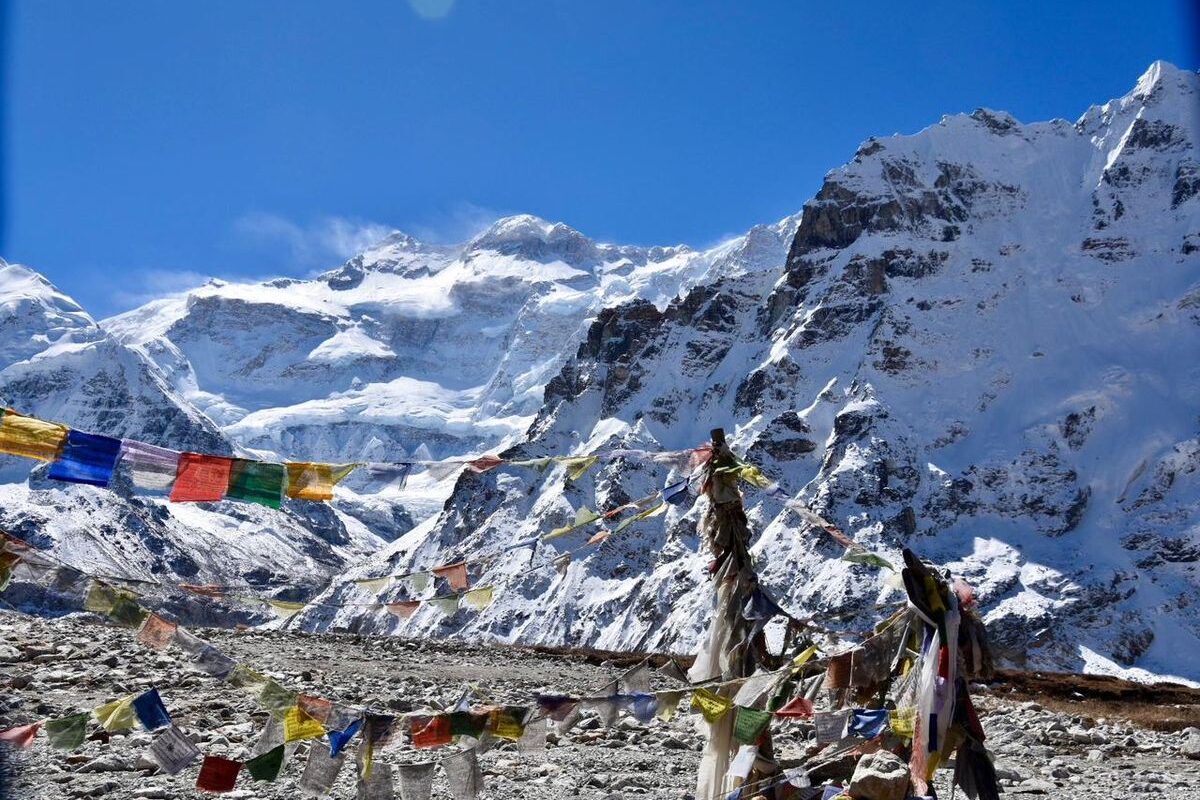
- Enjoy close views of Mount Kanchenjunga, the world’s third-highest mountain
- Trek through the protected Kanchenjunga Conservation Area
- Explore traditional Himalayan villages, including Ghunsa and Kambachen
- Walk through remote Lhonak Valley is surrounded by glaciers and high peaks
- Cross the challenging Sele La high-altitude route
- Explore Ramche and the dramatic Yalung Glacier region
- Walk through beautiful rhododendron and alpine forests
- Experience Limbu, Rai, Sherpa, and Tibetan-influenced local cultures
- Discover monasteries, prayer flags, mani walls, and Buddhist heritage
- Enjoy peaceful trekking trails away from the crowded Everest and Annapurna regions
- Experience dramatic changes from subtropical valleys to alpine wilderness
- Trek through glacial valleys, moraine landscapes, and high mountain terrain
- Enjoy opportunities to experience the rich biodiversity of the Kanchenjunga Conservation Area
- Experience authentic village life in one of Nepal’s most remote regions
- Enjoy outstanding Himalayan sunrise and mountain views
- Complete one of Nepal’s most adventurous and rewarding remote trekking circuits
Price starts
US$ 2050
We offer group discounts
-
2 -
4 person
US$ 2350
-
5 -
10 person
US$ 2050
-
11 over
9999
US$ 1700
Total Cost:
US$

Need Help?
Ask to Travel Expert
Trip Overview of Kanchenjunga Circuit Trek: 19 Incredible Highlights
The Kanchenjunga Circuit Trek is one of Nepal’s most remarkable journeys for trekkers searching for remote Himalayan wilderness, high-altitude adventure, traditional mountain villages, and close views of the world’s third-highest mountain. Far from the busy trails of Everest and Annapurna, this trek explores the isolated eastern Himalayas of Nepal and reaches both the northern and southern sides of the Kanchenjunga massif.
Mount Kanchenjunga rises to 8,586 meters and is recognized as the third-highest mountain in the world. The Kanchenjunga Circuit Trek travels through deep river valleys, dense forests, high alpine landscapes, glacial terrain, traditional settlements, and the protected Kanchenjunga Conservation Area. The journey combines challenging trekking with exceptional cultural and natural experiences.
Unlike a straightforward base camp trek, the circuit connects different valleys and approaches around the massif. Trekkers can experience the North Base Camp at Pangpema and the South Base Camp area near Oktang, depending on the exact route used. The Nepal Tourism Board identifies Pangpema at approximately 5,140 meters and Oktang at around 4,620 meters.
This guide covers the Kanchenjunga Circuit Trek map, route, distance, difficulty, permits, cost, accommodation, food, best seasons, physical preparation, safety, guide requirements, and other practical information. A detailed Kanchenjunga Circuit Trek itinerary for a 19-day program can remain as a separate section of your trekking package.
Why Choose the Kanchenjunga Circuit Trek?
The Kanchenjunga Circuit Trek is designed for trekkers who want a quieter and more adventurous alternative to Nepal’s popular trekking routes. The region remains remote, with limited road access, fewer trekking lodges, and considerably less trail traffic.
Its greatest attraction is variety. One day may involve walking through cardamom farms and subtropical vegetation, while another leads through rhododendron forests, yak pastures, rocky valleys, glaciers, and snow-covered alpine terrain.
The Kanchenjunga Circuit Trek also offers a strong cultural experience. Villages throughout eastern Nepal reflect the traditions of communities, including Limbu, Rai, Sherpa, and Tibetan-influenced Himalayan groups. Traditional houses, monasteries, prayer flags, man-made walls, farming practices, and seasonal livestock movement remain visible throughout the route.
For experienced trekkers, the combination of solitude, altitude, scenery, culture, and long-distance trekking gives the Kanchenjunga Circuit Trek a genuine expedition feeling.
19 Incredible Kanchenjunga Circuit Trek Highlights
Mount Kanchenjunga
The defining feature of the Kanchenjunga Circuit Trek is Mount Kanchenjunga itself. At 8,586 metres, the mountain dominates the northeastern Himalayan landscape and forms an enormous massif of ridges, glaciers, subsidiary peaks, and steep valleys.
Unlike seeing the mountain from one distant viewpoint, the circuit allows trekkers to observe the massif from different directions as the trail moves between the northern and southern sectors.
Kanchenjunga North Base Camp at Pangpema
Pangpema is one of the most important destinations on the Kanchenjunga Circuit Trek. Situated at approximately 5,140 meters, it provides an exceptional close-range perspective of the northern side of Kanchenjunga.
The surrounding landscape is wild and exposed, with moraine, glaciers, high ridges, and enormous Himalayan walls. Reaching Pangpema is often considered one of the most rewarding moments of the trek.
Kanchenjunga South Base Camp Area
The southern approach creates a very different mountain experience. Trekkers travel towards Ramche and the Oktang viewpoint, from where the southern face of the Kanchenjunga massif becomes visible.
The Nepal Tourism Board lists the South Base Camp at Oktang at approximately 4,620 meters.
Combining the southern and northern approaches is one of the main reasons to choose the complete Kanchenjunga Circuit Trek instead of a shorter single-base-camp journey.
Kanchenjunga Conservation Area
The trek passes through the spectacular Kanchenjunga Conservation Area, one of the most important protected landscapes in eastern Nepal.
According to the Nepal Tourism Board, the conservation area contains alpine environments, forests, rare plants, numerous rhododendron species, orchids, and wildlife, including red pandas, snow leopards, Himalayan black bears, musk deer, and blue sheep. Wildlife sightings cannot be guaranteed, but the ecological diversity adds enormous value to the Kanchenjunga Circuit Trek.
Ghunsa Village
Ghunsa is one of the major settlements on the northern side of the route. Surrounded by forested slopes and high mountains, it offers a valuable place for rest and acclimatization.
Traditional houses, Buddhist influence, prayer flags, and mountain livelihoods make Ghunsa much more than an overnight stop. Spending sufficient time here also supports gradual adaptation before entering the higher valleys.
Kambachen
Kambachen lies deeper in the northern Kanchenjunga region and feels considerably more isolated than the lower villages.
The surrounding mountain scenery becomes increasingly dramatic as vegetation becomes thinner and glacial landscapes begin to dominate. It is an important stage between Ghunsa and the higher camps towards Pangpema.
Lhonak Valley
Lhonak is one of the wildest sections of the Kanchenjunga Circuit Trek. The broad high-altitude valley is surrounded by huge Himalayan peaks, glaciers, rocky terrain, and open landscapes.
Accommodation and facilities are extremely basic, but the sense of wilderness is exceptional. Lhonak commonly serves as the staging point for the journey towards Pangpema.
Sele La Crossing
The Sele La route connects the northern side of the Kanchenjunga region with the southern valleys.
Crossing this high alpine area adds difficulty and adventure to the Kanchenjunga Circuit Trek. Weather conditions can change rapidly, and snow may make the route significantly more demanding.
The crossing should therefore be approached with proper acclimatization, suitable equipment, and the guidance of an experienced trekking professional.
Ramche
Ramche is one of the principal high-altitude stops on the southern approach.
The surrounding landscape contains alpine meadows, rocky terrain, glacial features, and panoramic mountain scenery. From here, trekkers can explore towards the Oktang area for impressive views of the southern side of Kanchenjunga.
Oktang Viewpoint
Oktang offers one of the finest Himalayan viewpoints on the Kanchenjunga Circuit Trek.
Massive glaciers and towering peaks dominate the landscape. On clear days, the scale of the Kanchenjunga massif becomes particularly impressive from this southern perspective.
Yalung Glacier
The Yalung Glacier is another major natural feature of the southern Kanchenjunga region.
Walking through the surrounding landscape reveals how glaciers have shaped these high valleys. Rocky moraine, ice, steep mountain walls, and changing weather give this section a genuine expedition atmosphere.
Rhododendron Forests
The lower and middle sections of the Kanchenjunga Circuit Trek pass through extensive forest environments.
The Nepal Tourism Board notes that the conservation area contains 23 varieties of rhododendron along with many orchids and indigenous plants. Spring trekkers may experience particularly colorful forest scenery.
Remote Himalayan Villages
One of the strongest characteristics of the Kanchenjunga Circuit Trek is its journey through settlements that remain relatively isolated from Nepal’s major tourism centers.
Traditional agriculture, livestock, stone houses, local food, religious practices, and community life help create a more authentic trekking experience.
Visitors should remember that these are living communities rather than tourist attractions. Permission should be requested before photographing people or entering religious places.
Traditional Buddhist Heritage
Higher settlements along the Kanchenjunga Circuit Trek show strong Tibetan Buddhist influence.
Monasteries, prayer wheels, mani walls, chortens, and prayer flags appear throughout parts of the route. Trekkers should follow local customs and their guide’s instructions when approaching sacred places.
Glacial Landscapes
The upper Kanchenjunga region contains some of the most dramatic glacial scenery on the trek.
Moraine ridges, frozen streams, exposed rock, glacial valleys, and enormous mountain faces create landscapes very different from the greener lower sections.
Exceptional Himalayan Views
Although Kanchenjunga is the main attraction, the route provides views of numerous surrounding peaks, ridges, and glaciers.
The changing perspective is particularly rewarding because trekkers do not simply approach one mountain and return by the same trail.
True Himalayan Wilderness
Long sections of the Kanchenjunga Circuit Trek pass through sparsely populated terrain.
There may be limited mobile connectivity, few shops, basic accommodation, and long distances between settlements. This isolation is part of the attraction but also makes preparation and professional support essential.
Quiet Trekking Trails
Compared with Nepal’s busiest trekking areas, Kanchenjunga offers a far quieter atmosphere.
Trekkers looking for solitude can spend long sections of the journey surrounded primarily by forests, rivers, mountains, livestock, and local communities rather than large trekking groups.
Complete Himalayan Adventure
The final highlight is the journey as a whole.
The Kanchenjunga Circuit Trek brings together two base-camp approaches, high passes, protected wilderness, traditional culture, forests, glaciers, remote villages, and demanding trekking days. Few journeys combine so many elements within one Himalayan expedition.
Kanchenjunga Circuit Trek Map and Route Overview
A Kanchenjunga Circuit Trek map should show the complete relationship between the northern and southern valleys rather than presenting the route as a simple out-and-back trail.
Most programs first travel from Kathmandu towards eastern Nepal before reaching the trailhead in the Taplejung region. The exact starting point can change depending on road conditions and transportation arrangements.
The northern route typically progresses through lower settlements and continues towards Ghunsa, Kambachen, Lhonak, and Pangpema. After visiting the northern base-camp area, trekkers return towards Ghunsa before crossing the Sele La region towards the southern valleys.
The route then continues towards Ramche and Oktang before eventually descending towards lower settlements and road access.
Because new roads continue to influence trekking starting and finishing points, the final Kanchenjunga Circuit Trek map should always match the itinerary being sold by the trekking operator rather than using a generic map copied from an older program.
Kanchenjunga Circuit Trek Distance
The Kanchenjunga Circuit Trek distance varies considerably depending on where trekking begins, where vehicle transport ends, whether both base camps are included, and which side trips are completed.
Different GPS tracks can also produce different measurements because some include acclimatization walks and viewpoint excursions while others measure only the main trail.
For this reason, it is better to publish a Kanchenjunga Circuit Trek distance that corresponds to your actual 19-day itinerary rather than claiming one universal figure.
Daily trekking time is often more meaningful than kilometers alone. A relatively short day at high altitude may require considerably more effort than a longer walk in the lower valleys because of steep gradients, rocky ground, snow, thin air, and changing weather.
Kanchenjunga Circuit Trek 19 Days
A Kanchenjunga Circuit Trek 19-day program can provide a practical balance between the journey to eastern Nepal, acclimatization, trekking, base-camp exploration, and return transportation.
However, a 19-day schedule must be designed carefully. Removing too many acclimatization or contingency days simply to create a shorter package can increase risk.
The complete Kanchenjunga Circuit Trek itinerary should consider daily altitude gain, walking duration, road transfers, weather, rest requirements, and the physical condition expected from participants.
Kanchenjunga Circuit Trek Difficulty
The Kanchenjunga Circuit Trek difficulty is generally considered strenuous.
The challenge comes from several factors working together: long trekking days, high altitude, remote terrain, cold conditions, high passes, limited infrastructure, and repeated ascents and descents.
Trekkers may reach above 5,000 metres on the northern side of the route. Pangpema itself is approximately 5,140 meters, according to the Nepal Tourism Board.
Previous multi-day trekking experience is highly recommended. Participants should be comfortable walking for several hours on uneven terrain while carrying a daypack.
The Kanchenjunga Circuit Trek difficulty also depends on weather. Snow, rain, strong wind, slippery trails, landslides, or poor visibility can transform an otherwise manageable section into a much more demanding day.
Altitude and Acclimatization
Altitude management is one of the most important parts of the Kanchenjunga Circuit Trek.
Fitness does not provide immunity from altitude sickness. Trekkers need gradual ascent, sufficient rest, hydration, proper nutrition, and honest communication with their guide.
Symptoms such as persistent headache, nausea, dizziness, unusual fatigue, poor coordination, or breathing difficulty should never be ignored.
Rest days should not be treated as wasted time. Acclimatization days allow the body to adapt while also providing opportunities to explore villages and nearby viewpoints.
Best Time for Kanchenjunga Circuit Trek
The most suitable seasons are generally spring and autumn.
The Nepal Tourism Board lists March to May and September to November as the best seasons for visiting the Kanchenjunga Conservation Area.
Spring: March to May
Spring usually brings improving temperatures, longer daylight hours, and colorful vegetation.
Rhododendron forests can be especially attractive during this period. Higher elevations may still contain snow, particularly early in the season.
Autumn: September to November
Autumn often provides stable weather and clear mountain views after the monsoon.
October is particularly popular for Himalayan trekking, while November usually brings colder nights and increasingly winter-like conditions at higher elevations.
Monsoon and Winter
Heavy summer rainfall can affect eastern Nepal more strongly than some rain-shadow trekking regions. Roads, trails, and transportation may be disrupted.
Winter brings very cold temperatures, snow, shorter daylight, and more difficult high-altitude travel. Winter departures require specialized planning and should not be treated like normal peak-season trekking.
Kanchenjunga Circuit Trek Permit Requirements
The Kanchenjunga region includes restricted trekking areas, so appropriate permits must be arranged before entering controlled sections.
According to the current Department of Immigration trekking permit fee schedule, restricted areas of Taplejung used by the Kanchenjunga route are charged at USD 20 per person per week for the first four weeks and USD 25 per person per week beyond four weeks.
Trekkers also need the required protected-area entry permit for Kanchenjunga Conservation Area.
The current Nepal Tourism Board park entry fee schedule lists the Kanchenjunga Conservation Area entry fee as NPR 100 for Nepali citizens, NPR 500 for SAARC nationals, and NPR 2,000 for other foreign visitors per entry.
The Nepal Tourism Board also lists Kanchenjunga trekking routes among those covered by its revised trekking guide and TIMS provisions. Travellers should therefore have their agency verify the exact documentation applicable to the booked route before departure. See the official TIMS Card information for current requirements.
Rules and fees can change, so permit details should always be reconfirmed at the time of booking.
Kanchenjunga Circuit Trek Guide
A professional Kanchenjunga Circuit Trek guide is particularly important because of the remoteness of the route.
The guide assists with navigation, accommodation coordination, permit checkpoints, communication with local communities, altitude monitoring, weather decisions, and emergency response.
The Nepal Tourism Board currently includes Kanchenjunga Base Camp routes within the trekking areas where licensed trekking guides and agency-issued TIMS provisions apply.
Choosing an experienced Kanchenjunga Circuit Trek guide is therefore not simply about finding the trail. Local knowledge becomes especially important when weather changes, snow covers paths, accommodation is limited, or someone in the group develops altitude-related symptoms.
Kanchenjunga Trek Cost
The Kanchenjunga trek cost is generally higher than a short or highly developed teahouse trek because the region is remote, and transportation, guiding, permits, porter support, accommodation, and logistics must all be arranged carefully.
There is no single Kanchenjunga trek cost that applies to every package.
Pricing depends on:
- Number of trekking days
- Group size
- Guide and porter services
- Transportation to and from eastern Nepal
- Hotels before and after trekking
- Trekking permits
- Conservation area fees
- Meals
- Accommodation
- Staff insurance
- Equipment provided by the agency
- Emergency and contingency arrangements
When comparing the Kanchenjunga trek cost between operators, travelers should check exactly what is included rather than choosing the lowest headline price.
A cheaper package may exclude permits, meals, porters, airport transfers, extra transportation, accommodation before the trek, or contingency costs.
Accommodation During Kanchenjunga Circuit Trek
Accommodation is generally based on locally available teahouses and lodges, although standards vary significantly.
The Nepal Tourism Board describes accommodation in the Kanchenjunga Conservation Area as a combination of tea houses and camping.
Lower villages may provide relatively comfortable rooms, while accommodation becomes much more basic at higher settlements such as Kambachen and Lhonak.
Trekkers should expect simple twin-sharing rooms, limited heating, shared toilets, and basic washing facilities.
A warm sleeping bag remains essential even when staying in lodges.
Food and Drinking Water
Food during the Kanchenjunga Circuit Trek is generally simple, filling, and designed around ingredients available in remote villages.
Common meals may include dal bhat, rice, lentils, vegetables, potatoes, noodles, soup, pasta, eggs, bread, porridge, fried rice, tea, and hot drinks.
Menu variety becomes more limited at higher elevations because supplies must travel long distances.
Trekkers with dietary restrictions should inform the trekking company before departure.
Natural water sources should not automatically be considered safe. Water should be boiled, filtered, or treated before drinking.
Reusable bottles and purification methods are preferable to relying heavily on disposable plastic bottles.
Training for the Kanchenjunga Circuit Trek
Physical preparation should begin well before departure.
A training period of around eight to twelve weeks is useful for many trekkers, although individual requirements vary.
Focus on cardiovascular endurance through hiking, running, cycling, swimming, or stair climbing.
Strength training should include legs, core, back, and overall stability.
The most useful preparation is repeated hiking on uneven terrain while carrying the same type of daypack you expect to use during the Kanchenjunga Circuit Trek.
Training on consecutive days also helps prepare the body for accumulated fatigue.
Essential Packing List
Equipment needs to handle warm lower valleys, rain, cold alpine terrain, strong sun, wind, and potentially freezing conditions.
Essential items include:
- Broken-in trekking boots
- Lightweight trekking shoes or sandals
- Waterproof jacket and trousers
- Down jacket
- Fleece or insulated mid-layer
- Thermal base layers
- Trekking trousers
- Warm hat and sun hat
- Insulated gloves
- UV-protection sunglasses
- High-SPF sunscreen
- Trekking poles
- Headlamp with spare batteries
- Warm sleeping bag
- Reusable water bottles
- Water purification system
- Personal medicines
- Basic first-aid supplies
- Power bank
- Waterproof pack cover
- Dry bags
- Duffel bag for porter transport
Packing should remain efficient because every unnecessary kilogram creates additional difficulty for transport staff and trekkers.
Culture and Responsible Trekking
The Kanchenjunga Circuit Trek passes through culturally diverse communities.
Visitors should dress respectfully, ask before photographing residents, and follow local etiquette around monasteries and religious monuments.
Waste management is particularly important in remote regions where disposal systems are limited.
Batteries, plastics, wipes, packaging, and other non-biodegradable waste should be carried back to suitable disposal facilities.
Trekkers should also choose an operator that provides appropriate wages, insurance, clothing, equipment, and load limits for guides and porters.
Responsible trekking helps protect both local communities and the fragile environment of the Kanchenjunga Conservation Area.
Wildlife and Natural Environment
The conservation area gives the Kanchenjunga Circuit Trek outstanding ecological diversity.
The Nepal Tourism Board lists snow leopard, red panda, Himalayan black bear, musk deer, blue sheep, rhesus monkey, and around 250 bird species within the protected region.
Seeing rare wildlife should be considered a bonus rather than an expectation.
Trekkers are more likely to notice changing vegetation, birdlife, animal tracks, forests, grazing areas, and different ecological zones as altitude increases.
Health, Safety, and Travel Insurance
Comprehensive travel insurance is essential for a trek of this nature.
The policy should explicitly cover trekking up to the maximum altitude of the planned route, emergency medical treatment, trip interruption, and helicopter evacuation where available.
Trekkers should carefully read exclusions instead of assuming that every travel insurance policy automatically includes high-altitude activities.
Because the Kanchenjunga Circuit Trek enters remote terrain, evacuation can be affected by weather, location, communication, and aircraft availability.
A professional trekking team should carry suitable first-aid supplies and have a clear emergency communication plan.
How to Reach the Kanchenjunga Trek Region
The Kanchenjunga region is located in Taplejung District in northeastern Nepal.
The Nepal Tourism Board describes access through eastern Nepal and notes connections towards Taplejung from Kathmandu via the eastern aviation network.
Modern trekking programs may use combinations of domestic flights, private vehicles, jeeps, and long road transfers depending on current transport conditions.
Because road extensions continue to change practical trailheads, transport arrangements should be confirmed shortly before departure.
This flexibility is also important when preparing the final Kanchenjunga Circuit Trek itinerary.
Kanchenjunga Base Camp Trek, Nepal vs. Kanchenjunga Circuit Trek
Travellers sometimes use Kanchenjunga Base Camp Trek and Kanchenjunga Circuit Trek as interchangeable terms, but package routes can differ.
A base camp program may visit only one side of Kanchenjunga.
A complete circuit typically attempts to connect the northern and southern sections, creating a longer and more varied journey.
Anyone comparing packages should therefore check whether the program includes Pangpema, the Sele La crossing, Ramche, and the southern Oktang area.
The route matters more than the package name.
Is the Kanchenjunga Circuit Trek Right for You?
Choose the Kanchenjunga Circuit Trek if you enjoy remote environments, challenging walking, cultural experiences, basic accommodation, and long periods away from major tourist centers.
You should be comfortable with uncertainty because weather, transport, trail conditions, and altitude may require itinerary adjustments.
This trek may not be suitable for travellers who require luxury accommodation, constant internet access, short walking days, or immediate access to medical facilities.
For properly prepared trekkers, however, the Kanchenjunga Circuit Trek offers exactly what many modern Himalayan routes have gradually lost: solitude, wilderness, cultural depth, and a genuine sense of exploration.
Conclusion
The Kanchenjunga Circuit Trek is one of Nepal’s most complete remote trekking adventures. It connects deep eastern valleys, traditional communities, rhododendron forests, alpine landscapes, glaciers, high passes, Pangpema, Ramche, Oktang, and the extraordinary Kanchenjunga massif.
Its difficulty should not be underestimated. Long trekking days, altitude, limited infrastructure, changing weather, and remote terrain require preparation, patience, professional support, and realistic expectations.
At the same time, these challenges are what make the journey special.
With a carefully designed Kanchenjunga Circuit Trek itinerary, experienced guide, correct permits, adequate acclimatization, suitable insurance, and proper equipment, trekkers can experience one of the wildest corners of the Nepal Himalaya.
For those seeking an alternative to the more crowded trekking regions, the Kanchenjunga Circuit Trek delivers an unforgettable combination of mountain scenery, wilderness, culture, physical challenge, and true Himalayan adventure.
Includes and Excludes
What is included?
- Airport pickups and drops in a private vehicle
- 03 night Hotel accommodation in kathmandu
- Tea house accommodation during the trek
- All meals during the trek
- All ground transportation on comfortable private vehicle during the trek
- Guided city tour in Kathmandu by private vehicle
- An experienced english speaking and government licensed holder trek leader and assistant trek leader
- Down jacket.
- All necessary paperwork and trekking permits
- Medical kit (carried by your trek leader)
- All government and local taxes
What is excluded?
- Nepalese visa fee
- Excess baggage charge
- Extra night accommodation in kathmandu
- International flights
- Travel and rescue insurance
- Personal expenses
- Tips for guides,porter and driver
Trip Information
| Trip Details | Information |
|---|---|
| Trip Name | Kanchenjunga Circuit Trek |
| Destination | Kanchenjunga Region, Eastern Nepal |
| Country | Nepal |
| Trip Duration | 19 Days |
| Trek Type | Remote Himalayan Circuit Trek |
| Trek Grade | Strenuous |
| Maximum Altitude | Approx. 5,140 m at Pangpema |
| Highest Mountain | Mount Kanchenjunga – 8,586 m |
| Main Attractions | Pangpema, Ghunsa, Kambachen, Lhonak, Sele La, Ramche & Oktang |
| Protected Area | Kanchenjunga Conservation Area |
| Accommodation | Teahouses / Local Lodges |
| Meals | Breakfast, lunch & dinner during the trek |
| Best Season | March–May & September–November |
| Trekking Style | Guided Trek |
| Guide Requirement | Licensed Trekking Guide Required |
| Permits Required | Restricted Area Permit & Kanchenjunga Conservation Area Permit |
| Starting Point | Taplejung Region |
| Ending Point | Taplejung Region |
| Transportation | Domestic Flight / Private Vehicle / Jeep |
| Group Size | Private or Small Group |
| Suitable For | Experienced & Physically Fit Trekkers |
| Major Experiences | High Passes, Glaciers, Base Camps, Remote Villages, Himalayan Culture & Wilderness |
Frequently Asked Questions
How difficult is the Kanchenjunga Circuit Trek?
The Kanchenjunga Circuit Trek is considered a strenuous trek. It involves long walking days, remote trails, high-altitude terrain, steep ascents and descents, basic accommodation, and sections above 5,000 meters. Good physical fitness and previous multi-day trekking experience are highly recommended.
How many days does the Kanchenjunga Circuit Trek take?
A complete Kanchenjunga Circuit Trek can be arranged as a 19-day program, depending on the selected route, transportation, acclimatization days, and starting and ending points. The itinerary should provide enough time for gradual altitude gain and safe trekking.
What is the maximum altitude of the Kanchenjunga Circuit Trek?
One of the highest commonly visited points is Pangpema, the Kanchenjunga North Base Camp, at approximately 5,140 meters. Trekkers also cross high-altitude sections around the Sele La route.
What is the Kanchenjunga Circuit Trek distance?
The Kanchenjunga Circuit Trek distance varies depending on the trailhead, road access, base camp visits, side trips, and route variations. The final distance should be calculated according to the exact itinerary provided by the trekking operator.
What is the best time for the Kanchenjunga Circuit Trek?
The best seasons are generally March to May and September to November. Spring offers warmer conditions and flowering rhododendrons, while autumn usually provides clearer skies and excellent Himalayan views.
Do I need a guide for the Kanchenjunga Circuit Trek?
Yes. The Kanchenjunga region includes restricted trekking areas, and trekkers should travel with a licensed trekking guide through a registered trekking agency. An experienced guide also helps with navigation, permits, accommodation, altitude monitoring, and emergency situations.
What permits are required for the Kanchenjunga Circuit Trek?
Trekkers generally require a restricted-area trekking permit and entry permission for Kanchenjunga Conservation Area. Additional trekking documentation may also apply depending on current government regulations. Permit requirements should always be reconfirmed before departure.
How much does the Kanchenjunga Trek cost?
The Kanchenjunga Trek cost depends on the number of days, group size, guide and porter services, transportation, permits, accommodation, meals, hotels, and service level. Because the region is remote, the trek generally costs more than shorter and more developed trekking routes in Nepal.
Is the Kanchenjunga Circuit Trek suitable for beginners?
The trek is generally more suitable for experienced trekkers because of its altitude, remoteness, long walking days, basic facilities, and demanding terrain. Physically fit beginners with strong preparation may complete it with professional support, but previous trekking experience is preferable.
What accommodation is available during the Kanchenjunga Circuit Trek?
Accommodation is mainly provided in local teahouses and basic mountain lodges. Facilities become simpler at higher and more remote locations such as Kambachen, Lhonak, and Ramche. Trekkers should carry a warm sleeping bag even when using lodges.
What food is available during the trek?
Common meals include dal bhat, noodles, rice, vegetables, potatoes, soup, pasta, eggs, bread, porridge, tea, and other simple trekking foods. Menu choices become more limited at higher elevations because supplies must be transported into remote areas.
Trip Reviews
Price starts
US$ 2050
Need Help?
Ask to Travel Expert