
- Mt. Kailash Tour
- Kailash Mansarovar Overland Tour
- Kailash Mansarovar Yatra by Helicopter – Complete Spiritual Journey Guide
- Kailash Yatra via Lucknow
- Kailash Mansarovar Tour via Lhasa
- Kailash Lhasa EBC Tour From Beijing
- Kailash Heli Tour via Kerung: Complete Spiritual Journey Guide
- Kailash Tour via Lhasa In Kerung Out
- Lhasa EBC Kailash Tour
- Kailash Heli Tour
- Kailash Mansarovar Yatra from Nepal 2027: Cost & Itinerary
- Kailash Nandi Kora
- Kailash Tour via Humla Simikot – 20 Days
- Mount Kailash Tour: 7 Amazing Experiences in 2027
- Trekking
-
-
- Everest Region
- Luxury Everest Base Camp Trek: 7 Unforgettable Highlights
- Everest Base Camp Trek 2026: Cost, Route, and Complete Guide
- Everest Three Passes Trek 2027: Cost, Route & Itinerary
- Everest Base Camp Short Trek
- Everest Panorama Trek: Amazing 10-Day Cost & Itinerary
- Everest Base Camp Island Peak Trek: Complete 19-Day Guide
- Gokyo Valley Trekking 2027: Easy Guide to Cost & Itinerary
- Mera Peak Climbing 2027: Complete Cost & Itinerary Guide
- Rolwaling Valley Trek: 23-Day Itinerary, Cost, Permits & Difficulty
- Dolpo Region Trek
- Everest Region
-
- Annapurna Region
- Annapurna Base Camp Trekking
- Annapurna Circuit Trek
- Annapurna Base Camp Trek: 7 Amazing Cost & Route Tips
- Mardi Himal Trek: 7 Amazing Highlights & Complete Guide
- Annapurna Alternative Combine Trek: 18 Amazing Days
- Mohare Dada Trek
- Ghorepani Poon Hill Trek: 7 Unforgettable Highlights
- Khopra Ridge Community Trek: 13-Day Ultimate Adventure
- Damodar Kunda Trek: 10-Day Ultimate Sacred Adventure
- Upper Mustang Trek: 10 Amazing Sights : Ultimate Guide
- Jomsom Muktinath Trek: Amazing 12-Day Ultimate Guide
- Ghale Gaun Trek: 7 Amazing Reasons : Ultimate Guide
- Dhampus Sarangkot Trek: 7 Incredible Experiences
- Dhaulagiri Region
- Annapurna Region
-
-
- Tours
-
-
- Day Tours
- Rickshaw–a three-wheeler Tour
- Pharping Dakshinkali Day Tour: 7 Amazing Highlights
- Historical Tour: 7 Amazing Places to Explore
- Kathmandu Temple Tour: 7 Amazing Spiritual Places
- Nagarkot Tour
- Bhaktapur City Tour: 7 Amazing Places to Explore
- Kathmandu City Tour – Complete Heritage & Cultural Experience in Nepal
- Chandragiri Hill: A Scenic Himalayan Escape Near Kathmandu
- Chitlang Hiking
- Shivapuri to Sundarijal Day Hiking
- Kulekhani Dam Day Tour — Complete Travel Guide
- Day Tours
-
- Package Tours
- Mustang Tour on Jeep
- Nepal Tour Package for Nepali: 12 Amazing Destinations to Explore (2026)
- Muktinath Tour: Complete Guide to Nepal’s Sacred Himalayan Pilgrimage
- 3N,4D Kathmandu Pilgrimage Tour
- Nepal Buddhist Pilgrimage Tour: 7 Sacred Sites Not to Miss
- 6D Nepal Pilgrimage Tour: 7 Amazing Sacred Places
- 7 Nights, 8 Days Nepal Tour
- Districts tour of Nepal
- Janakpur Tour Package: Price, Family Tour & Travel Guide from Kathmandu 2026
- Short Hike in Nepal: 7 Best Easy Treks for Beginners
- Package Tours
-
-
- Outbound
-
- Activities
- Climbing
- Bungee Jumping in Nepal
- Heli Skiing Adventure in the Himalayas
- Canoeing in Nepal
- Mountain Flight in Nepal
- Zip Flyer in Pokhara: The Ultimate Adventure Experience
- Paragliding in Pokhara: 7 Amazing Reasons to Experience Nepal’s Best Adventure
- Kathmandu Cycling Tour: 9 Amazing Adventures
- Rafting
- Rock Climbing
- Company
- Travel Info
- Travel Insurance
- Recommended Medical Kit
- Nepal Visa Information
- Flight delays and cancellation in Nepal
- Electricity in Nepal: Rates, Bill Check, Calculator and NEA Services
- Trekking Equipment Checklist: 40 Essential Items
- Best Kailash season in Tibet
- Best Trekking season in Nepal
- Trekking in Nepal 2027: 15 Best Himalayan Adventures
- Blogs
- Contact


WhatsApp
+977-9851035239

Email Us
[email protected]
Everest Base Camp Island Peak Trek: Complete 19-Day Guide


Trip Duration
19 Days
Trip Difficulty
Easy
Max. Altitude
6,189m. / 20,305ft.
Activity
trekking, hiking & climbing
Destination
Nepal
Group Size
2-15
Accommodation
3-4 star hotel inNormal guest house during trekkingHighlights of Everest Base Camp Island Peak Trek: Complete 19-Day Guide
- Experience one of the most thrilling flights to and from Lukla airport
- Be fond of the lively, popular Namche Bazaar and learn about the local people’s culture
- Witness majestic Himalayas such as Mount Everest, Lhotse, Nuptse, and many more
- Visit Sagarmatha National Park, which is one of the most popular UNESCO World Heritage sites
- Golden view of sunrise and sunset from Kala Patthar
- Explore Tenboche Monastery, one of the oldest Buddhist monasteries
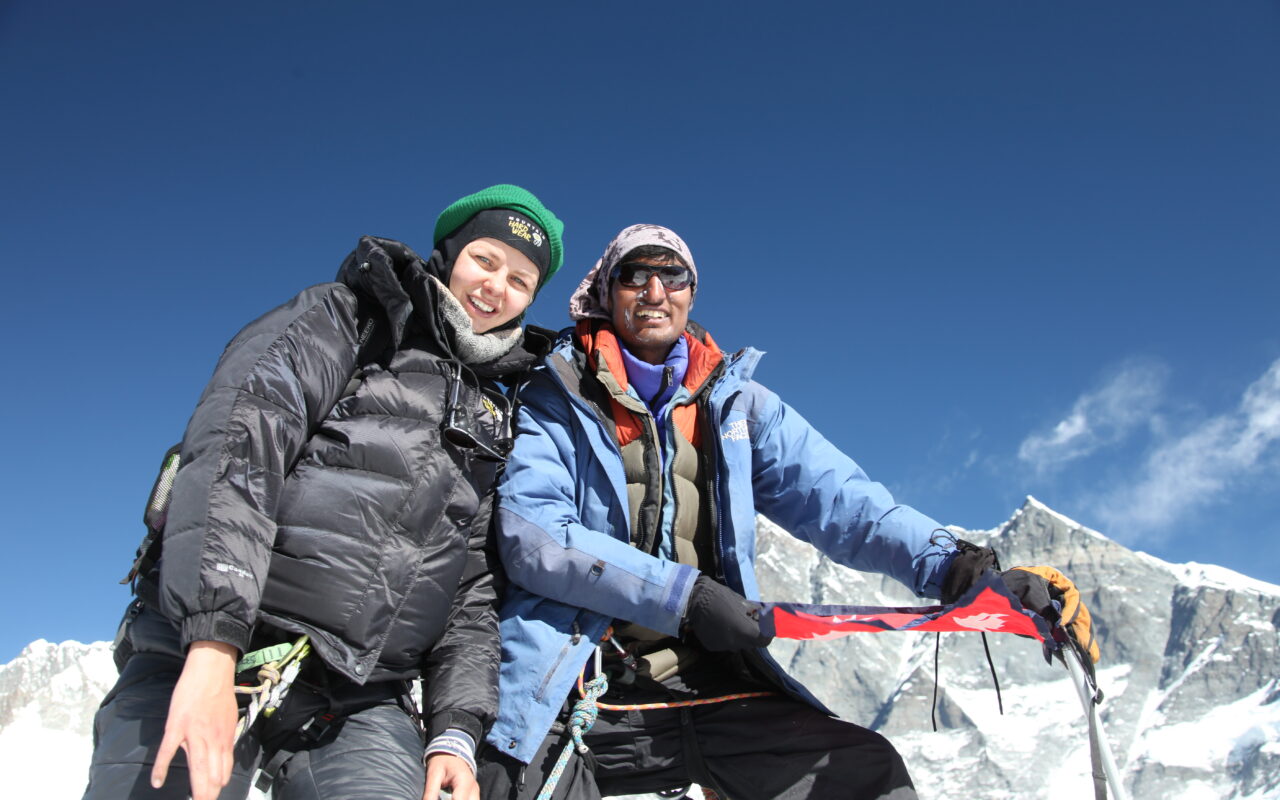
- Summit of Island Peak
Price starts
US$ 1900
We offer group discounts
-
1 -
4 person
US$ 2100
-
5 -
10 person
US$ 1900
-
11 over
9999
US$ 1700
Total Cost:
US$ 2100

Need Help?
Ask to Travel Expert
Trip Overview of Everest Base Camp Island Peak Trek: Complete 19-Day Guide
The Everest Base Camp Island Peak Trek combines two remarkable Himalayan goals in one carefully planned adventure: trekking to the foot of Mount Everest and climbing Imja Tse, better known as Island Peak.
Instead of finishing at Everest Base Camp, the journey continues toward Chhukung and Island Peak Base Camp. Trekkers then exchange their walking poles for mountaineering equipment and attempt a genuine 6,000-meter Himalayan summit.
The official Nepal Mountaineering Association listing identifies Imja Tse at 6,160 meters in the Khumbu Himal of Solukhumbu. nepalmountaineering.org
A 19-day program provides a practical balance between trekking, acclimatization, climbing preparation, and contingency planning. However, this is not simply a longer version of the standard Everest Base Camp Trek. Island Peak introduces glacier travel, fixed ropes, specialist equipment, and a demanding summit day.
This guide explains the route, difficulty, cost factors, permits, training, equipment, and safety considerations you should understand before booking.
What Is the Everest Base Camp Island Peak Trek?
The Everest Base Camp Island Peak Trek is a high-altitude trekking and mountaineering journey through Nepal’s Khumbu region.
It normally begins with a mountain flight to Lukla. From there, the trail follows the Dudh Koshi Valley through Phakding, Monjo, and Namche Bazaar before continuing toward Tengboche, Dingboche, Lobuche, and Gorak Shep.
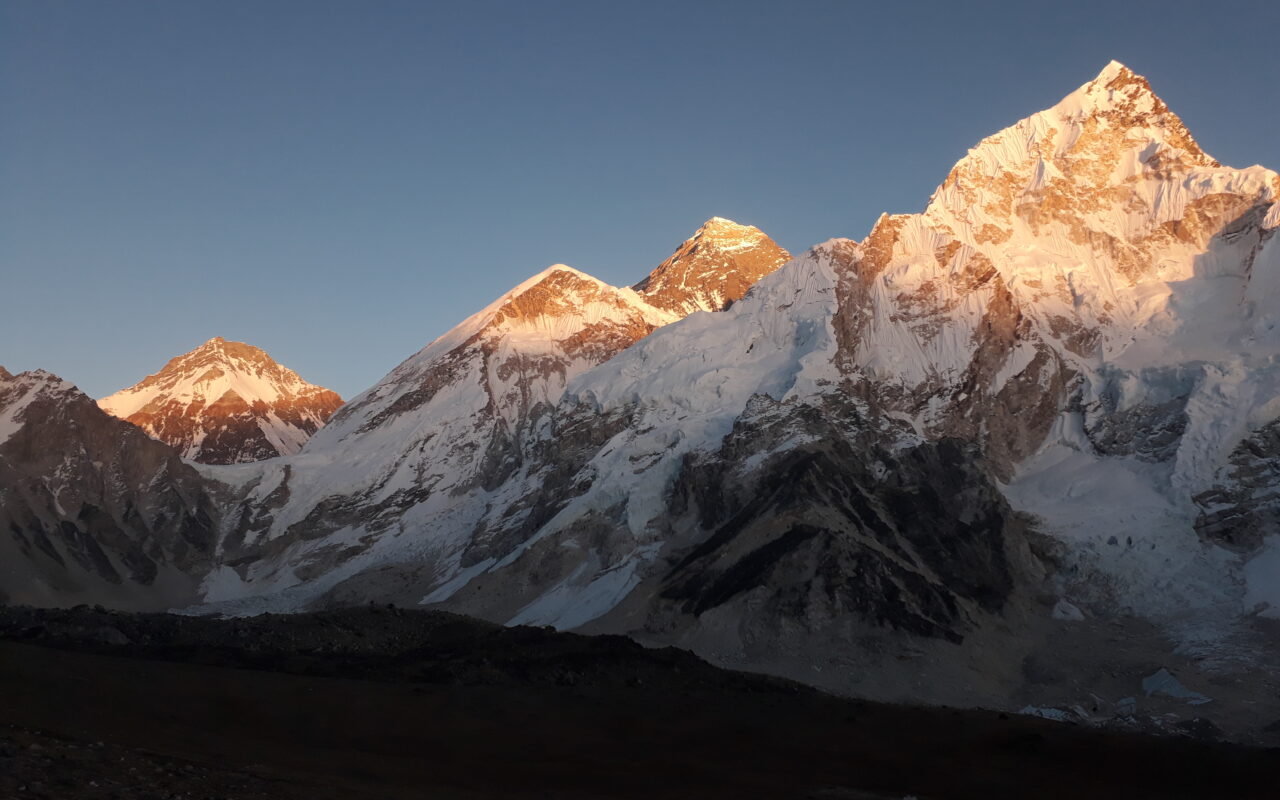
The first major objective is Everest Base Camp, situated at approximately 5,364 meters. Depending on the chosen program and conditions, trekkers may also climb Kala Patthar for a panoramic view of Everest, Nuptse, Pumori, the Khumbu Glacier, and the surrounding mountains.
Instead of returning directly to Lukla, the route continues into the Imja Valley. Climbers prepare around Chhukung before proceeding to Island Peak Base Camp and attempting the summit.
This combination makes the Everest Base Camp and Island Peak journey significantly more demanding than a regular trek. The approach is completed on established mountain trails, but the summit section requires basic mountaineering techniques and equipment.
Why Combine Everest Base Camp and Island Peak?
Reaching Everest Base Camp is a rewarding achievement on its own. Adding Island Peak transforms the experience from a high-altitude trek into an introductory Himalayan climbing expedition.
Experience Two Major Himalayan Goals
The combined journey allows you to reach Everest Base Camp and stand on a 6,000-meter summit during the same trip. It is especially attractive to trekkers who want to progress from hiking toward mountaineering.
Build Acclimatization Before the Climb
Visiting Namche Bazaar, Dingboche, Lobuche, and Everest Base Camp before Island Peak gives the body time to adjust gradually to higher elevations. This does not eliminate altitude risk, but it offers a more sensible progression than approaching the peak too quickly.
The CDC notes that commonly used Everest Base Camp schedules can already push acclimatization limits. Adding appropriate acclimatization and recovery time can make a journey safer and more enjoyable. Yellow Book
Learn Practical Mountaineering Skills
Before the summit attempt, the climbing team normally provides training in the use of:
- A climbing harness
- Crampons
- Ascender or jumar
- Descender
- Carabiners
- Fixed ropes
- Ice axe
- Helmet
- Mountaineering boots
Training cannot replace previous experience or proper preparation, but it introduces the systems climbers will use on the mountain.
See the Khumbu from Different Perspectives
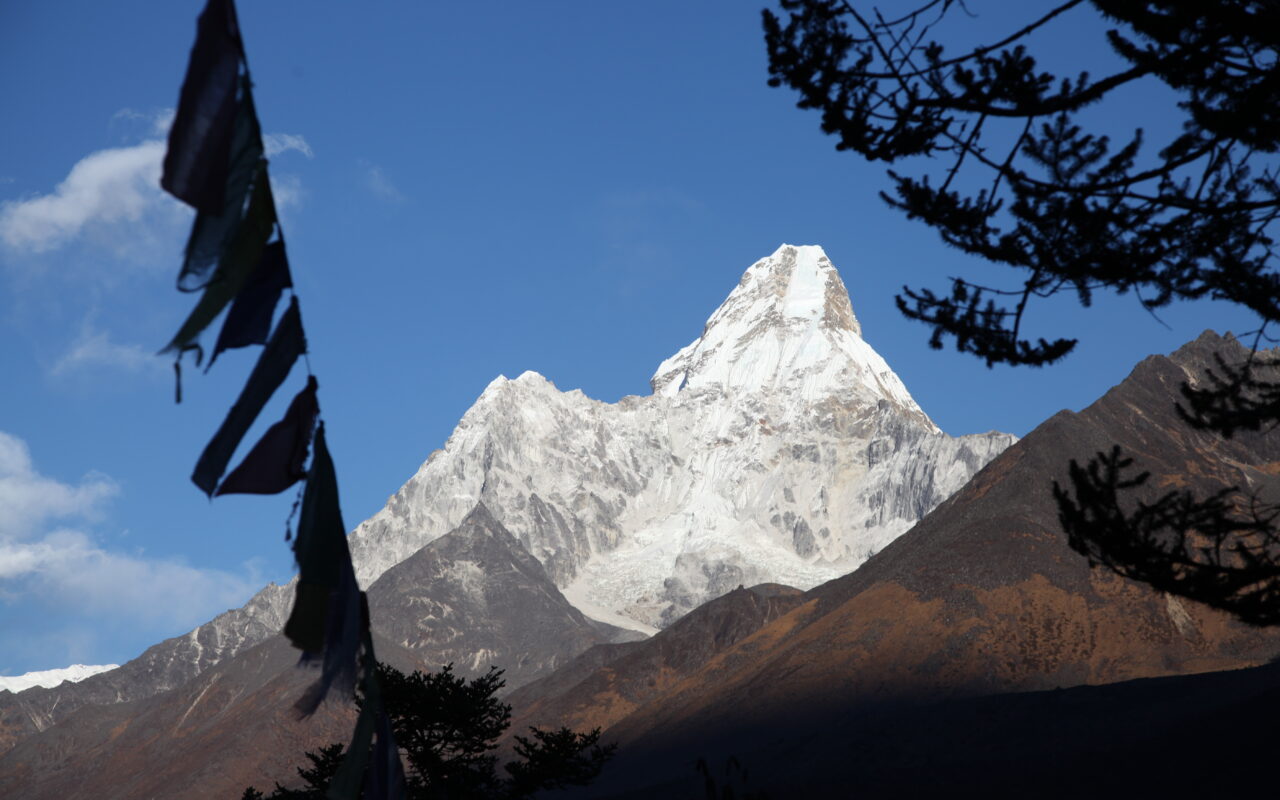
The route passes forests, river valleys, Sherpa settlements, monasteries, glaciers, and high alpine terrain. The final climb provides a very different perspective from the trekking trail, with expansive views across the Imja Valley and surrounding peaks when conditions are clear.
Prepare for Future Climbing Objectives
Island Peak is often selected as a first Himalayan climbing objective. Successfully completing it can help climbers understand how their bodies respond to altitude, cold, prolonged exertion, and mountaineering equipment.
It can be a useful stepping stone toward other climbing programs, such as Mera Peak Climbing, although every mountain requires separate preparation and technical judgment.
Everest Base Camp Island Peak Route Overview
This section provides a route summary rather than a day-by-day itinerary.
The standard Everest Base Camp Island Peak map generally follows:
Kathmandu → Lukla → Phakding → Namche Bazaar → Tengboche → Dingboche → Lobuche → Gorak Shep → Everest Base Camp → Dingboche or Chhukung → Island Peak Base Camp → Island Peak summit attempt → Chhukung → Namche Bazaar → Lukla → Kathmandu
The walking journey begins in Lukla and follows the Dudh Koshi Valley. Trekkers enter Sagarmatha National Park near Monjo before climbing to Namche Bazaar, the principal commercial center of the Khumbu.
The official Nepal Tourism Board description of the Everest Base Camp route confirms Lukla as its main gateway and identifies Namche Bazaar as a key stop on the journey. Trek to EBC
Beyond Namche, the trail reaches Tengboche, home to one of the region’s most important monasteries. The landscape becomes increasingly alpine as the route continues toward Dingboche, Lobuche, and Gorak Shep.
After visiting Everest Base Camp, the climbing route turns into the Imja Valley. Chhukung is commonly used for preparation and recovery before the team continues to Island Peak Base Camp.
The exact route may change because of acclimatization requirements, weather, trail conditions, lodge availability, or the health of group members.
How Many Days Does the Trip Take?
A regular Everest Base Camp trek often takes approximately 12 to 14 days, depending on whether the package includes Kathmandu services, a return walk to Lukla, or a helicopter flight.
Combining Everest Base Camp and Island Peak usually requires approximately 18 to 21 days. A 19-day schedule is therefore reasonable when it includes:
- Arrival and departure arrangements
- Kathmandu preparation
- Lukla flights
- Acclimatization days
- The Everest Base Camp hike
- Climbing preparation
- Island Peak Base Camp
- A summit attempt
- The return journey
Travelers comparing this program with an Everest Base Camp short trek should not select a trip based only on duration. Removing acclimatization days to create a shorter package may increase altitude-related risks.
Lukla flights are also affected by cloud, wind, and visibility. Keeping at least one flexible day after the mountain section is strongly recommended.
Everest Base Camp Island Peak Difficulty
The Everest Base Camp Island Peak Trek is challenging. The trekking sections require endurance, while the summit attempt adds technical terrain, cold temperatures, and a long day at extreme altitude.
Trekking Difficulty
Before reaching Island Peak, participants spend several consecutive days walking at high elevation. Common challenges include:
- Five to eight hours of walking on many days
- Steep ascents and descents
- Rocky and uneven trails
- Suspension bridges
- Cold mornings and nights
- Reduced oxygen
- Basic accommodation at higher elevations
- Changing weather
- Accumulated fatigue
Healthy beginners may complete the trekking section with sufficient training and acclimatization. The summit climb, however, requires additional skills, equipment, and supervision.
Climbing Difficulty
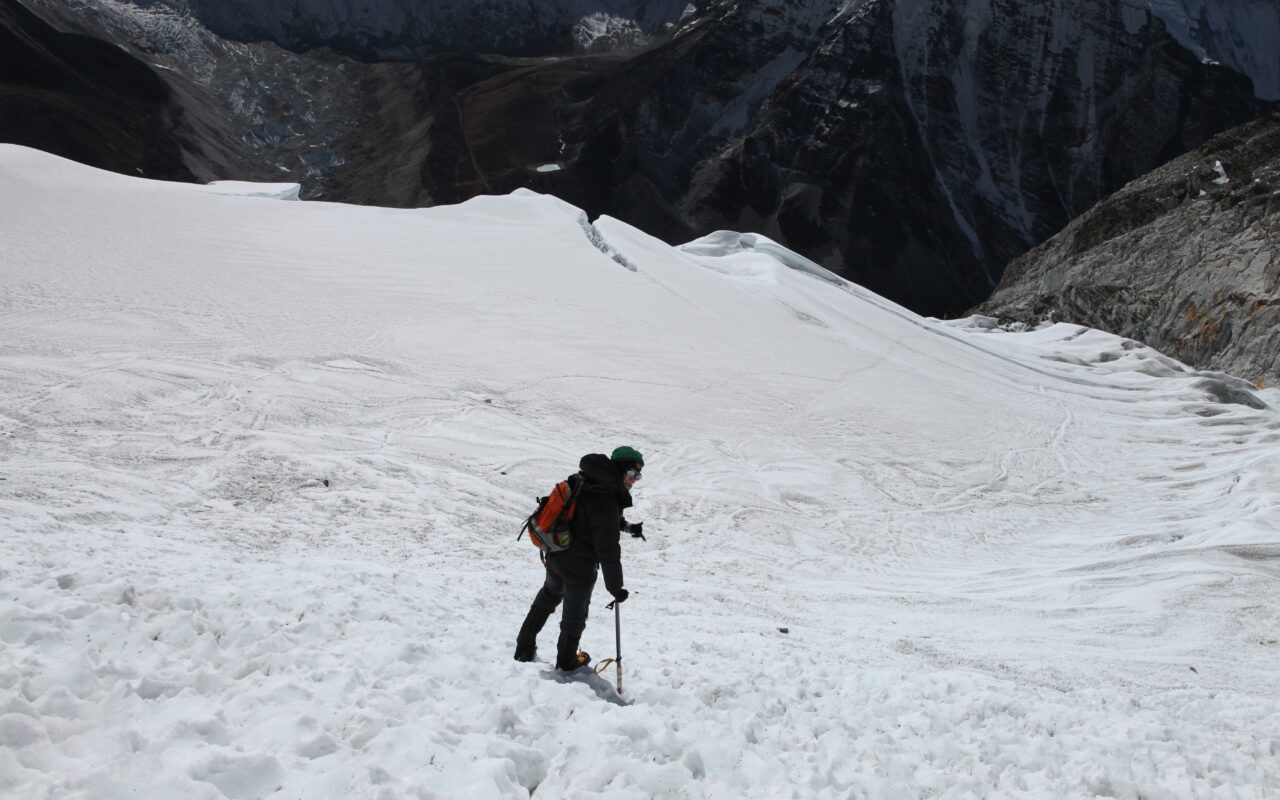
Island Peak is widely described as a trekking peak, but this term should not be mistaken for an ordinary hike. Conditions can include snow, ice, glacier travel, crevasse hazards, fixed ropes, and steep climbing.
The final difficulty varies according to:
- Snow and ice conditions
- Route changes
- Weather
- Rope placement
- Glacier movement
- Previous climbing experience
- Physical condition
- Acclimatization
- Guide-to-climber ratio
Anyone booking an Everest Base Camp Island Peak hike should understand that the summit portion is mountaineering, not conventional trekking.
Summit-Day Demands
The summit attempt normally begins well before sunrise. Climbers move slowly in darkness and cold before reaching more technical sections.
A summit day may involve eight to twelve hours or longer, depending on the route, weather, group pace, and mountain conditions. The descent also requires concentration. Reaching the top is only half the task, and climbers must preserve enough energy to return safely.
The guide may cancel or turn around a summit attempt because of dangerous weather, unstable conditions, delayed progress, illness, or equipment problems. The summit is never guaranteed.
Altitude and Acclimatization
Altitude is one of the most serious challenges of the Everest Base Camp and Island Peak climb.
Important elevations include approximately:
| Location | Elevation |
|---|---|
| Lukla | 2,860 m |
| Namche Bazaar | 3,440 m |
| Tengboche | 3,860 m |
| Dingboche | 4,410 m |
| Lobuche | 4,910 m |
| Everest Base Camp | 5,364 m |
| Kala Patthar | About 5,545 m |
| Island Peak | 6,160 m |
At high elevations, the body receives less oxygen. Physical fitness does not prevent altitude illness, and even experienced athletes may develop symptoms.
Possible warning signs include:
- Headache
- Nausea
- Dizziness
- Unusual tiredness
- Loss of appetite
- Poor sleep
- Reduced coordination
- Breathlessness while resting
- Confusion
Symptoms must be reported immediately. Climbers should never hide discomfort because they are worried about delaying the group.
The CDC’s high-altitude travel guidance recommends gradual ascent and avoiding alcohol or heavy exertion during the initial period at altitude. wwwnc.cdc.gov
Severe or worsening symptoms may require immediate descent and professional medical assistance. Medication should only be used following appropriate medical advice.
Is the Everest Base Camp Death Rate Relevant?
Searches for “Everest Base Camp death rate” often mix together two very different activities: trekking to base camp and climbing Mount Everest.
The standard Everest Base Camp trail does not enter the Everest death zone or attempt the 8,848-meter summit. Therefore, fatality figures for Mount Everest expeditions should not be presented as the death rate for the trek.
There is also no single dependable percentage that represents every Everest Base Camp trek. Records may classify trekking accidents, medical emergencies, and mountaineering incidents differently.
The combined Island Peak program is more serious than an ordinary Everest Base Camp trek because it adds glacier travel and a technical summit. Relevant risks include:
- Acute altitude illness
- Falls on steep terrain
- Crevasses
- Extreme cold
- Sudden weather changes
- Exhaustion
- Rock, snow, or ice hazards
- Flight and evacuation delays
Risk can be reduced through gradual acclimatization, proper equipment, professional leadership, honest health reporting, and conservative decisions. It cannot be removed completely.
Travelers should review the Nepal Tourism Board’s official mountain-safety information before departure. NTB
Training for the Everest Base Camp Island Peak Trek
Preparation should begin at least three to four months before departure. Travelers starting from a low fitness level may need longer.
Cardiovascular Training
Develop the ability to sustain moderate effort for several hours. Useful activities include:
- Hill walking
- Stair climbing
- Running
- Cycling
- Swimming
- Incline treadmill sessions
Two or three longer sessions each week can help prepare the body for consecutive trekking days.
Strength Training
Focus on the legs, hips, back, and core. Squats, lunges, step-ups, calf raises, deadlifts, and controlled core exercises are useful when performed correctly.
Train with the boots and backpack you expect to use. Gradually increase duration and carried weight rather than making sudden changes.
Technical Preparation
Previous climbing experience is highly beneficial. If possible, complete an introductory mountaineering course covering:
- Crampon technique
- Ice-axe use
- Fixed-rope movement
- Ascending with a jumar
- Controlled descending
- Harness safety
- Basic glacier awareness
A short demonstration at base camp is valuable, but practicing the skills before arriving in Nepal provides greater confidence.
Mental Preparation
Climbing requires patience and disciplined decision-making. Cold, uncertainty, slow movement, and fatigue can be mentally demanding.
A successful participant must be willing to turn around when the guide determines that continuing is unsafe.
Best Time to Climb Island Peak
Spring and autumn are generally the preferred climbing seasons.
Spring: March to May
Spring typically offers comparatively favorable temperatures and established mountaineering operations. Rhododendron forests add color to lower sections, while Everest Base Camp becomes active during the main expedition season.
April and May are popular, so flights, lodges, and climbing services may fill early.
Autumn: September to November
Autumn often provides clear skies and excellent mountain visibility following the monsoon. October is normally busy, while November brings colder temperatures.
Snow and climbing conditions vary every year. A specific month cannot guarantee a safe summit.
Winter: December to February
Winter offers quieter trails and clear mornings, but severe cold, snow, and strong wind can make Island Peak substantially more difficult.
Winter climbing is more suitable for experienced participants with specialist clothing, flexible timing, and appropriate local support.
Monsoon: June to August
The monsoon brings rain, clouds, and flight disruption at lower elevations. Higher mountain conditions can remain unstable, making this period less suitable for most Island Peak programs.
Read the complete guide to the best trekking season in Nepal when comparing departure months.
Permits Required for Island Peak
A combined Everest Base Camp Island Peak Trek generally requires several permissions.
Island Peak Climbing Permit
Imja Tse is listed as a regulated peak by the Nepal Mountaineering Association. nepalmountaineering.org
The climbing permit charge varies by season. Because fees and procedures can change, operators and climbers should check the current NMA climbing service charges before confirming a package. nepalmountaineering.org
Sagarmatha National Park Entry Permit
Most of the approach passes through Sagarmatha National Park. UNESCO describes the park as an exceptional landscape of mountains, glaciers, and deep valleys dominated by Mount Everest. whc.unesco.org
Current park rules and entry charges should be confirmed through official authorities or the trekking company.
Local Municipality Permit
Visitors entering the Khumbu region may also require the Khumbu Pasang Lhamu Rural Municipality permit.
Additional Climbing Documentation
Depending on the applicable regulations, the operator may need to arrange climbing-related documentation, guide details, insurance records, and waste-management requirements.
Permit policies should always be reconfirmed before departure. A professional operator will normally arrange these documents using the traveler’s correct passport information.
Guide and Support Requirements
The Everest Base Camp Island Peak Trek should be organized with an experienced climbing team.
A trekking guide who is excellent on ordinary trails may not necessarily be qualified to lead a technical mountain ascent. Before booking, ask the operator about:
- The climbing leader’s qualifications
- Island Peak experience
- Guide-to-climber ratio
- Rope and rescue equipment
- Oxygen and medical provisions
- Emergency communication
- Weather monitoring
- Evacuation procedures
- Insurance for guides and porters
- Equipment inspection
- Summit turnaround policies
A responsible operator will give a realistic assessment instead of promising guaranteed success.
Travelers seeking a demanding trekking route without a climbing summit may alternatively compare the Everest Three Passes Trek.
Everest Base Camp Island Peak Cost
The final cost depends on more than the number of days. Packages with similar names may include very different levels of service.
Important price factors include:
Group Size
Shared departures distribute guides, permits, transfers, and logistical expenses among more participants. Private trips provide greater flexibility but normally cost more per person.
Climbing Services
The cost should account for qualified climbing guides, group climbing equipment, fixed-rope arrangements where applicable, and base-camp logistics.
Equipment Rental
Technical boots, crampons, harnesses, ascenders, helmets, and ice axes may be included, rented separately, or supplied only as group equipment. Confirm the arrangement in writing.
Accommodation and Meals
Packages may include hotels in Kathmandu and teahouses throughout the trekking section. Island Peak Base Camp may use tents with dedicated cooking and support arrangements.
Flights and Transportation
The package should clearly state whether Lukla flights, airport transfers, and any Kathmandu–Manthali transportation are included.
Permits and Government Charges
Confirm that the advertised cost covers the climbing permit, national park entry, and applicable local permissions.
Guide and Porter Services
Ask how much weight each porter is expected to carry and whether the company provides appropriate insurance, equipment, accommodation, and meals for its staff.
Personal Expenses
Common exclusions include:
- International flights
- Nepal visa
- Travel insurance
- Personal climbing clothing
- Equipment rental
- Hot showers
- Device charging
- Wi-Fi
- Snacks and bottled drinks
- Gratuities
- Unplanned accommodation
- Emergency evacuation
The cheapest package is not always the best value. Compare safety systems, staff qualifications, acclimatization time, and exclusions before comparing the headline price.
Accommodation, Food, and Drinking Water
Kathmandu accommodation normally consists of a tourist-standard hotel, while mountain nights use locally operated teahouses.
Rooms become increasingly simple at higher elevations. Attached bathrooms, hot water, room heating, and reliable electricity should not be expected everywhere.
At Island Peak Base Camp, accommodation may be in tents because permanent lodge facilities are limited or unavailable.
Common meals include:
- Dal bhat
- Rice and vegetable dishes
- Soup
- Noodles
- Potatoes
- Pasta
- Eggs
- Porridge
- Bread
- Tea and hot drinks
Food prices normally rise with elevation because supplies must be transported by aircraft, porters, or pack animals.
Untreated stream or tap water should not be consumed directly. Boiled water, a reliable filtration system, or correctly used purification treatment can reduce health risks and limit plastic waste.
Essential Equipment
A complete packing plan should include both trekking and climbing equipment.
| Trekking Equipment | Recommended Quantity |
|---|---|
| Waterproof trekking boots | 1 pair |
| Moisture-wicking base-layer tops | 2–3 |
| Moisture-wicking base-layer bottoms | 2 |
| Insulated mid-layers | 2 |
| Down jacket | 1 |
| Waterproof and windproof shell | 1 |
| Trekking trousers | 2–3 pairs |
| Thermal leggings | 2 pairs |
| Warm trekking socks | 4–5 pairs |
| Sun hat | 1 |
| Insulated hat | 1 |
| Inner gloves | 1 pair |
| Insulated outer gloves | 1 pair |
| UV-protective sunglasses | 1 pair |
| Trekking poles | 1 pair |
| Headlamp | 1 |
| Spare batteries | 2 sets |
| Cold-weather sleeping bag | 1 |
| Reusable water bottles | 2 |
| Water-purification system | 1 |
| Sunscreen | 1 |
| Lip balm with SPF | 1 |
| Personal first-aid kit | 1 |
| Power bank | 1–2 |
| Waterproof document pouch | 1 |
| Climbing Equipment | Recommended Quantity |
|---|---|
| Mountaineering boots | 1 pair |
| Crampons compatible with boots | 1 pair |
| Climbing harness | 1 |
| Climbing helmet | 1 |
| Ascender or jumar | 1 |
| Descender | 1 |
| Locking carabiners | 2–3 |
| Non-locking carabiners | 2–3 |
| Ice axe | 1 |
| Climbing sling | 2 |
| Prusik cord | 2 |
| Gaiters | 1 pair |
| Technical climbing gloves | 1 pair |
Use the trekking equipment checklist as a starting point, but obtain a separate climbing list from the expedition leader.
Do not assume every technical item is included in the package. Confirm whether each item is personal, rented, or shared.
Travel Insurance and Emergency Planning
Ordinary travel insurance may exclude trekking above a particular altitude, mountaineering, rope use, or glacier travel.
The policy should explicitly cover:
- Trekking above 5,000 meters
- Climbing up to at least 6,160 meters
- Mountaineering with ropes and crampons
- Emergency helicopter evacuation
- Medical treatment
- Trip interruption
- Flight disruption
- Repatriation
Read the policy wording instead of relying only on a sales representative’s verbal statement. Keep digital and printed copies of the insurance information.
This travel insurance guide explains important considerations for Himalayan trips.
Everest Base Camp Island Peak Map and Navigation
A reliable Everest Base Camp Island Peak map should show both the traditional base-camp trail and the extension through the Imja Valley.
Important locations include:
- Lukla
- Phakding
- Monjo
- Namche Bazaar
- Tengboche
- Dingboche
- Lobuche
- Gorak Shep
- Everest Base Camp
- Chhukung
- Island Peak Base Camp
- Island Peak
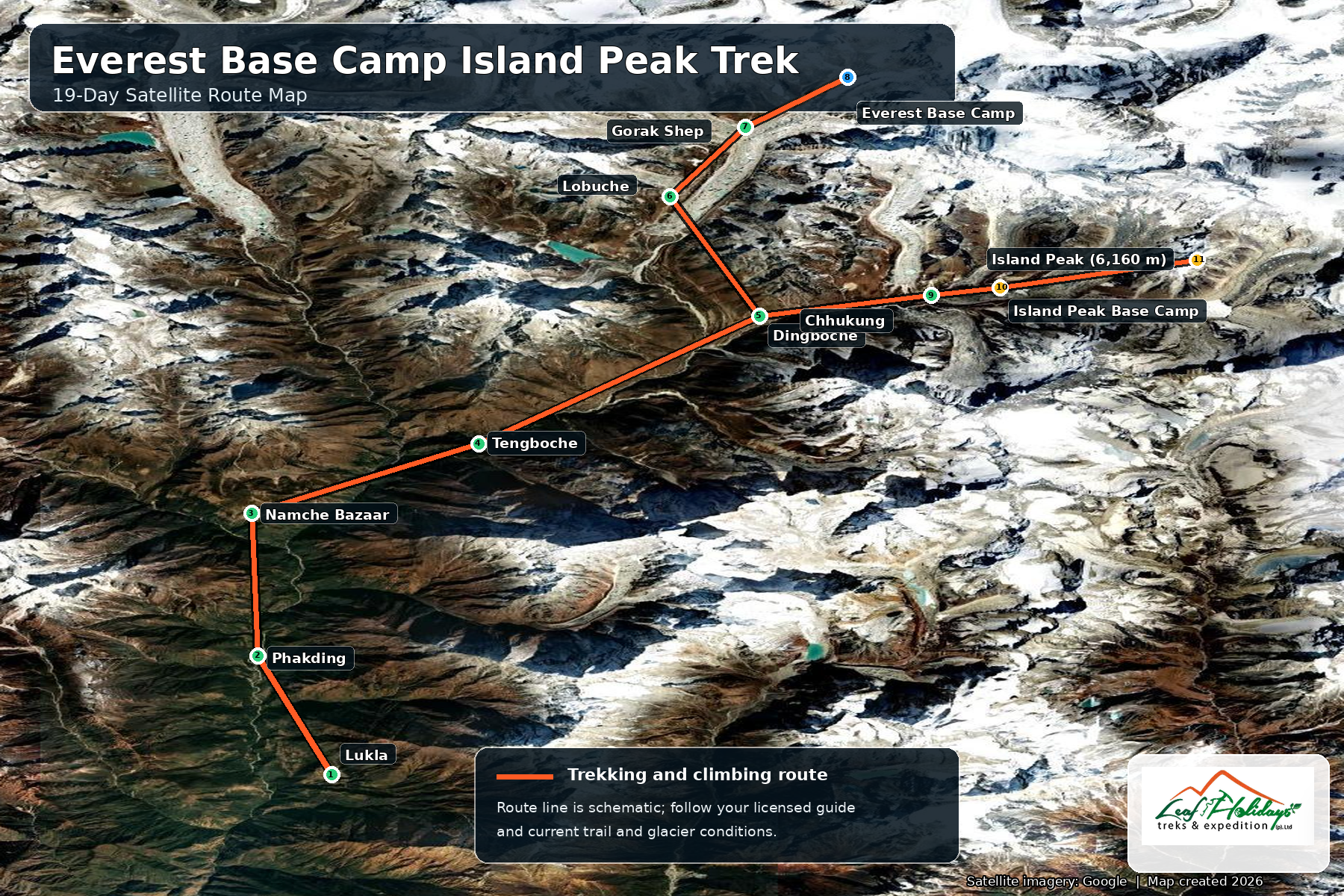
A digital map is helpful for understanding the route, but it cannot replace an experienced guide. Glacier conditions and summit routes can change, while mobile service and batteries may fail.
Travelers interested in a lake-based alternative can explore Gokyo Valley Trekking. A journey via Gokyo is longer and should only be advertised if the actual itinerary crosses the relevant route.
Responsible Trekking and Climbing
The route passes through fragile alpine landscapes and culturally important Sherpa communities.
Responsible behavior includes:
- Carrying reusable bottles
- Avoiding unnecessary plastic
- Packing out personal waste
- Using established toilets
- Staying on recognized trails
- Respecting monasteries and religious monuments
- Asking permission before photographing people
- Limiting unnecessary charging and hot-water use
- Supporting locally operated lodges
- Following park and climbing regulations
- Treating porters and guides fairly
Sagarmatha National Park protects an internationally important landscape and was inscribed on the UNESCO World Heritage List for its exceptional natural features. whc.unesco.org
Who Should Choose This Trip?
The Everest Base Camp Island Peak Trek is suitable for travelers who:
- Have strong cardiovascular fitness
- Can walk for several consecutive days
- Want to experience introductory mountaineering
- Are comfortable with basic accommodation
- Can tolerate cold conditions
- Have enough time for gradual acclimatization
- Understand that the summit is not guaranteed
- Are willing to follow guide decisions
It may not be appropriate for travelers who:
- Have untreated heart or respiratory conditions
- Cannot commit to consistent training
- Want a comfortable sightseeing holiday
- Have insufficient insurance
- Need a guaranteed schedule
- Are unwilling to turn around for safety
- Expect Island Peak to be a simple hike
Anyone with a medical condition should consult an appropriately qualified medical professional before booking.
Everest Base Camp Trek or Island Peak Combination?
Choose a conventional Everest Base Camp trek if your main goal is to experience Sherpa culture, famous mountain scenery, and the base of Everest without technical climbing.
Choose the Everest Base Camp Island Peak Trek if you want a greater physical challenge, are prepared to train, and wish to experience a genuine Himalayan summit.
Travelers looking for additional comfort may compare the Luxury Everest Base Camp Trek. Those with limited time can review the Everest Base Camp Helicopter Tour, although a helicopter tour cannot reproduce the experience of trekking and climbing through the region.
Book the Everest Base Camp Island Peak Trek.
The Everest Base Camp Island Peak Trek is an ambitious journey that combines celebrated trekking trails with a challenging Himalayan summit. It requires more than enthusiasm: proper acclimatization, physical preparation, appropriate equipment, and professional climbing support are essential.
Leaf Holidays Treks and Expeditions can help organize a 19-day program with local guides, required permits, mountain accommodation, transportation, and climbing logistics. The final route remains flexible because weather, flight schedules, and individual acclimatization may affect operations.
Before confirming your place, request a detailed list of inclusions, equipment arrangements, guide qualifications, emergency procedures, and current permit fees.
Contact Leaf Holidays Treks and Expeditions to discuss group departures, private climbing options, and a suitable preparation plan for your Everest Base Camp Island Peak adventure.
Detail Itinerary of Everest Base Camp Island Peak Trek: Complete 19-Day Guide
Day 01: Arrival in Kathmandu
Arrive at Tribhuvan International Airport, where our team will welcome you and transfer you to your Kathmandu hotel. If time permits, explore the nearby cultural attractions. Breakfast is included in Kathmandu, while full-board meals are provided during the trek.
Highest Altitude
1300m. (Kathmandu)
Meals
Breakfast
Accommodation
HotelDay 02: Kathmandu Valley sightseeing
Explore Kathmandu’s cultural landmarks, temples, and lively streets. In the evening, you may visit a local restaurant or enjoy a traditional Dohori Sanjh featuring Nepali music, food, and cultural performances.

Activity & Duration
sightseeing
Highest Altitude
1300m. (Kathmandu)
Meals
Breakfast
Accommodation
HotelDay 03: Flight from Kathmand Lukla and trek to Phakding
After breakfast, transfer to Kathmandu Airport for a scenic flight to Lukla. Meet the trekking crew and begin a gentle downhill walk through Sherpa villages, enjoying views of Kongde Ri, Khumbila, and Kusum Kanguru. Reach Phakding after approximately 3–4 hours and stay overnight at a guesthouse.
Activity & Duration
Trekking, 2-3 hours
Highest Altitude
2610m. (Phakding)
Meals
Breakfast, lunch and dinner
Accommodation
GuesthouseDay 04: Trek to Namche Bazaar (3440 m)
Trek through colorful villages and enter Sagarmatha National Park before stopping for lunch at Jorsale. Cross the famous Hillary Suspension Bridge over the Dudh Koshi River and climb toward Namche Bazaar. After approximately 5–6 hours of walking, reach Namche and stay overnight at a local teahouse.
Activity & Duration
Trekking, 7 hours
Highest Altitude
3440m. (Namche Bazaar)
Meals
Breakfast,, lunch and dinner
Accommodation
hotelDay 05: Rest and acclimatization day
Spend an acclimatization day in Namche Bazaar with a short hike to Hotel Everest View. Enjoy panoramic views of Everest, Lhotse, Nuptse, Ama Dablam, Thamserku, and other Himalayan peaks before returning to Namche for an overnight stay.
Highest Altitude
3440m. (Namche Bazaar)
Meals
Breakfast, lunch and dinner
Accommodation
hotelDay 06: Trek to Tengboche from Namche Bazaar
After breakfast, trek from Namche Bazaar to Tengboche through rhododendron, pine, and fir forests. Enjoy views of Everest, Ama Dablam, Lhotse, Nuptse, and Thamserku along the approximately five-hour trail. Visit Tengboche Monastery and stay overnight at a nearby teahouse.
Activity & Duration
Trekking, 3-5 hours
Highest Altitude
3867m. (Tengboche)
Meals
Breakfast, lunch and dinner
Accommodation
GuesthouseDay 07: Trek to Dingboche
Trek toward Dingboche via Upper Pangboche, where you may visit one of the Khumbu region’s oldest monasteries. Stop for lunch at Shomare, then follow the Imja Khola through beautiful alpine landscapes. Arrive in Dingboche and enjoy impressive views of the surrounding Himalayan peaks.
Activity & Duration
Trekking, 6 hours
Highest Altitude
4410m. (Dingboche)
Meals
Breakfast, lunch and dinner
Accommodation
GuesthouseDay 08: Trek to Lobuche
Trek from Dingboche to Lobuche at 4,910 meters in approximately 4–5 hours. Stop for lunch at Dughla, then climb past the Thukla memorials while enjoying views of Lobuche Peak, Ama Dablam, and the surrounding glaciers. Overnight in Lobuche.
Activity & Duration
Trekking, around 5 hours
Highest Altitude
4940m. (Lobuche)
Meals
Breakfast, lunch and dinner
Accommodation
GuesthouseDay 09: Trek to Gorak Shep, Continue trek to EBC and back to Gorakshep
Trek from Lobuche to Gorak Shep, have lunch, and continue across rocky glacial terrain to Everest Base Camp at 5,364 meters. Explore the iconic base camp and admire the dramatic Himalayan scenery before returning to Gorak Shep for an overnight stay. The journey takes approximately 7–8 hours.
Activity & Duration
Trekking, 4-5 hours
Highest Altitude
5164m. (Gorakshep)
Meals
Breakfast, lunch and dinner
Accommodation
GuesthouseDay 10: Hike to Kala Patthar (5,645 m) and trek down to Dingboche
Begin early with a climb to Kala Patthar at approximately 5,545 meters for panoramic views of Everest, Lhotse, Nuptse, and the surrounding Himalayas. Descend through Gorak Shep and Lobuche before continuing to Dingboche for an overnight stay. The journey takes around 5–6 hours.
Activity & Duration
Trekking, 7-8 hours
Highest Altitude
4410m. (Dingboche)
Meals
Breakfast, lunch and dinner
Accommodation
GuesthouseDay 11: Trek from Dingboche to Chukkung
Trek from Dingboche to Chhukung at 4,760 meters in approximately 2–3 hours. Enjoy views of Lhotse, Nuptse, Ama Dablam, Imja Glacier, and Island Peak, locally known as Imja Tse. Overnight at a teahouse in Chhukung.
Activity & Duration
Trekking, 2 hours
Highest Altitude
5550m. (Chukkung)
Meals
Breakfast, lunch and dinner
Accommodation
GuesthouseDay 12: Chhukung to Island Peak Base camp: 3 to 4 hours
Begin early and trek for approximately 3–4 hours across steep, rocky terrain to Island Peak Base Camp at around 5,200 meters. Your climbing guide will lead the group and assist throughout the journey. As no permanent lodges are available, stay overnight in tents at base camp.
Activity & Duration
Trekking, 3-4 hours
Highest Altitude
6189m. (Island Peak Base camp)
Meals
Breakfast, lunch and dinner
Accommodation
GuesthouseDay 13: Island Peak High Camp (5,200m):3-4 hours
Today will be the day when you will be able to get a 360-degree panoramic view of several snow-capped mountains. After having our breakfast, we will start our trek of 2–3 hours to finally reach Island Peak High Camp. Once you reach there, you will get a clear picture of the mountains. We will set up our tents, spend our night there, and gather our energy for tomorrow’s journey.
Activity & Duration
Trekking, 3-4 hours
Highest Altitude
5200m. (Island Peak High Camp)
Meals
Breakfast, lunch and dinner
Accommodation
GuesthouseDay 14: Island Peak summit (6,189m/20,305ft) & return back to Chhukung, 8-9hours
Begin the summit attempt before dawn and climb Island Peak at 6,160 meters using ropes and mountaineering equipment. If weather and health conditions permit, enjoy panoramic Himalayan views from the summit before descending to Chhukung. The demanding round trip takes approximately 8–10 hours.
Activity & Duration
Trekking, 8-9 hours
Highest Altitude
5550m. (Chhukung)
Meals
Breakfast, lunch and dinner
Accommodation
GuesthouseDay 15: Trek to Khumjung (3,780m/12,401ft)
Descend from Chhukung toward Khumjung through scenic valleys, forests, and traditional Sherpa settlements. Upon arrival, explore the village and learn about local culture, history, and daily life. Enjoy dinner and stay overnight at a local guesthouse.
Activity & Duration
Trekking, 4-6 hours
Highest Altitude
3970m. (Khumjung )
Meals
Breakfast, lunch and dinner
Accommodation
GuesthouseDay 16: Trek to Namche Bazzar
On this day, we will return to Namche Bazaar. We will start our journey from Imja Khola, follow the trail to Tengboche, and descend to Pungi Thanka to finally reach Namche Bazaar. We will stay the night at the guesthouse. You can also revisit your favorite sites and recreate your memories during your stay here.
Activity & Duration
Trekking, 4-5 hours
Highest Altitude
3440m. (Namche Bazzar)
Meals
Breakfast, lunch and dinner
Accommodation
GuesthouseDay 17: Trek to Lukla
As Namche, we will retake our path from where we began our trek to Island Peak Camp. We will walk down the trail and eventually reach Lukla, where we will spend our night and be hosted with a celebration for completing our thrilling but adventurous journey to Island Peak Camp and Everest Base Camp.
Activity & Duration
Trekking, 7 hours
Highest Altitude
2860m. (Lukla)
Meals
Breakfast, lunch and dinner
Accommodation
GuesthouseDay 18: Return back to Kathmandu
This will be the final day of your Everest Base Camp trek with Island Peak Climbing. On this day, we will have our breakfast early in the morning and head back to Tenzing Hillary Airport, from where we will take our flight to Kathmandu. We will spend our night at the hotel. You can also visit several sites if you have spare time.
Activity & Duration
Flight, around 30 minutes
Highest Altitude
1300m. (Kathmandu)
Meals
Dinner
Accommodation
HotelDay 19: Transfer to the airport for the final departure
This will be the last day of the trek to Everest Base Camp with Island Peak Climbing. We will take you in a private vehicle to the airport, from where you can depart for your final destination.
We would also like to inform you that if you want to spend some more time in Kathmandu, then the services provided will not be included in the package. You have to pay for those services on your own.
Highest Altitude
1300m. (Kathmandu)
Meals
Breakfast
Accommodation
Hotel
- The itinerary may change because of weather, trail conditions, Lukla flight schedules, or participant health.
- Acclimatization days are included to support safer altitude adjustment.
- Daily walking times are approximate and depend on pace and conditions.
- The Island Peak summit is not guaranteed and depends on weather, health, and the climbing guide’s decision.
- Participants must follow all safety instructions provided by the trekking and climbing guides.
- Proper travel insurance covering trekking and climbing up to 6,160 meters is mandatory.
- Technical climbing equipment will be used during the Island Peak summit attempt.
- Inform your guide immediately if you experience symptoms of altitude sickness.
- Extra expenses caused by delays, emergencies, or itinerary changes may not be included.
- Keep at least one flexible day in Nepal because flights to and from Lukla may be delayed.
Includes and Excludes
What is included?
- Airport pickups and drops in a private vehicle
- Hotel accommodation in Kathmandu with bed and breakfast
- Teahouse accommodation during the trek
- Climbing guide for climbing the island peak.
- All meals (breakfast, lunch, and dinner) during the trek
- All ground transportation on a comfortable private vehicle as per the itinerary
- Domestic flights (Kathmandu-Lukla-Kathmandu)
- An experienced, English-speaking, and government-licensed holder of Guide and Porter service (2 trekkers: 1 porter)
- Staff costs, including their salary, insurance, equipment, domestic airfare, food, and accommodation
- Down jacket
- All necessary paperwork and trekking permits (National Park Permit, TIMS)
- Medical kit (carried by your trek leader)
- All government and local taxes
What is excluded?
- Nepalese visa fee
- Excess baggage charge(s)
- Extra night accommodation in Kathmandu because of early arrival, late departure, or early return from the mountain (due to any reason) than the scheduled itinerary
- Emergency expenses like rescues and emergency medical treatment.
- Personal insurance charges.
- International flights
- Travel and rescue insurance
- Personal expenses (phone calls, laundry, bar bills, battery recharge, extra porter, bottle or boiled water, shower, etc.)
- Tips for guide(s), porter(s), and driver(s)
Trip Information
| Trip Information | Details |
|---|---|
| Trip duration | 19 days |
| Destination | Everest Region, Nepal |
| Maximum altitude | 6,160 m at Island Peak |
| Trip difficulty | Challenging |
| Activity | Trekking and peak climbing |
| Starting and ending point | Kathmandu, Nepal |
| Trek starting point | Lukla |
| Main destinations | Namche Bazaar, Tengboche, Dingboche, Everest Base Camp, Chhukung, and Island Peak |
| Accommodation | Hotels in Kathmandu, teahouses during the trek, and tents at Island Peak Base Camp |
| Meals | Breakfast in Kathmandu and full-board meals during the trek and climbing period |
| Transportation | Private airport transfers and domestic flights to and from Lukla |
| Group size | 2–15 participants |
| Best seasons | March–May and September–November |
| Trekking hours | Approximately 5–8 hours daily |
| Summit-day duration | Approximately 8–12 hours |
| Required permits | Island Peak climbing permit, Sagarmatha National Park permit, and local municipality permit |
| Guide service | Licensed trekking guide and experienced climbing guide |
| Technical equipment | Harness, helmet, crampons, ice axe, ascender, descender, and climbing ropes |
| Fitness requirement | Strong physical fitness and endurance |
| Previous experience | A trekking experience is recommended; basic mountaineering training is highly beneficial. |
| Major highlights | Everest Base Camp, Kala Patthar, Sherpa culture, Tengboche Monastery, and Island Peak summit |
| Mountain views | Everest, Lhotse, Nuptse, Ama Dablam, Makalu, and surrounding Himalayan peaks |
| Accommodation level | Tourist-standard hotel, mountain teahouse, and basic camping |
| Mobile and internet | Available in selected settlements but unreliable at higher elevations |
| Electricity | Available at most teahouses for an additional charge |
| Travel insurance | Mandatory coverage for trekking and climbing up to at least 6,160 meters |
| Summit guarantee | Not guaranteed; depends on health, weather, and mountain conditions |
Frequently Asked Questions
How long is the Everest Base Camp Island Peak Trek?
The complete trip takes 19 days, including arrival, preparation, acclimatization, trekking, the Island Peak summit attempt, and departure. Weather or Lukla flight delays may extend the journey.
How difficult is the Everest Base Camp Island Peak Trek?
The trip is challenging because it combines high-altitude trekking with technical peak climbing. Participants must handle long walking days, cold weather, reduced oxygen, glacier terrain, and a demanding summit attempt.
What is the maximum altitude of the trip?
The highest point is the summit of Island Peak, officially listed at 6,160 meters. Everest Base Camp is approximately 5,364 meters, while Kala Patthar is around 5,545 meters.
Is previous climbing experience required?
Previous climbing experience is helpful but not always compulsory. However, participants should have strong physical fitness and receive training in using crampons, ropes, harnesses, ascenders, and ice axes before the summit attempt.
Is Island Peak a trekking peak or a technical climb?
Island Peak is classified as a trekking peak, but its summit is not an ordinary hike. Climbers may encounter glaciers, crevasses, fixed ropes, and steep snow or ice sections requiring mountaineering equipment.
What permits are required?
Travelers generally need an Island Peak climbing permit, a Sagarmatha National Park entry permit, and a Khumbu Pasang Lhamu Rural Municipality permit. Permit fees and regulations should be confirmed before departure.
What is the best time for the Everest Base Camp Island Peak Trek?
The best seasons are spring from March to May and autumn from September to November. These periods generally offer better visibility and more favorable trekking and climbing conditions.
What accommodation is available during the trip?
Travelers stay in a hotel in Kathmandu, teahouses, or mountain lodges during the trek and tents at Island Peak Base Camp. Facilities become more basic at higher elevations.
Are meals included in the package?
Breakfast is usually included during the Kathmandu stay. Breakfast, lunch, and dinner are normally provided throughout the trekking and climbing period. Drinks, snacks, and additional meals may cost extra.
What equipment is required for Island Peak?
Essential climbing equipment includes mountaineering boots, crampons, a helmet, a harness, an ice axe, an ascender, a descender, carabiners, and technical gloves. Confirm which items are included or available for rent before departure.
Is travel insurance mandatory?
Yes. Insurance should specifically cover trekking and mountaineering up to at least 6,160 meters, medical treatment, helicopter evacuation, trip interruption, and repatriation.
Is altitude sickness a concern?
Yes. The route reaches several locations above 5,000 meters. Participants must ascend gradually, use acclimatization days, and immediately inform their guide about headaches, nausea, dizziness, unusual fatigue, or breathing difficulty.
How long does the Island Peak summit attempt take?
The summit attempt generally takes approximately 8–12 hours for the complete ascent and descent. The exact duration depends on weather, snow conditions, route conditions, and the climber’s pace.
Is the Island Peak summit guaranteed?
No. Summit success depends on the participant’s health, acclimatization, weather, and mountain conditions. The climbing guide may cancel or stop the attempt when continuing would be unsafe.
Can beginners join the Everest Base Camp Island Peak Trek?
Well-prepared beginners with excellent fitness may participate under experienced climbing supervision. Completing an introductory mountaineering course before visiting Nepal is strongly recommended.
What happens if the Lukla flight is delayed?
Lukla flights may be delayed or cancelled because of clouds, wind, or poor visibility. The schedule may be adjusted, and additional accommodation or transportation expenses may apply. Keeping at least one flexible day is recommended.
Trip Reviews
Price starts
US$ 1900
Need Help?
Ask to Travel Expert