
- Mt. Kailash Tour
- Kailash Mansarovar Overland Tour
- Kailash Mansarovar Yatra by Helicopter – Complete Spiritual Journey Guide
- Kailash Yatra via Lucknow
- Kailash Mansarovar Tour via Lhasa
- Kailash Lhasa EBC Tour From Beijing
- Kailash Heli Tour via Kerung: Complete Spiritual Journey Guide
- Kailash Tour via Lhasa In Kerung Out
- Lhasa EBC Kailash Tour
- Kailash Heli Tour
- Kailash Mansarovar Yatra from Nepal 2027: Cost & Itinerary
- Kailash Nandi Kora
- Kailash Tour via Humla Simikot – 20 Days
- Mount Kailash Tour: 7 Amazing Experiences in 2027
- Trekking
-
-
- Everest Region
- Luxury Everest Base Camp Trek: 7 Unforgettable Highlights
- Everest Base Camp Trek 2026: Cost, Route, and Complete Guide
- Everest Three Passes Trek 2027: Cost, Route & Itinerary
- Everest Base Camp Short Trek
- Everest Panorama Trek: Amazing 10-Day Cost & Itinerary
- Everest Base Camp Island Peak Trek: Complete 19-Day Guide
- Gokyo Valley Trekking 2027: Easy Guide to Cost & Itinerary
- Mera Peak Climbing 2027: Complete Cost & Itinerary Guide
- Rolwaling Valley Trek: 23-Day Itinerary, Cost, Permits & Difficulty
- Dolpo Region Trek
- Everest Region
-
- Annapurna Region
- Annapurna Base Camp Trekking
- Annapurna Circuit Trek
- Annapurna Base Camp Trek: 7 Amazing Cost & Route Tips
- Mardi Himal Trek: 7 Amazing Highlights & Complete Guide
- Annapurna Alternative Combine Trek: 18 Amazing Days
- Mohare Dada Trek
- Ghorepani Poon Hill Trek: 7 Unforgettable Highlights
- Khopra Ridge Community Trek: 13-Day Ultimate Adventure
- Damodar Kunda Trek: 10-Day Ultimate Sacred Adventure
- Upper Mustang Trek: 10 Amazing Sights : Ultimate Guide
- Jomsom Muktinath Trek: Amazing 12-Day Ultimate Guide
- Ghale Gaun Trek: 7 Amazing Reasons : Ultimate Guide
- Dhampus Sarangkot Trek: 7 Incredible Experiences
- Dhaulagiri Region
- Annapurna Region
-
-
- Tours
-
-
- Day Tours
- Rickshaw–a three-wheeler Tour
- Pharping Dakshinkali Day Tour: 7 Amazing Highlights
- Historical Tour: 7 Amazing Places to Explore
- Kathmandu Temple Tour: 7 Amazing Spiritual Places
- Nagarkot Tour
- Bhaktapur City Tour: 7 Amazing Places to Explore
- Kathmandu City Tour – Complete Heritage & Cultural Experience in Nepal
- Chandragiri Hill: A Scenic Himalayan Escape Near Kathmandu
- Chitlang Hiking
- Shivapuri to Sundarijal Day Hiking
- Kulekhani Dam Day Tour — Complete Travel Guide
- Day Tours
-
- Package Tours
- Mustang Tour on Jeep
- Nepal Tour Package for Nepali: 12 Amazing Destinations to Explore (2026)
- Muktinath Tour: Complete Guide to Nepal’s Sacred Himalayan Pilgrimage
- 3N,4D Kathmandu Pilgrimage Tour
- Nepal Buddhist Pilgrimage Tour: 7 Sacred Sites Not to Miss
- 6D Nepal Pilgrimage Tour: 7 Amazing Sacred Places
- 7 Nights, 8 Days Nepal Tour
- Districts tour of Nepal
- Janakpur Tour Package: Price, Family Tour & Travel Guide from Kathmandu 2026
- Short Hike in Nepal: 7 Best Easy Treks for Beginners
- Package Tours
-
-
- Outbound
-
- Activities
- Climbing
- Bungee Jumping in Nepal
- Heli Skiing Adventure in the Himalayas
- Canoeing in Nepal
- Mountain Flight in Nepal
- Zip Flyer in Pokhara: The Ultimate Adventure Experience
- Paragliding in Pokhara: 7 Amazing Reasons to Experience Nepal’s Best Adventure
- Kathmandu Cycling Tour: 9 Amazing Adventures
- Rafting
- Rock Climbing
- Company
- Travel Info
- Travel Insurance
- Recommended Medical Kit
- Nepal Visa Information
- Flight delays and cancellation in Nepal
- Electricity in Nepal: Rates, Bill Check, Calculator and NEA Services
- Trekking Equipment Checklist: 40 Essential Items
- Best Kailash season in Tibet
- Best Trekking season in Nepal
- Trekking in Nepal 2027: 15 Best Himalayan Adventures
- Blogs
- Contact


WhatsApp
+977-9851035239

Email Us
[email protected]
Dhaulagiri Circuit Trek: 12 Incredible Highlights


Trip Duration
21 Days
Trip Difficulty
Moderate
Max. Altitude
5,250m. / 17,224ft.
Activity
Trekking, Hiking & Sightseeing
Destination
Nepal
Group Size
2-20 Pax
Accommodation
3-4 star hotel in kathmandu, Normal guest house during trekkingHighlights of Dhaulagiri Circuit Trek: 12 Incredible Highlights
- Explore the remote Dhaulagiri Circuit Trek around the world’s seventh-highest mountain
- Reach Dhaulagiri Base Camp beneath Mount Dhaulagiri at 8,167 meters
- Cross the challenging French Pass at approximately 5,360 meters
- Cross Dhampus Pass at over 5,200 meters
- Experience the isolated and dramatic Hidden Valley
- Trek through glacier, moraine, snow, and high-altitude terrain
- Spend an important acclimatization stop at Italian Base Camp
- Explore traditional villages of the Myagdi region
- Enjoy spectacular views of Dhaulagiri, Tukuche Peak, Nilgiri, and the Annapurna range
- Experience expedition-style camping in remote Himalayan areas
- Descend into the beautiful Kali Gandaki Valley
- Visit Marpha, one of the most attractive traditional villages near the end of the circuit
- Trek on peaceful trails with far fewer visitors than Everest and Annapurna
- Experience dramatic changes from green valleys to glacial wilderness
- Complete one of Nepal’s most demanding and rewarding high-altitude trekking circuits
Price starts
US$ 1900
We offer group discounts
-
2 -
4 person
US$ 2200
-
5 -
10 person
US$ 1900
-
11 over
9999
US$ 1700
Total Cost:
US$

Need Help?
Ask to Travel Expert
Trip Overview of Dhaulagiri Circuit Trek: 12 Incredible Highlights
The Dhaulagiri Circuit Trek is one of Nepal’s most challenging and rewarding high-altitude adventures. Far from the crowded trails of Everest and Annapurna, this journey circles the massive Dhaulagiri range through remote villages, deep river valleys, glaciers, high mountain passes, and an extraordinary landscape known as Hidden Valley.
Mount Dhaulagiri rises to 8,167 meters and is the seventh-highest mountain in the world. According to the Nepal Tourism Board’s official Dhaulagiri information, the massif lies northwest of Pokhara and has played an important role in Himalayan exploration history.
The Dhaulagiri Circuit Trek is not a conventional teahouse journey. The lower sections pass through inhabited villages, but the upper route becomes increasingly isolated. Trekkers must cross glaciers, moraine, snow-covered terrain, and two major high passes before descending towards the Kali Gandaki Valley.
This adventure is particularly suitable for experienced trekkers looking for a serious Himalayan challenge. The Dhaulagiri Circuit Trek combines the Dhaulagiri Base Camp Trek experience with French Pass, Hidden Valley, Dhampus Pass, and the traditional villages of Myagdi and Mustang.
This complete guide covers the Dhaulagiri Circuit Trek Map, Dhaulagiri Trek Itinerary, Dhaulagiri Circuit Trek Difficulty, Dhaulagiri Base Camp Trek, distance, altitude, cost, permits, accommodation, food, training, safety, and essential preparation.
Why Choose the Dhaulagiri Circuit Trek?
The Dhaulagiri Circuit Trek offers an experience that is increasingly difficult to find on Nepal’s more developed trekking routes: genuine wilderness.
Large parts of the upper journey pass far from permanent settlements. Beyond the lower villages, trekkers enter landscapes dominated by glaciers, cliffs, snow, exposed valleys, and enormous mountain walls.
Another attraction is the continuously changing environment. The trek begins among cultivated hills, forests, rivers, and traditional villages before gradually entering alpine terrain. Above the tree line, vegetation disappears and the landscape becomes increasingly dramatic.
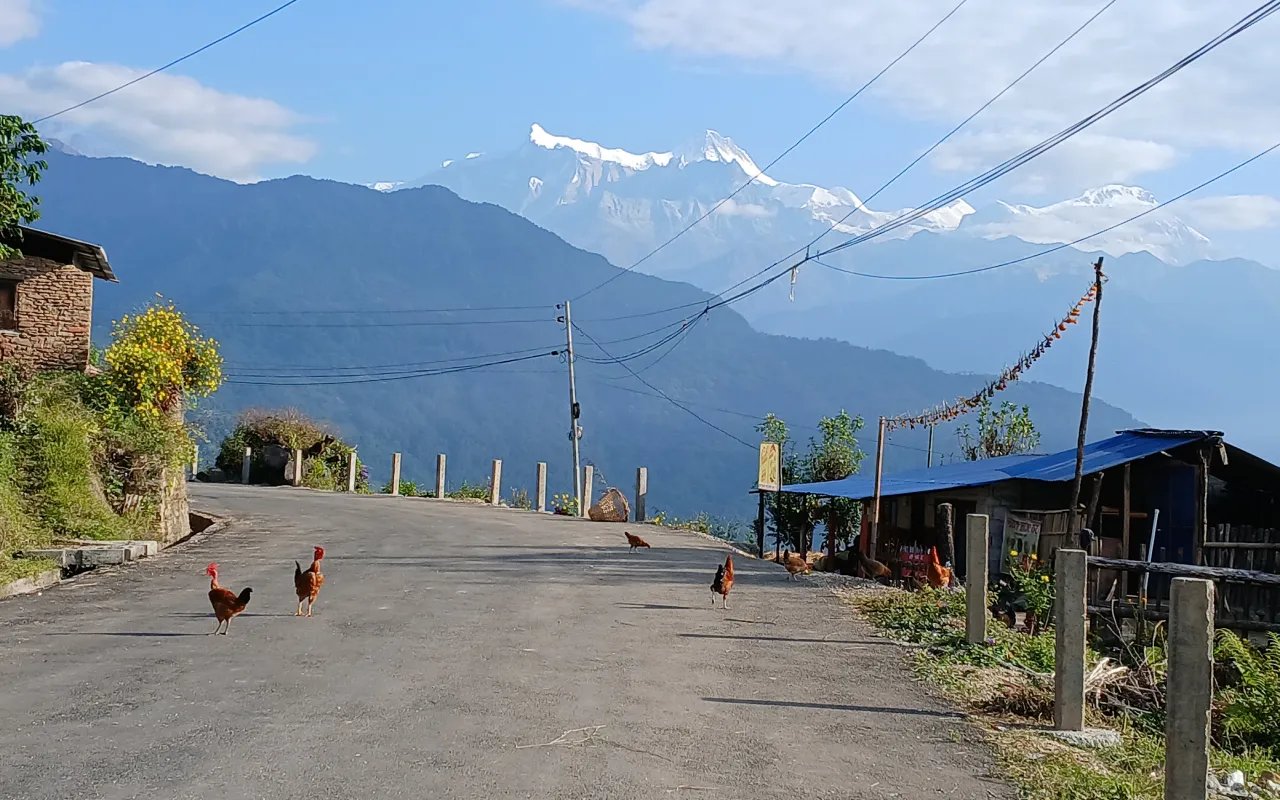
The Dhaulagiri Circuit Trek also provides exceptional mountain scenery. Mount Dhaulagiri dominates much of the journey, while trekkers can also see surrounding peaks such as Tukuche Peak, Dhaulagiri II, Dhaulagiri III, Dhaulagiri IV, Dhaulagiri V, Nilgiri, and sections of the Annapurna range.
For experienced trekkers, the combination of altitude, glaciers, high passes, remote camping, and cultural diversity creates a genuine expedition-style experience.
12 Incredible Dhaulagiri Circuit Trek Highlights
Mount Dhaulagiri
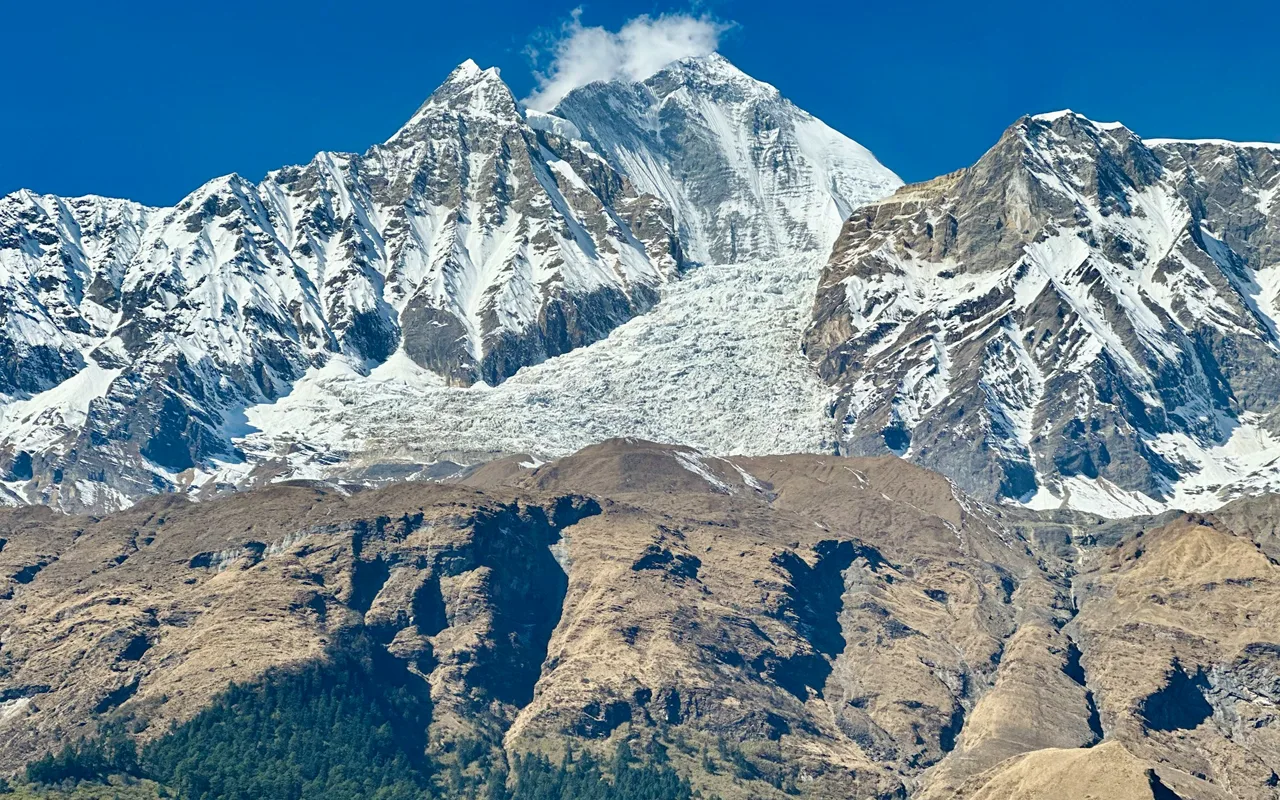
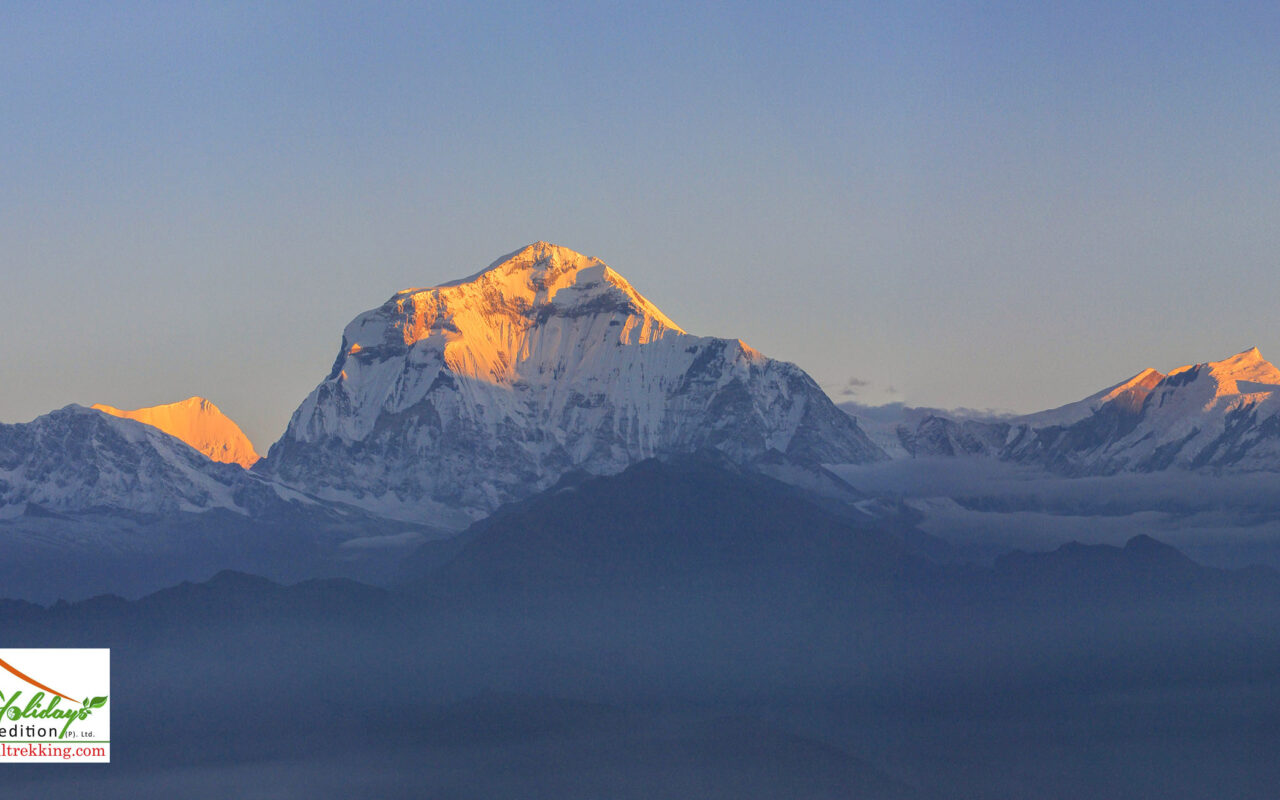
Mount Dhaulagiri is the central attraction of the Dhaulagiri Circuit Trek.
At 8,167 meters, it is officially recognized by the Nepal Tourism Board as the seventh-highest mountain in the world. Its enormous scale becomes increasingly apparent as trekkers move deeper into the Myagdi Valley and approach the base camp.
The mountain remains visible from several sections of the trail, but the closest perspectives around the base camp provide an entirely different appreciation of its glaciers, ridges, and steep Himalayan walls.
Dhaulagiri Base Camp
The Dhaulagiri Base Camp Trek section is one of the defining stages of the complete circuit.
Dhaulagiri Base Camp is commonly placed at approximately 4,700–4,750 meters, although exact campsite elevations can vary slightly depending on GPS readings and seasonal camp placement. Current trekking itineraries commonly list the camp at around 4,740–4,750 meters.
Reaching the base camp places trekkers beneath an immense high-altitude landscape of ice, moraine, glaciers, and towering peaks.
Unlike a simple out-and-back Dhaulagiri Base Camp Trek, the complete Dhaulagiri Circuit Trek continues beyond the base camp and crosses the high mountains towards Hidden Valley.
Italian Base Camp
Italian Base Camp is one of the most important acclimatization stops on the route.
Located at roughly 3,660 meters on many trekking itineraries, it provides a strategic location for rest before entering the more demanding glacial sections above.
The surrounding scenery becomes increasingly dramatic, with forest giving way to rocky mountain terrain and enormous Himalayan walls rising above the valley.
Spending sufficient time here is important because the Dhaulagiri Circuit Trek becomes significantly more demanding after Italian Base Camp.
Glacier and Moraine Terrain
One of the characteristics that separates this route from Nepal’s conventional trekking trails is the amount of glacial terrain.
Beyond Italian Base Camp, trekkers enter increasingly unstable and rugged sections containing moraine, rock, snow, and glacier surfaces.
Route conditions can change from season to season, making experienced guiding particularly important.
The glacier section gives the Dhaulagiri Circuit Trek a genuine expedition atmosphere and requires much greater attention than walking on established village trails.
French Pass
French Pass is generally regarded as the highest point on the main trekking route.
Most current itineraries place French Pass at approximately 5,360 meters.
The climb requires proper acclimatization, stable weather, and strong physical condition.
From the pass, trekkers experience expansive views of the Dhaulagiri massif and the isolated high-altitude terrain surrounding Hidden Valley.
Successfully crossing French Pass is one of the greatest achievements of the Dhaulagiri Circuit Trek.
Hidden Valley
Hidden Valley lies beyond French Pass and is one of the most unusual landscapes on the journey.
The environment is dry, exposed, windswept, and surrounded by high mountain terrain. After the steep glaciers and massive walls around Dhaulagiri Base Camp, the broad valley creates a completely different atmosphere.
There are no normal village facilities here, so groups must rely on their expedition logistics.
Hidden Valley also creates one of the most serious logistical sections of the Dhaulagiri Circuit Trek because trekkers remain above 5,000 metres between major passes. Experienced operators emphasize the importance of entering this section properly and acclimatizing.
Dhampus Pass
After Hidden Valley, the route continues towards Dhampus Pass, another major high-altitude crossing.
Published elevations vary slightly, but many current itineraries place Dhampus Pass at approximately 5,240 meters.
The trail may contain snow, ice, or loose terrain depending on conditions.
After crossing the pass, the route begins a major descent toward Yak Kharka and eventually the Kali Gandaki Valley.
Remote Myagdi Villages
The lower section of the Dhaulagiri Circuit Trek passes through traditional settlements in Myagdi District.
Depending on the selected route and current road access, trekkers may pass through villages such as Darbang, Dharapani, Muri, Boghara, and Dobang.
These settlements reveal an entirely different side of the journey compared with the high mountain camps.
Terraced agriculture, local houses, livestock, forests, and village life provide cultural depth before the trail enters the uninhabited alpine region.
Marpha and the Kali Gandaki Valley
The dramatic high-altitude journey eventually descends into the Kali Gandaki Valley.
Marpha is one of the most attractive settlements near the end of many Dhaulagiri Trek itinerary variations. The village is known for its traditional architecture and location within the broader Annapurna and Mustang trekking region.
The descent toward Marpha creates an extraordinary transition from glacier, snow, and exposed passes to cultivated land and permanent settlement.
This connection between the Dhaulagiri and Annapurna sides is one reason the Dhaulagiri Circuit Trek feels like a complete Himalayan traverse rather than a simple base camp trek.
Expedition-Style Camping
The Dhaulagiri Circuit Trek cannot be treated entirely as a conventional teahouse trek.
Although basic accommodation may be available in lower villages, the remote upper section generally requires camping support. Current route descriptions commonly classify the journey as a hybrid trek, with expedition camping necessary through the highest and most isolated stages.
Groups may need sleeping tents, kitchen facilities, dining arrangements, food supplies, fuel, and trained support staff.
This expedition-style structure adds to the cost but also makes the journey significantly more adventurous.
Fewer Crowds
The route receives far fewer trekkers than Nepal’s famous Everest Base Camp and Annapurna Circuit trails.
Its physical difficulty, camping requirements, limited infrastructure, and demanding high passes naturally reduce visitor numbers.
For trekkers who value solitude, this is one of the biggest advantages of the Dhaulagiri Circuit Trek.
Long sections of trail can feel completely removed from Nepal’s mainstream trekking industry.
A Complete Himalayan Challenge
The greatest highlight is the overall journey.
The Dhaulagiri Circuit Trek combines traditional villages, subtropical valleys, forests, rivers, glaciers, Dhaulagiri Base Camp, French Pass, Hidden Valley, Dhampus Pass, and the Kali Gandaki Valley within one continuous adventure.
Few trekking routes in Nepal provide such a dramatic progression of landscapes and challenges.
Dhaulagiri Circuit Trek Map and Route Overview
A proper Dhaulagiri Circuit Trek Map should show the entire journey from the lower Myagdi region to Dhaulagiri Base Camp, French Pass, Hidden Valley, Dhampus Pass, and the final descent towards Marpha or Jomsom.
Most traditional programs begin with travel from Kathmandu to Pokhara before continuing by road towards Beni and the trekking trailhead.
Road extensions have changed some starting points over the years. Depending on the current road condition and package design, trekking may begin around Darbang, Dharapani, Muri, or another nearby settlement.
The route then follows the Myagdi Khola system through increasingly remote villages and forests.
Higher up, trekkers reach Italian Base Camp and continue through glacial terrain towards Dhaulagiri Base Camp.
From the base camp, the Dhaulagiri Circuit Trek climbs toward French Pass, enters Hidden Valley, crosses Dhampus Pass, and descends toward Yak Kharka and Marpha.
The final stages normally connect with the established transportation network around Marpha or Jomsom.
The Dhaulagiri Circuit Trek Map should always match the actual itinerary being sold because roads, campsites, glacier conditions, and overnight locations may change.
Dhaulagiri Circuit Trek Distance
There is no single universally accepted Dhaulagiri Circuit Trek distance.
Published trekking itineraries currently vary significantly. Some route measurements calculate roughly 100–130 kilometers, while others calculate 160 kilometers or more depending on trailhead access, side excursions, GPS methodology, and which transport sections are excluded.
This variation does not necessarily mean one measurement is incorrect.
Road development may allow one itinerary to drive farther into the lower valley, while another begins walking much earlier. Some GPS measurements include acclimatization walks and camp exploration; others only calculate the main trail.
Therefore, your published Dhaulagiri Circuit Trek distance should match the exact itinerary and map provided to guests.
Daily walking commonly requires several hours, but kilometers alone do not explain the difficulty.
Walking eight kilometers across glacier moraine above 4,500 meters may require more energy and time than covering twice that distance on a lower, easier trail.
Dhaulagiri Trek Itinerary Overview
A well-designed Dhaulagiri Trek itinerary should prioritize acclimatization rather than simply minimizing the number of days.
Most programs begin with arrival and preparation in Kathmandu before travelling to Pokhara and the Myagdi region.
The lower trekking stages gradually move through traditional settlements and forested river valleys toward Italian Base Camp.
An acclimatization period around Italian Base Camp is particularly valuable before the Dhaulagiri Circuit Trek enters the glacier zone.
From Italian Base Camp, the route normally progresses through one or more intermediate camps before reaching Dhaulagiri Base Camp.
After adequate rest and assessment of the weather, trekkers continue towards French Pass and Hidden Valley.
The next major challenge is Dhampus Pass, followed by a steep descent toward Yak Kharka and the settlement of Marpha.
From Marpha or Jomsom, transportation returns travelers towards Pokhara and eventually Kathmandu.
A Dhaulagiri Trek itinerary may take around 16 to 20 days or longer depending on the starting point, acclimatization schedule, transportation, and service design. Current commercial itineraries demonstrate considerable variation in trip length.
Shortening the Dhaulagiri Circuit Trek simply for marketing purposes is not recommended if it removes important acclimatization days.
Dhaulagiri Circuit Trek Difficulty
The Dhaulagiri Circuit Trek difficulty is strenuous and should be taken seriously.
This is not simply because the route reaches above 5,000 metres.
Trekkers also face long walking days, glacier travel, moraine, snow, loose rock, steep ascents, exposed terrain, cold nights, basic camps, and major changes in elevation.
French Pass rises to approximately 5,360 meters, while Dhampus Pass also crosses above 5,200 meters on commonly used routes.
Another major factor in the difficulty of the Dhaulagiri Circuit Trek is isolation.
Once groups enter the upper route, there are very few opportunities to simply stop the trek and use a nearby road.
Medical facilities are distant, communications may be unreliable, and weather can make evacuation complicated.
Previous high-altitude trekking experience is strongly recommended.
Participants should be comfortable walking six to eight hours on demanding terrain and should understand the physical and mental demands of consecutive trekking days.
Altitude and Acclimatization
Altitude is one of the most important safety considerations on the Dhaulagiri Circuit Trek.
The route gradually moves from low villages to camps above 4,000 meters and eventually crosses French Pass at approximately 5,360 meters.
Fitness does not prevent altitude sickness.
Trekkers need gradual ascent, adequate rest, good hydration, sufficient food, and honest communication with the guide.
Symptoms such as persistent headache, nausea, dizziness, unusual fatigue, poor balance, confusion, or breathlessness while resting should be reported immediately.
Acclimatization days are therefore an essential part of a professional Dhaulagiri Trek itinerary.
They should never be removed simply to create a cheaper or shorter package.
Best Time for the Dhaulagiri Circuit Trek
Spring and autumn are generally the most practical seasons for this high-altitude journey.
Spring: March to May
Spring gradually brings warmer temperatures and longer daylight.
The lower forests and villages become more comfortable as winter ends, while higher regions may still contain substantial snow.
April and May are commonly preferred because the high passes may become more manageable as seasonal conditions improve.
However, snow and poor weather can still affect French Pass and Dhampus Pass.
Autumn: September to November
Autumn is another important season for the Dhaulagiri Circuit Trek.
Post-monsoon conditions often bring clearer mountain views and more stable weather.
October and early November can provide excellent trekking conditions, although temperatures at the higher camps remain cold.
Late November increases the possibility of severe cold and winter snow.
Monsoon and Winter
The summer monsoon can make lower trails wet, muddy, unstable, and landslide-prone.
Winter brings extreme cold, heavy snow, and potentially unsafe conditions around the passes.
Off-season Dhaulagiri Circuit Trek departures require experienced leadership, flexible schedules, suitable equipment, and careful assessment of current conditions.
Dhaulagiri Circuit Trek Permit and Guide Requirements
The Nepal Tourism Board currently lists “Round Dhaulagiri” among trekking routes requiring a licensed trekking guide and an agency-issued TIMS card under the revised TIMS system.
The official TIMS Card information currently lists NPR 2,000 for most foreign trekkers and NPR 1,000 for SAARC nationals. These requirements should be reconfirmed before booking because regulations can change.
The standard circuit eventually enters the Annapurna side around the Kali Gandaki Valley. When the booked route passes through the Annapurna Conservation Area, the appropriate ACAP entry permit is required.
The current Nepal protected-area entry fee schedule lists Annapurna Conservation Area fees at NPR 3,000 for foreign visitors, NPR 1,000 for SAARC nationals, and NPR 100 for Nepali visitors per entry. Children below ten receive the listed exemption.
Travellers and trekking companies should verify the precise requirements for the final route immediately before departure rather than relying on old blog posts.
Dhaulagiri Circuit Trek Cost
The Dhaulagiri Circuit Trek cost is generally higher than a standard teahouse trek.
The biggest reason is logistics.
The remote upper section requires food, fuel, tents, cooking equipment, staff, and emergency planning to be carried into areas without normal lodge infrastructure.
There is no single Dhaulagiri Circuit Trek cost that applies to every departure.
The price depends on:
- Total trip duration
- Group size
- Starting and ending points
- Hotels in Kathmandu and Pokhara
- Ground transportation
- Guide services
- Porters and expedition staff
- Cook and kitchen crew
- Tents and camping equipment
- Meals
- TIMS and applicable conservation permits
- Staff insurance
- Emergency equipment
- Taxes and administrative expenses
When comparing the Dhaulagiri Circuit Trek cost, travelers should request a detailed inclusion and exclusion list.
A low-cost package may exclude important services such as full camping support, porters, meals, permits, hotels, transportation, or adequate staff equipment.
For a journey of this difficulty, safety and reliable logistics should carry more importance than the cheapest advertised price.
Accommodation During the Dhaulagiri Circuit Trek
Accommodation varies dramatically throughout the route.
Lower villages may have simple teahouses, homestays, or local lodges.
As the Dhaulagiri Circuit Trek moves higher, permanent accommodation becomes increasingly limited.
The section around Italian Base Camp, glacier camps, Dhaulagiri Base Camp, Hidden Valley, and the high passes generally requires expedition camping on many itineraries.
A supported group may carry:
- Sleeping tents
- Dining tent
- Kitchen equipment
- Cooking fuel
- Food supplies
- Toilet arrangements
- Group safety equipment
Trekkers need a high-quality sleeping bag suitable for freezing temperatures.
Anyone joining the journey should be comfortable spending multiple nights without showers, private bathrooms, heating, or normal hotel facilities.
Food and Drinking Water
Meals need to provide enough energy for sustained high-altitude walking.
In the lower villages, trekkers may find dal bhat, vegetables, potatoes, noodles, eggs, bread, soup, rice, and local dishes.
During the camping section, meals depend largely on the supplies carried by the expedition crew.
A professional operator should plan enough carbohydrates, protein, hot drinks, soups, and high-energy food for the group.
Dietary requirements should be communicated well before departure.
Water from streams, rivers, glacier melt, or local taps must be treated appropriately before drinking.
Boiling, reliable filtration, or purification treatment should be used.
Reusable bottles and insulated flasks are strongly recommended.
Training for the Dhaulagiri Circuit Trek
Preparation should begin well before travelling to Nepal.
For most trekkers, eight to twelve weeks of focused training provides a useful foundation.
Cardiovascular training can include:
- Hiking
- Running
- Cycling
- Stair climbing
- Swimming
- Incline treadmill sessions
Strength training should focus particularly on the legs, core, back, and stability.
Weekend hikes with substantial elevation gain are highly valuable.
Trekkers should gradually increase the weight of their daypack and practice walking on consecutive days.
Training for steep descents is just as important as preparing for climbing.
The Dhaulagiri Circuit Trek requires endurance rather than short bursts of maximum effort.
Essential Packing List
Equipment must be suitable for low valleys, freezing camps, glacier terrain, snow, strong sunshine, wind, and changing mountain weather.
Important items include:
- Broken-in trekking boots
- Waterproof jacket and trousers
- Down jacket
- Fleece or insulated mid-layer
- Thermal base layers
- Warm trekking trousers
- Insulated gloves
- Warm hat
- Sun hat
- UV-protection sunglasses
- High-SPF sunscreen
- Trekking poles
- Headlamp and spare batteries
- Warm expedition sleeping bag
- Reusable water bottles
- Insulated flask
- Water-treatment system
- Personal medicines
- Basic first-aid supplies
- Power bank
- Dry bags
- Waterproof pack cover
- Duffel bag for porter transport
Depending on snow and glacier conditions, the operator may also require or provide additional safety equipment.
The final equipment list should always be confirmed with the trekking company before departure.
Culture and Responsible Trekking
The lower Dhaulagiri Circuit Trek passes through traditional communities where visitors should behave respectfully.
Ask permission before photographing residents.
Dress appropriately around villages and religious places.
Support locally operated lodges, shops, and services whenever practical.
Waste management becomes especially important in the remote upper region.
Carry batteries, plastics, wrappers, wipes, and other non-biodegradable rubbish back to an appropriate disposal facility.
Human waste, kitchen waste, and campsites should be managed carefully to reduce environmental impact.
Trekkers should also select a company that provides fair wages, insurance, adequate clothing, suitable equipment, and reasonable loads for staff.
Responsible trekking protects both the mountain environment and the people supporting the expedition.
Health, Safety, and Travel Insurance
Comprehensive travel insurance is essential for the Dhaulagiri Circuit Trek.
The insurance policy should clearly cover trekking above the maximum altitude of the planned route.
It should also cover emergency medical treatment, trip interruption, and helicopter evacuation where available.
Trekkers should read policy exclusions carefully rather than assuming that all travel insurance includes high-altitude activities.
Emergency evacuation from remote Himalayan terrain depends on location, weather, communication, aircraft availability, and insurance authorization.
The trekking team should carry suitable first-aid equipment and dependable communication tools.
Buffer days are also valuable because weather, trail conditions, transportation, or health issues can affect the planned schedule.
How to Reach the Dhaulagiri Circuit Trek Trailhead
Most journeys begin by travelling from Kathmandu towards Pokhara and then continuing west towards Beni and the Myagdi region.
Pokhara is the primary tourism gateway for the broader Annapurna and Dhaulagiri region, and the Nepal Tourism Board notes that the Dhaulagiri massif lies northwest of the city.
From Beni, the exact road transfer depends on the chosen Dhaulagiri Trek itinerary and current road conditions.
Road development has gradually changed traditional trailheads, so operators may begin trekking from different villages.
The end of the Dhaulagiri Circuit Trek commonly reaches Marpha or the Jomsom area before travelling back through Pokhara.
Dhaulagiri Base Camp Trek vs. Dhaulagiri Circuit Trek
The terms Dhaulagiri Base Camp Trek and Dhaulagiri Circuit Trek are sometimes used interchangeably online, but they can describe different experiences.
A Dhaulagiri Base Camp Trek may focus primarily on reaching the base camp and returning through the same general valley.
The complete Dhaulagiri Circuit Trek continues beyond base camp.
It crosses French Pass, enters Hidden Valley, crosses Dhampus Pass, and descends on the opposite side toward the Kali Gandaki Valley.
Trekkers comparing packages should therefore examine the actual Dhaulagiri Trek itinerary instead of relying only on the package title.
If French Pass, Hidden Valley, Dhampus Pass, and Marpha are included, the journey represents the full circuit experience.
Is the Dhaulagiri Circuit Trek Right for You?
The Dhaulagiri Circuit Trek is best suited to experienced trekkers who enjoy serious mountain challenges.
Choose this journey if you:
- Have strong physical fitness
- Have previous multi-day trekking experience
- Are comfortable at high altitude
- Can handle basic camping conditions
- Enjoy remote wilderness
- Can walk six to eight hours on difficult terrain
- Are prepared for snow, glacier, and moraine sections
- Can adapt to itinerary changes
- Prefer fewer crowds
- Understand that comfort is limited
It may not be suitable for travellers looking for luxury lodges, constant internet access, easy evacuation, short walking days, or a predictable schedule.
For properly prepared trekkers, however, the Dhaulagiri Circuit Trek offers one of Nepal’s strongest combinations of challenge, wilderness, solitude, and Himalayan scenery.
Conclusion
The Dhaulagiri Circuit Trek is far more than a walk to the foot of an 8,000-meter mountain.
It is a complete Himalayan expedition through traditional villages, deep valleys, forests, glacier moraine, Dhaulagiri Base Camp, French Pass, Hidden Valley, Dhampus Pass, and the Kali Gandaki region.
Mount Dhaulagiri itself rises to 8,167 meters and remains the spectacular centrepiece of the journey.
Success depends on realistic expectations and careful preparation.
A professional Dhaulagiri Trek itinerary must provide sufficient acclimatization. An accurate Dhaulagiri Circuit Trek Map should match the current route. Travellers need to understand the Dhaulagiri Circuit Trek difficulty, camping requirements, weather risks, permits, equipment, and overall Dhaulagiri Circuit Trek cost before booking.
This is not a trek designed for convenience.
Its remote location, high passes, glaciers, cold camps, limited infrastructure, and demanding terrain are exactly what make the Dhaulagiri Circuit Trek special.
For experienced trekkers seeking an authentic expedition-style journey away from Nepal’s busiest routes, the Dhaulagiri Circuit Trek remains one of the country’s most extraordinary Himalayan adventures.
Detail Itinerary of Dhaulagiri Circuit Trek: 12 Incredible Highlights
Day 01:
Includes and Excludes
What is included?
- Airport pick-up and transfer to Hotel
- An experienced, helpful and and friendly government license holder trekking guide
- Experienced trekking cook for entire trip
- Annapurna Conservation Area project fee (ACAP PERMIT)
- Trekkers Information Managements System (TIMS Card)
- Overland Transportation
- Insurance for Nepalese Staff (Trekking guide & Porters)
- Airport drop
What is excluded?
- International Flight Ticket
- High risk medical insurance
- Entrance fees while sightseeing tour in Kathmandu valley
- Alcoholic beverage and telephone calls
- Hot drinks, soft drinks such as cola, mineral water
- Nepal visa fee
- Personnel expenses
- Tips to guide or porter
Trip Information
| Trip Details | Information |
|---|---|
| Trip Name | Dhaulagiri Circuit Trek |
| Destination | Dhaulagiri Region, Nepal |
| Country | Nepal |
| Trek Type | Remote High-Altitude Circuit Trek |
| Trek Grade | Strenuous |
| Maximum Altitude | Approx. 5,360 m at French Pass |
| Major Mountain | Mount Dhaulagiri – 8,167 m |
| Main Attractions | Dhaulagiri Base Camp, Italian Base Camp, French Pass, Hidden Valley, Dhampus Pass & Marpha |
| Trekking Region | Myagdi, Dhaulagiri & Kali Gandaki Region |
| Accommodation | Teahouses in Lower Areas & Camping in Remote Sections |
| Meals | Breakfast, lunch & dinner during the trek |
| Best Season | March–May & September–November |
| Daily Walking | Approx. 5–8 Hours |
| Trekking Style | Guided Expedition-Style Trek |
| Guide Requirement | Licensed Trekking Guide Required |
| Permits Required | TIMS Card & Applicable Conservation Area Permit |
| Starting Region | Beni / Myagdi Region |
| Ending Region | Marpha / Jomsom Region |
| Transportation | Private Vehicle / Local Jeep / Tourist Vehicle |
| Previous Trekking Experience | Strongly Recommended |
| Fitness Level | Very Good Physical Fitness Required |
| Suitable For | Experienced High-Altitude Trekkers |
| Major Experiences | High Passes, Glaciers, Camping, Remote Villages, Base Camp & Himalayan Wilderness |
Frequently Asked Questions
How difficult is the Dhaulagiri Circuit Trek?
The Dhaulagiri Circuit Trek is considered strenuous. It involves long trekking days, glacier and moraine sections, remote camping, steep ascents and descents, and two major high-altitude crossings above 5,000 meters. Previous high-altitude trekking experience and strong physical fitness are highly recommended.
How long does the Dhaulagiri Circuit Trek take?
The duration depends on the exact route, transportation, acclimatization schedule, and starting point. Most Dhaulagiri Trek itinerary options take approximately 16 to 20 days or longer when arrival, departure, acclimatization, and contingency days are included.
What is the highest point of the Dhaulagiri Circuit Trek?
The French Pass is generally the highest point of the main trekking route at approximately 5,360 meters. Trekkers also cross Dhampus Pass at more than 5,200 meters.
What is the Dhaulagiri Circuit Trek distance?
The Dhaulagiri Circuit Trek distance varies according to the trailhead, road access, itinerary, side trips, and GPS measurement method. Different routes may cover approximately 100 to 160 kilometers or more, so the final distance should match the actual itinerary.
What is the best time for the Dhaulagiri Circuit Trek?
Spring from March to May and autumn from September to November are generally the best seasons. These periods usually provide more suitable conditions for trekking and crossing the high passes.
Does the Dhaulagiri Circuit Trek include Dhaulagiri Base Camp?
Yes. A complete Dhaulagiri Circuit Trek generally includes Dhaulagiri Base Camp before continuing over French Pass, through Hidden Valley, and across Dhampus Pass.
What is the altitude of Dhaulagiri Base Camp?
Dhaulagiri Base Camp is generally located at approximately 4,700 to 4,750 metres above sea level. The exact elevation may vary slightly depending on the campsite location and GPS measurement.
What is the difference between the Dhaulagiri Base Camp Trek and Dhaulagiri Circuit Trek?
The Dhaulagiri Base Camp Trek mainly focuses on reaching the base camp, while the complete Dhaulagiri Circuit Trek continues beyond it. The circuit crosses French Pass, enters Hidden Valley, crosses Dhampus Pass, and descends towards the Kali Gandaki Valley and Marpha.
Do I need a guide for the Dhaulagiri Circuit Trek?
Yes. The Round Dhaulagiri route requires a licensed trekking guide. A professional guide is also important because of the remote terrain, glaciers, high passes, changing weather, navigation challenges, and limited emergency facilities.
What permits are required for the Dhaulagiri Circuit Trek?
Trekkers generally require a TIMS Card and any applicable conservation-area permits for the final route. If the itinerary enters the Annapurna Conservation Area near the Kali Gandaki Valley, an ACAP permit is also required. Permit requirements should be reconfirmed before departure.
How much does the Dhaulagiri Circuit Trek cost?
The Dhaulagiri Circuit Trek cost depends on trip duration, group size, transportation, guide and porter services, camping equipment, kitchen crew, meals, hotels, permits, and other expedition logistics. The remote camping sections generally make it more expensive than a standard teahouse trek.
What accommodation is available during the trek?
Accommodation varies by location. Basic teahouses or local lodges may be available in the lower villages, while expedition-style camping is generally required in remote sections around the glacier, Dhaulagiri Base Camp, Hidden Valley, and the high passes.
What food is available during the Dhaulagiri Circuit Trek?
In lower villages, meals may include dal bhat, rice, vegetables, noodles, soup, potatoes, eggs, bread, and local dishes. In the camping sections, meals are prepared by the trekking crew using food and supplies carried along the route.
Is altitude sickness a concern on the Dhaulagiri Circuit Trek?
Yes. The route crosses above 5,000 metres, so altitude sickness is a serious consideration. Gradual ascent, proper acclimatization, hydration, adequate rest, and immediate reporting of symptoms to the guide are essential.
Do I need previous trekking experience?
Previous high-altitude and multi-day trekking experience is strongly recommended. Trekkers should be comfortable walking six to eight hours on difficult terrain for several consecutive days.
How fit do I need to be for the Dhaulagiri Circuit Trek?
You should have strong cardiovascular endurance, good leg strength, and the ability to handle long ascents and descents. Training should ideally include hiking, stair climbing, running, cycling, strength exercises, and practice walks with a loaded daypack.
Do I need travel insurance?
Yes. Comprehensive travel insurance is essential. The policy should cover trekking above the maximum altitude of the route, emergency medical treatment, trip interruption, and helicopter evacuation where available.
What should I pack for the Dhaulagiri Circuit Trek?
Important equipment includes trekking boots, waterproof clothing, a down jacket, thermal layers, gloves, a warm hat, trekking poles, sunglasses, sunscreen, a high-quality sleeping bag, water-treatment equipment, a headlamp, personal medicines, and a power bank.
Is the Dhaulagiri Circuit Trek a teahouse trek?
Not entirely. Lower sections may use teahouses or local lodges, but the remote upper sections usually require camping. For this reason, the trek is better described as a teahouse and expedition-camping combination.
What are French Pass and Dhampus Pass?
French Pass and Dhampus Pass are the two major high-altitude crossings on the Dhaulagiri Circuit Trek. French Pass is approximately 5,360 metres, while Dhampus Pass is above 5,200 metres. Both can be affected by snow, wind, and changing mountain conditions.
What is Hidden Valley?
Hidden Valley is a remote high-altitude area located between French Pass and Dhampus Pass. It is one of the most isolated and dramatic sections of the trek, surrounded by barren Himalayan terrain and high mountains.
Can beginners do the Dhaulagiri Circuit Trek?
The trek is generally not recommended as a first Himalayan trek. Its altitude, glacier terrain, camping requirements, high passes, and remoteness make it more suitable for experienced and physically prepared trekkers.
Is mobile network or internet available during the trek?
Mobile and internet connectivity may be available in some lower settlements, but service becomes unreliable or unavailable in remote and high-altitude sections. Trekkers should be prepared to remain without regular connectivity for several days.
Can bad weather change the itinerary?
Yes. Snow, rain, strong wind, poor visibility, landslides, glacier conditions, and road disruptions may affect the planned schedule. The trekking guide may change the route, camp location, or walking plan when necessary for safety.
Why choose the Dhaulagiri Circuit Trek?
The Dhaulagiri Circuit Trek is ideal for experienced trekkers seeking a remote Himalayan adventure with fewer crowds, challenging high passes, glaciers, expedition-style camping, traditional villages, Dhaulagiri Base Camp, Hidden Valley, and exceptional mountain scenery.
Trip Reviews
Price starts
US$ 1900
Need Help?
Ask to Travel Expert