
- Mt. Kailash Tour
- Kailash Mansarovar Overland Tour
- Kailash Mansarovar Yatra by Helicopter – Complete Spiritual Journey Guide
- Kailash Yatra via Lucknow
- Kailash Mansarovar Tour via Lhasa
- Kailash Lhasa EBC Tour From Beijing
- Kailash Heli Tour via Kerung: Complete Spiritual Journey Guide
- Kailash Tour via Lhasa In Kerung Out
- Lhasa EBC Kailash Tour
- Kailash Heli Tour
- Kailash Mansarovar Yatra from Nepal 2027: Cost & Itinerary
- Kailash Nandi Kora
- Kailash Tour via Humla Simikot – 20 Days
- Mount Kailash Tour: 7 Amazing Experiences in 2027
- Trekking
-
-
- Everest Region
- Luxury Everest Base Camp Trek: 7 Unforgettable Highlights
- Everest Base Camp Trek 2026: Cost, Route, and Complete Guide
- Everest Three Passes Trek 2027: Cost, Route & Itinerary
- Everest Base Camp Short Trek
- Everest Panorama Trek: Amazing 10-Day Cost & Itinerary
- Everest Base Camp Island Peak Trek: Complete 19-Day Guide
- Gokyo Valley Trekking 2027: Easy Guide to Cost & Itinerary
- Mera Peak Climbing 2027: Complete Cost & Itinerary Guide
- Rolwaling Valley Trek: 23-Day Itinerary, Cost, Permits & Difficulty
- Dolpo Region Trek
- Everest Region
-
- Annapurna Region
- Annapurna Base Camp Trekking
- Annapurna Circuit Trek
- Annapurna Base Camp Trek: 7 Amazing Cost & Route Tips
- Mardi Himal Trek: 7 Amazing Highlights & Complete Guide
- Annapurna Alternative Combine Trek: 18 Amazing Days
- Mohare Dada Trek
- Ghorepani Poon Hill Trek: 7 Unforgettable Highlights
- Khopra Ridge Community Trek: 13-Day Ultimate Adventure
- Damodar Kunda Trek: 10-Day Ultimate Sacred Adventure
- Upper Mustang Trek: 10 Amazing Sights : Ultimate Guide
- Jomsom Muktinath Trek: Amazing 12-Day Ultimate Guide
- Ghale Gaun Trek: 7 Amazing Reasons : Ultimate Guide
- Dhampus Sarangkot Trek: 7 Incredible Experiences
- Dhaulagiri Region
- Annapurna Region
-
-
- Tours
-
-
- Day Tours
- Rickshaw–a three-wheeler Tour
- Pharping Dakshinkali Day Tour: 7 Amazing Highlights
- Historical Tour: 7 Amazing Places to Explore
- Kathmandu Temple Tour: 7 Amazing Spiritual Places
- Nagarkot Tour
- Bhaktapur City Tour: 7 Amazing Places to Explore
- Kathmandu City Tour – Complete Heritage & Cultural Experience in Nepal
- Chandragiri Hill: A Scenic Himalayan Escape Near Kathmandu
- Chitlang Hiking
- Shivapuri to Sundarijal Day Hiking
- Kulekhani Dam Day Tour — Complete Travel Guide
- Day Tours
-
- Package Tours
- Mustang Tour on Jeep
- Nepal Tour Package for Nepali: 12 Amazing Destinations to Explore (2026)
- Muktinath Tour: Complete Guide to Nepal’s Sacred Himalayan Pilgrimage
- 3N,4D Kathmandu Pilgrimage Tour
- Nepal Buddhist Pilgrimage Tour: 7 Sacred Sites Not to Miss
- 6D Nepal Pilgrimage Tour: 7 Amazing Sacred Places
- 7 Nights, 8 Days Nepal Tour
- Districts tour of Nepal
- Janakpur Tour Package: Price, Family Tour & Travel Guide from Kathmandu 2026
- Short Hike in Nepal: 7 Best Easy Treks for Beginners
- Package Tours
-
-
- Outbound
-
- Activities
- Climbing
- Bungee Jumping in Nepal
- Heli Skiing Adventure in the Himalayas
- Canoeing in Nepal
- Mountain Flight in Nepal
- Zip Flyer in Pokhara: The Ultimate Adventure Experience
- Paragliding in Pokhara: 7 Amazing Reasons to Experience Nepal’s Best Adventure
- Kathmandu Cycling Tour: 9 Amazing Adventures
- Rafting
- Rock Climbing
- Company
- Travel Info
- Travel Insurance
- Recommended Medical Kit
- Nepal Visa Information
- Flight delays and cancellation in Nepal
- Electricity in Nepal: Rates, Bill Check, Calculator and NEA Services
- Trekking Equipment Checklist: 40 Essential Items
- Best Kailash season in Tibet
- Best Trekking season in Nepal
- Trekking in Nepal 2027: 15 Best Himalayan Adventures
- Blogs
- Contact


WhatsApp
+977-9851035239

Email Us
[email protected]
Manaslu Circuit Trek Nepal


Trip Duration
14 Days
Trip Difficulty
Challenging
Max. Altitude
5,106m. / 16,752ft.
Activity
Guided sightseeing tour & trekking
Destination
Nepal
Group Size
2-15 Pax
Accommodation
3-Star hotel in Kathmandu and teahouse during trekking
Meals
Breakfast, lunch, and dinnerHighlights of Manaslu Circuit Trek Nepal
- Embark on an adventurous journey in the remote northwestern corners of the Himalayan range in Nepal
- Trek around the 8th-tallest mountain in the world, Mount Manaslu
- Follow an adventurous offbeat route that goes through lush forests and alpine pastures to glacier moraines
- Spend nights in picturesque mountain villages where you will meet with the Gurung and Nubri communities
- Witness breathtaking mountain vistas and diverse landscapes
- Experience the mountain lifestyle and rich culture of the locals of the Manaslu region
- Navigate landslide and rockfall-prone areas
- Go on side hikes to Pun Gyen Gompa, Birendra Lake, and Manaslu Base Camp
- Cross the high altitude Larkya La Pass
Price starts
US$ 1600
We offer group discounts
-
2 -
4 person
US$ 1800
-
5 -
10 person
US$ 1600
-
11 over
9999
US$ 1450
Total Cost:
US$

Need Help?
Ask to Travel Expert
Trip Overview of Manaslu Circuit Trek Nepal
Why do the Manaslu Circuit trek Nepal with Leaf Holidays?
- We are an authorized Nepali trekking company that can operate the Manaslu Circuit trek Nepal
- Full logistics and permit support
- An expert team to assist you in Kathmandu and during the trek
- Clear and honest Manaslu Circuit trek Nepal price
- Accommodation and food throughout the trek
- Unlimited drinking water
- Flexible Manaslu Circuit Trek Nepal itinerary
- 24/7 support
- No hidden charges
- Emergency evacuation support (travel insurance with helicopter evacuation coverage required)
- Several years of expertise and knowledge
- Acclimatization support: guidance to help your body adjust to high-altitude conditions
- Easy booking and secure payment gateway
Manaslu Circuit Trek, Nepal: Introduction
The Manaslu Circuit trail update 2026: You can start the Manaslu Circuit trek Nepal from Jagat instead of Machha Khola. The road has been built up to Jagat village.
The Manaslu Circuit trek Nepal regulation update 2026: Solo trekkers can do the Manaslu Circuit trek Nepal or any restricted area in Nepal. The minimum two-trekker requirement was dropped by the Nepal government in April 2026.
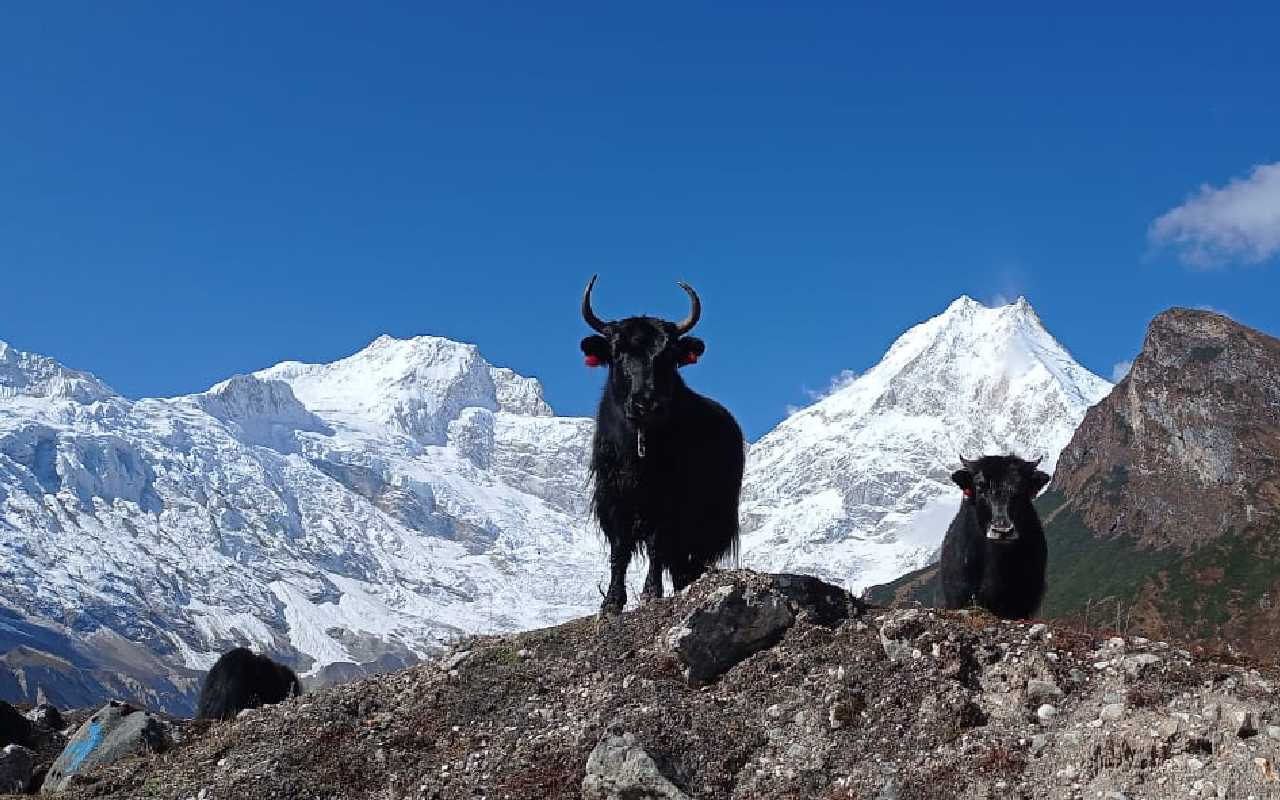
On the Manaslu Circuit trek in Nepal, you will travel in the remote northwestern corners of the Himalayan range in Nepal that houses Mount Manaslu, the 8th highest mountain in the world.
It is an incredibly adventurous and scenic journey that you can complete in two weeks. Our 14-day Manaslu Circuit Trek Nepal itinerary also includes arrival and departure from Kathmandu. So, it is a complete itinerary with full trek support.
Leaving the bustle of Kathmandu, you will travel following winding hills and pass by Arughat Bazaar, Soti Khola, and Machha Khola. The trek begins from Jagat village at 1,410 meters.
From Jagat, you will hike through the rice and millet terraces and ascend along the mighty gorges of the Budi Gandaki River. The trail includes lush hills, rivers, and waterfalls. You will reach the highlands (almost above 3,500 meters) in just two days of walking from Jagat.
Trip at a glance
| Trek starting point: Jagat (1,410 m/4,625 ft) | Trek ending point: Tilje (2,300 m/7,546 ft) |
| Trek total distance: Approx. 145 km (90 miles) | Trip duration: 14 days & Trek duration: 9 days |
| Highest point: Larkya La Pass (5,106 m/16,752 ft) | Restricted area: Yes |
| Trek type: Remote, teahouse trek | Daily walking: 5-6 hours on average |
| Difficulty: Strenuous | Fitness: Good health and strong cardiovascular fitness |
| Previous trek experience: Required | Accommodation: Twin-shared rooms in teahouses |
| Meals: Breakfast, lunch, and dinner (three meals a day with tea/coffee) | Trek permits: Restricted Area Permit for the Manaslu region, Manaslu Conservation Area permit, and Annapurna Conservation Area permit |
| Best time to trek: spring (March-May) and autumn (September-November) | Offseason trekking: Manageable in winter & high weather, with trail challenges in the monsoon |
| Guide requirement: Mandatory for restricted area treks. | Porter: Trekkers’ wishes (already included in our package) |
| Acclimatization day: In Sama Gaon (3,530 m/11,581 ft) | Side quests: Pun Gyen Gompa, Birendra Lake, and Manaslu Base Camp |
Manaslu Circuit Trek Nepal Itinerary
The Manaslu Circuit trek in Nepal is located in one of the biggest conservation areas in Nepal. It is an untouched, restricted region explored by very few trekkers every year, compared to the famous Everest Base Camp and Annapurna Base Camp treks.
You will be walking in the shadow of Mt. Manaslu, covering approximately 150 km. The trail gradually ascends above thundering gorges, picturesque villages, cliff faces, and alpine meadows.
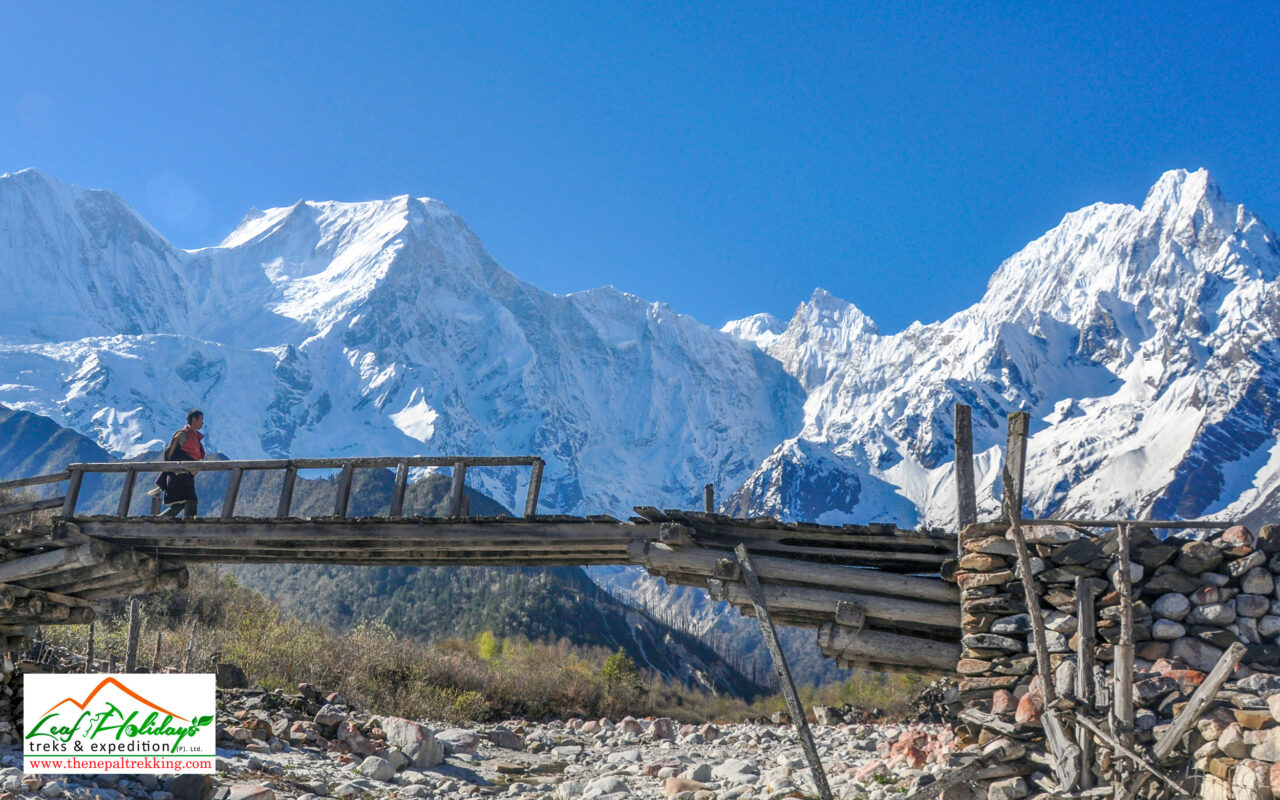
During the first two days of the trek, you will be trekking through dense pine and rhododendron forests, crossing suspension bridges over the Budi Gandaki River.
As the trail unfolds, the community quickly shifts from Gurung to Nubri & Tibetan. Crossing landslide-prone areas, you will enter the Nubri Valley. The Nubri Valley is the upper part of the Manaslu Circuit.
It starts from Bihi and goes up to Sama Gaon. Nubri is a Tibetan-Burman language spoken by the residents of these villages. Therefore, the valley is named after it.
To provide the best acclimatization opportunity, we have included a night stay between Namrung and Sama Gaon (most itineraries directly ascend from Namrung to Sama Gaon).
You will spend a night in Shyala village and hike to Sama Gaon the next day. As the distance is short from Shyala to Sama Gaon, you can take a detour to Pun Gyen Gompa.
You will be spending two nights in Sama Gaon. It is our official acclimatization stopover before Larkya La Pass. As you have already explored Pun Gyen Gompa, you can freely visit the Manaslu Base Camp via Birendra Lake on acclimatization day.
Then the trail ascends to the Tibetan refugee village, Samdo. It is the last major settlement before Larkya La Pass. From here, you can go on the Rui La Pass hike. It is completely optional. From here, you will spend one night at Larke Phedi and cross the Larkya La Pass.
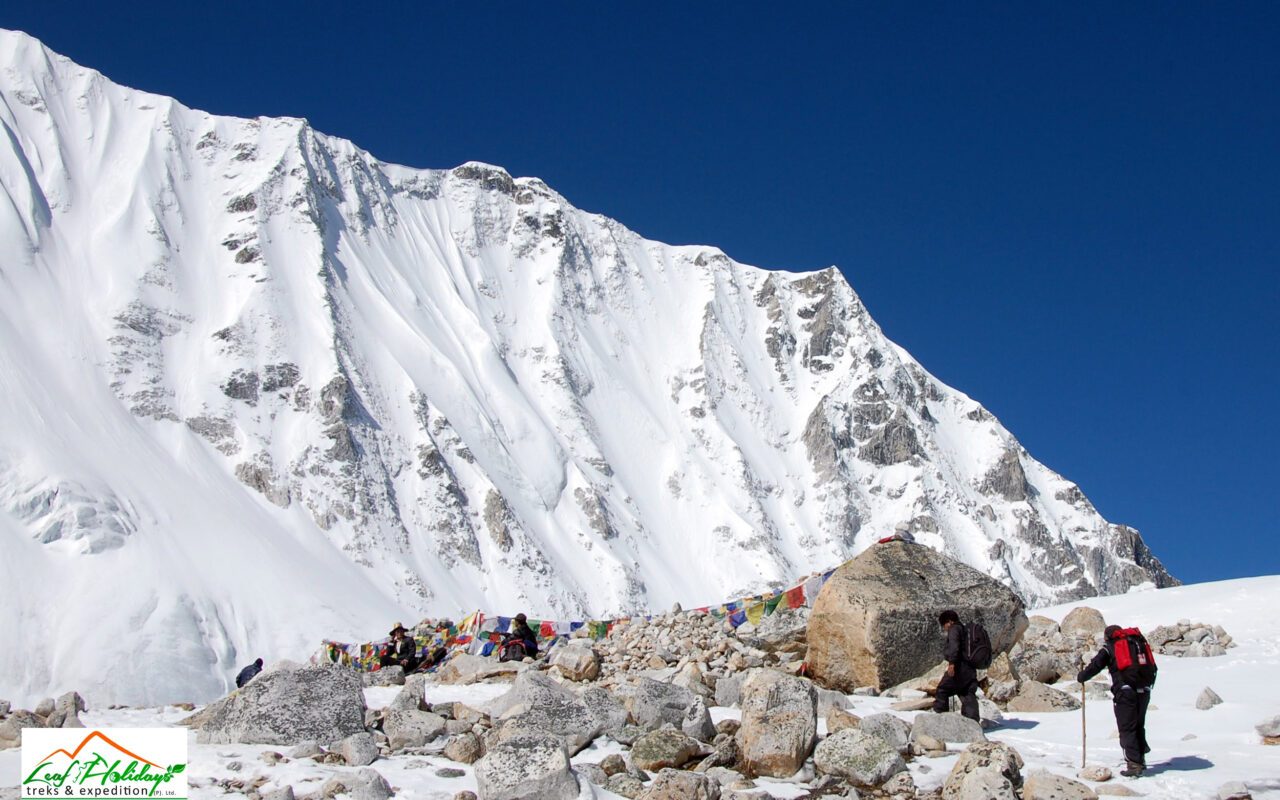
The Larkya La Pass climb is going to be very challenging, but it will also reward you with a stunning mountain panorama. From the pass, the trail descends into the Annapurna region and ends at Tilje (2,300 m).
Why choose the Manaslu Circuit trek in Nepal over other treks in Nepal?
The 14-day Manaslu Circuit trek in Nepal is a great Himalayan walk. You will see mountains such as Himalchuli, Bauddha Himal, Ngadi Chuli, Ganesh Himal, Annapurna II, Simnag Himal, Sringi Himal, Mt. Manaslu, and many others.
The Manaslu Circuit trek in Nepal offers a less crowded trail and an authentic mountain experience. You will share trails with yak herders, not tour groups.
The glimpse of the Nubri community lifestyle and culture will be quite intriguing. Their mindset about life, goals, and accomplishments will definitely have a huge impact on your perspective.
The challenge and adventure of crossing Larkya La Pass are unparalleled. You will feel high adrenaline and a huge sense of achievement.
Travel companies usually fail to put the emphasis on the extraordinary biodiversity that trekkers get to explore during the Manaslu Circuit trek in Nepal. The trail winds across five ecological zones—from subtropical to glacial moraines.
You not only explore the Manaslu region on the Manaslu Circuit trek in Nepal but also enter the Annapurna region. In fact, many trekkers combine the Manaslu Circuit trek in Nepal with the Annapurna Circuit with us.
Spring and autumn are definitely the best times to do the Manaslu Circuit trek. But you can also do this trek in winter (if the pass is crossable). The magical winter landscapes and cold weather challenges make the Manaslu Circuit trek even more arduous and adventurous.
We love the value and overall experience the Manaslu Circuit trek in Nepal offers for the price you pay. The trip will be worth every penny you spend.
What documents do you need for the Manaslu Circuit trek in Nepal?
➜ A passport with at least 6 months’ validity from the day you enter Nepal
➜ Passport-sized photo
➜ Travel insurance with emergency helicopter evacuation and medical bills
➜ Restricted Area Permit for Manaslu (Manaslu RAP)
➜ Manaslu Conservation Area Project (MCAP) permit
➜ Annapurna Conservation Area Project (ACAP) permit
We will take care of all three permits. The permit fees are also included in our Manaslu Circuit trek Nepal package.
Travelers have to arrange other documents by themselves.
What is genuinely tough about this trek?
➜ Varying climate and high altitude above 5,000 meters
➜ Long walking days (minimum 6 hours a day)
➜ Hot, humid temperatures in the lower gorges
➜ Basic teahouse accommodation and limited services
➜ Narrow, rocky uphill climbing
➜ Isolation above Sama Gaon
➜ Unpredictable weather
➜ Mental demands
Is the 14-day Manaslu Circuit trek in Nepal suitable for you?
- You are an experienced trekker with strong fitness.
- You are seeking an off-the-beaten-path adventure in Nepal.
- You want to explore an authentic remote mountain lifestyle and culture.
- You are looking for an alternative to the Annapurna Circuit trek and the Everest Three Passes trek.
- You are ready to get uncomfortable and push your limits.
- You have previous high-altitude experience.
- You understand the Himalayan trail and the limitations it has.
How fit do you need to be?
➜ Sustained walking (flat): 6-7 hrs comfortably
➜ Uphill endurance: 600 m gain in a day
➜ Loaded pack walking: 5-6 kg day pack
➜ Steep descent control: 1,600 m in one session
➜ Multiple-day hike: 10 consecutive days
➜ Cold-weather performance: Okay with -5°C to -10°C
Manaslu Circuit Trek Nepal: cost and booking 2026
The Manaslu Circuit trek in Nepal costs between USD 1,800 and USD 1,450 per person. The price you will pay depends on your group size. The more the trekkers, the bigger the discount each member will receive.
To book the 14-day Manaslu Circuit trek in Nepal, you can send us your booking request through our website. It is a simple process of a few minutes.
You also need to make a small booking deposit that we use to obtain permits and make necessary accommodation reservations in advance.
The Manaslu Circuit trek in Nepal 2026 bookings are open. You can do this trek throughout the year with us. If you have any questions, feel free to talk to us.
The Manaslu Circuit trek in Nepal is definitely not an easy trip in the Himalayas. You will be uncomfortable, challenged, and tested. But all these difficulties offer a lifetime experience, confidence, and heavenly mountain panoramas!
Detail Itinerary of Manaslu Circuit Trek Nepal
Day 01: Pick up from Kathmandu airport and transfer to the hotel
Our representative will warmly welcome you at Tribhuvan International Airport and assist you with your luggage before escorting you to the hotel in a private four-wheeler.
Enjoy your first glimpse of Kathmandu during the drive as you begin your Manaslu Circuit Trek Nepal journey. After reaching Thamel, the main tourist hub of the city, check into your hotel and take some time to relax and enjoy a meal.
Later, spend the evening exploring the lively streets of Thamel and prepare for the adventure ahead.
Highest Altitude
1325m. (Kathmandu)
Meals
Welcome dinner
Accommodation
HotelDay 02: Guided sightseeing tour and trek preparation
Today, we will take you on a guided sightseeing tour of Kathmandu, often known as the City of Temples. The city is filled with historic temples, stupas, palaces, and cultural landmarks, so we will focus on some of the most important highlights.
You will visit popular attractions such as the Monkey Temple, Boudhanath Stupa, Kathmandu Durbar Square, and Patan Durbar Square.
After the sightseeing tour, you will have some time to rest. While you explore the city, our team will work on obtaining the necessary permits for your Manaslu Circuit Trek Nepal journey.
In the evening, we will brief you about the trekking plan, route, safety guidelines, and important preparations. You can also use this time for any last-minute shopping before the trek begins.

Activity & Duration
Sightseeing
Meals
Breakfast only
Accommodation
HotelDay 03: Drive from Kathmandu to Jagat (1,410 m/4,625 ft)
From Kathmandu, you will drive to Jagat, a remote mountain village where your Manaslu Circuit Trek Nepal adventure officially begins. The journey follows winding mountain highways and scenic riverside roads, offering beautiful views of Nepal’s hills and countryside.
The drive remains relatively smooth until Arughat. From there, the road becomes rougher as you enter the remote mountain region. The final 2–3 hours can be bumpy, but the journey rewards you with impressive views of rivers, waterfalls, traditional villages, and snow-capped mountains along the way.
Activity & Duration
(180 km/112 miles); 9-10 hours
Highest Altitude
1410m. ()
Meals
Breakfast, lunch, and dinner
Accommodation
TeahouseDay 04: Trek from Jagat to Deng (1,804 m/5,917 ft)
The trekking journey begins today. Start your morning with some light stretching, enjoy breakfast, and prepare for a full day of walking on the Manaslu Circuit Trek Nepal route.
First, we will register the required trekking permits at the police checkpost before continuing through beautiful terraced fields. The trail passes Salleri village and then descends towards Sirdibas.
From Sirdibas, continue to Phillim and follow the western bank of the Budi Gandaki River. The trail then leads through peaceful rhododendron forests, crosses a bridge over Siyar Khola, and finally reaches Deng for the overnight stay.
Activity & Duration
(19.9 km/12.3 miles); 7 hours
Highest Altitude
1804m. ()
Meals
Breakfast, lunch, and dinner
Accommodation
TeahouseDay 05: Trek from Deng to Namrung (2,630 m/8,626 ft)
From Deng, the trail gradually ascends through beautiful pine, rhododendron, and bamboo forests as you continue deeper into the Manaslu Circuit Trek Nepal route. Along the way, you will cross the Budi Gandaki River several times and pass through small mountain villages such as Bihi and Ghap.
After Bihi, you enter the culturally rich Nubri Valley. Some sections of the trail are landslide-prone, so extra care is required while crossing them. From Ghap to Namrung, the path becomes steeper and rockier, making this section more challenging but rewarding with impressive mountain and forest scenery.
Activity & Duration
(19.5 km/12.1 miles); 6 hours
Highest Altitude
2630m. ()
Meals
Breakfast, lunch, and dinner
Accommodation
TeahouseDay 06: Trek from Namrung to Shyala (3,500 m/11,483 ft)
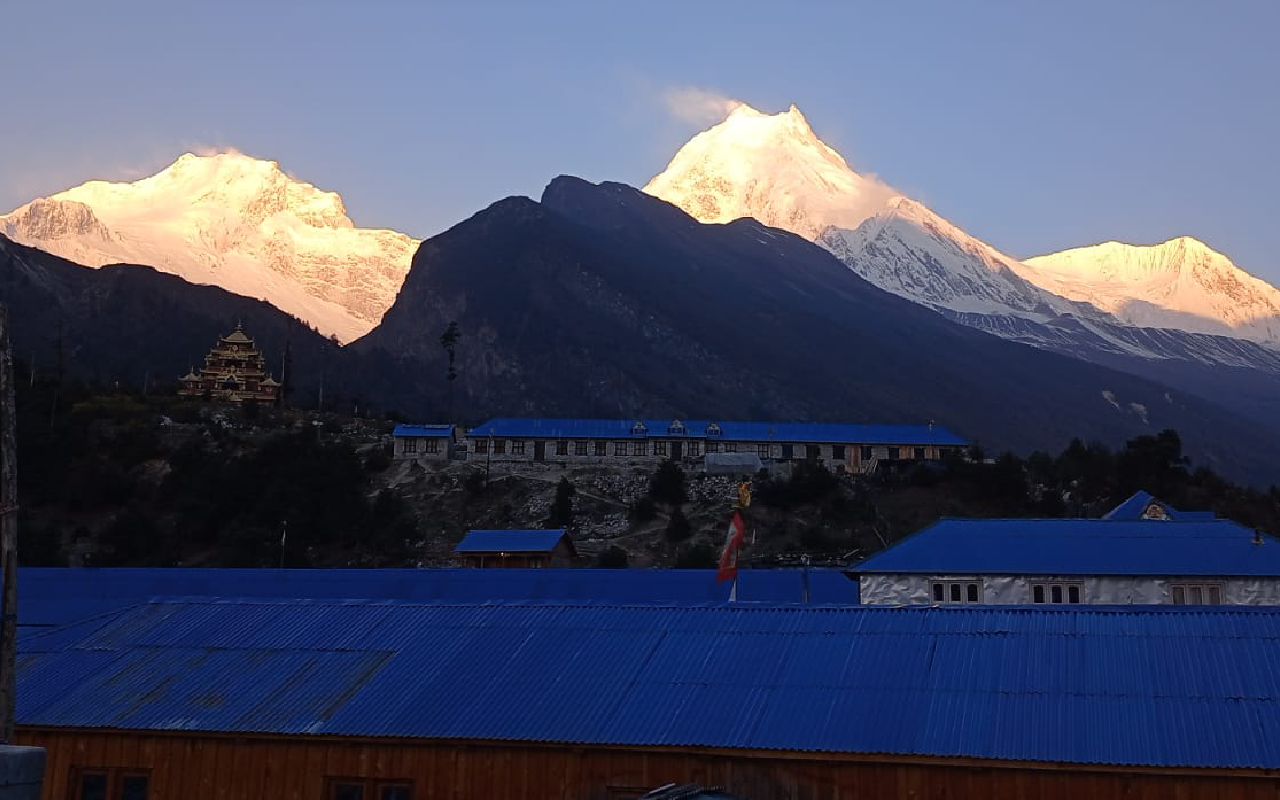
Leaving Namrung village, you will continue deeper into the Manaslu Circuit Trek Nepal route towards Shyala, surrounded by increasingly dramatic Himalayan scenery. Mt. Manaslu begins to dominate the skyline, creating one of the most impressive mountain views of the journey.
The trail to Shyala is steep, rocky, and exposed in several sections, so careful walking is essential. You will also cross a rockfall-prone area before passing through the beautiful village of Lho.
Today, the landscape changes noticeably as the lush green hills gradually give way to drier and more barren alpine terrain. The mountains become much more prominent, with spectacular views of Himalchuli, Ganesh Himal, Siring Himal, Baudha Himal, Manaslu, and Ngadi Chuli accompanying you along the trail.
Activity & Duration
(11 km/6.8 miles); 4 hours
Highest Altitude
3500m. ()
Meals
Breakfast, lunch, and dinner
Accommodation
TeahouseDay 07: Trek from Shyala to Sama Gaon (3,530 m/11,581 ft) via Pun Gyen Gompa (4,700 m/15,420 ft)
From Shyala village, you will continue your Manaslu Circuit Trek Nepal journey towards Sama Gaon. Since today’s trekking distance is relatively short, we will take a rewarding side hike to Pungyen Gompa before continuing to the village.
The trail branches away from the main route and follows the glacial moraine towards Pungyen Gompa, one of the ancient monasteries of the Manaslu region. The side hike offers outstanding views of the surrounding mountains and glacial landscapes.
After exploring the monastery and enjoying the Himalayan scenery, retrace the trail back to the junction and continue towards Sama Gaon, one of the most important settlements on the Manaslu Circuit Trek Nepal route.
Activity & Duration
(17 km/10.5 miles); 4-5 hours
Highest Altitude
3530m. ()
Meals
Breakfast, lunch, and dinner
Accommodation
TeahouseDay 08: Acclimatization day- hike to Manaslu Base Camp via Birendra Lake
You will spend an important acclimatization day in Sama Gaon before continuing toward Larkya La Pass. This rest day is essential for reducing the risk of altitude sickness and preparing your body for the higher sections of the Manaslu Circuit Trek Nepal route.
Early in the morning, follow your guide on a challenging side hike toward Manaslu Base Camp. Along the way, you will pass the beautiful and isolated Birendra Lake. The trail is steep and demanding, but the reward is breathtaking views of Manaslu and the surrounding Himalayan peaks.
After completing the hike, return to Sama Gaon and spend the rest of the day relaxing, recovering, and observing the peaceful daily life of the mountain community.
Activity & Duration
4-5 hours
Meals
Breakfast, lunch, and dinner
Accommodation
TeahouseDay 09: Trek from Sama Gaon to Samdo (3,875 m/12,713 ft)
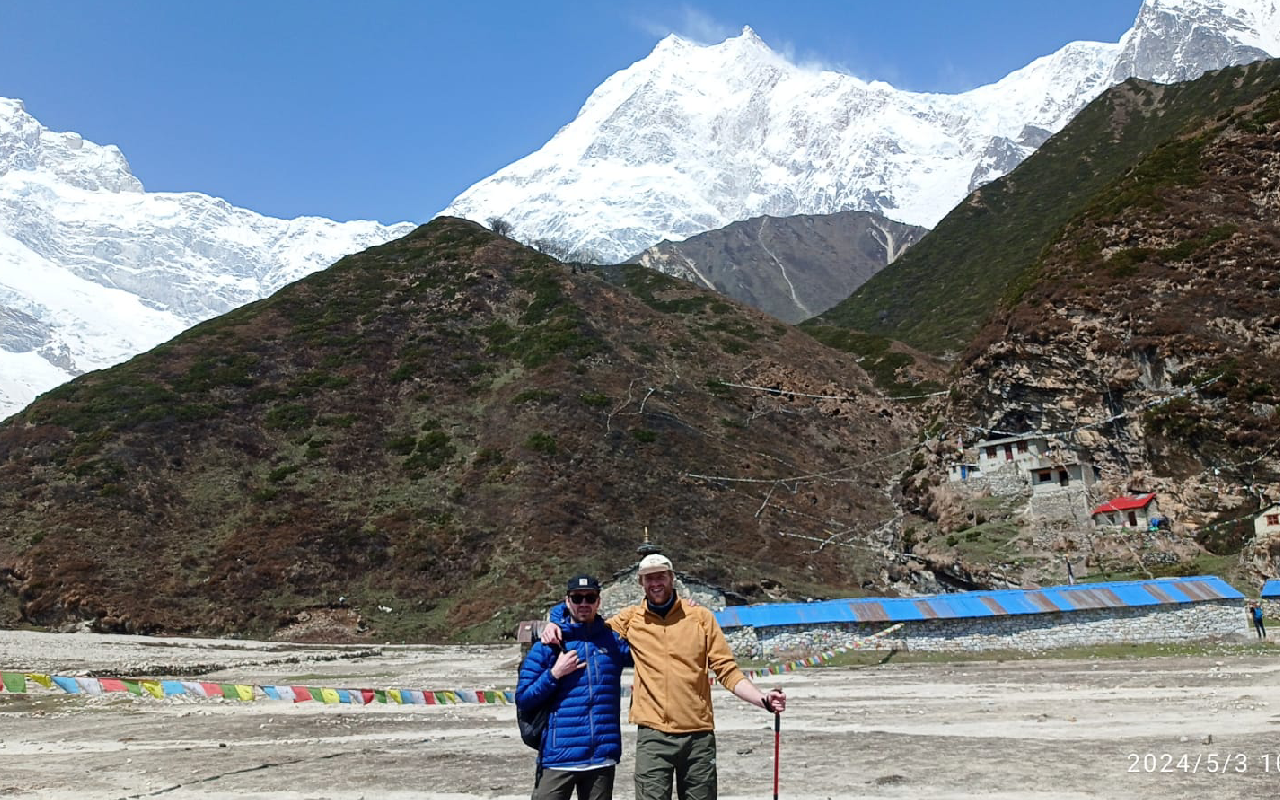
From Sama Gaon, you will continue your Manaslu Circuit Trek Nepal journey with a gradual ascent to Samdo village, a Tibetan refugee settlement near the Nepal–Tibet border. Today’s trek is comparatively shorter, giving you plenty of time to rest and recover after reaching Samdo.
The trail leaves Sama Gaon and crosses wide yak pastures and the open high-altitude valley. Along the way, you will follow long man-made walls, climb gradually to a ridge, and cross a wooden bridge before passing through the small settlement of White Kani.
After reaching Samdo, you can relax and enjoy the peaceful mountain surroundings while preparing for the higher and more demanding sections of the trek ahead.
If you are interested in a side hike, visit the Rui La Pass. It used to be an ancient salt trade route.
Activity & Duration
(8.2 km/5 miles); 3-4 hours
Highest Altitude
3875m. ()
Meals
Breakfast, lunch, and dinner
Accommodation
TeahouseDay 10: Trek from Samdo to Larke Phedi (Dharamsala) (4,480 m/14,698 ft)
From Samdo, you will continue your Manaslu Circuit Trek Nepal journey towards Larke Phedi, the final overnight stop before crossing the challenging Larkya La Pass. The trail gradually ascends through rugged high-altitude terrain and offers spectacular views of the surrounding Himalayan peaks.
As you move closer to Larke Phedi, the landscape becomes more barren and remote. Facilities here are very basic, with only a few teahouses available. Rooms are often simple and may be dormitory-style, so trekkers should be prepared to adjust to limited comfort.
This overnight stop is important for rest and preparation before the demanding Larkya La Pass crossing the following day.
Activity & Duration
(11.7 km/7.2 miles); 4-5 hours
Highest Altitude
4480m. ()
Meals
Breakfast, lunch, and dinner
Accommodation
TeahouseDay 11: Trek from Larke Phedi (Dharmsala) to Bimthang (3,720 m/12,205 ft) by crossing Larkya La Pass (5,106 m/16,752 ft)
On this day, you cross the Larkya La Pass. We begin ascending before the sunrise. Crossing the pass before mid-morning is important to avoid strong winds.
Leaving Larke Phedi, we will hike to the edge of a moraine and descend to a small lake. Then follow an unclear path and cross the steep south slope. The trail further descends to four frozen lakes.
From this point, you will begin ascending to the top of the pass. It will be a steep, challenging uphill climb. But you will be rewarded with a spectacular mountain panorama from the top of the pass.
Enjoy a beautiful sunrise and mountain views. Then walk downhill from the pass and enter the lush valley. You will spend a night in Bimthang village.
Activity & Duration
(24.7 km/15.3 miles); 8-9 hours
Highest Altitude
5104m. ()
Meals
Breakfast, lunch, and dinner
Accommodation
TeahouseDay 12: Trek from Bimthang to Tilje (2,300 m/7,546 ft)
Today marks the final trekking day of your Manaslu Circuit Trek Nepal journey. Leaving Bimthang, you will gradually descend through lush forests, peaceful valleys, and small mountain settlements.
The trail crosses several rivers and streams as you make your way toward Tilje. Compared with the high and rugged terrain of the previous days, today’s route feels greener and more relaxed, with beautiful forest scenery accompanying you throughout the descent.
After reaching Tilje, you can celebrate the successful completion of the trekking section and enjoy a well-earned rest.
Activity & Duration
(26 km/16 miles); 6-7 hours
Highest Altitude
2300m. ()
Meals
Breakfast, lunch, and dinner
Accommodation
TeahouseDay 13: Drive back to Kathmandu (1,324 m/4,344 ft) via Besisahar
After an early breakfast, you will continue the final road journey of your Manaslu Circuit Trek Nepal adventure. From Tilje, take a mountain jeep to Besisahar. The drive can be rough and bumpy in sections, but the scenery of rivers, hills, villages, and mountain landscapes makes the journey rewarding.
Upon reaching Besisahar, change to a more comfortable tourist bus and continue the drive back to Kathmandu.
After arriving in Kathmandu, the rest of the day is free for you to relax and unpack. In the evening, you can explore nearby tourist areas, enjoy the city atmosphere, or shop for souvenirs to remember your Manaslu journey.
Activity & Duration
(195 km/121 miles); 8-9 hours
Highest Altitude
1324m. ()
Meals
Breakfast only
Accommodation
HotelDay 14: Final departure - fly back to your home!
After breakfast, our representative will transfer you to Tribhuvan International Airport for your departure. As your Manaslu Circuit Trek Nepal journey comes to an end, our team will assist you with the final transfer and bid you a warm farewell.
We hope you leave Nepal with unforgettable memories of the mountains, local culture, and incredible experiences from the Manaslu region.
Meals
Breakfast only
Accommodation
Null
- The Manaslu Circuit Trek Nepal itinerary may be adjusted due to weather, trail conditions, road conditions, landslides, or transportation delays.
- Trekking times can vary depending on the pace, fitness level, and acclimatization condition of the group.
- The side hike to Pungyen Gompa and the acclimatization hike toward Manaslu Base Camp depend on weather, trail conditions, and the guide’s assessment.
- Proper acclimatization in Sama Gaon is important before continuing toward Samdo, Larke Phedi, and Larkya La Pass.
- High-altitude sections, especially around Larke Phedi and Larkya La Pass, may be affected by snow, strong wind, or poor visibility.
- Accommodation becomes very basic in remote places such as Larke Phedi, where rooms may be dormitory-style and facilities are limited.
- Road journeys between Kathmandu, Jagat, Tilje, and Besisahar may be rough and bumpy, and travel time can change depending on road conditions.
- The guide may modify overnight stops, walking schedules, or route sections when necessary for the safety and comfort of the group.
- Trekkers should be prepared for steep, rocky, exposed, landslide-prone, and rockfall-prone sections along the route.
- Mountain views and side excursions are weather-dependent and cannot always be guaranteed.
- Travellers should keep some flexibility in their overall Nepal travel plan in case of unexpected delays.
- Any necessary itinerary changes will be made with priority given to the safety, health, acclimatization, and overall well-being of the group.
Includes and Excludes
What is included?
- Airport Pickups and Drops
- Hotel accommodation and breakfast in Kathmandu
- Teahouse accommodation during the trek
- Three meals a day during the trek
- All ground transportation on a comfortable private vehicle
- Experienced English speaking guide
- Local porter
- Down jacket
- First-aid kit
- All government and local taxes
- The company’s service charge
What is excluded?
- International flights to/from Kathmandu
- Nepal travel visa fee
- Excess baggage charge
- Extra night accommodation in Kathmandu
- Lunch and dinner in Kathmandu
- Travel and rescue insurance
- Personal expenses
- Tips for guides,porter and driver
- Any expense not included in the Cost Include section
Trip Information
Manaslu Circuit trek permits and rules in 2026
2026 restricted area trek rule change:
The Nepal government has removed the mandatory minimum two-trekker requirement for restricted area treks in Nepal, including the Manaslu Circuit trek.
Solo trekkers can now apply individually for a restricted area permit without needing to find a second trekker.
However, the restricted area permit can only be issued through a Nepali authorized trekking company, and the trekker must be accompanied by a licensed mountain guide.
Manaslu Circuit trek permits 2026:
The Manaslu region is a restricted area in Nepal. It is also a conservation area. In addition to that, you enter the Annapurna region after crossing Larkya La Pass.
So, you will need the following permits for the Manaslu Circuit trek in 2026:
➜ Manaslu Conservation Area Project (MCAP) permit: USD 30 per person
➜ Annapurna Conservation Area Project (ACAP) permit: USD 30 per person
➜ Manaslu Restricted Area Permit (Manaslu RAP):
- September to November: USD 100 per person for the first 7 days, then USD 15 per person per day
- December to August: USD 75 per person for the first 7 days, then USD 10 per person per day
Final Manaslu Circuit trek 2026 regulations:
➜ No minimum two-trekker requirement.
➜ The Manaslu Circuit trek must be organized by a local authorized Nepali trekking company like Leaf Holidays.
➜ A licensed Nepali guide must accompany the trekker.
Our Manaslu Circuit trek package is inclusive of all the permit fees. We will help you obtain the necessary permits.
Manaslu Circuit trek best time
Technically, the Manaslu Circuit trek is possible throughout the year. However, some seasons offer better mountain views and safer trail conditions than others.
Autumn (September, October, November):
Autumn is the most popular time of the year for the Manaslu Circuit trek. It is the post-monsoon period, so the visibility is great. The pollution and dust levels are at their lowest all over Nepal.
Mountains are seen from far away. Likewise, the weather is stable in autumn. You will not see sudden rainfall or snowfall, especially in late September and October.
Similarly, a moderate climate makes long walking pleasant at high altitude. Daytime will be warm, with nights and mornings on the cold side.
In the lower valley, the temperature ranges between 8°C-25°C. Likewise, mid valley has 2°C-18°C and high altitude has 0°C-12°C.
Spring (March, April, May):
Spring is the second great time of the year for the Manaslu Circuit trek. It is a visually very appealing time to explore the Himalayas because lower trails are covered with rhododendron blooms.
There can be occasional snowfall or rainfall in March, but by April, the weather settles down. Visibility is good, so the landscapes and mountain panoramas are clear.
The temperature ranges between 6°C-22°C in the lower valley and 0°C-16°C in the mid valley. Likewise, at high altitude (3,500 m to 4,500 m), the temperature is around -5°C to 10°C. At Larkya La Pass, the temperature is around -15°C to 2°C.
Winter (December, January, February):
Winter is not a popular time for the Manaslu Circuit trek because of extreme cold, unstable weather, and snow-covered trails. However, if you prepare well and dress up for the climate, you will enjoy a very satisfying Manaslu Circuit trek in winter.
Winter offers an experience that no other season offers: magical snowy landscapes, near-total solitude, and crisp air. The challenges and risks are high in winter, but the experience you will have is also unmatched.
There are both gloomy and clear days in winter. Most days have clear skies, so you will enjoy warm sunrays and excellent scenery. The price of accommodation and meals is also low in the winter season.
In winter, the temperature can drop as low as -20°C at Larkya La Pass. In the lower valley and mid valley, the temperature ranges between 15°C and -5°C.
Depending on the trail condition, you may also have to use micro crampons and other winter gear to cross the Larkya La Pass. We have experience in operating the Manaslu Circuit trek in winter, so feel free to contact us if you are interested.
Summer/monsoon (June, July, August):
Between June and August, the weather is very unstable, and the climate is extremely hot and humid. The temperature drops as you ascend higher. Still, daytime is brutal due to high exposure to the sun.
Once the monsoon starts, heavy rains make the trail muddy and slippery with leeches. Landslide risk increases a lot throughout the low and mid hills.
Mountain views are not clear every day. If you are interested in the biodiversity of the Manaslu region, then the summer/monsoon is the best time of the year to do the Manaslu Circuit trek.
Waterfalls, rivers, and streams are in excellent condition. Likewise, the morning mists and rainy landscapes are also quite mesmerizing. Accommodation and meal prices are low in this season.
The temperature ranges between 31°C and -3°C (from the lower valley to Larkya La Pass). You need proper rain gear and professional support to safely complete the Manaslu Circuit trek in the monsoon.
Manaslu Circuit trek difficulty
On the difficulty level, the Manaslu Circuit trek is rated 4 out of 5. It is a strenuous trek and falls under the challenging trek category in Nepal.
During these two weeks’ trek, you will ascend above 5,000 meters, navigating through the remote wilderness of the Manaslu region. There is no road access after Jagat village.
The trail is steep and rocky in many sections. Limited services and daily 6 hours of hiking put a lot of mental pressure. Even if you are exhausted, you have to keep moving.
We only stop if you get sick. To ensure you stay in the best condition during trekking, our guide will monitor your health and customize strategic short breaks so that you can rest and recover as you ascend and descend.
The trail goes through dense forests and yak pastures to glacier moraines. Larkya La Pass is the most demanding section of the Manaslu Circuit and will test your endurance.
Altitude sickness on the Manaslu Circuit trek
High altitude is a big challenge on the Manaslu Circuit trek. It makes trekking more difficult because, as the elevation rises, the oxygen level decreases. You will get tired quickly, and if you do not acclimate, altitude sickness is inevitable.
The symptoms of altitude sickness include persistent headache, dizziness, fatigue, nausea, loss of appetite, disturbed sleep, and breathlessness.
These are the early signs of altitude sickness. If you get them, inform your guide immediately. He will provide first aid and monitor your condition.
Do not underestimate these signs because if they progress into a serious form of altitude sickness, we have to immediately transfer you to a hospital in Kathmandu via helicopter evacuation.
While trekking in the Himalayas, you should follow the “trek high and sleep low” rule. It is known as the golden rule and is best for acclimatization. Following our Manaslu Circuit trek itinerary, you will have many trek high, sleep low days.
Altitude sickness preventive measures and tips:
- Keep a steady pace while hiking. Don’t rush. Take your time.
- Keep yourself hydrated while walking. Have garlic soups and ginger-honey tea daily. They are great for acclimatization.
- Do not smoke or have alcohol while ascending.
- Listen to your body and inform your guide if you see any discomfort.
- Follow our acclimation plan.
- Have ample food and sleep at least 8 hours each day to be in the best condition.
- If your symptom does not improve in 24 hours at the same altitude, descend immediately. Do not ascend high, as it will worsen altitude sickness.
Manaslu Circuit trek preparation
Manaslu Circuit trek preparation includes getting physically and mentally ready for the journey. It should be your priority if you have decided to do this trek.
If you are not physically fit, you should at least keep 12 weeks in your hand to get fit enough for the trek.
➜ Cardio: In the first 4 weeks, have 3 to 4 45-60 minute aerobic sessions. You can pick among swimming, cycling, brisk walking, or stair climbing. These activities will help you improve your stamina and endurance.
➜ Long walks and strength training: Then, between weeks 4 and 8, add a long walk carrying a 5 kg backpack. Start with a 30-minute walk and go for more than 2 hours of walking. Combine strength training too. It is great to build your core, legs, and back.
➜ Workout intensity: In the last 4 weeks, increase intensity and workout hours. You should focus on pushing your limits every week.
Travel insurance requirements for the Manaslu Circuit trek
Travel insurance for the Manaslu Circuit trek should include emergency helicopter evacuation up to 5,500 meters and medical bills. It is a mandatory requirement.
Travelers are advised to buy travel insurance with necessary coverage in their country and bring documents with them. There is no travel insurance provision for high-altitude treks in Nepal for foreigners.
Make sure to check the travel insurance clauses and whether it is eligible for a high-altitude trek in Nepal or not. You need to give us your insurance documents before the trek starts. We use it to arrange rescue service if needed.
Guide and porter
Trekking with a licensed Nepali guide is mandatory on the Manaslu Circuit trek. We will provide you with a professional guide with great expertise on the Manaslu Circuit trek route.
He will help you safely navigate the steep, rocky tracks and landslide-prone areas. Likewise, you will get great insights from your guide about the locals’ lives and culture.
Porter, on the other hand, carries a duffel bag for you. Without a heavy duffel bag, trekking becomes easy and safe. Our porters are natives of the Manaslu region. They are funny and add great value to your journey.
➜ Porter weight limit: You have an 8-9 kg duffel bag weight limit and a 5 kg backpack weight limit. Our one porter carries a duffel bag for two trekkers. So, in total, they carry 16-19 kg.
➜ Tips for guide and porter: Tips are not included in our Manaslu Circuit trek package. You are supposed to tip the guide and porter on the last day of the trek. It shows your appreciation for their hard work. You can tip 15% to 25% of the package cost or tip on a per-day basis as you wish.
Transportation to/from the starting and ending points of the Manaslu Circuit trek
You will start the Manaslu Circuit trek from Jagat village. Likewise, the trek ends in Tilje. We book a local bus or jeep. Domestic flights are not available.
You can also upgrade to a private jeep by paying extra money.
Kathmandu to Jagat:
➜ Distance: 180 km/112 miles
➜ Drive duration: 9-10 hours
➜ Vehicle: Local bus or shared jeep (private jeep is available at additional cost)
Private jeeps are safer, faster, and more comfortable.
Tilje to Kathmandu:
➜ Distance: 195 km/121 miles
➜ Drive duration: 8-9 hours
➜ Vehicle: Shared jeep from Tilje to Besisahar and tourist bus from Besishar to Kathmandu
Manaslu Circuit trek accommodation, food, and drinking water
There are teahouses on the Manaslu Circuit trek route. It is the most basic type of accommodation for trekkers in the Himalayas. Please be aware that teahouses are nothing compared to lodges in the Everest and Annapurna regions.
The teahouses on the Manaslu Circuit trail are family-run. They provide humble accommodation and hot meals to the trekkers. As the elevation increases, the services in the teahouse get simpler and more limited.
In teahouses, you have to pay extra money for charging, WiFi, and hot showers. These are your personal expenses and not covered in our Manaslu Circuit trek cost.
➜ Rooms: Rooms are twin-shared. There are separate single beds for the trekkers. Most rooms have one window and a table.
➜ Bathroom: You may find private bathrooms up to Namrung village. After this village, shared bathrooms are common. Likewise, squat toilets are most available in the teahouses.
➜ Hot shower and personal washing: Hot showers cost extra money and may not be available at Larke Phedi. It is best to avoid taking a shower at Larke Phedi because of the altitude, and you will cross the Larkya La Pass early the next day. Similarly, do not rely on washing and drying clothes. Pack ample clothes to change into for the entire trek.
➜ Charging: Charging is another paid service. Carry spare batteries and a solar power bank for backup.
➜ WiFi: WiFi is available in many teahouses, but it will also cost a few extra bucks. The network is not reliable.
➜ Food: We provide three meals a day during the trek. In Kathmandu, you only get breakfast. The meals during trekking are provided as per the menu of the teahouses. You will have nice Nepali and Tibetan dishes with some Western options.
➜ Common food: The common food you eat during the Manaslu Circuit trek is thukpa, Tibetan bread, dal bhat, fried rice, Swiss roasties, momo, chowmein, potato pancakes, pasta, stew, soups, porridge, pancake, etc.
➜ Beverages: Different types of tea and coffee are available everywhere. Likewise, hot chocolate and soft beverages are also found in many teahouses.
➜ Drinking water: We drink boiled drinking water during the Manaslu Circuit trek and carry water purification tablets for backup.
Manaslu Circuit trek packing list
➜ You do not have to bring everything from your country. Do trekking in Kathmandu. You will find plenty of options at a great price.
➜ Rent trekking gear if you do not want to invest a lot of money in it. Rental charges are a factor in cost.
The packing list below includes all the things that you will need during the Manaslu Circuit trek:
Clothes and gear:
- Comfortable underwear
- Base layer (trekking t-shirt and pants)
- Thermal layer (bodywarmers, sweater, fleece)
- Outer layer (windproof/waterproof jacket and pants)
- Down jacket
- Beanie
- Sunhat
- Scarf
- Gloves
- Socks
- Trekking boots
- Casual slippers
Trekking gear:
- Daypack with a good waist support band
- Duffel bag
- Trekking poles
- UV sunglasses
- Sleeping bag & liner
- Gaiters
- Water bladder
Essentials:
- Water bladder (recommended)
- Reusable water bottles and water purification tablets
- Universal charger
- Power bank
- Solar charger
- Map
- Torch
- Camera and mobile
- Snacks
- Ziplock bags to store used clothes and other things
Toiletries and first aid:
- Moisturizer and body lotion
- Toilet paper
- High SPF
- Lip balm
- Personal first aid kit
- Wet tissues
- Toothpaste and toothbrush
- Soap and shampoo
- Hand sanitizer
- GPS devices and a compass (optional)
- Whistle (optional)
- Electrolyte
- Comb
- Pocket mirror
- Travelers knife
Documents and cash:
- Travel insurance documents
- Nepali currency
- Passport with six months of validity
- Nepal travel visa
- Trek permits
- Debit/credit cards
Frequently Asked Questions
How difficult is the Manaslu Circuit trek?
The Manaslu Circuit trek is physically and mentally very demanding. It is an offbeat trek that includes a challenging mountain pass crossing.
Likewise, the trail traverses narrow, steep tracks, rocky paths, landslide and rockfall-prone areas, and glacier moraines. In addition, you will deal with cold temperatures, high altitude, and long trekking hours.
How long is the Manaslu Circuit trek?
Unlike the old days, you can now complete the Manaslu Circuit trek in just two weeks, including your arrival and departure from Kathmandu. The road has been built to Jagat. So, it reduces approximately 22 km of trekking as well.
What are the transportation options for the Manaslu Circuit trek?
Our Manaslu Circuit trek package includes a local bus or a shared jeep from Kathmandu to Jagat. Likewise, on the return, you will travel by mountain jeep from Tilje to Besisahar, then change to a comfortable tourist bus to Kathmandu.
You can also rent a private jeep by paying a little extra money. It will give you the flexibility to stop the car at various locations along the way to soak in the views and take pictures.
Where does the Manaslu Circuit trek start and end?
The Manaslu Circuit trek starts from Jagat (1,410 m/4,625 ft) and ends in Tilje (2,300 m/7,546 ft).
What is the best time to do the Manaslu Circuit trek?
The best time to do the Manaslu Circuit trek is when the weather is stable and the climate is pleasant in the Himalayas. Spring (March to May) and autumn (September to November) have these weather conditions, which make them the top trekking seasons.
How much does the Manaslu Circuit trek cost?
The Manaslu Circuit trek costs range between USD 1,450 and USD 1,800 or more per person. The price usually varies depending on the itinerary, group size, and services included in the package.
Is the Manaslu Circuit trek suitable for beginners?
The Manaslu Circuit trek is not suggested for beginner trekkers. It demands strong fitness, Himalayan trail knowledge, and previous high-altitude experience.
You may do the Manaslu Circuit trek if you have the required physical fitness and mental fortitude. However, the journey may still be very demanding for a beginner trekker compared to someone who has previous trek experience.
What is the highest point of the Manaslu Circuit trek?
The highest point on the Manaslu Circuit trek is Larkya La Pass. It stands 5,106 meters above sea level.
Is the Manaslu Circuit Trek a restricted area trek?
Yes, the Manaslu Circuit trek is a restricted area. The upper part of the region is close to the Tibetan border and has a fragile environment, which needs protection and preservation.
Can I do the Manaslu Circuit trek without a guide?
No, you cannot do the Manaslu Circuit trek without a guide. In restricted areas in Nepal, foreigners must be accompanied by a licensed Nepali trekking guide.
Is solo trekking allowed in the Manaslu region?
Solo trekkers can do the Manaslu Circuit trek, but not without a guide. So before April 2026, at least two trekkers were mandatory in a group.
If you are a solo traveler, you either have to join a shared group or buy a ghost permit (which means you are paying double for the restricted area permit).
However, now solo trekkers can do the Manaslu Circuit trek without worrying about another trekker.
What is the total distance of the Manaslu Circuit trek?
The Manaslu Circuit trek distance after recent road construction is around 150 km (93 miles). The distance may differ depending on where you start and end the trek.
Is altitude sickness common on the Manaslu Circuit trek?
Altitude sickness is a concern on the Manaslu Circuit trek, but not every trekker gets it. If you follow our acclimatization plan and preventive measures, you can prevent altitude sickness.
How do I prepare for the Manaslu Circuit trek?
Physical preparation for the Manaslu Circuit trek includes training that will improve your stamina, endurance, strength, and ability to walk long hours with a 5 kg backpack.
You can plan a workout routine and follow it for 8 to 12 weeks before the trek starts. The more time you give yourself, the less hurried you will be.
What should I pack for the Manaslu Circuit trek?
You need to pack different types of clothes, trekking gear, sun and dry weather protection, toiletries, a first aid kit, windproof/waterproof gear, important documents, money, and other miscellaneous things for the Manaslu Circuit trek.
We have designed the perfect Manaslu Circuit trek packing list. It includes everything that you will need during the trek. If you have a low budget or do not want to invest in trekking gear, you can rent it in Kathmandu at a fraction of the price.
Is drinking water available on the Manaslu Circuit trek?
Yes, clean drinking water is available on the Manaslu Circuit trek. We drink boiled water while trekking. It is easily available in all teahouses along the trail.
Bottled water is also available, but it costs way more and increases our waste. So, we avoid it. For backup, we carry water purification tablets.
Are hot showers available during the trek?
In villages at lower elevations, hot showers are available. However, it will cost you a few extra bucks. Once you are above Namrung village, we recommend being smart about taking a shower.
Because hot showers and cold climate may make it tough to regulate your body temperature, and can increase the risk of altitude sickness. Carry wet wipes and ample clothes to change into. Plan the showers strategically.
What is the weather like during the Manaslu Circuit trek?
The weather on the Manaslu Circuit trek varies significantly depending on the season and altitude. In spring and autumn, the weather is generally stable, and the climate is moderate.
However, the higher you ascend, the lower the temperature gets. Nights and mornings are comparatively colder. Likewise, the climate is cold throughout the year near Larkya La Pass.
Can I do the Manaslu Circuit trek in winter?
Yes, you can do the Manaslu Circuit trek in the winter season. However, the cold climate and snow-covered trails make the trek more challenging. You may come across blizzards, too.
Crossing Larkya La Pass is definitely the most demanding in winter. You may have to use micro crampons depending on the pass condition.
Is the Manaslu Circuit trek safe?
Yes, the Manaslu Circuit trek is safe if you are well prepared and guided by a knowledgeable mountain guide. Some parts of the trail are tricky to navigate, and for those sections, you need guidance.
Which mountains can be seen during the Manaslu Circuit trek?
You will see the following mountains during the Manaslu Circuit trek: Manaslu, Ngadi Chuli, Ganesh Himal, Cheo Himal, Simnang Himal, Annapurna II, Shringi Himal, Himal Chuli, etc.
Is the Manaslu Circuit trek less crowded than the Annapurna Circuit?
Yes, the Manaslu Circuit trek is less crowded than the Manaslu Circuit trek even during the peak trekking seasons. The Annapurna Circuit trek is more commercial than the Manaslu Circuit trek.
Likewise, the Annapurna Circuit trek does not require a restricted area permit, so permit hassle is less compared to the Manaslu Circuit trek.
Why choose the Manaslu Circuit trek over Everest Base Camp?
If you are seeking a quieter and less commercialized trekking option, the Manaslu Circuit trek is better than the Everest Base Camp trek. The Manaslu Circuit trek is not as busy as the EBC and offers a more authentic experience.
Are there ATMs on the Manaslu Circuit trek? How much cash should I carry for the trek?
There are no ATMs on the Manaslu Circuit trek route. Trekkers should withdraw money in Kathmandu to spend while trekking.
Our Manaslu Circuit trek package covers all major expenses. But you will need some money for services like a hot shower, WiFi, and charging. Likewise, you also need money to tip your guide and porter.
Is the Manaslu Circuit trek suitable for families?
The Manaslu Circuit trek may not be suitable for families, especially if you are trekking with toddlers. This trek is physically very demanding, and the services are also not that great.
And crossing a high mountain pass can be quite a lot for a kid. So, definitely assess your kids’ fitness, endurance, and previous remote experiences before bringing them on the Manaslu Circuit trek.
Can I combine the Manaslu Circuit trek with the Tsum Valley trek?
Yes, you can combine the Manaslu Circuit trek with the Tsum Valley trek. It will make the journey more adventurous and culturally more immersive. We also have a combined Manaslu Circuit trek with Tsum Valley package.
What are the side trips during the Manaslu Circuit trek?
The side trips on the Manaslu Circuit trek are:
➜ Pun Gyen Gompa
➜ Birendra Lake and Manaslu Base Camp
➜ Rui La Pass
Can I rent trekking gear in Kathmandu for the Manaslu Circuit trek?
Yes, you can rent trekking gear in Kathmandu for the Manaslu Circuit trek. Gear like trekking poles, sleeping bags, crampons, duffel bags, backpacks, down jackets, etc, is available for rent.
What type of sleeping bag is needed for the Manaslu Circuit trek?
For the Manaslu Circuit trek, you will need a high-quality sleeping bag rated for temperatures between -10°C and -20°C.
Are there emergency rescue services on the Manaslu Circuit trek?
Yes, emergency rescue services are available on the Manaslu Circuit trek. If you get injured, suffer from altitude sickness, or any unseen emergency occurs during trekking, we will immediately arrange helicopter evacuation if needed.
Note that your travel insurance must cover helicopter evacuation expenses and medical bills.
Is mobile network coverage available on the Manaslu Circuit trek?
The mobile network coverage is not that good along the Manaslu Circuit trek. Above Namrung village, the connectivity gets limited. Villages have satellite phones for emergency communication.
Trip Reviews
Price starts
US$ 1600
Need Help?
Ask to Travel Expert