
- Mt. Kailash Tour
- Kailash Mansarovar Overland Tour
- Kailash Mansarovar Yatra by Helicopter – Complete Spiritual Journey Guide
- Kailash Yatra via Lucknow
- Kailash Mansarovar Tour via Lhasa
- Kailash Lhasa EBC Tour From Beijing
- Kailash Heli Tour via Kerung: Complete Spiritual Journey Guide
- Kailash Tour via Lhasa In Kerung Out
- Lhasa EBC Kailash Tour
- Kailash Heli Tour
- Kailash Mansarovar Yatra from Nepal 2027: Cost & Itinerary
- Kailash Nandi Kora
- Kailash Tour via Humla Simikot – 20 Days
- Mount Kailash Tour: 7 Amazing Experiences in 2027
- Trekking
-
-
- Everest Region
- Luxury Everest Base Camp Trek: 7 Unforgettable Highlights
- Everest Base Camp Trek 2026: Cost, Route, and Complete Guide
- Everest Three Passes Trek 2027: Cost, Route & Itinerary
- Everest Base Camp Short Trek
- Everest Panorama Trek: Amazing 10-Day Cost & Itinerary
- Everest Base Camp Island Peak Trek: Complete 19-Day Guide
- Gokyo Valley Trekking 2027: Easy Guide to Cost & Itinerary
- Mera Peak Climbing 2027: Complete Cost & Itinerary Guide
- Rolwaling Valley Trek: 23-Day Itinerary, Cost, Permits & Difficulty
- Dolpo Region Trek
- Everest Region
-
- Annapurna Region
- Annapurna Base Camp Trekking
- Annapurna Circuit Trek
- Annapurna Base Camp Trek: 7 Amazing Cost & Route Tips
- Mardi Himal Trek: 7 Amazing Highlights & Complete Guide
- Annapurna Alternative Combine Trek: 18 Amazing Days
- Mohare Dada Trek
- Ghorepani Poon Hill Trek: 7 Unforgettable Highlights
- Khopra Ridge Community Trek: 13-Day Ultimate Adventure
- Damodar Kunda Trek: 10-Day Ultimate Sacred Adventure
- Upper Mustang Trek: 10 Amazing Sights : Ultimate Guide
- Jomsom Muktinath Trek: Amazing 12-Day Ultimate Guide
- Ghale Gaun Trek: 7 Amazing Reasons : Ultimate Guide
- Dhampus Sarangkot Trek: 7 Incredible Experiences
- Dhaulagiri Region
- Annapurna Region
-
-
- Tours
-
-
- Day Tours
- Rickshaw–a three-wheeler Tour
- Pharping Dakshinkali Day Tour: 7 Amazing Highlights
- Historical Tour: 7 Amazing Places to Explore
- Kathmandu Temple Tour: 7 Amazing Spiritual Places
- Nagarkot Tour
- Bhaktapur City Tour: 7 Amazing Places to Explore
- Kathmandu City Tour – Complete Heritage & Cultural Experience in Nepal
- Chandragiri Hill: A Scenic Himalayan Escape Near Kathmandu
- Chitlang Hiking
- Shivapuri to Sundarijal Day Hiking
- Kulekhani Dam Day Tour — Complete Travel Guide
- Day Tours
-
- Package Tours
- Mustang Tour on Jeep
- Nepal Tour Package for Nepali: 12 Amazing Destinations to Explore (2026)
- Muktinath Tour: Complete Guide to Nepal’s Sacred Himalayan Pilgrimage
- 3N,4D Kathmandu Pilgrimage Tour
- Nepal Buddhist Pilgrimage Tour: 7 Sacred Sites Not to Miss
- 6D Nepal Pilgrimage Tour: 7 Amazing Sacred Places
- 7 Nights, 8 Days Nepal Tour
- Districts tour of Nepal
- Janakpur Tour Package: Price, Family Tour & Travel Guide from Kathmandu 2026
- Short Hike in Nepal: 7 Best Easy Treks for Beginners
- Package Tours
-
-
- Outbound
-
- Activities
- Climbing
- Bungee Jumping in Nepal
- Heli Skiing Adventure in the Himalayas
- Canoeing in Nepal
- Mountain Flight in Nepal
- Zip Flyer in Pokhara: The Ultimate Adventure Experience
- Paragliding in Pokhara: 7 Amazing Reasons to Experience Nepal’s Best Adventure
- Kathmandu Cycling Tour: 9 Amazing Adventures
- Rafting
- Rock Climbing
- Company
- Travel Info
- Travel Insurance
- Recommended Medical Kit
- Nepal Visa Information
- Flight delays and cancellation in Nepal
- Electricity in Nepal: Rates, Bill Check, Calculator and NEA Services
- Trekking Equipment Checklist: 40 Essential Items
- Best Kailash season in Tibet
- Best Trekking season in Nepal
- Trekking in Nepal 2027: 15 Best Himalayan Adventures
- Blogs
- Contact


WhatsApp
+977-9851035239

Email Us
[email protected]
Maha Shivaratri 2026: 8 Powerful Traditions, Sacred Story & Grand Nepal Celebrations
04 February 2018
By Leaf Holidays
Introduction to Maha Shivaratri
Few festivals in the Hindu calendar carry the spiritual weight and cultural depth of Maha Shivaratri. Translated from Sanskrit as “The Great Night of Shiva,” this sacred occasion is observed with unmatched devotion by millions of Hindus across the world. In Nepal, it holds a place unlike anywhere else, not just as a religious observance but as a powerful national experience that unites pilgrims, sadhus, families, and even curious travelers under the same moonless sky.
Maha Shivaratri is a night dedicated to Lord Shiva, one of the principal deities of Hinduism and the supreme god of the Shaiva tradition. He is revered as Mahadev the Great God who finds serenity in cremation grounds, beauty in ashes, and truth in stillness. On this one night each year, devotees believe the cosmic energy of Lord Shiva is most accessible to human consciousness, making prayers, meditation, and fasting exponentially more potent.
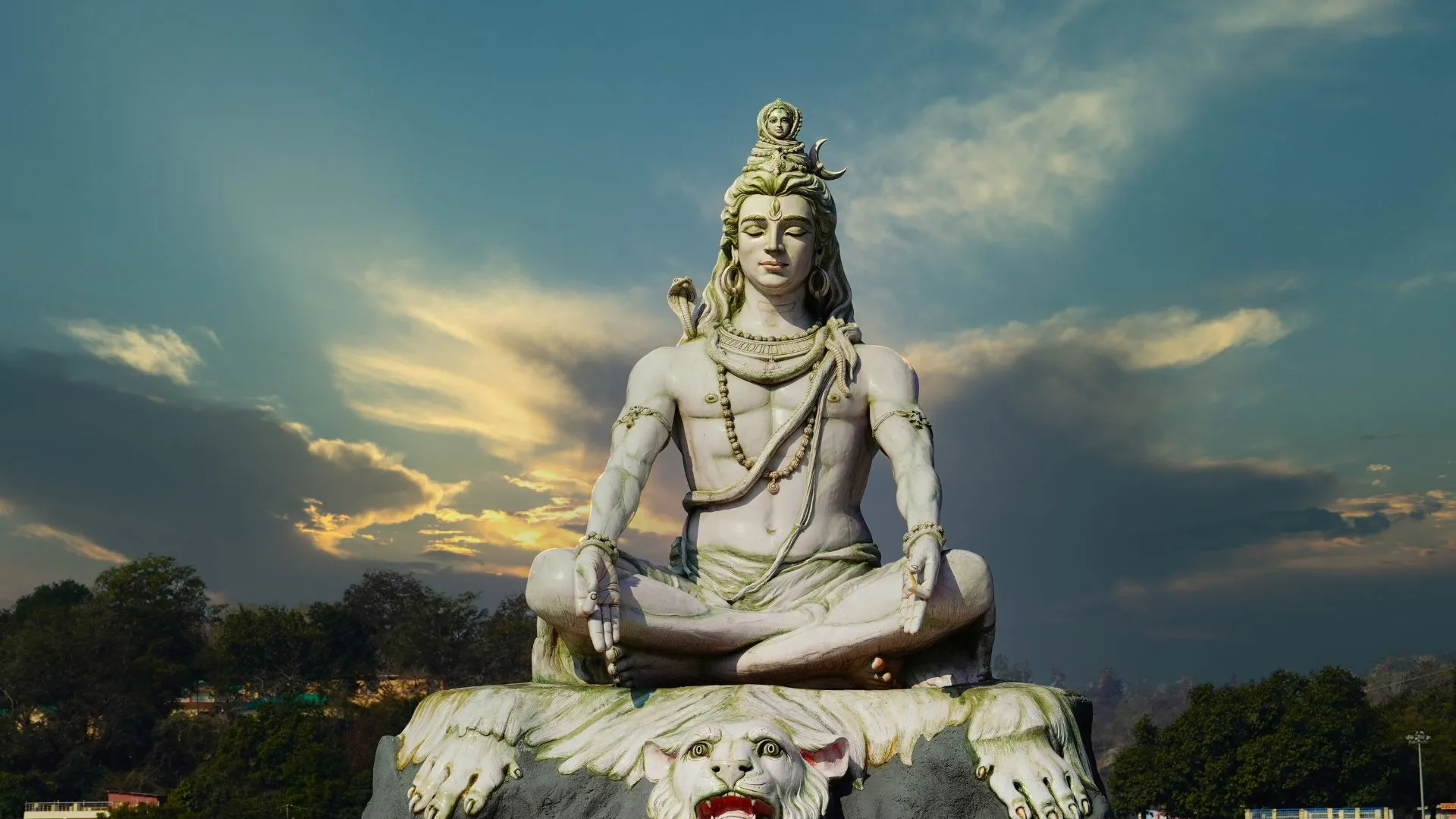
What makes Nepal’s celebration particularly extraordinary is its authenticity. There are no flashy advertisements or corporate sponsors driving the event. The only commerce visible is simple people selling flowers, lamps, and food for offerings. It is a festival by the people, not a business event. From the ancient ghats of Pashupatinath to remote mountain temples, Maha Shivaratri is lived and breathed with raw, heartfelt devotion that is genuinely rare in the modern world.
Whether you are a devout Hindu, a spiritual seeker, or a traveler drawn to living culture, understanding how Maha Shivaratri is celebrated in Nepal opens a doorway into one of humanity’s oldest and most profound traditions.
Maha Shivaratri 2026 Date and Timing
Maha Shivaratri 2026 falls on Falgun 03 according to the Nepali calendar, which corresponds to Sunday, February 15, 2026, in the English calendar.
The lunar calendar dictates the timing of this sacred festival, falling on the 14th day of the waning moon, Krishna Paksha, in the month of Falgun. The festivities begin at dawn on Sunday and reach their spiritual peak during the Nishita Kaal (the midnight hour), continuing until the sun rises on Monday.
For those planning to perform puja, understanding the specific time windows is essential. The most auspicious puja window, Nishita Kaal, falls between 12:09 AM and 1:01 AM on February 16. This 52-minute window is considered optimal for direct communion with Lord Shiva.
Shivaratri puja can be performed one time or four times during the night. The whole night duration can be divided into four to get four Prahar (प्रहर) for performing Shiva puja at each stage of the night. Serious devotees who wish to stay awake through all four Prahars dedicate each watch of the night to a different aspect of Lord Shiva’s energy.
The Parana, or the breaking of the fast, is traditionally done the following morning after sunrise, completing the cycle of devotion from one dawn to the next. Fasting begins at sunrise on February 15 and traditionally breaks the next morning after puja.
Mark your calendar and plan your visit early if you intend to attend celebrations at major temples. Maha Shivaratri 2026 is a public holiday in Nepal, and temple towns like Kathmandu will see extraordinary crowds.
Maha Shivaratri Story and Significance
The Maha Shivaratri story is not a single legend but a tapestry of sacred myths, each revealing a different dimension of Lord Shiva’s divine nature.
The most widely celebrated legend centers on the sacred union of Shiva and Goddess Parvati. Most famously, Maha Shivaratri marks the night Shiva married Goddess Parvati. This union represents the perfect balance of Purusha (consciousness) and Prakriti (nature). Devotees celebrate this cosmic marriage as a symbol of harmony between the masculine and feminine forces of the universe. In Nepal, married women observe fasts and offer prayers for the long life of their husbands, while unmarried women pray to be blessed with a partner who embodies the compassionate and virtuous qualities of Lord Shiva himself.
A second profound legend relates to the Samudra Manthan, the great churning of the cosmic ocean by gods and demons. When a deadly poison called Halahala emerged and threatened to destroy all of creation, Lord Shiva stepped forward and consumed it to save the universe. Legend tells us that Lord Shiva saved the world by drinking poison on this sacred night. Goddess Parvati held his throat to prevent the poison from spreading through his body, turning his throat blue and earning him the name Neelkanth, the Blue-Throated One. Maha Shivaratri is celebrated as a remembrance of this ultimate act of sacrifice.
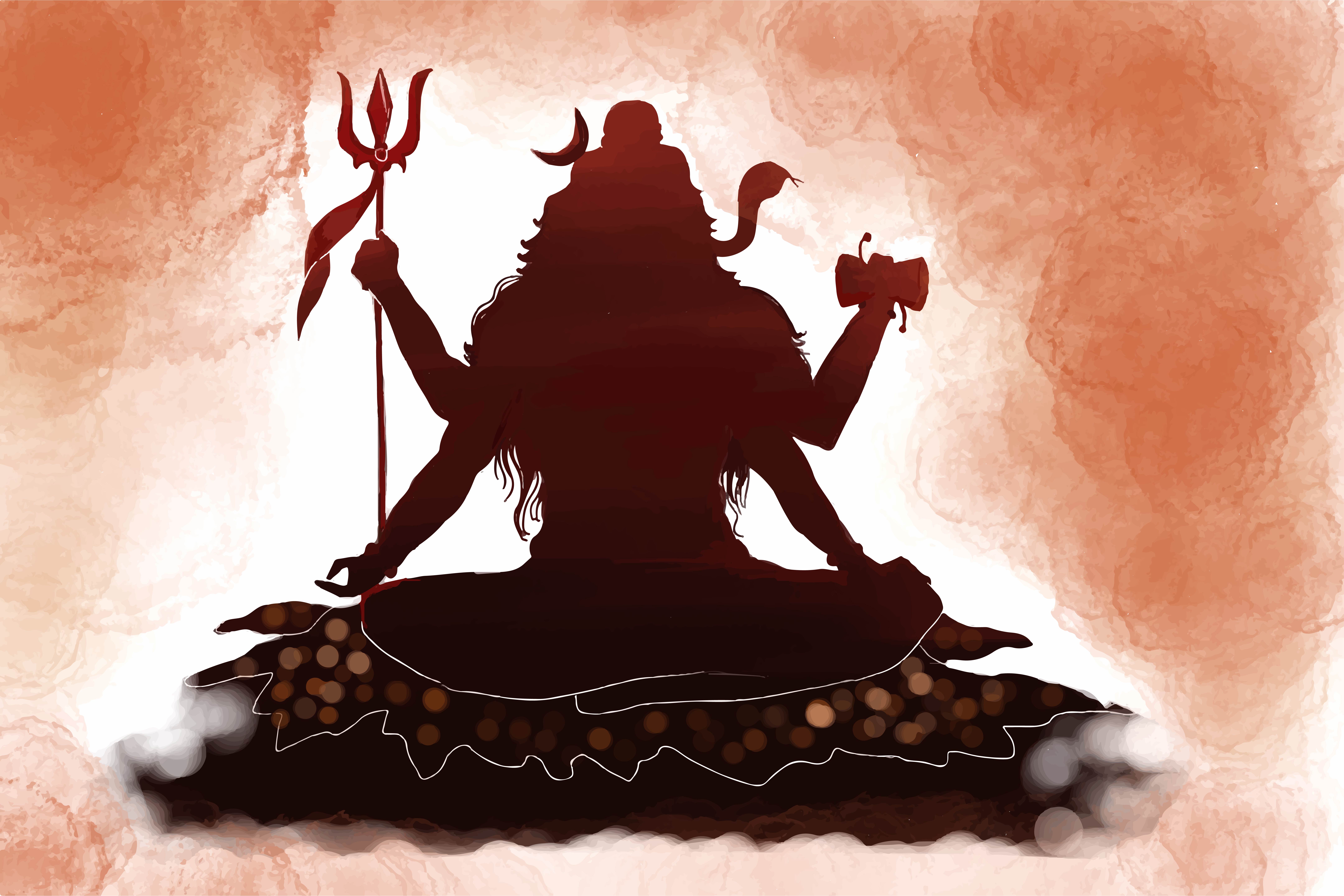
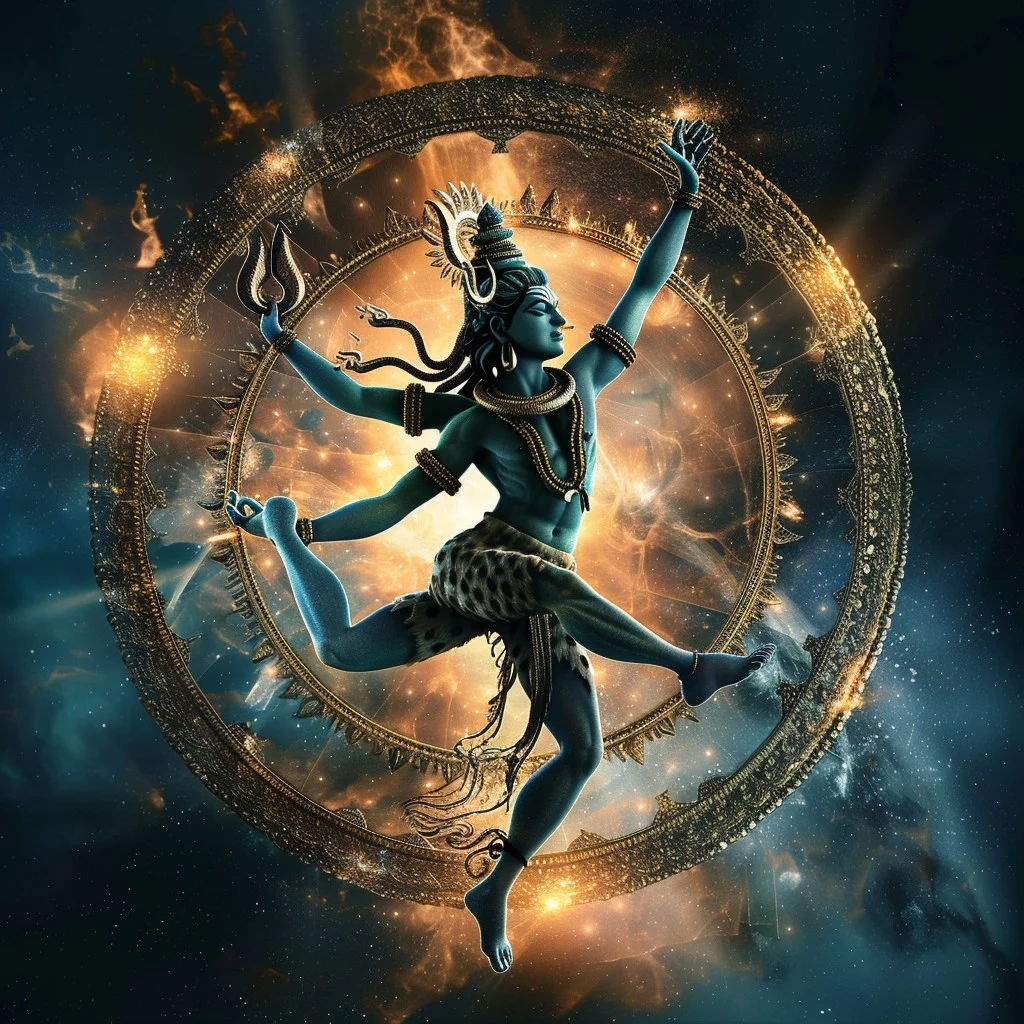
A third legend speaks of the cosmic dance. It is regarded as the day when Shiva performed the Tandava, the cosmic dance to discard negative power. The Tandava is the rhythm of creation, preservation, and destruction, and it is said that the very pulse of existence flows from this divine movement.
Beyond mythology, the spiritual significance of Maha Shivaratri is profound. The dark night of Krishna Paksha on which it falls is symbolic; devotees are invited to transcend the darkness of ignorance through devotion, wakefulness, and inner stillness. It is the most spiritually powerful night of the Hindu calendar, the night when Lord Shiva’s consciousness is most accessible to human awareness, making meditation, mantra chanting, and spiritual practice exponentially more potent.
How is Maha Shivaratri Celebrated in Nepal
Nepal is considered one of the holiest lands in the world for Shaivism, and how Maha Shivaratri is celebrated here reflects that deep spiritual heritage. The country transforms on this day; cities slow down, temples overflow, and the air carries the scent of incense and woodsmoke from ritual bonfires called “Dhuni.” “
Devotees typically fast, offer prayers, and engage in rituals throughout the day and night. They visit Shiva temples, light oil lamps, chant hymns, and perform Abhishekam, the ritual bathing of the Shiva Lingam with milk, honey, water, and sacred offerings.
The Shiva Lingam, which represents the formless cosmic energy of Lord Shiva, is the central object of worship. Devotees bring Bilva leaves (Bel patra), flowers, fruits, and sacred water from the Bagmati River as offerings. The act of pouring water or milk over the Lingam while chanting “Om Namah Shivaya” is considered one of the most purifying rituals in Hindu practice.
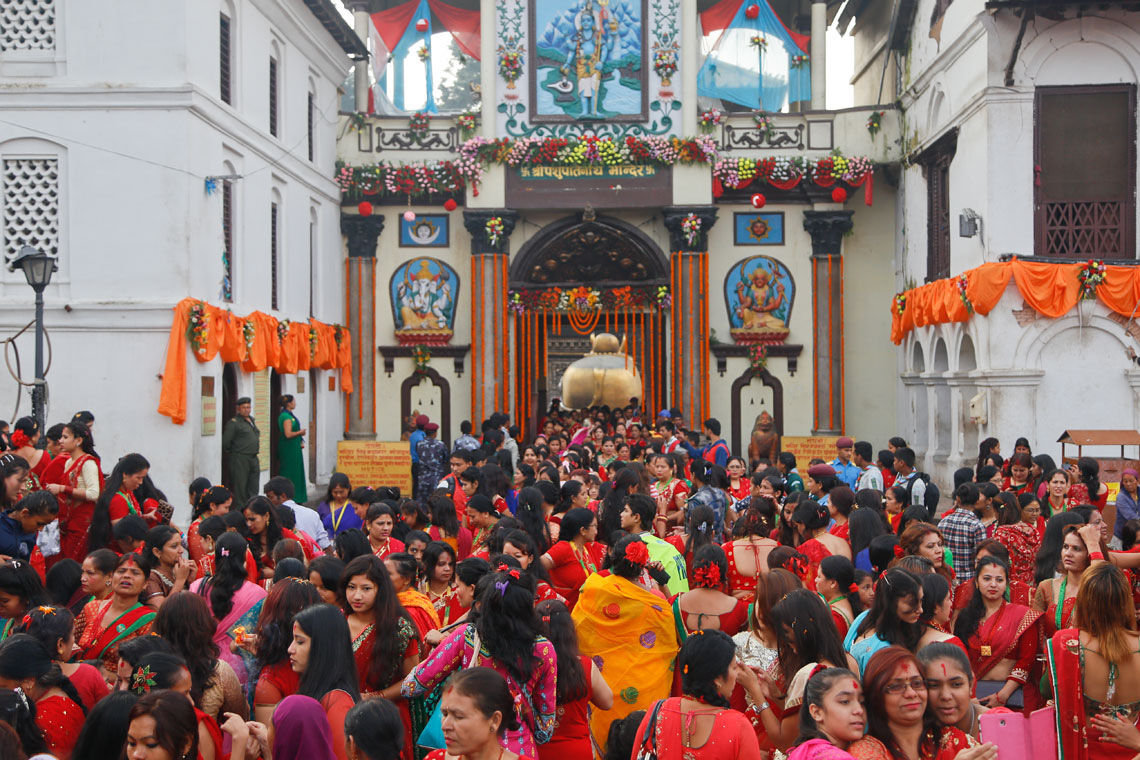
One of the most visually striking aspects of Maha Shivaratri in Nepal is the gathering of Sadhus, Hindu ascetics who renounce worldly life. During Maha Shivaratri, Pashupatinath Temple witnesses a considerable surge of devotees and Sadhus offering their worship. These holy men, some covered in ash and adorned with Rudraksha beads, come from across Nepal and India to observe the festival at this holiest of shrines. Their presence adds a mystical, ancient quality to the celebrations that is unlike anything else.
Nepal’s celebrations are special because they bring together many spiritual practices. Devotees fast, stay up all night, and keep chanting “Om Namah Shivaya” to awaken their inner consciousness. The festival goes beyond religious boundaries and encourages unity among people of all backgrounds who come to honor Lord Shiva.
Holy rituals related to sacred bathing, fasting, chanting Shiva mantras, Sandhya Arati, bonfires, and more weave together to create an atmosphere that is simultaneously solemn and deeply energizing. Children participate by blowing sugarcane in open fires, young people gather around Dhunis singing devotional songs, and elders spend the night in meditation and prayer.
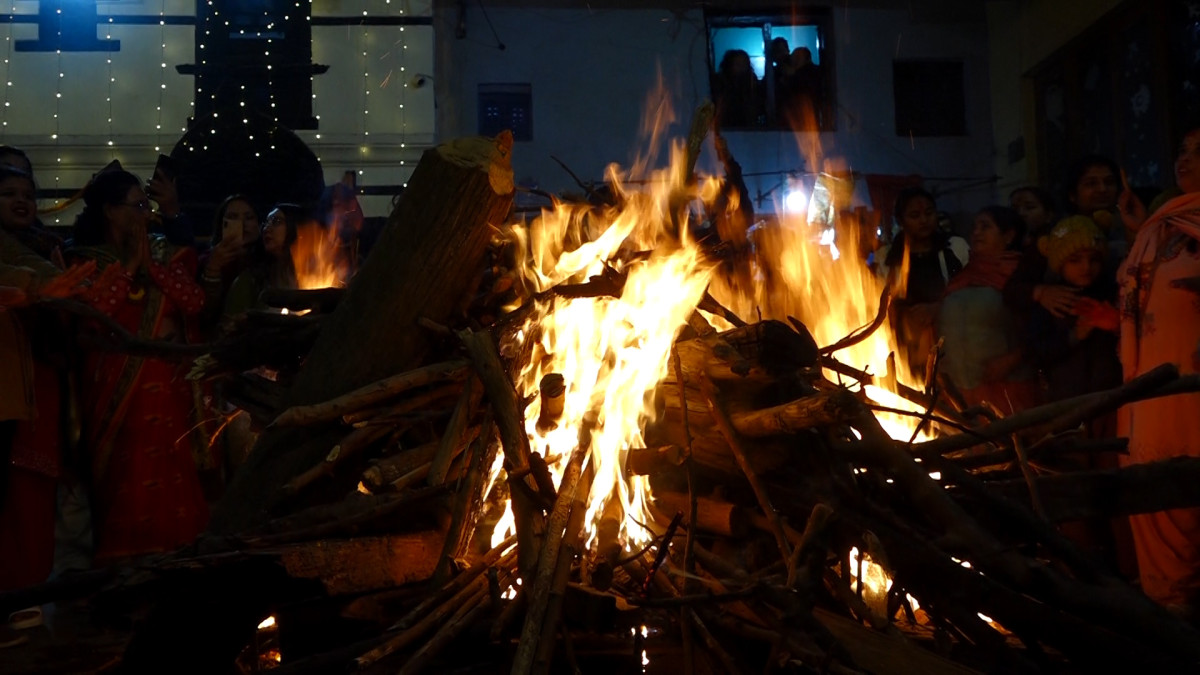
Beyond Kathmandu, Maha Shivaratri is observed at hundreds of Shiva temples across Nepal from Gokarneshwar Mahadev in the Kathmandu Valley to Doleshwar Mahadev to remote highland shrines in mountain districts. Most of the sacred sites are easily accessible by vehicle, but if you’re interested in trekking, you can reach even higher-altitude regions where these temples are located. For more cultural and religious festivals, visit Nepal Trekking.
Pashupatinath Temple Celebration
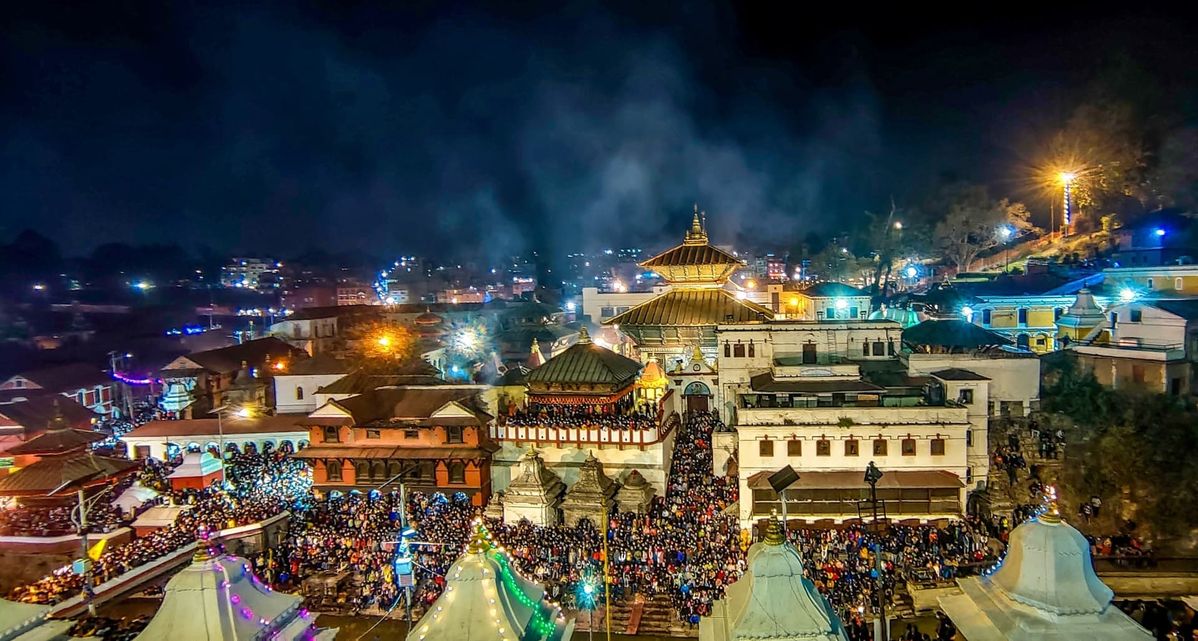
Of all the places in Nepal where Maha Shivaratri is observed, Pashupatinath Temple in Kathmandu stands in a class of its own. This UNESCO World Heritage Site on the banks of the sacred Bagmati River is not just Nepal’s most important Hindu temple; it is one of the most revered Shiva shrines on Earth.
Pashupatinath Temple welcomes approximately 1.5 million devotees during Maha Shivaratri, creating Nepal’s biggest religious gathering. The rituals here have been performed the same way for centuries. There is no “touristy” version; everything is done with genuine devotion.
On Maha Shivaratri, the Pashupatinath Temple is a very special place; incense is everywhere, bells ring continuously, and devotional songs fill the entire temple complex.
The main temple boasts four primary doors covered with silver sheets and features a cubic structure housing the sacred Shiva Lingam. Only Hindus may enter the inner sanctum, where highly qualified South Indian Bhatt priests perform intricate Vedic rituals. Non-Hindu visitors can observe the celebrations from designated areas and still absorb the incredible atmosphere of the festival.
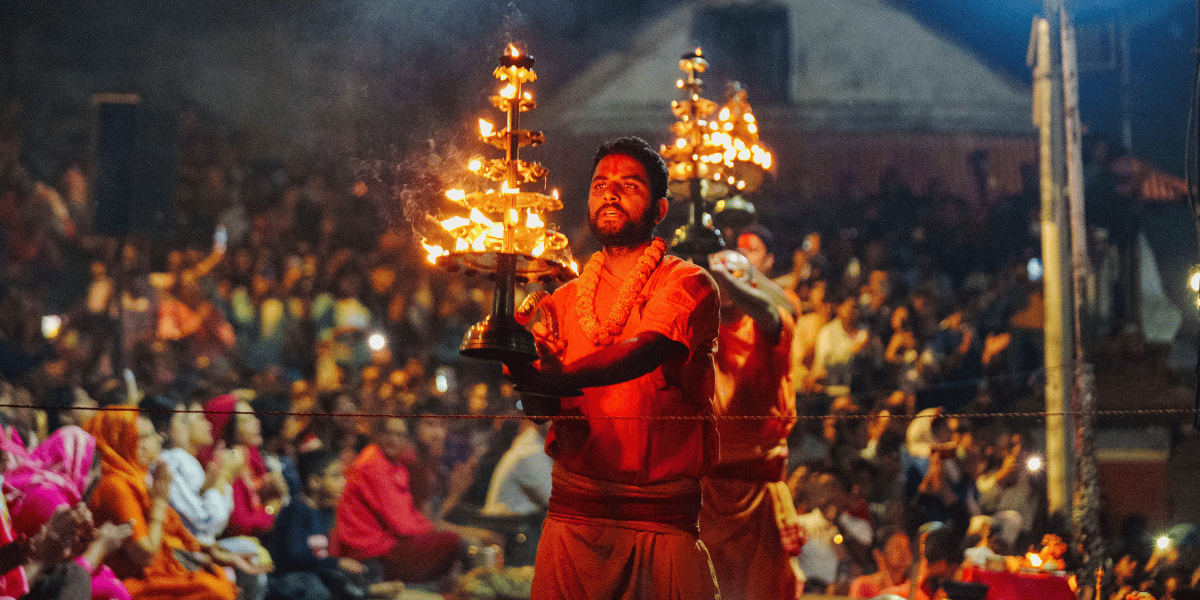
The real magic happens at night. The temple complex is illuminated by millions of sparks from ritual bonfires (Dhuni), where devotees stay awake (Jagaran) to overcome darkness and ignorance.
Sandhya Aarti, an auspicious ritual, is held at the banks of the Bagmati River on the eastern side of Pashupatinath Temple. As the priests perform the evening fire ritual with synchronized movements of lamps and incense, the scene is nothing short of breathtaking.
For those seeking a slightly less crowded but equally spiritually significant experience, Doleshwar Mahadev offers a more serene but equally potent experience. It is believed that this temple is the “head” portion of the Kedarnath deity in India, making it a must-visit for serious spiritual seekers.
Maha Shivaratri at Pashupatinath also coincides with Nepal’s Army Day, which adds military parades and cultural shows to the festival’s energy, making it a uniquely layered celebration of both spiritual and national identity.
Maha Shivaratri Fasting Rules
Maha Shivaratri fasting is one of the most significant and disciplined observances in Hinduism. It is not merely about abstaining from food; it is a complete practice of physical purification, mental focus, and spiritual surrender.
Maha Shivaratri fasting is one of the strictest Hindu fasts, observed to seek Lord Shiva’s blessings, spiritual purification, and self-discipline. Devotees prepare a day before by eating a sattvic meal, avoiding grains, onion, garlic, and non-vegetarian food. The next day, after taking a ritual bath, they begin the fast with full devotion.
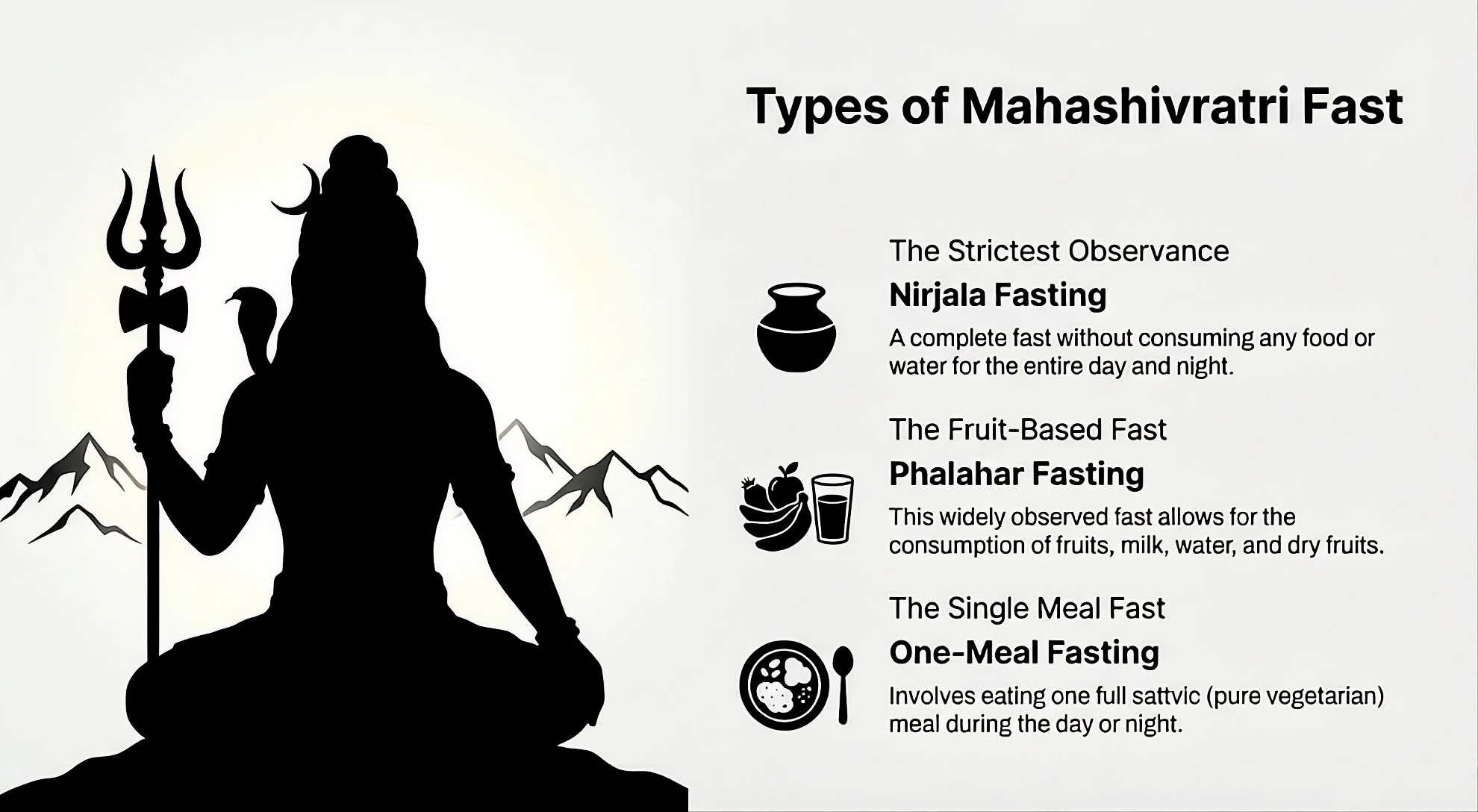
There are three main types of Maha Shivaratri fasting that devotees observe based on their health and spiritual commitment:
Nirjala Upvas—The strictest form. Those following the strictest rule abstain from eating, drinking, and even sleeping for 24 hours, dedicating the entire time to meditation, mantra chanting, and prayer.
Phalahari Upvas — A moderate fast where devotees consume only fruits, milk, and water while refraining from grains, salt, and cooked food.
Water Fasting — Consuming only water throughout the day and night, maintaining awareness and focus without complete food abstinence.
Those who fast typically avoid wheat, rice, salt, certain vegetables, and pulses. Non-vegetarian foods, onion, and garlic are strictly avoided, even by those who are not fasting.
Staying awake through the night, called Jaagran, is considered as important as the fast itself. According to the Shiva Purana, the soul that remains wakeful and devoted through all four prahars of Maha Shivaratri receives the same merit as performing a year of daily puja. The waking state also maintains heightened consciousness during the night when Shiva’s energy is most accessible.
Observing Maha Shivaratri fasting detoxifies the body, while chanting and meditation bring mental clarity. The cosmic energy shift during this time enhances concentration, improves emotional balance, and strengthens spiritual resolve.
The fast is broken the following morning, typically after performing morning puja and receiving the blessings of Lord Shiva. Fruits, milk, and light sattvic foods are consumed first before gradually returning to a regular diet.
Maha Shivaratri Wishes and Quotes
Sharing blessings on Maha Shivaratri is a beautiful tradition that brings the spiritual energy of the festival into everyday relationships. Here are some meaningful wishes and quotes to share with loved ones:
Wishes:
- “May Lord Shiva bless you with strength, wisdom, and peace on this auspicious night of Maha Shivaratri. Om Namah Shivaya!”
- “On this holy occasion of Maha Shivaratri 2026, may the divine grace of Mahadev remove all obstacles from your path and fill your life with joy and prosperity.”
- “Wishing you a spiritually uplifting Maha Shivaratri. May Lord Shiva’s blessings be with you and your family always. Har Har Mahadev!”
- “May this Maha Shivaratri bring inner peace, good health, and the courage to face life with devotion. Jai Bholenath!”
- “As you fast, pray, and reflect on this sacred night, may Lord Shiva guide your heart toward truth, love, and liberation. Happy Maha Shivaratri 2026!”
Quotes to inspire reflection:
- “The Shiva within you is eternal. On Maha Shivaratri, awaken that consciousness and let it illuminate every corner of your life.”
- “Maha Shivaratri teaches us that the darkest nights are not to be feared; they are to be transformed through devotion and awareness.”
- “In the stillness of this sacred night, hear the silence speak. That is Shiva.”
Maha Shivaratri Songs and Bhajans
Music and devotion are inseparable during Maha Shivaratri. Across Nepal’s temples, neighborhoods, and homes, the night comes alive with the sound of sacred hymns, bhajans, and mantras dedicated to Lord Shiva. These songs are not mere entertainment; they are a form of worship, a way of keeping the mind focused and the heart open through the long vigil of the night.
Popular Maha Shivaratri Bhajans and Songs:
Om Namah Shivaya — The most universally chanted Shiva mantra, often set to devotional melodies. It is the simplest and most powerful way to connect with Lord Shiva during the festival night.
Shiv Tandav Stotram — A powerful Sanskrit hymn composed by Ravana in praise of Lord Shiva’s cosmic dance. Its rhythm mirrors the energy of the Tandava itself and is widely sung during Maha Shivaratri.
Har Har Mahadev — A call-and-response chant that fills the air at Pashupatinath and Shiva temples across Nepal during the festival. Its simplicity and energy make it perfect for group chanting.
Bhole Bhandari — A beloved Nepali devotional song that praises Lord Shiva in the colloquial and heartfelt language of the people. It is commonly heard in the lanes near Pashupatinath during the festival.
Rudrashtakam — A classical Sanskrit hymn from the Ramayana composed by Tulsidas, singing of Lord Shiva’s formless and omnipresent nature. It is considered deeply meditative when chanted slowly.
Mahamrityunjaya Mantra—”Om Tryambakam Yajamahe…” This ancient mantra is chanted for healing, liberation, and protection. On Maha Shivaratri, it is offered as one of the most auspicious forms of prayer.
In Nepal, local folk traditions also bring unique bhajans and devotional songs that blend classical Shaiva hymns with the musical heritage of Newar, Brahmin, and hill communities, making the celebration a rich cultural tapestry as much as a spiritual one.
FAQs About Maha Shivaratri
Q1. When is Maha Shivaratri 2026?
Maha Shivaratri 2026 falls on Sunday, February 15, 2026, corresponding to Falgun 03 in the Nepali calendar. The most auspicious time for puja, Nishita Kaal, is between 12:09 AM and 1:01 AM on February 16.
Q2. What is the story behind Maha Shivaratri?
The Maha Shivaratri story includes several sacred legends: the marriage of Shiva and Parvati; Lord Shiva drinking the cosmic poison to save the universe during Samudra Manthan; and his performance of the Tandava, the cosmic dance of creation and destruction.
Q3. How is Maha Shivaratri celebrated in Nepal?
In Nepal, Maha Shivaratri is celebrated through fasting, night-long vigils, bathing and anointing the Shiva Lingam, chanting mantras, visiting temples, especially Pashupatinath in Kathmandu, and gathering around sacred bonfires called Dhuni. It is one of the country’s most important public holidays.
Q4. What are the Maha Shivaratri fasting rules?
Fasting on Maha Shivaratri involves avoiding grains, salt, non-vegetarian food, onion, and garlic. Devotees can observe a complete fast (Nirjala), a fruit-and-milk fast (Phalahari), or a water-only fast. Staying awake through the night is considered an essential part of the observance.
Q5. Can non-Hindus attend Maha Shivaratri at Pashupatinath?
Yes, non-Hindus are welcome to witness the celebrations at Pashupatinath from the outer precincts and along the Bagmati River. However, the inner sanctum of the main temple is accessible only to Hindu devotees.
Q6. What should I wear to Maha Shivaratri celebrations?
Modest, traditional clothing is recommended, preferably in white or saffron, which are sacred colors in Shaiva tradition. Avoid revealing attire out of respect for the deeply religious nature of the event.
Q7. Is Maha Shivaratri a public holiday in Nepal?
Yes. Maha Shivaratri is a recognized public holiday in Nepal, with government offices, schools, and many businesses closed for the day.
Q8. What is the best way to experience Maha Shivaratri in Nepal as a visitor?
Arrive early at Pashupatinath, respect temple etiquette, wear modest clothing, and try to stay through the evening Sandhya Aarti and into the night for the full spiritual experience. Joining a guided cultural tour can also help you understand the deeper meaning behind each ritual.

Table of Contents
- Introduction to Maha Shivaratri
- Maha Shivaratri 2026 Date and Timing
- Maha Shivaratri Story and Significance
- How is Maha Shivaratri Celebrated in Nepal
- Pashupatinath Temple Celebration
- Maha Shivaratri Fasting Rules
- Maha Shivaratri Wishes and Quotes
- Maha Shivaratri Songs and Bhajans
- FAQs About Maha Shivaratri

Need Help?
Ask to Travel Expert