
- Mt. Kailash Tour
- Kailash Mansarovar Overland Tour
- Kailash Mansarovar Yatra by Helicopter – Complete Spiritual Journey Guide
- Kailash Yatra via Lucknow
- Kailash Mansarovar Tour via Lhasa
- Kailash Lhasa EBC Tour From Beijing
- Kailash Heli Tour via Kerung: Complete Spiritual Journey Guide
- Kailash Tour via Lhasa In Kerung Out
- Lhasa EBC Kailash Tour
- Kailash Heli Tour
- Kailash Mansarovar Yatra
- Kailash Nandi Kora
- Kailash Tour via Humla Simikot – 20 Days
- Mount Kailash Tour : Best Package and Cost for 2025
- Trekking
- Tours
-
-
- Day Tours
- Rickshaw–a three-wheeler Tour
- Day tour to Chobhar & Dakshinkali
- Historical Tour
- Kathmandu Temple Tour
- Nagarkot Tour
- Bhaktapur City Tour
- Kathmandu City Tour – Complete Heritage & Cultural Experience in Nepal
- Chandragiri Hill: A Scenic Himalayan Escape Near Kathmandu
- Chitlang Hiking
- Shivapuri to Sundarijal Day Hiking
- Kulekhani Dam Day Tour — Complete Travel Guide
- Day Tours
-
- Package Tours
- Mustang Tour on Jeep
- 10 Days, Nepal Tour
- Muktinath Tour: Complete Guide to Nepal’s Sacred Himalayan Pilgrimage
- 3N,4D Kathmandu Pilgrimage Tour
- 7 Days,Nepal pilgrimage tour
- 5N,6D Nepal Pilgrimage Tour
- 7 Nights, 8 Days Nepal Tour
- Districts tour of Nepal
- Janakpur Tour Package: Price, Family Tour & Travel Guide from Kathmandu 2026
- Short Hike in Nepal
- Package Tours
-
-
- Outbound
-
- Activities
- Company
- Travel Info
- Blogs
- Contact


WhatsApp
+977-9851035239

Email Us
[email protected]
Bungee Jumping Tour Packages for Ultimate Adventure
25 January 2018
By Leaf Holidays
Introduction to Bungee Jumping in Nepal
If you are looking for one of the most breathtaking adventure experiences on the planet, bungee jumping in Nepal should be at the very top of your bucket list. Nestled between the towering Himalayas and carved with deep river gorges and wild valleys, Nepal has transformed itself into one of the premier destinations for extreme adventure tourism in Asia, and bungee jumping sits right at the heart of it.
Nepal, often celebrated for its majestic mountains and trekking trails, has steadily emerged as a hotspot for adventure activities. Among these, bungee jumping has carved out a special niche for adrenaline junkies, from leaping off suspension bridges over roaring rivers to free-falling against the backdrop of snow-capped peaks.
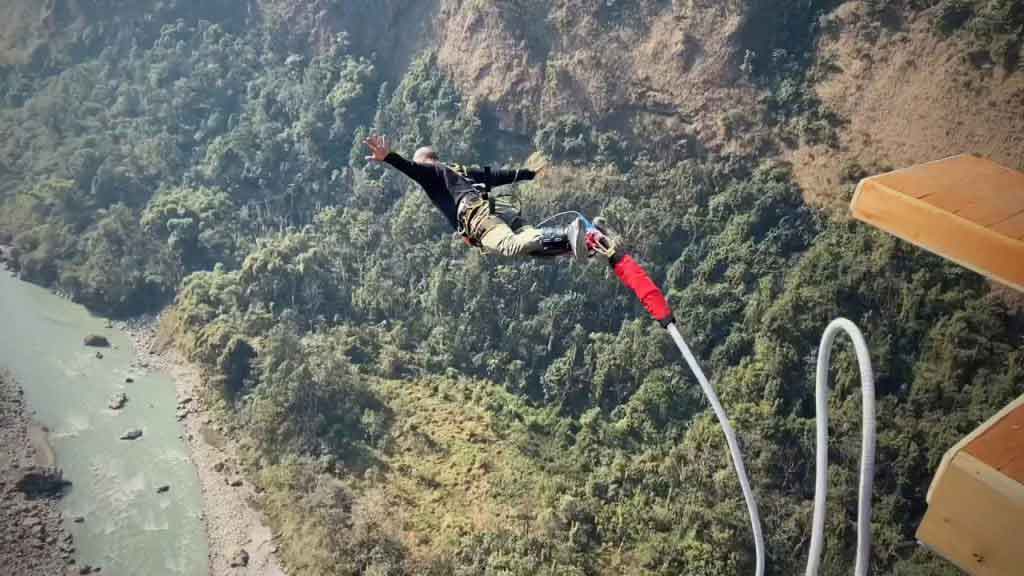
What makes Nepal truly special for bungee jumping is what lies beneath your feet when you jump. Most bungee jumping destinations in the world use cranes or manmade towers. Nepal is different; you jump over natural river gorges, ancient suspension bridges, and Himalayan landscapes that make the experience unforgettable even before you leave the platform.
Whether you are a first-time thrill-seeker or a seasoned adventure traveler, Nepal has a jump for every level of courage. From the world-famous Bhotekoshi site near the Tibetan border to the record-breaking heights of Kushma in western Nepal, this guide covers everything you need to plan your perfect bungee jumping adventure.
Why Choose Nepal for Bungee Jumping?
There are hundreds of bungee sites around the world, but very few offer the raw, immersive experience that bungee jumping in Nepal delivers. The combination of dramatic natural landscapes, world-class safety standards, and genuinely affordable pricing makes Nepal a category of its own.
Operators in Nepal are certified to international safety standards and fitted with New Zealand-grade equipment, and sites are open almost year-round with peak seasons offering perfect weather conditions.
Nepal is also home to two of the highest bungee jumps in all of Asia. Nepal has a jump that ideally matches every degree of courage and every budget from beginner-friendly spots in Pokhara to one of the tallest bungee jumps on the planet at Kushma.
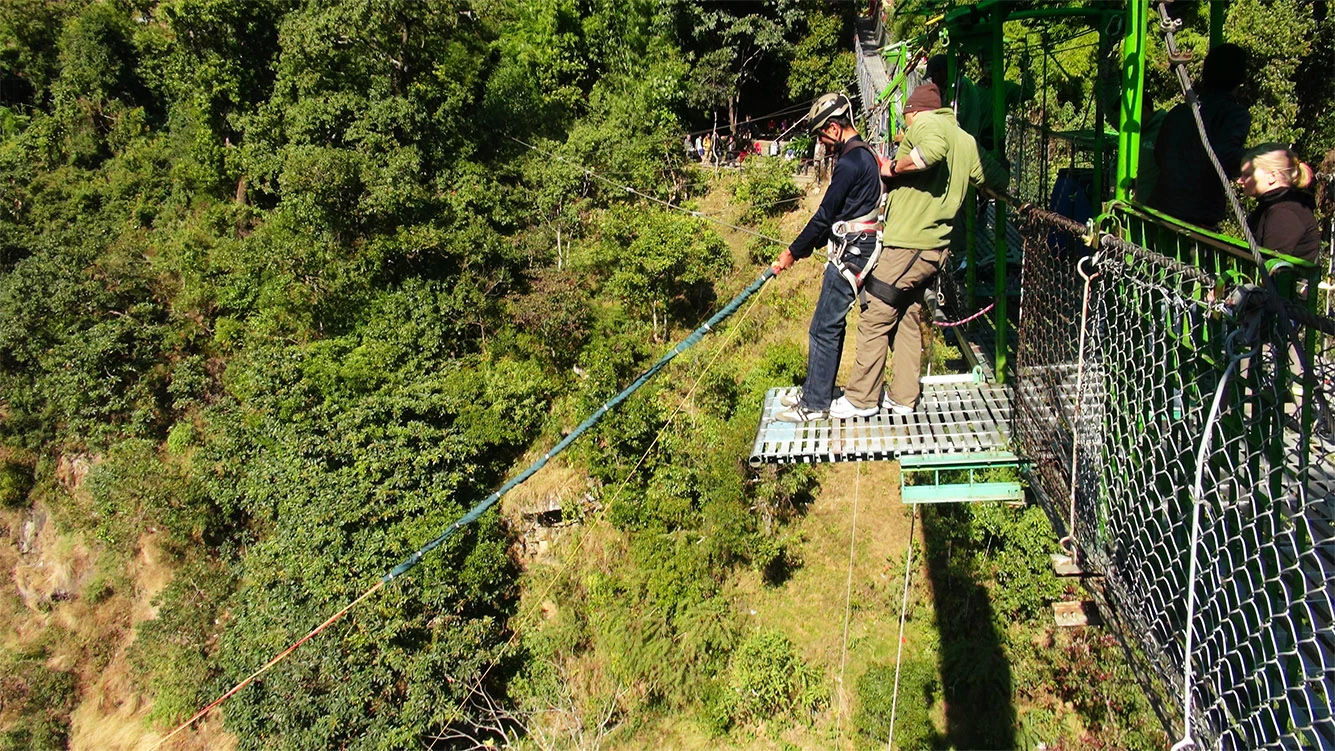
The adventure does not end at the jump. Nepal’s bungee sites are embedded within stunning natural environments where you can combine your jump with canyon swinging, white-water rafting, canyoning, zip-lining, and overnight resort stays. Few places on Earth pack this much adventure into a single destination.
Top Bungee Jumping Locations in Nepal
1. Bhotekoshi Bungee Jump — The Original Thrill
Bungee jumping in Nepal started in the early 1990s, and the first site was at the Bhote Koshi River. It remains a top spot for bungee jumping to this day, with stunning Himalayan views.
The Last Resort, situated on the Araniko Highway in the Nepal-Tibet border area, is still the most iconic place for bungee jumping in Nepal, with a dramatic 160-meter drop over the Bhote Koshi River. The narrow gorge makes the fall more intense and exciting than open platform jumps, ideal for both beginners and experienced jumpers.
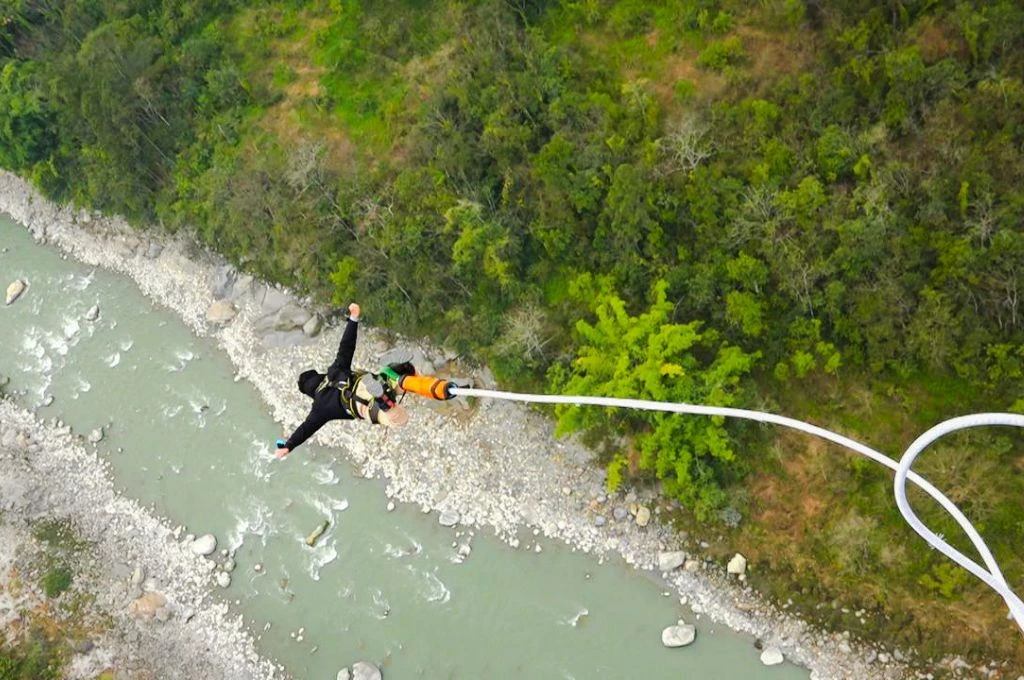
It is located 100 kilometers northeast of Kathmandu, at a height of 3,600 feet above sea level. The Bhotekoshi bungee bridge was built exclusively for bungee jumping according to Swiss requirements, with a 4x safety factor and a loading factor of 41,500 kg.
You can also combine your bungee jumping here with canyoning, rafting, or an overnight resort stay, making it one of the most complete adventure packages in Nepal.
2. Kushma Bungee Jump — The Highest in Nepal
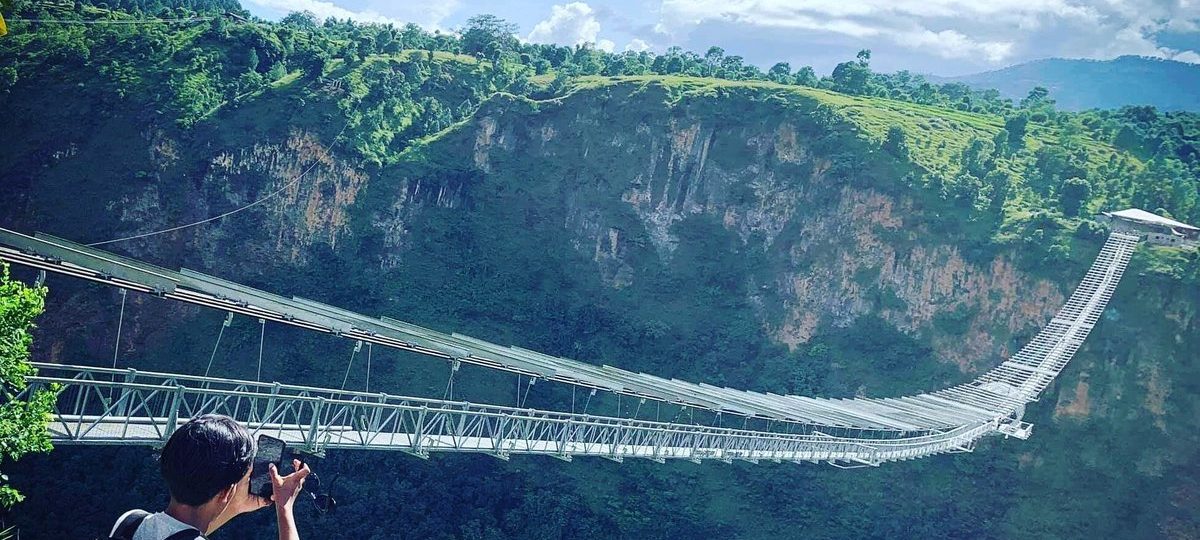
For those who want the absolute maximum, Kushma is the answer. Located near the town of Kushma in the Parbat district, the Kushma bungee offers an adrenaline-pumping experience with a jump from one of the highest suspension bridges in the world at 228 meters (748 feet) above the ground.
Located between Baglung and Parbat districts, Kushma is home to the highest bungee jump in Nepal and the second-highest in the world. The jump takes place from a 520-meter-long suspension bridge connecting Kushma in Parbat with Balewa in Baglung, with panoramic views of the Kali Gandaki valley and the Annapurna and Dhaulagiri mountain ranges stretching endlessly in the background.
For those who fall in love with the rush, the second jump comes at a 50% discount, making it a favorite for repeat jumpers. The third jump is priced even lower, and the fourth is offered free.
3. Pokhara Bungee Jump — The Tower Jump by the Himalayas
Bungee jumping in Pokhara is a perfect choice for anyone who loves daring adventures. Jumping from an altitude of 80 meters into the gorge offers a feeling of risky adventure. The Hemja station is home to Nepal’s first tower bungee jump, the only tower bungee in Nepal.
The Pokhara bungee experience is unique because it drops you straight toward the Seti River gorge with a jaw-dropping frame of Himalayan peaks in the background. All year round, except for the rainy season, Pokhara bungee jumping tours depart daily, with the best bungee cord made by HighGround and the safest technologies available.
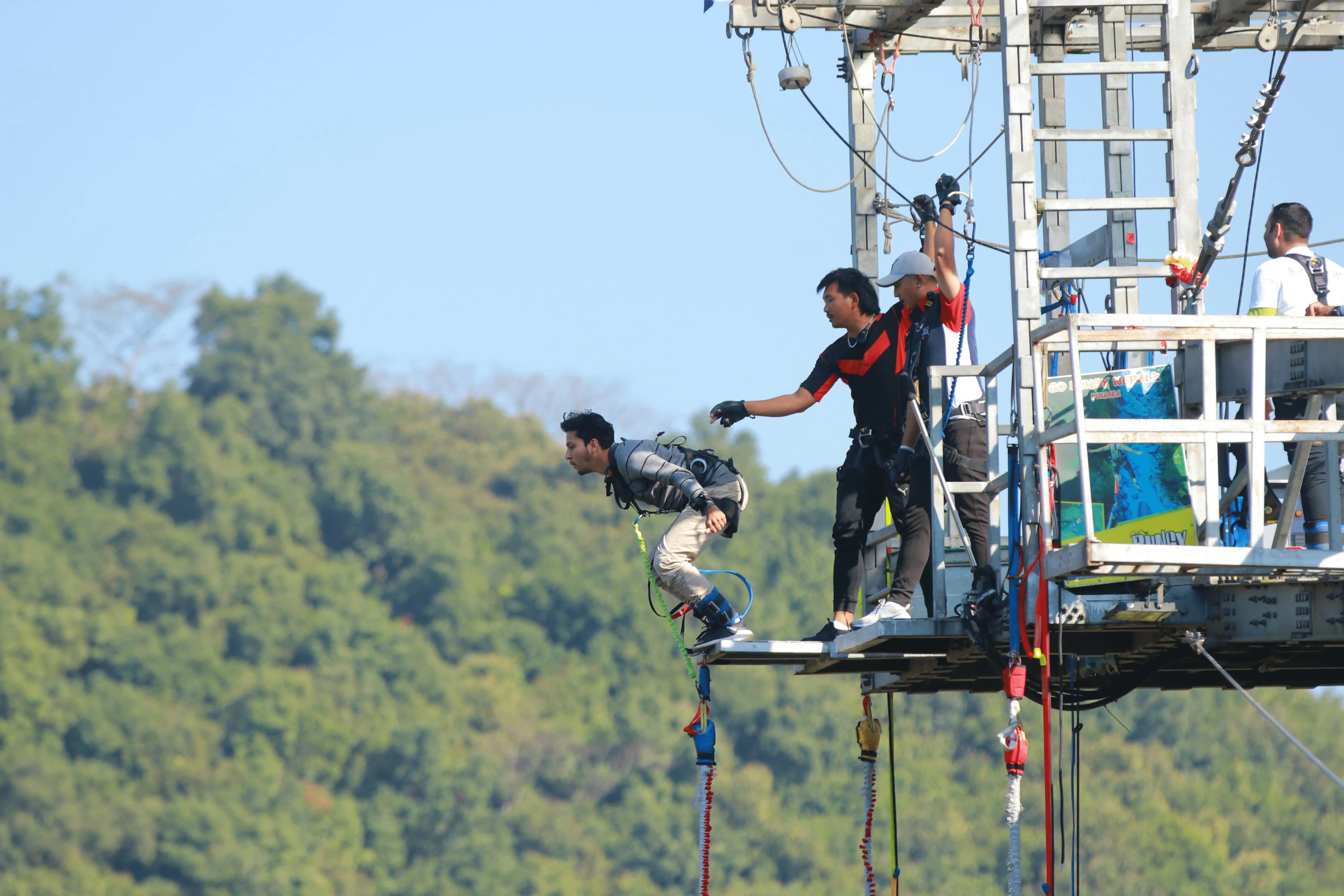
For travelers already visiting Pokhara for trekking or paragliding, adding a bungee jump here is a natural and unforgettable extension of the adventure.
Bungee Jumping Tour Packages Nepal — What’s Included?
When you book bungee jumping in Nepal, most operators offer comprehensive packages that take the logistical stress completely off your plate. Here is what standard bungee jumping tour packages in Nepal typically include:
Standard Day Trip Package — Most popular for Bhotekoshi and Pokhara. Includes round-trip transportation from Kathmandu or Pokhara, safety briefing, one bungee jump, and basic snacks or a meal. This is the most affordable entry point for first-time jumpers.
Adventure Combo Package — For those who want more, operators bundle bungee jumping with canyon swinging, zip-lining, white-water rafting on the Bhotekoshi or Trishuli River, and in some cases an overnight stay at a resort. You can combine your bungee jumping experience with canyoning, rafting, or an overnight stay at The Last Resort.
Photography and Video Add-on — The cost for videography and photography typically ranges from around NPR 1,500 to NPR 2,000, covering both services. This is purely additional and optional.
Couple/Tandem Bungee Package — What people call “couple bungee” in Nepal is officially a tandem swing, where two participants are securely seated side by side and released from the same platform. It has become a go-to for honeymooners, anniversary duos, or birthday thrill-seekers. The Cliff Nepal in Kushma is the only place in Nepal offering tandem swings for couples.
When you book bungee jumping in Nepal online, always confirm what is included in the base price before payment. Transportation, meals, photos, and videos are often sold separately.
Bungee Jumping Cost in Nepal — Full Price Guide
Understanding the bungee jumping cost in Nepal upfront helps you plan your adventure without surprises. Prices vary based on location, nationality, and what is included in the package.
Bhotekoshi (The Last Resort): At The Last Resort, the price of bungee jumping for Nepali citizens is Rs. 6,300; NPR 9,000 for Indian, Chinese, and SAARC visitors; and USD 92 for other foreign nationals. The resort also offers occasional discount packages combining bungee, canyon swing, and rafting.
Kushma Bungee: The cost of the Kushma Bungee Jump for Nepali is Rs. 7,500 per person, with an additional Rs. 1,500 for a video of your jump. The cost for foreigners is approximately Rs. 8,500 per person. Kushma’s bungee with video and photography runs approximately NPR 10,000.
Pokhara (Hemja Tower Bungee): The current bungee price in Pokhara is 7,500 Nepalese Rupees. The couple’s bungee and tandem bungee price is 13,000 rupees, and the price is the same for all nationalities.
As a general international reference, Bhotekoshi bungee jumping is priced around USD 130 per person, Pokhara bungee around USD 75 per person, and Kushma bungee around USD 80 per person. Transportation costs are extra and are provided separately by local travel agencies.
Bungee Jumping Tickets Nepal Price — How to Book Online
Securing your bungee jumping tickets Booking Nepal in advance is strongly recommended, especially during peak tourist seasons when spots fill up fast. Here is how to book:
Official Operator Websites — Both The Last Resort (Bhotekoshi) and The Cliff Nepal (Kushma) have official websites where you can browse packages, check availability, and confirm your jump date. Online booking usually requires a deposit to hold your spot.
Registered Nepal Travel Agencies — Many government-registered adventure travel companies in Kathmandu and Pokhara offer bundled bungee jumping tour packages in Nepal at competitive rates. These agencies, including Nepal trekking companies, handle transportation, permits, and coordination, making them ideal for international visitors who want a hassle-free experience.
Book bungee jumping in Nepal online via aggregators—travel platforms and adventure booking portals now list Nepal bungee packages with user reviews and verified pricing. Always check that the operator is Nepal Tourism Board registered before making payment.
Walk-in Booking — For Pokhara bungee at Hemja, walk-in bookings are possible on the day, but availability is not guaranteed on weekends and public holidays.
Your jump day typically begins with registration and equipment fitting. Subsequently, comprehensive safety briefings explain all procedures and equipment functions. Additionally, you will watch demonstrations and have opportunities to ask questions. The entire process usually takes 2-3 hours from arrival to completion.
Bungee Jumping Safety in Nepal — What You Need to Know
Safety is naturally the first question for anyone considering bungee jumping in Nepal for the first time. The good news is that Nepal’s established bungee sites maintain excellent safety records backed by international standards and experienced professionals.
The jump at Bhotekoshi is from a suspension bridge of Swiss design built exclusively for bungee jumping, with a 4x safety factor. At Kushma, the bridge engineering also follows Swiss design principles, ensuring structural integrity even under maximum load.
Weight and age requirements apply at all sites. Most sites require jumpers to be at least 13-16 years old with parental consent for minors. The weight requirements typically range from 40 to 100 kg, though some sites accommodate up to 110 kg. Health restrictions include pregnancy, heart conditions, high blood pressure, and recent surgeries. Always declare medical conditions during booking.
What to wear: Closed-toe shoes are mandatory. Wear comfortable, fitted clothing; avoid loose items like scarves, jewelry, or wide sleeves that can interfere with the harness. Leave valuables in the locker provided at the site.
Follow your instructor throughout the process and ask anything that comes to mind. They are trained individuals who know how to handle situations in case of an emergency. If you are too scared for your first jump but don’t want to miss out, ask the instructor to go along with you as a double jump.
No prior experience is required to bungee jump in Nepal. Operators provide full instructions and safety briefings before the jump, making it accessible to first-time jumpers.
Best Time for Bungee Jumping in Nepal
Timing your visit correctly can make all the difference between a clear, exhilarating jump and a weather-cancelled disappointment.
The best time to go for bungee jumping in Nepal is March–May and September–November, when the weather is dry and cool. Avoid the monsoon season regardless of what the tour company offers, as weather changes abruptly during June to August.
The post-monsoon period provides spectacular visibility and comfortable temperatures. Clear skies during these seasons provide better photography and video opportunities, maximizing your overall experience.
Spring (March–May) is ideal if you want lush green landscapes, blooming rhododendron forests, and manageable temperatures at both Bhotekoshi and Kushma. This season also coincides with peak trekking season, making it easy to combine bungee jumping with a trek in the same trip.
Autumn (September–November) is arguably the best season overall. Skies are crystal clear after the monsoon rains, the air is crisp, and the Himalayan views from the Kushma Bridge are at their most spectacular. This is peak adventure season in Nepal.
Tips for First-Time Bungee Jumpers in Nepal
These practical tips will help you get the most out of your bungee jumping experience in Nepal:
Book in advance: Especially for weekends and peak season dates, bungee jumping tickets fill up fast. When you book bungee jumping in Nepal online ahead of time, you also have more flexibility to choose your preferred date and package.
Eat light beforehand: Have a light meal at least two hours before your jump. A heavy stomach and an adrenaline spike do not mix well.
Arrive early: Getting to the site early means you complete registration, briefing, and harness fitting without rushing, and you get to watch other jumpers before it is your turn, which actually helps calm the nerves.
Bring cash: While online booking handles the base fee, on-site add-ons like video packages, extra jumps, or merchandise are often cash-only at many Nepal bungee sites.
Capture the memory: The photo and video packages are genuinely worth it. You will want proof of what you accomplished, and the footage of a 160-meter or 228-meter free fall is remarkable.
Combine activities: Nepal’s bungee sites are adventure hubs. Combining bungee jumping with canyon swinging, rafting, or zip-lining on the same day through a bundled bungee jumping tour package in Nepal maximizes your investment and your fun.
Frequently Asked Questions About Bungee Jumping in Nepal
Q1. What is the highest bungee jump in Nepal?
The Kushma bungee jump, at 228 meters, is the highest bungee jump in Nepal and the second-highest in the world.
Q2. What is the bungee jumping cost in Nepal for foreigners?
Costs vary by location. Bhotekoshi is approximately USD 92 per person, Kushma around USD 80, and Pokhara around USD 75. Transportation and photography are typically charged separately.
Q3. How do I book bungee jumping in Nepal online?
You can book directly through official operator websites, registered Nepal travel agencies, or adventure booking platforms. Always confirm the operator’s Nepal Tourism Board registration before paying.
Q4. Is bungee jumping in Nepal safe?
Yes. All operators follow strict international safety protocols. Safety gear is always looked after to keep everyone safe, and no prior experience is needed.
Q5. What is the best time for bungee jumping in Nepal?
Spring (March–May) and autumn (September–November) are the best seasons. Avoid the monsoon months of June through August.
Q6. What is the minimum age for bungee jumping in Nepal?
The age limit varies by operator. Most sites require participants to be at least 16–18 years old. Minors may be permitted with a guardian’s written consent at certain locations.
Q7. Can couples do bungee jumping together in Nepal?
Yes, The Cliff Nepal in Kushma offers tandem swings (couple bungee jumping), and it is the only place in Nepal where you can do a couple jump side by side.
Q8. How far is the Bhotekoshi bungee from Kathmandu?
The journey to The Last Resort is approximately 4 hours and about 100 km east of Kathmandu. The drive itself follows the scenic Arniko Highway along the Bhotekoshi River.
Q9. What should I wear for bungee jumping in Nepal?
Comfortable, fitted clothing and closed-toe shoes are essential. Avoid loose clothing, jewelry, and scarves. Keep your pockets empty and store valuables in the lockers provided on-site.

Table of Contents
- Introduction to Bungee Jumping in Nepal
- Why Choose Nepal for Bungee Jumping?
- Top Bungee Jumping Locations in Nepal
- Bungee Jumping Tour Packages Nepal — What's Included?
- Bungee Jumping Cost in Nepal — Full Price Guide
- Bungee Jumping Tickets Nepal Price — How to Book Online
- Bungee Jumping Safety in Nepal — What You Need to Know
- Best Time for Bungee Jumping in Nepal
- Tips for First-Time Bungee Jumpers in Nepal
- Frequently Asked Questions About Bungee Jumping in Nepal

Need Help?
Ask to Travel Expert