notification-icon Kailash Mansarovar Tour booking open for 2026

Best Treks in Nepal: 15 Epic Himalayan Adventures

Introduction to the Best Treks in Nepal

Nepal is not just a country; it is the world’s greatest trekking arena. Eight of Earth’s fourteen highest peaks rise within its borders, and the trails connecting them pass through ancient Sherpa villages, Buddhist monasteries, terraced farmlands, and ecosystems ranging from subtropical forests to high-altitude glaciers. For anyone serious about experiencing the Himalayas on foot, the best treks in Nepal offer a lifetime of adventure compressed into a single extraordinary destination.

Whether you are a first-time trekker looking for a gentle introduction to mountain walking, a solo female traveler seeking safe and well-supported routes, or a seasoned adventurer chasing high passes and remote wilderness, Nepal has a trail built for you. The diversity of the best trekking in Nepal is genuinely unmatched anywhere on Earth, from easy 4-day loop walks through rhododendron forests to 21-day circuit treks crossing 5,000-meter passes.

The best beginner-friendly treks combine stunning mountain scenery, welcoming villages, and comfortable trails, offering the ideal introduction to the world of Himalayan trekking without the need for prior experience.

In 2026, every best trek in Nepal requires digital registration via the e-TIMS platform, and the mandatory guide policy is now standardized across all regions, ensuring that every trek directly supports local mountain communities.

This complete guide covers the 15 best treks in Nepal organized by difficulty, traveler profile, and destination, giving you everything you need to choose, plan, and book the perfect Himalayan journey.

Why Nepal is the World’s Top Trekking Destination

Nepal is widely known as one of the best trekking destinations globally due to its unique geography and cultural richness. From low-altitude hills to the highest peaks on Earth, the variety is unmatched. Trekkers can choose from easy trekking routes to extremely challenging expeditions, making it suitable for beginners and professionals alike. Beyond landscapes, the warm hospitality of locals and rich traditions make every trek a cultural journey as well.

Trekking in Nepal continues to evolve each year, but the essence remains the same. The trails feel grounded, honest, and deeply connected to both mountains and culture. The year 2026 is shaping up to be one of the strongest trekking seasons, thanks to improved access, better lodges, enhanced trail safety, and growing interest in quieter, offbeat regions.

The teahouse system, a network of simple lodges providing meals and accommodation along every major trail, means that even the best treks in Nepal for beginners can be completed without carrying tents or cooking equipment, making Himalayan trekking far more accessible than most people realize.

Best Treks in Nepal for Beginners

If you are planning your first Himalayan adventure, choosing from the best treks in Nepal for beginners is the single most important decision you will make. The right trail turns your first trek into a life-changing experience. The wrong one turns it into a suffering exercise that puts you off mountains forever.

Post-pandemic infrastructure improvements have made easy trekking routes in Nepal more accessible and safer than ever before. Enhanced communication networks, upgraded accommodation facilities, and improved emergency response systems create an ideal environment for first-time trekkers.

Here is what defines the best trek in Nepal for beginners: manageable daily walking distances of 4 to 6 hours, maximum altitude below 3,500 meters to minimize altitude sickness risk, a well-established teahouse network for comfortable accommodation, and clear, well-marked trails that do not require navigation skills.

1. Ghorepani Poon Hill Trek (4 to 5 Days)

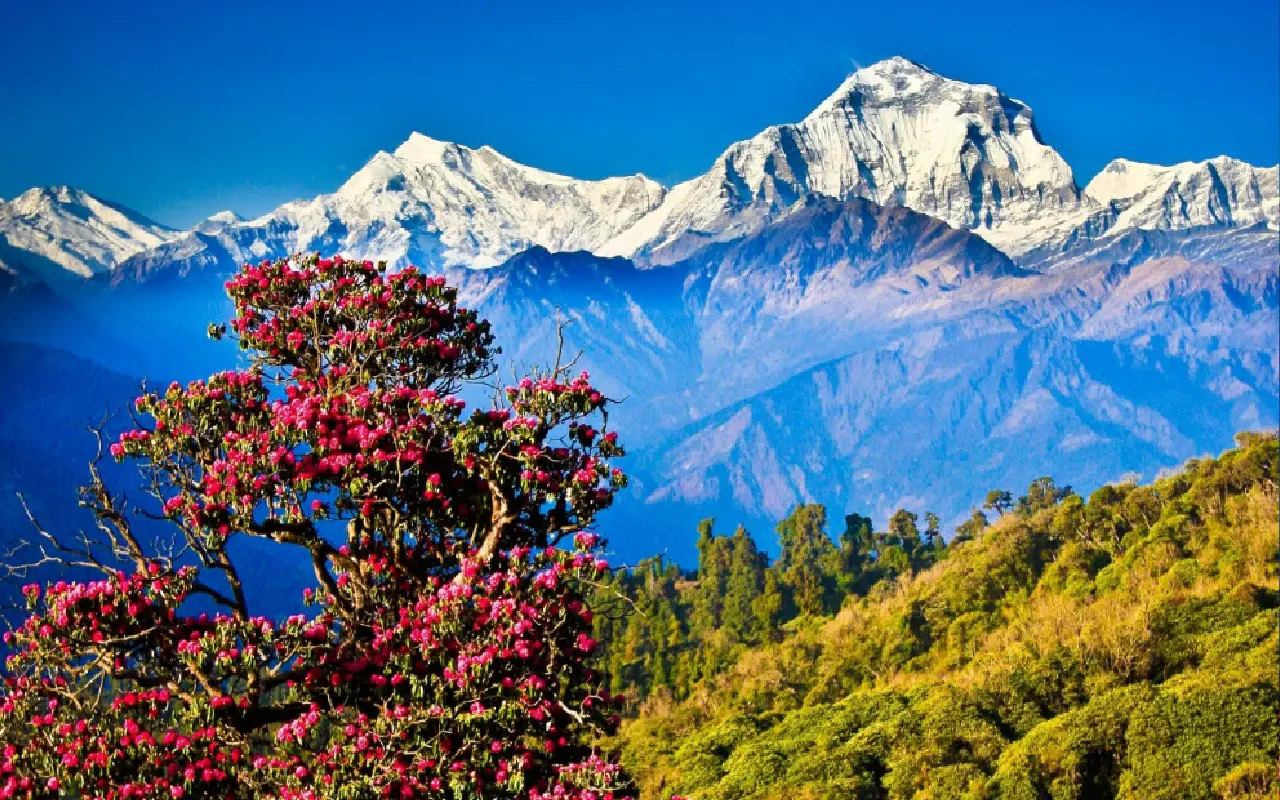
The Poon Hill Trek is widely considered the best short trek in Nepal and the number one choice for beginners. The trek takes you from Nayapul, only a short distance from Pokhara, before ascending through rolling hills, terraced fields, and dense forest. In spring, a highlight of this trek is walking through magnificent rhododendron trees when the hillsides are covered with red and pink flowers. The highlight of the entire trek is the early morning hike to Poon Hill at 3,210 meters, where trekkers wake before dawn and experience one of the most incredible sunrises imaginable.

Best treks in Nepal Ghorepani Poon Hill Trek

This is genuinely the best entry point into the best trekking in Nepal for anyone with no prior Himalayan experience.

2. Ghandruk Trek (3 to 4 Days)

This moderate trek through the Annapurna foothills showcases Nepal’s diverse landscapes and cultural beauty in just 5 days. Visit the traditional Gurung villages of Ghandruk and Landruk, where you will enjoy homestay hospitality and panoramic views of Annapurna South, Hiunchuli, and Machhapuchhre. Because it lies at low altitude, the risk of altitude sickness is almost nonexistent. The Ghandruk Trek is ideal for families, beginners, and travelers looking for a short but fulfilling Himalayan experience filled with culture and natural beauty.
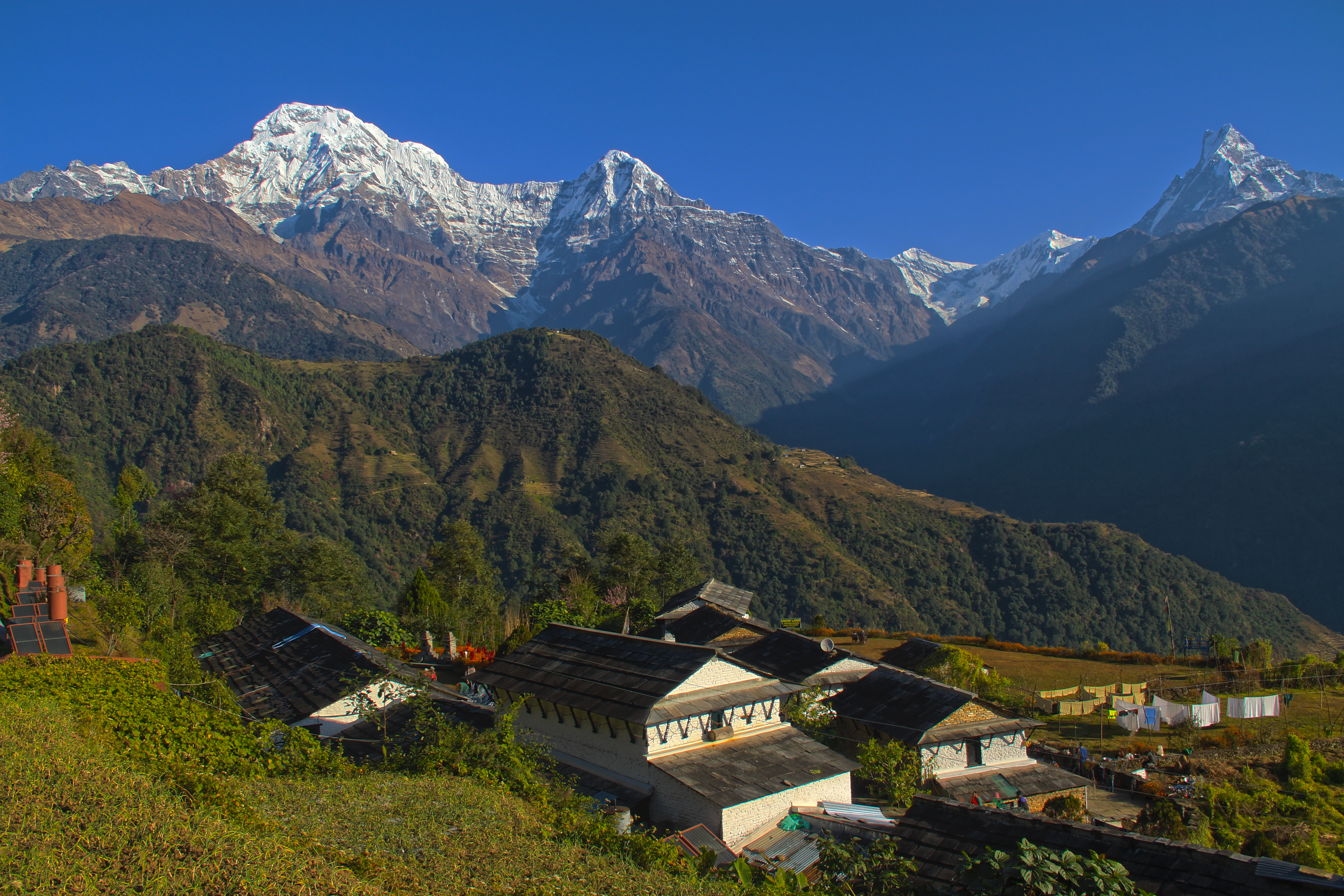
Best treks in Nepal Ghandruk Trek

3. Langtang Valley Trek (7 to 10 Days)

Just 60 kilometers north of Kathmandu, Langtang Valley delivers pristine Himalayan trekking without expensive flights or extended time commitments. The route passes through Tamang villages rebuilt after the 2015 earthquake, with Langtang Lirung at 7,227 meters dominating the skyline above Kyanjin Gompa at 3,870 meters. No domestic flight is required; the trailhead at Syabrubesi is reachable by road from Kathmandu in 6 to 7 hours.

Best treks in Nepal Langtang Valley Trek

These beginner-friendly routes offer stunning mountain views, welcoming villages, and a perfect introduction to trekking in Nepal’s breathtaking landscapes, making the Langtang Valley Trek one of the most recommended treks in Nepal for beginners.

4. Mardi Himal Trek (5 to 7 Days)

The Mardi Himal Trek is one of the best short treks in Nepal, perfect for those who want a peaceful experience away from crowded trails. It offers stunning views of Machhapuchhre (Fishtail Mountain) and Annapurna ranges, making it ideal for photographers and nature lovers. Less trafficked than Poon Hill, Mardi Himal is the ideal choice for beginners who want solitude alongside spectacular scenery.

Best treks in Nepal Mardi Himal Trek

5. Dhampus and Sarangkot Trek (2 to 3 Days)

Combining two of the most beautiful viewpoints near Pokhara, this easy 3-day trek is perfect for families and first-time trekkers. Enjoy the traditional village of Dhampus, followed by a sunrise over the Annapurna range from Sarangkot. This is the shortest and most accessible of all the best treks in Nepal for beginners and requires no prior fitness preparation.
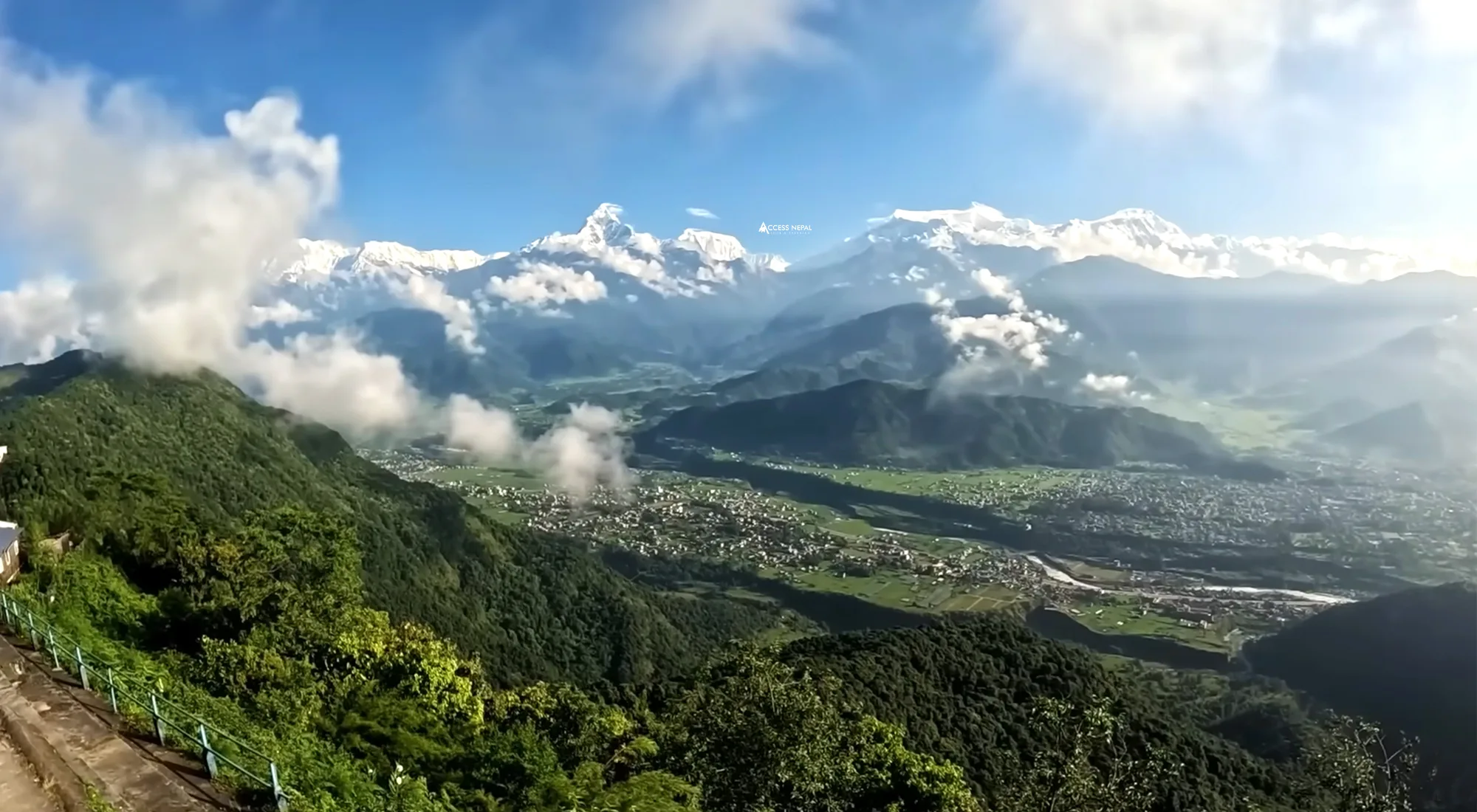
Best treks in Nepal Dhampus and Sarangkot Trek

Best Trekking Destinations in Nepal — Classic and Iconic Routes

Beyond the beginner trails, the best trekking destinations in Nepal include some of the most celebrated long-distance routes on Earth. These are the treks that have defined Himalayan adventure for generations.

6. Everest Base Camp Trek (12 to 14 Days)

The Everest Base Camp experience remains the most iconic trek in Nepal. The Everest Base Camp trek is a legendary 12 to 15-day journey in Nepal, taking hikers through Sherpa culture, rhododendron forests, and high-altitude landscapes to an elevation of 5,364 meters.
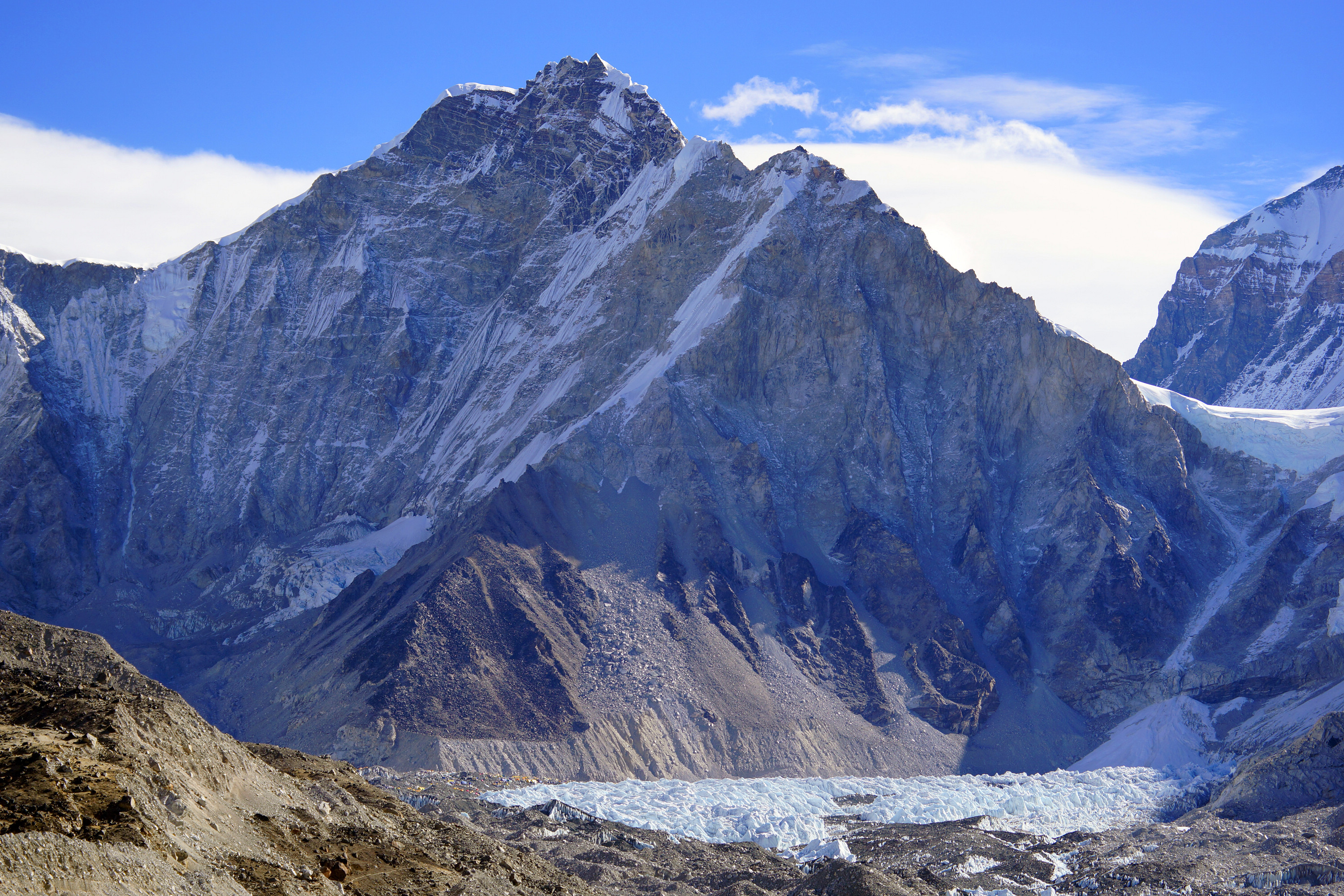
Best treks in Nepal Everest Base Camp Trek

The trail passes through Namche Bazaar, the gateway to the high Himalayas; Tengboche Monastery with its extraordinary mountain backdrop; and the remote Khumbu Glacier before reaching the foot of the world’s highest mountain. Whether you are navigating the iconic streets of Namche Bazaar or finding spiritual solace in the hidden, wind-swept valleys of the Manaslu Circuit, you are participating in a legacy of adventure. Everest Base Camp is unquestionably one of the best trekking destinations in Nepal and the single most sought-after trekking experience in the world.

7. Annapurna Circuit Trek (15 to 21 Days)

The Annapurna Circuit is the most varied trek in all of Nepal. Hindu farming communities transition to Buddhist villages, then Tibetan-influenced upper valleys. You never retrace a single step; the full loop delivers an entirely new landscape every day.

Best treks in Nepal Annapurna Circuit Trek

The crossing of Thorong La Pass at 5,416 meters is the dramatic high point of the circuit, offering one of the most exhilarating moments available on any of the best treks in Nepal. The route passes through Manang, Mustang, and the sacred temple of Muktinath, a complete cultural and geographical journey through the heart of the Himalayas.

8. Annapurna Base Camp Trek (7 to 12 Days)

The Annapurna Base Camp Trek is a favorite choice among trekkers due to its balanced mix of scenery, culture, and safety. This trek typically takes 7 to 12 days depending on the route and reaches an altitude of 4,130 meters. The trail passes through Gurung and Magar villages, hot springs, and alpine landscapes before reaching the dramatic amphitheater of Annapurna Sanctuary.

Best treks in Nepal Annapurna Base Camp Trek

The Annapurna Sanctuary, a natural glacial bowl surrounded on all sides by peaks above 7,000 meters, is one of the most visually stunning destinations in all of the best trekking in Nepal and offers an experience that genuinely cannot be replicated anywhere else.

9. Manaslu Circuit Trek (14 to 18 Days)

The Manaslu Circuit Trekking Trail is one of the finest and most adventurous treks in Nepal, providing stunning views of Mt. Manaslu, the world’s eighth-highest mountain at 8,163 meters. This tour through the untouched Manaslu Conservation Area is the perfect alternative for those who have already visited the Annapurna Circuit. The trail rises from warm lowlands and rice terraces through breathtaking gorges carved by the Budi Gandaki River.

Best treks in Nepal Manaslu

Because it requires a special permit, the Manaslu region feels protected and peaceful. The path has improved over the last few years, and 2026 offers smoother logistics with more organized teahouses while still keeping the region uncrowded. Trekking here feels like stepping into an older Nepal, untouched by busy tourism.

10. Upper Mustang Trek (10 to 14 Days)

Upper Mustang features a landscape unlike that of the rest of Nepal. The cliffs, caves, and desert valleys resemble the Tibetan highlands. This restricted area trek, requiring a special permit, takes you through a medieval Tibetan kingdom frozen in time, with ancient cave monasteries, ochre-painted villages, and an otherworldly lunar landscape carved by centuries of wind. Upper Mustang is one of the most unique and best trekking destinations in Nepal for travelers seeking something genuinely off the beaten path.
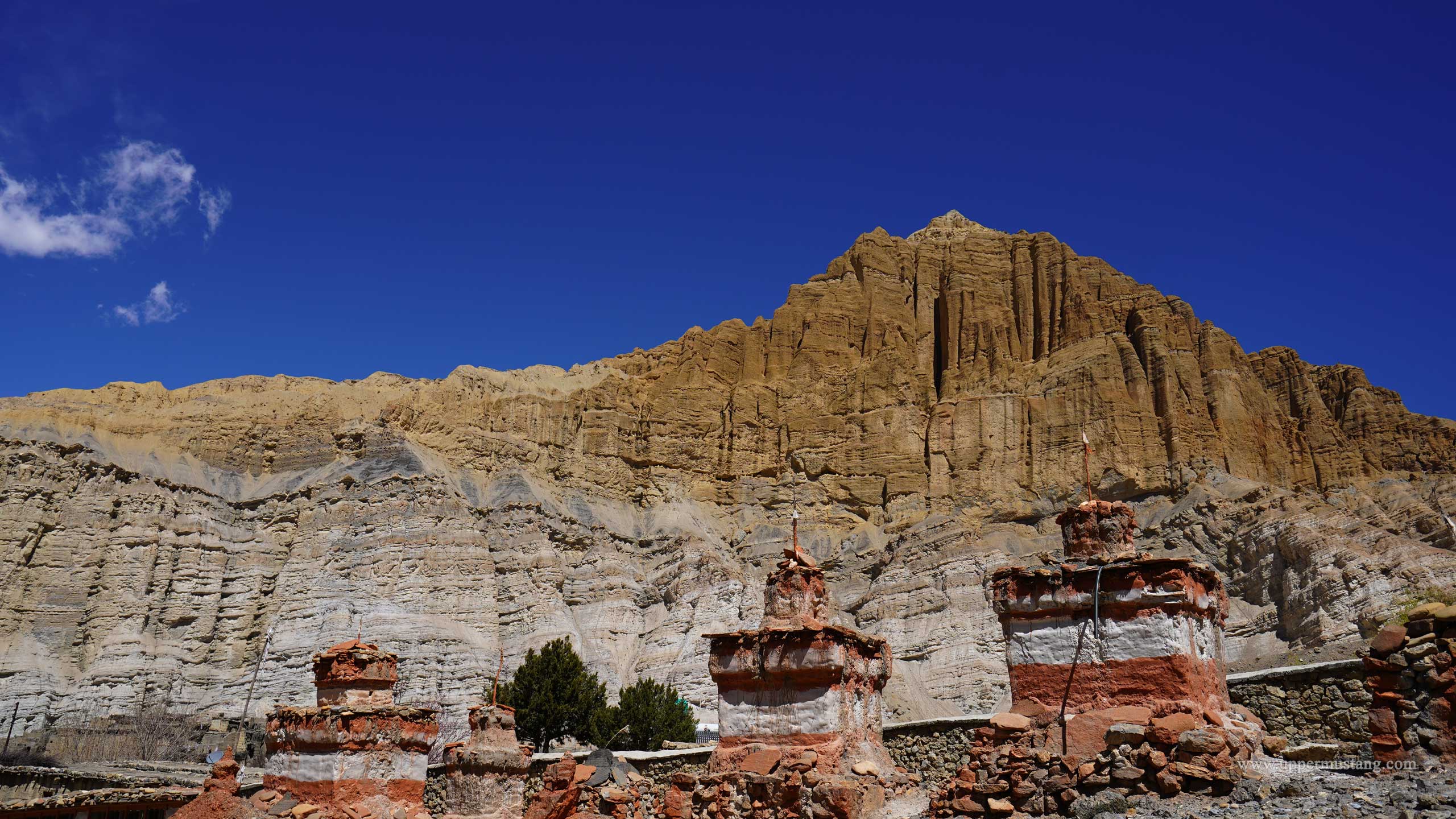
Best treks in Nepal Upper Mustang Trek Nepal | 14 days

Best Treks in Nepal — Trekking Variations and Hidden Gems

Beyond the classic routes, the best trekking in Nepal includes a growing collection of alternative and offbeat trails that deliver extraordinary experiences with fewer crowds.

11. Pikey Peak Trek (6 to 7 Days)

Pikey Peak is a hidden gem offering incredible Everest views without the crowds. From the Pikey Peak summit, you can see Mount Everest and dozens of other snow-covered giants. Often called Nepal’s best-kept secret viewpoint, this trek sits in the Solu region below the Khumbu and delivers Everest panoramas that rival anything on the classic EBC route, at a fraction of the altitude and cost.

Pikey peak trek Best treks in Nepal

12. Khopra Danda Trek (8 to 10 Days)

Khopra Danda is a peaceful ridge walk with sweeping mountain views, situated in the Annapurna region but far quieter than the main Poon Hill and ABC routes. The Khopra Ridge camp at 3,660 meters offers some of the most dramatic close-up views of the Annapurna range available anywhere in the best trekking destinations in Nepal, with community-run eco-lodges adding a sustainable and authentic dimension to the experience.
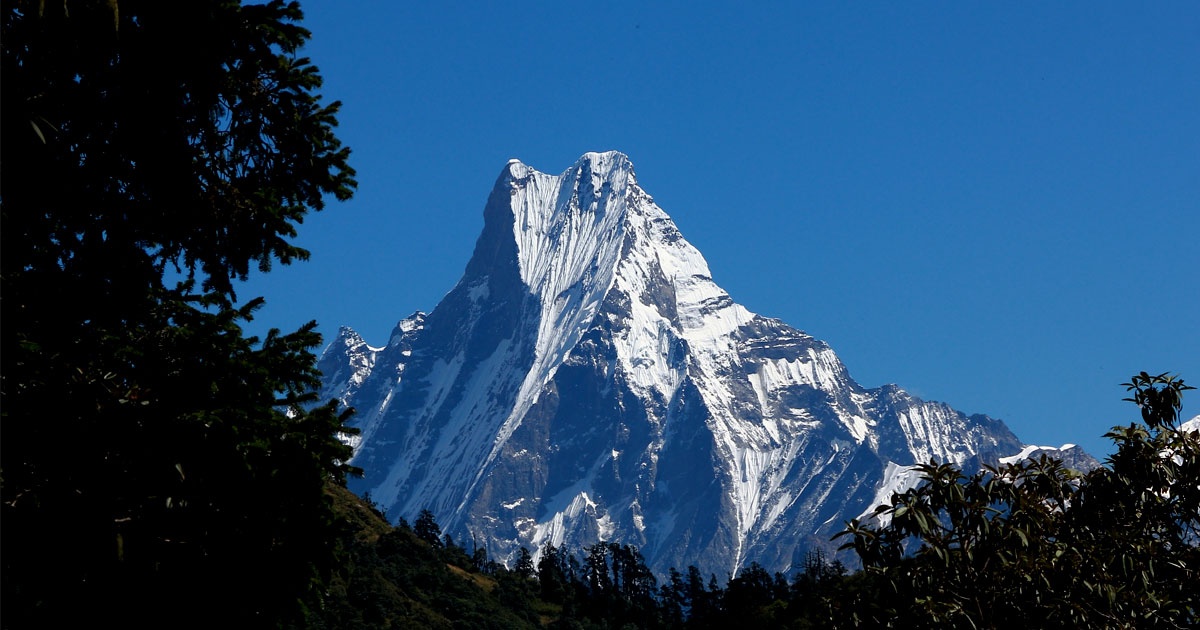
Khopra Danda Trek Best treks in Nepal

13. Mohare Danda Trek (5 to 7 Days)

Mohare Danda is less busy than Poon Hill, with community-run ecolodges. The ridge walk to Mohare Danda at 3,300 meters delivers an unbroken 180-degree panorama of the Annapurna, Dhaulagiri, and Mustang mountain ranges, arguably the finest mountain view available on any of the best treks in Nepal below 3,500 meters. Its community lodge model means your trekking fees go directly to village development.

Mohare Danda Community Trek | Best treks in Nepal

14. Gosaikunda Lake Trek (6 to 9 Days)

Gosaikunda is one of Nepal’s most sacred high-altitude lakes, sitting at 4,380 meters in the Langtang region. The trek combines the cultural richness of the Langtang Valley with the spiritual power of a pilgrimage to one of Nepal’s holiest sites. For trekkers who have already completed the Langtang Valley route, Gosaikunda offers the perfect extension and is one of the most spiritually distinctive of all the best treks in Nepal.
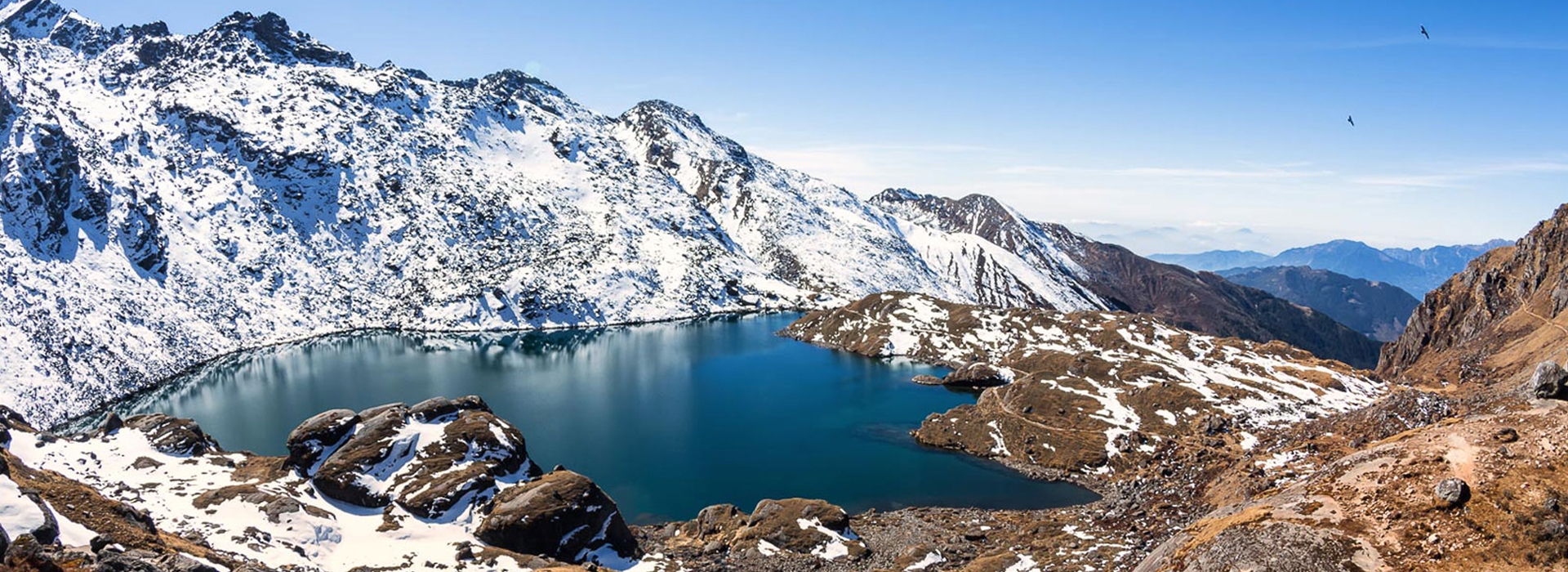
Gosaikunda Lake Best treks in Nepal

15. Nagarkot to Dhulikhel Trek (2 to 3 Days)

This short cultural hiking circuit combines nature and spirituality with visits to Nagarkot, Dhulikhel, and the sacred Namobuddha Monastery. Along forested ridgelines and hilltop villages, enjoy peaceful trails with Himalayan views and sunrises. Just one hour from Kathmandu, this is the perfect first taste of the best trekking in Nepal for travelers with only a day or two to spare—and one of the most underrated short experiences in the entire valley.
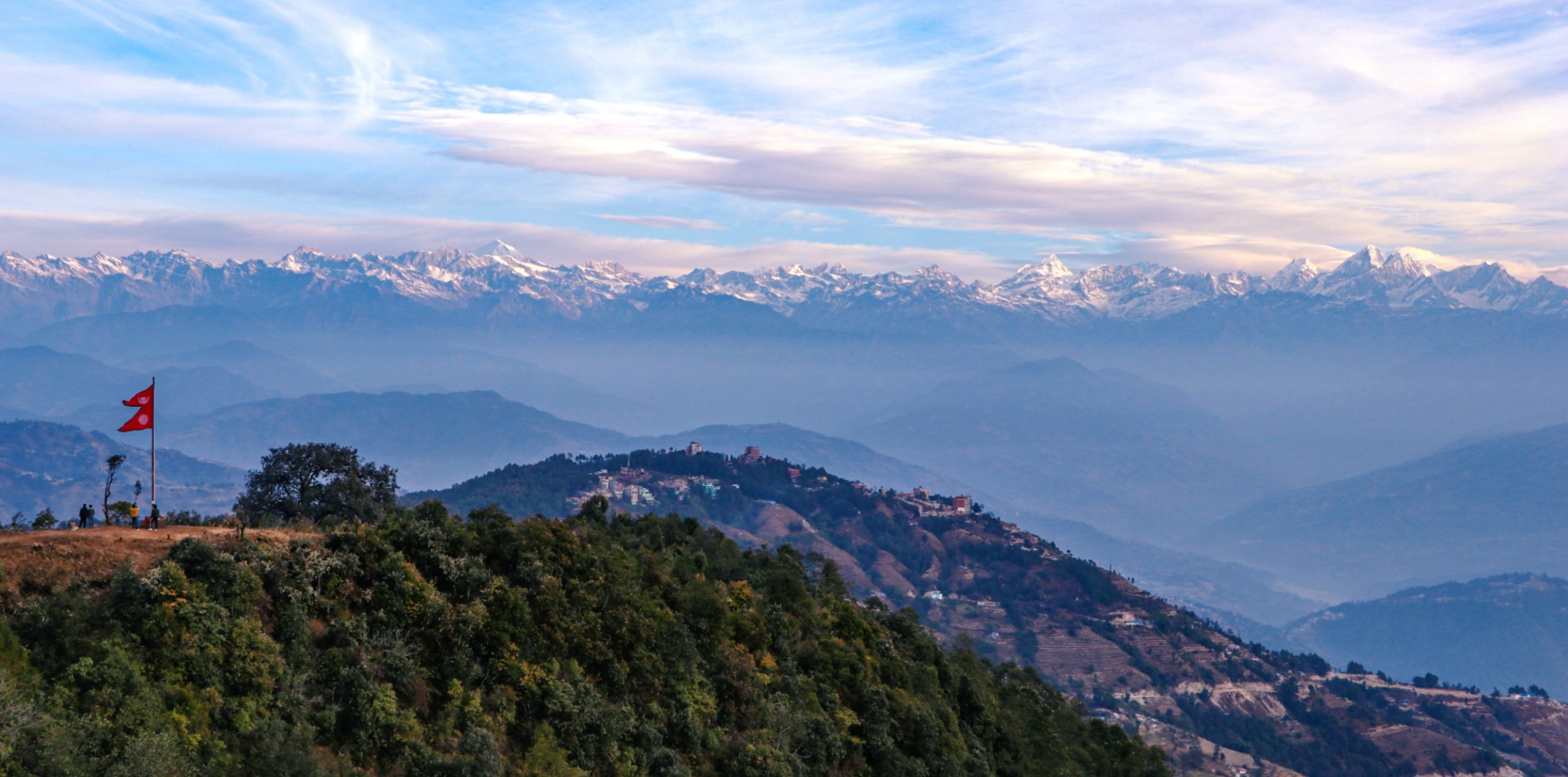
Nagarkot-Dhulikhel Trek | Best treks in Nepal

Best Treks in Nepal for Solo Female Trekkers

Nepal is one of the safest trekking destinations in the world for solo female travelers, and the best treks in Nepal offer well-supported routes where women can travel confidently at every level of experience.

Nepal is generally very safe for solo travelers and women. The teahouse system is well-established, and local people are incredibly welcoming and respectful. Hiring a reputable guide is always wise, especially for first-time or high-altitude treks.

The Ghorepani Poon Hill Trek is one of the safest and easiest options for solo female trekkers in Nepal, usually taking 4 to 5 days.

The Annapurna Base Camp Trek is a favorite choice for female solo trekking in Nepal due to its balanced mix of scenery, culture, and safety. The ABC route has one of the best tea house networks in Nepal. Lodges are comfortable, food is reliable, and fellow trekkers are always around. Many solo female trekkers feel confident on this trail because help is always close by and the path is clear even during colder months.

The Langtang Valley Trek is also highly recommended for solo female travelers: shorter road access from Kathmandu, moderate altitude, and a strong network of family-run teahouses where women travelers are warmly welcomed. For solo female trekkers exploring the best trekking destinations in Nepal, these three routes, Poon Hill, ABC, and Langtang, consistently rank as the safest and most rewarding options.

Easy and Short Treks in Nepal for First-Time Trekkers

Not every traveler has two weeks to spend on the trail. The good news is that many of the best treks in Nepal can be completed in as little as 3 to 5 days without compromising on scenery or experience.

Short treks in Nepal offer the ideal combination of Himalayan adventure, scenic beauty, and cultural immersion, perfect for travelers who are short on time, new to trekking, or prefer a gentler walking experience. Unlike long and strenuous expeditions to Everest Base Camp or the Annapurna Circuit, these short treks in Nepal are designed to fit into 2 to 7 days while still delivering rich and rewarding experiences.

Most short treks begin within hours of Kathmandu or Pokhara, keep you below 4,000 meters to reduce altitude risk, and use the famous teahouse system for accommodation and meals.

The Ghorepani Poon Hill Trek is widely considered the shortest trek, completable in as little as 2 to 4 days. It offers excellent views of the Annapurna and Dhaulagiri mountains. Other short options include the Ghandruk Trek at 3 to 4 days and the Mardi Himal Trek at 4 to 8 days. For an even quicker escape, the Kathmandu Valley Trek can be done in just 3 days.

For first-time trekkers who are unsure about their fitness level, starting with a 3-day option like Dhampus-Sarangkot or the Nagarkot-Dhulikhel circuit is the ideal confidence-builder before committing to a longer best trek in Nepal for beginners like Poon Hill or Langtang.

Best Time for Trekking in Nepal

Timing your best trekking in Nepal correctly is as important as choosing the right trail.

Spring from March to May and autumn from September to November are the gold standard seasons for the best treks in Nepal. These periods offer the clearest skies, most stable weather, and best mountain visibility across all trekking regions.

Autumn (September to November) is the most popular season overall. Crystal-clear post-monsoon skies, cool temperatures, and spectacular mountain visibility make this the peak season for the best trekking destinations in Nepal. Book accommodation and guides well in advance as trails are at their busiest.

Spring (March to May) is the second-best season and is particularly beautiful for lower-altitude treks where the rhododendron forests are in full bloom. This is also the primary mountaineering season, adding an extra energy of excitement to trails like Everest Base Camp and Annapurna Circuit.

Winter (December to February) is cold but rewarding on lower routes. The best treks in Nepal for beginners like Poon Hill and Ghandruk remain accessible and beautifully clear of crowds, with stunning mountain views on crisp winter mornings.

Monsoon (June to August) brings lush green landscapes but heavy rainfall, leeches on lower trails, and cloud-obscured mountain views. Most of the best trekking in Nepal is not recommended during this period, though rain-shadow areas like Upper Mustang and Manang remain excellent options.

Nepal Trekking Permits and Costs in 2026

Every trekker must obtain the correct permits before setting out on any of the best treks in Nepal. Here is a practical overview:

In 2026, every best trek in Nepal requires digital registration via the e-TIMS platform. Safety-first protocols introduced since 2024 have seen search-and-rescue operations drop significantly. Hiring a guide ensures your investment directly supports mountain communities through local employment.

TIMS Card (Trekkers Information Management System): Required for most popular trekking routes and available at the Nepal Tourism Board offices in Kathmandu and Pokhara.

ACAP Permit (Annapurna Conservation Area): Required for all treks in the Annapurna region, including Poon Hill, ABC, Annapurna Circuit, Mardi Himal, and Mohare Danda.

Langtang National Park Permit: Required for Langtang Valley and Gosaikunda treks.

Sagarmatha National Park Permit: Required for Everest Base Camp and all Khumbu region treks.

Restricted Area Permit: Required for Upper Mustang, Manaslu Circuit, and other restricted zone treks. These must be arranged through a registered trekking agency and are significantly more expensive than standard permits.

Costs vary based on trek duration, region, and whether you hire a guide and porter. Typical ranges, including permits, teahouses, meals, and a guide, run from around USD 500 to USD 800 for beginner-level short treks, rising to USD 1,200 and above for longer and more remote routes.

Practical Tips for the Best Treks in Nepal

These tips apply whether you are tackling your first best trek in Nepal for beginners or your fifth high-altitude circuit:

Start training at least 6 to 8 weeks before departure. Regular cardio hiking, stair climbing, and jogging dramatically improve your enjoyment of any of the best trekking destinations in Nepal. You do not need to be an athlete, but basic fitness makes every day on the trail more rewarding.

Hire a licensed guide. Search-and-rescue operations during trekking in Nepal have dropped by 40 percent since 2024 with the adoption of the mandatory guide policy. A licensed guide ensures your safety and directly supports local mountain communities.

Acclimatize properly. For any trek above 3,500 meters, follow the standard rule of ascending no more than 300 to 500 meters per day above 3,000 meters, with at least one rest day for every 1,000 meters gained. This applies to all the high-altitude routes among the best treks in Nepal.

Travel insurance is non-negotiable. Ensure your policy covers high-altitude trekking, helicopter evacuation, and medical treatment in Nepal. This is essential for any of the best trekking routes in Nepal above 3,000 meters.

Pack light but smart. Layers are essential for Nepal’s variable mountain weather. A quality sleeping bag rated to minus 10 degrees Celsius, broken-in trekking boots, and a good rain cover are the three most important items for any of the best treks in Nepal.

FAQs About the Best Treks in Nepal

Q1. What is the best trek in Nepal for beginners?

The Poon Hill Trek is widely considered the best short trek in Nepal and the top recommendation for beginners, offering stunning Annapurna views with manageable daily distances and a well-established teahouse network.

Q2. What are the best trekking destinations in Nepal?

The top trekking destinations in Nepal are the Everest Base Camp, Annapurna Circuit, Annapurna Base Camp, Langtang Valley, Manaslu Circuit, and Upper Mustang, along with shorter options like Poon Hill, Mardi Himal, and Ghandruk.

Q3. Is Nepal safe for solo female trekkers?

Yes. Nepal is generally very safe for solo travelers and women. The teahouse system is well-established, and local people are incredibly welcoming and respectful. The Poon Hill, ABC, and Langtang routes are the most recommended for solo female first-time trekkers.

Q4. What is the easiest short trek in Nepal?

The Ghorepani Poon Hill Trek is widely considered the shortest and most accessible trek in Nepal, completable in as little as 2 to 4 days. The Dhampus Trek and Kathmandu Valley Trek are also excellent options for first-time trekkers.

Q5. What is the best time for trekking in Nepal?

Spring from March to May and autumn from September to November are the two best seasons for the best treks in Nepal, offering the clearest skies and most stable weather across all trekking regions.

Q6. Do I need a guide for trekking in Nepal?

In 2026, the mandatory guide policy is now standardized across all trekking regions of Nepal. Hiring a licensed guide is required for foreign trekkers and directly supports local mountain communities.

Q7. What permits do I need for trekking in Nepal?

Requirements vary by route. All trekkers need a TIMS card. Additional permits, ACAP, Sagarmatha National Park, Langtang National Park, or restricted area permits depend on which of the best trekking destinations in Nepal you choose.

Q8. How fit do I need to be for the best treks in Nepal?

No prior trekking experience is needed for the beginner-friendly routes. These easy treks in Nepal are crafted to keep walking days manageable while still delivering unforgettable Himalayan rewards. For high-altitude routes above 4,500 meters, a solid base fitness level and six to eight weeks of preparation training are strongly recommended.

Nepal calls to everyone differently; some come for the summit views, some for the monastery bells, and some for the warmth of a teahouse after a long day on the trail. But every trekker, from the nervous first-timer on Poon Hill to the seasoned veteran crossing Thorong La, leaves with the same feeling: that the best treks in Nepal are not just walks through mountains. They walk through you. Lace up, step out, and let the Himalayas do the rest.
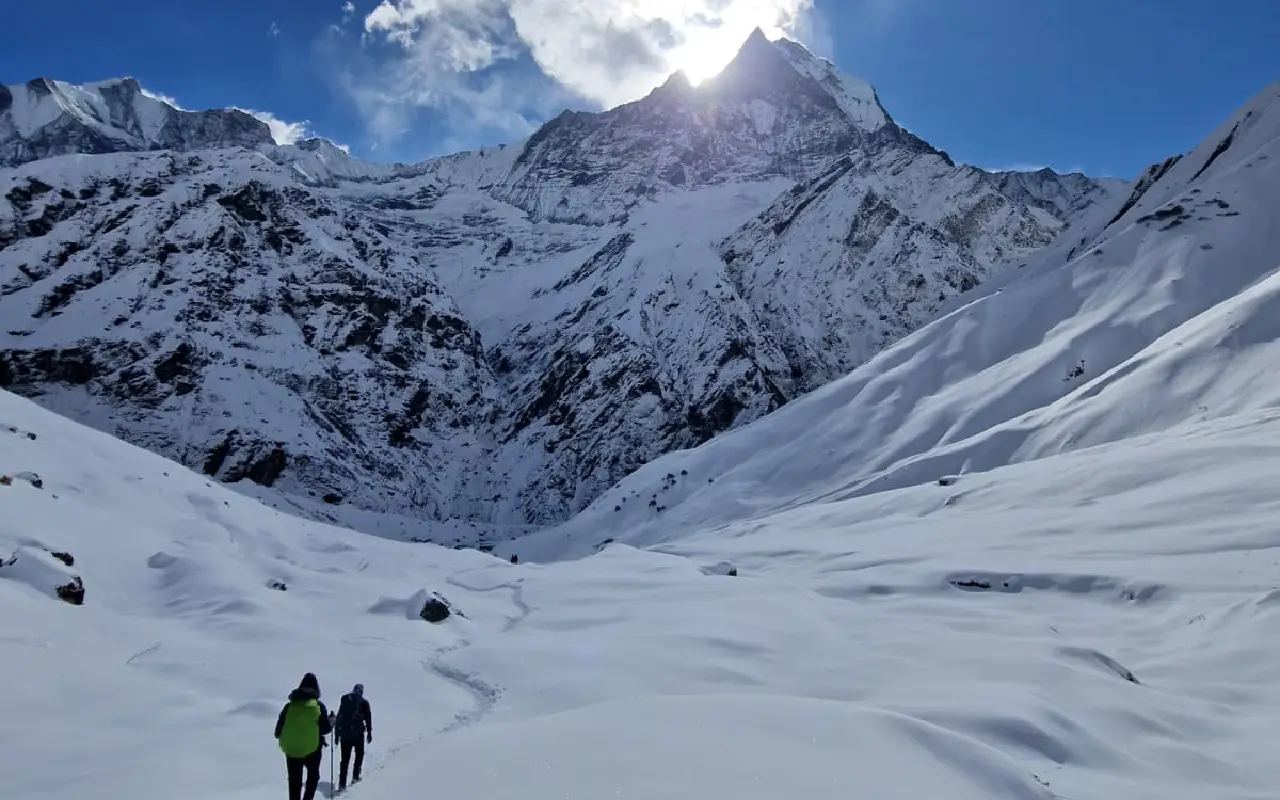
Trek to Annapurna Region

Trek to Annapurna Region

Annapurna Region is easily denoted as the best holiday travel destination within the country’s boundary. Annapurna trek has the world’s leading picture square views of Annapurna, Machhapuchhre, Dhaulagiri, Hiunchuli, and many Unique landscapes, and climates. Subtropical to alpine vegetation and climate alter with the elevation, culture, and friendly people add beauty to Annapurna trekking areas.

Annapurna region trek allocates travel around through rhododendron forests over the foothills of the Dhaulagiri and Annapurna and through the “Kali Gandaki” which is known as the deepest gorge in the world. Annapurna Trek offers the most popular trekking holidays including Ghorepani Poon Hill Trek, Jomsom Muktinath Trek, Annapurna Circuit Trek, Annapurna Base Camp Trek, Annapurna Panorama Trek, Mardi Himal Trek, Dhampus Sarangkot Trek, Ghale Gaun Trek and more, those offers varieties of natural, cultural views of the Himalayan region behind the best trekking in Nepal.

Annapurna trek is also a popular area in flora and fauna. Annapurna trek gives an experience of climatic and ethnic variety as we go deeper and deeper we come across the natural view of a rare combination of pure white snow-capped peaks, waterfalls, springs, rivers with expensive gorges, hot springs, ancient stonework, ancient Nepal lifestyle with different ethnic groups, Sherpa people’s lifestyle and many more.

Annapurna trek is the second-best destination after Mount Everest Base Camp trek. The Annapurna Base Camp Trek can easily be done independently. It is possible to do this trek in all seasons. On the other hand, as we all know Nepal is a peace-loving country and a naturally gifted country here travel agencies are cheaply providing higher service to domestic as well as international tourists.

Ghode Jatra in Nepal: History, Meaning and Celebration

Ghode Jatra in Nepal: The Festival That Stops a City in Its Tracks

Every year, something extraordinary happens in the heart of Kathmandu. Schools close. Offices empty. The president and prime minister take their seats in a viewing gallery. And then the thunder begins.

Hooves pound the earth at Tundikhel as hundreds of soldiers on horseback launch into precision drills, acrobatics, and breathtaking cavalry displays. The crowd roars. Drums echo off ancient temple walls. And for a few electric hours, the entire Kathmandu Valley holds its breath.

This is Ghode Jatra in Nepal, the Festival of Horses, and it is unlike any celebration you have ever witnessed.

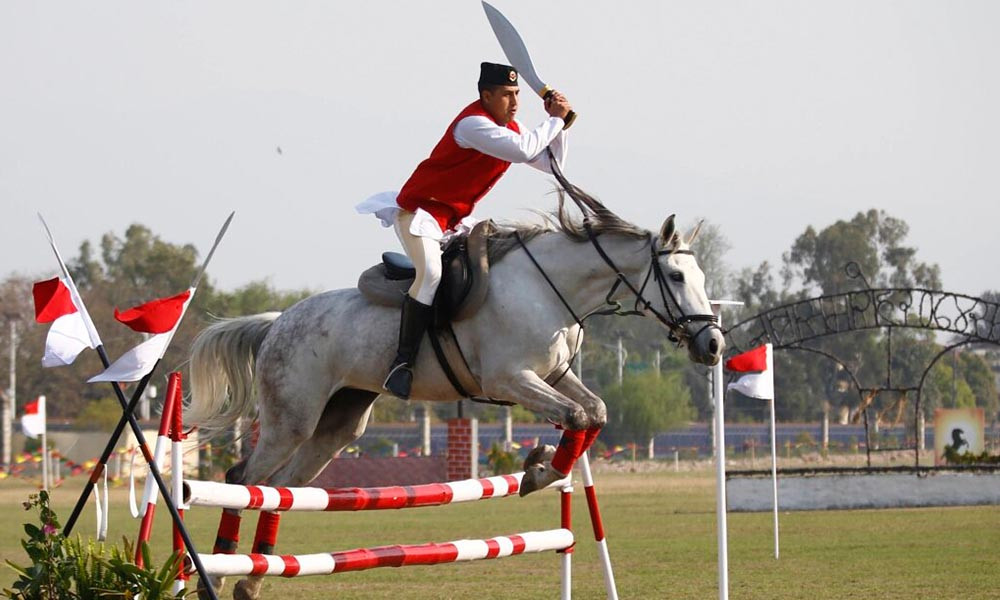
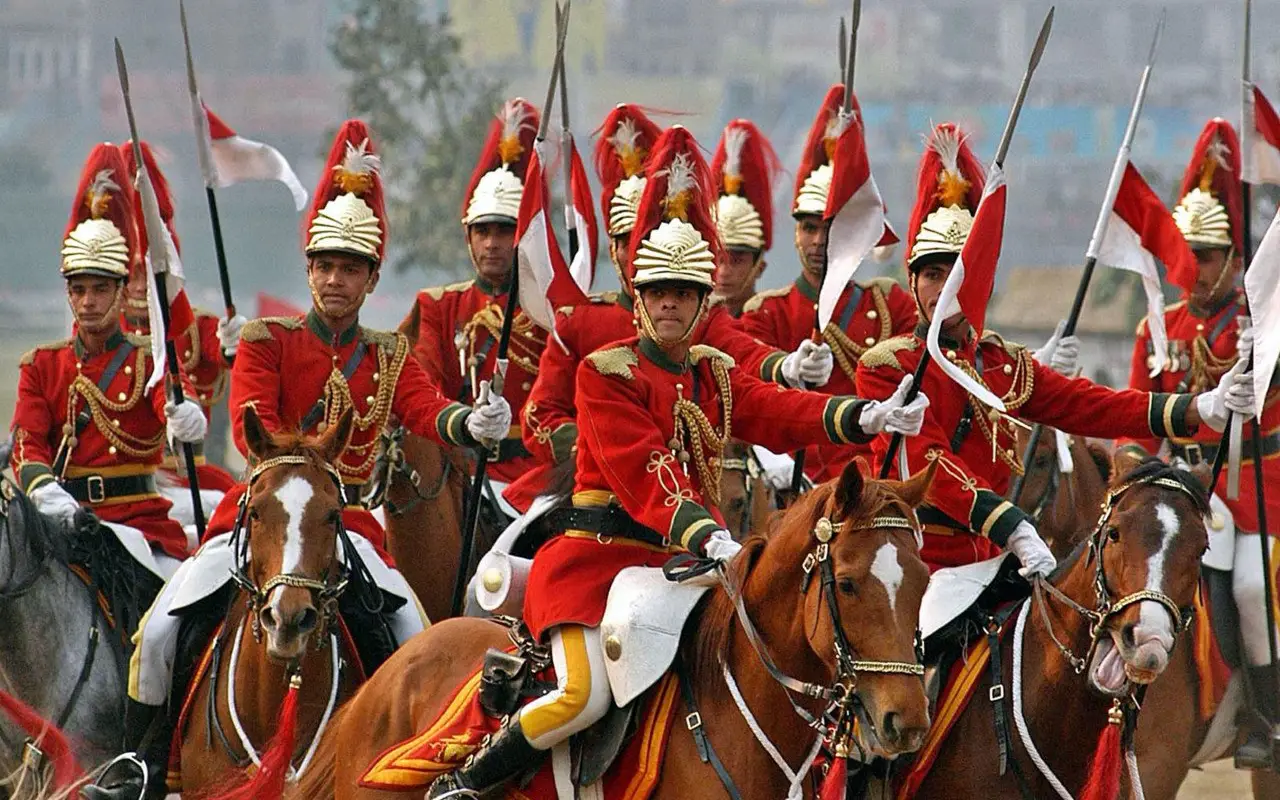
The Ghode Jatra festival is a very important cultural celebration in Nepal that has been taking place for centuries. It has deep roots in Hindu myths and legends, symbolizing the victory of good over evil forces. The highlight of the festival is the grand parade of beautifully decorated horses marching through the streets of Kathmandu.

A Grandiose Horse Parade | Ghode Jatra | Event in Nepal

But here is what most people do not know. Beneath the spectacle of galloping horses and military parades, Ghode Jatra hides a collection of stories so dark, so dramatic, and so deeply human that they will make your jaw drop. Stories of demons buried alive under thundering hooves. Of kings driven by jealousy to extraordinary acts of pride. Of gamblers, goddesses, stolen gold plates, and spirits that locals still believe walk the grounds of Tundikhel today.

This complete Ghode Jatra deep dive covers the five most shocking stories behind the festival, the full Ghode Jatra history that shaped modern Nepal, when Ghode Jatra in Nepal is celebrated on the Nepali date 2083, why it is celebrated, and everything you need to witness this extraordinary event for yourself.

What is Ghode Jatra in Nepal?

Before the stories unfold, understanding what Ghode Jatra in Nepal actually is forms the essential foundation. “Ghode Jatra” translates directly as “Horse Parade,” with “Ghode” meaning “horse” and “Jatra” meaning “festival” or “procession.” But calling Ghode Jatra a simple horse parade is like calling the Himalayas a row of hills.

Ghode Jatra stands as one of Kathmandu’s most significant traditional festivals and reflects the deep cultural heritage of the Newar community and the historical identity of the Kathmandu Valley. People observe the festival each year around late March or early April. The celebration centers on a grand horse procession that represents ancient Hindu legends, especially the victory of Lord Bhairav over the demon, symbolizing the defeat of evil forces that once threatened the valley and strengthening long-held beliefs about protection, bravery, and balance within the community.

ghodejatra208001 1712585930


Ghode Jatra is the vibrant festival celebrated annually in the Kathmandu Valley of Nepal. It symbolizes the victory of good over evil and honors the equine spirit. This festival holds great importance among the Newar community of the Kathmandu Valley and is celebrated with great enthusiasm and joy. The festival is celebrated with various activities like horse parades, horse races, tug-of-war, traditional dance and cultural performances, community gatherings, and religious ceremonies.

Ghode Jatra in Nepal is simultaneously an ancient myth, a royal legacy, a military tradition, and a living community celebration. It belongs equally to the Newar grandmother preparing a ceremonial feast and the Nepal Army soldier performing equestrian stunts at 6 AM. Understanding Ghode Jatra means understanding all of these layers at once.

When is Ghode Jatra on the Nepali date 2083?

Before diving into the shocking stories, here is the essential timing every visitor searching for Ghode Jatra in Nepal needs to know.

Ghode Jatra means “horse parade,” which is a fitting title given the day’s events. The Newari people of Nepal celebrate a three-day festival each year called Pahachare, the second day of which is known as Ghode Jatra. The holiday is kept according to the local lunar calendar, but it falls anywhere from the middle of March to early April on the Gregorian calendar.

Ghode Jatra, on the Nepali date 2083, falls on the new moon day, Aunsi, of the Chaitra month in the Nepali calendar. Based on the consistent lunar calendar pattern of Ghode Jatra, the festival in Nepali year 2083 BS is expected to fall in late March or early April 2027. The exact Nepali date for Ghode Jatra 2083 is confirmed annually by the Nepal government and published in the official Nepali Patro calendar.

The parade and competitions of Ghode Jatra are carried out in the presence of the head of state. The Nepal Army organizes the parade and competitions. Kathmandu native Newar people mark the festival with a feast. There is a public holiday in Kathmandu on the day of Ghode Jatra.

For reference, Ghode Jatra in Nepal fell on Chaitra 04, 2082, corresponding to March 18, 2026, in the English calendar. For Nepali year 2083, the Ghode Jatra date falls on April 6, 2027, in the Gregorian calendar. If you are traveling to Nepal to experience Ghode Jatra in Nepal firsthand, plan your arrival at least two days before the festival date and book accommodation early.

Ghode Jatra History — Who Started It and Why

The Official Origin of Ghode Jatra

Understanding the full Ghode Jatra history requires knowing that this festival was not born in a single moment. It grew through centuries, shaped by community myth, royal politics, and military tradition.

The history of the Ghode Jatra festival dates back to the Malla dynasty, a period between the 12th and 18th centuries. It is said that the festival was started by King Jayanta Rana in the 17th century as a way to ward off a demon named Tundi who was believed to reside in the area. The festival was first celebrated in the 15th century to honor the demon Tundi and the goddess Taleju Bhawani. Over time, it has evolved to include other activities and has become an important part of Nepalese culture and heritage.

Ghode Jatra Festival in Nepal | Abound Holidays

Who started Ghode Jatra in Nepal is therefore not a single name but a lineage. The Newar community planted the seed with the legend of Gurumapa. The Malla kings watered it with royal patronage and political rivalry. The Shah dynasty institutionalized it as a national military celebration. And the Nepali Army has carried it forward into the modern era, making Ghode Jatra one of the most uniquely layered festivals in all of Asia.

The festival originated from the Newar community and later gained prominence as a military event showcasing cavalry skills. The Shah dynasty institutionalized the festival as a national holiday, blending military tradition with cultural heritage.

Every layer of Ghode Jatra history adds a new dimension to what you witness at Tundikhel today. The horses are not just performing. They are carrying centuries of story on their backs.

Story 1 — The Demon Buried Alive Under Tundikhel

This is the story that started Ghode Jatra in Nepal, and it is far darker than any tourist brochure will tell you.

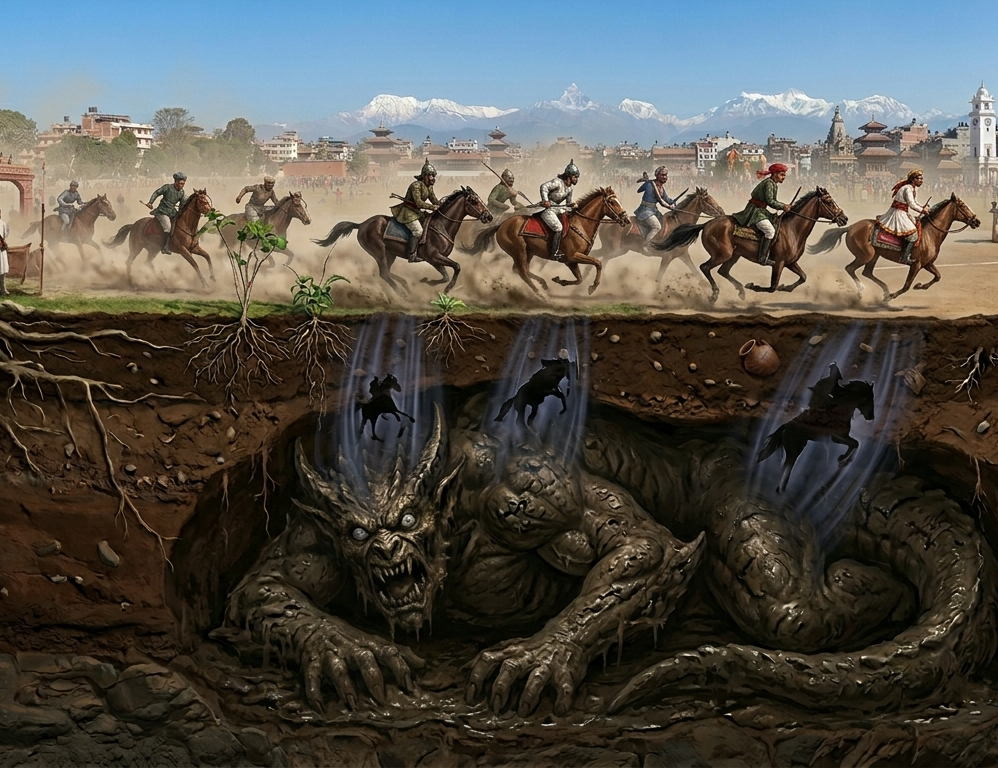
According to local folklore, a demon named Gurumapa once lived in a tree in the southeast of Tundikhel. He would terrorize the city and kidnap children. To stop him, the residents found a way to trample the demon under the hooves of horses. Ghode Jatra was born as a victory celebration. Even today, it is believed that the thundering hooves of the horses keep the demon’s spirit pressed deep into the earth. Elders warn that if the race is not held, the spirit might rise again to cause havoc.

Think about that for a moment. Ghode Jatra in Nepal is not just a celebration. It is a containment ritual. The horses performing at Tundikhel every year are not doing it for show. According to the oldest and most foundational story of Ghode Jatra history, they are keeping a demon imprisoned beneath the soil of Kathmandu.

gemini generated image a2yypga2yypga2yy

There is a strong belief that the parade of horses at Tundikhel keeps the demon’s spirit away. People believe the faster the horses run, the better Tundi’s spirit is dispelled.

Ghode Jatra is believed to ward off evil spirits and is celebrated to mark the victory over a demon named Tundi. This demon once lived in a meadow, now known as Tundikhel, and constantly terrorized Kathmandu’s ancestors. To put an end to his reign of fear, he was trampled to death by horses and buried under a tree in the heart of Tundikhel. Since then, the festival has been observed annually, with a grand horse parade symbolizing the continued suppression of evil forces.

Every thundering hoof that crosses Tundikhel during Ghode Jatra is, in the belief of many Kathmandu residents, pounding the spirit of Gurumapa deeper into the earth. Stop Ghode Jatra in Nepal for a single year, the elders say, and the demon wakes up.

Story 2 — The Gambler, the Golden Plate, and the Ghost

This is the story of Ghode Jatra that most visitors never hear: a tale of addiction, shame, and a supernatural reckoning that changed Kathmandu forever.

Long ago, in a place called Kutumbahal, there lived a man named KeshChandra. He was clever but had a dangerous habit; he was addicted to gambling. Over time, he lost everything he owned. Out of desperation, he visited his sister, who kindly fed him. However, KeshChandra secretly stole her golden plate and gambled it away. The same thing happened again with a silver plate. Eventually, his sister refused to help him and served food on the ground to teach him a lesson. Ashamed and hungry, KeshChandra left with some rice and went towards the forest near Swayambhunath.

What happened next in that forest became the seed from which an entire dimension of Ghode Jatra history would grow. KeshChandra’s supernatural encounter in the forest, his shame, his transformation, and what he set in motion became one of the foundational legends of why Ghode Jatra is celebrated as a festival of moral reckoning as much as a joyous parade.

The Newar community remembers Kesh Chandra every Ghode Jatra in Nepal not as a villain but as a mirror. A reminder that every community carries within it the seeds of self-destruction and that the festivals that survive through centuries are the ones that hold space for both the darkness and the redemption that follows it.

Story 3 — The King Who Weaponized Ghode Jatra

Ghode Jatra history takes a dramatically political turn during the era of the three kingdoms when Kathmandu, Bhaktapur, and Patan were separate rival kingdoms, each ruled by a Malla king whose pride was as towering as the mountains surrounding the valley.

History tells us that when Kathmandu, Bhaktapur, and Patan were separate kingdoms, King Pratap Malla of Kathmandu was a formidable ruler. Around Nepal Sambat 787, due to a rift between King Pratap Malla and King Shri Niwas Malla of Patan, the festival became an arena of power and prestige.

This is the shocking political secret embedded in Ghode Jatra history. The festival was not always a unified national celebration. For centuries, Ghode Jatra in Nepal was a contested battlefield of royal egos, where the grandeur of your horse parade was a direct public statement of your kingdom’s military power, your cavalry’s skill, and your personal authority as a ruler.

Kings competed through horses. The quality of a king’s procession at Ghode Jatra was a declaration that every rival ruler across the valley could see, judge, and fear. To have a magnificent Ghode Jatra was to be a great king. To have a weak one was to invite contempt from your rivals and doubt from your own people.

This political dimension of Ghode Jatra history explains why the festival evolved so rapidly from a community demon-warding ritual into an elaborate military spectacle. Because in the Kathmandu Valley, power has always been performed as much as exercised. And Ghode Jatra in Nepal became the grandest stage on which that performance played out.

Story 4 — The Goddess Who Demands to Be Present at Ghode Jatra

Among the most striking layers of Ghode Jatra in Nepal is the parallel religious celebration that most tourists completely miss while watching the horse parade at Tundikhel.

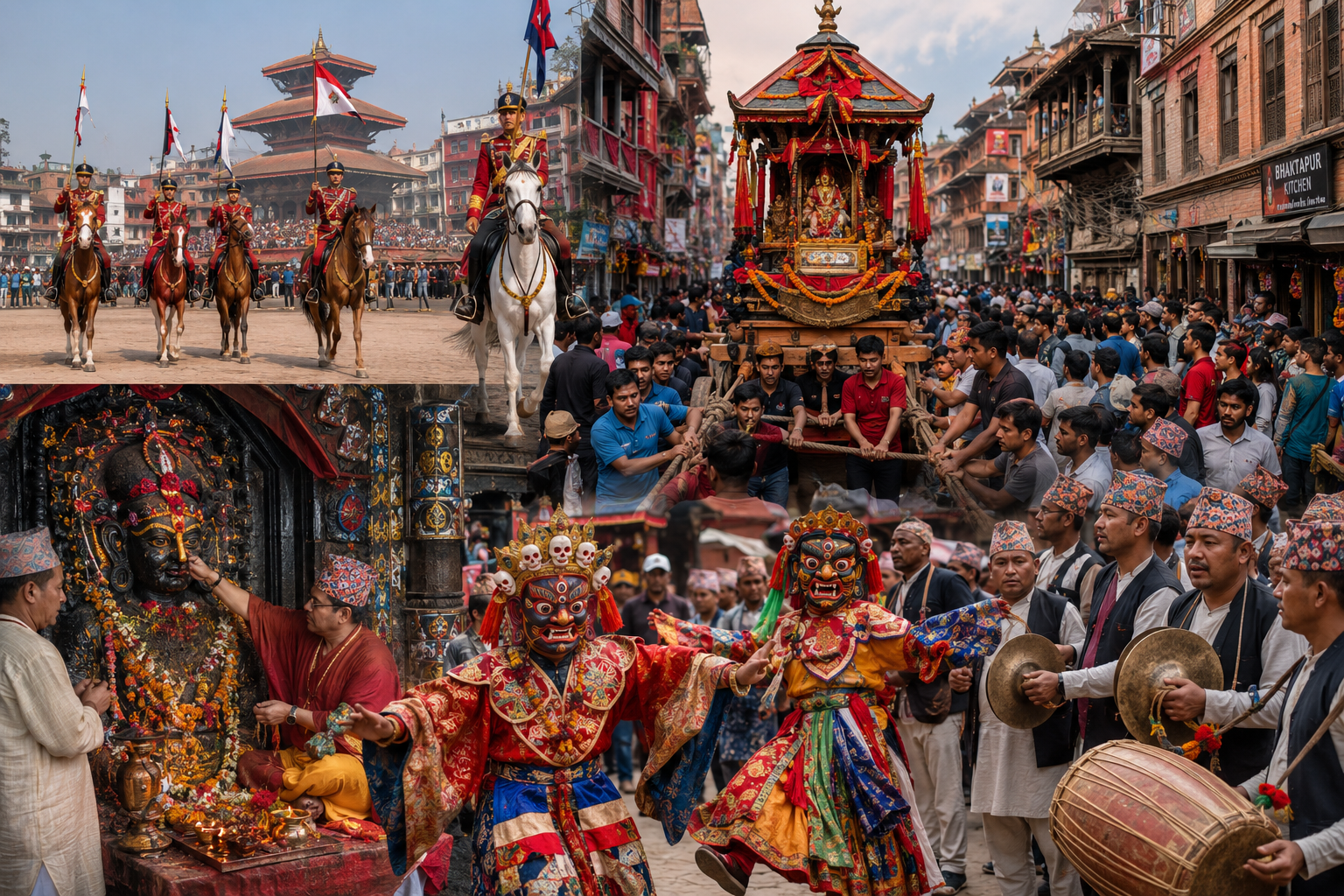
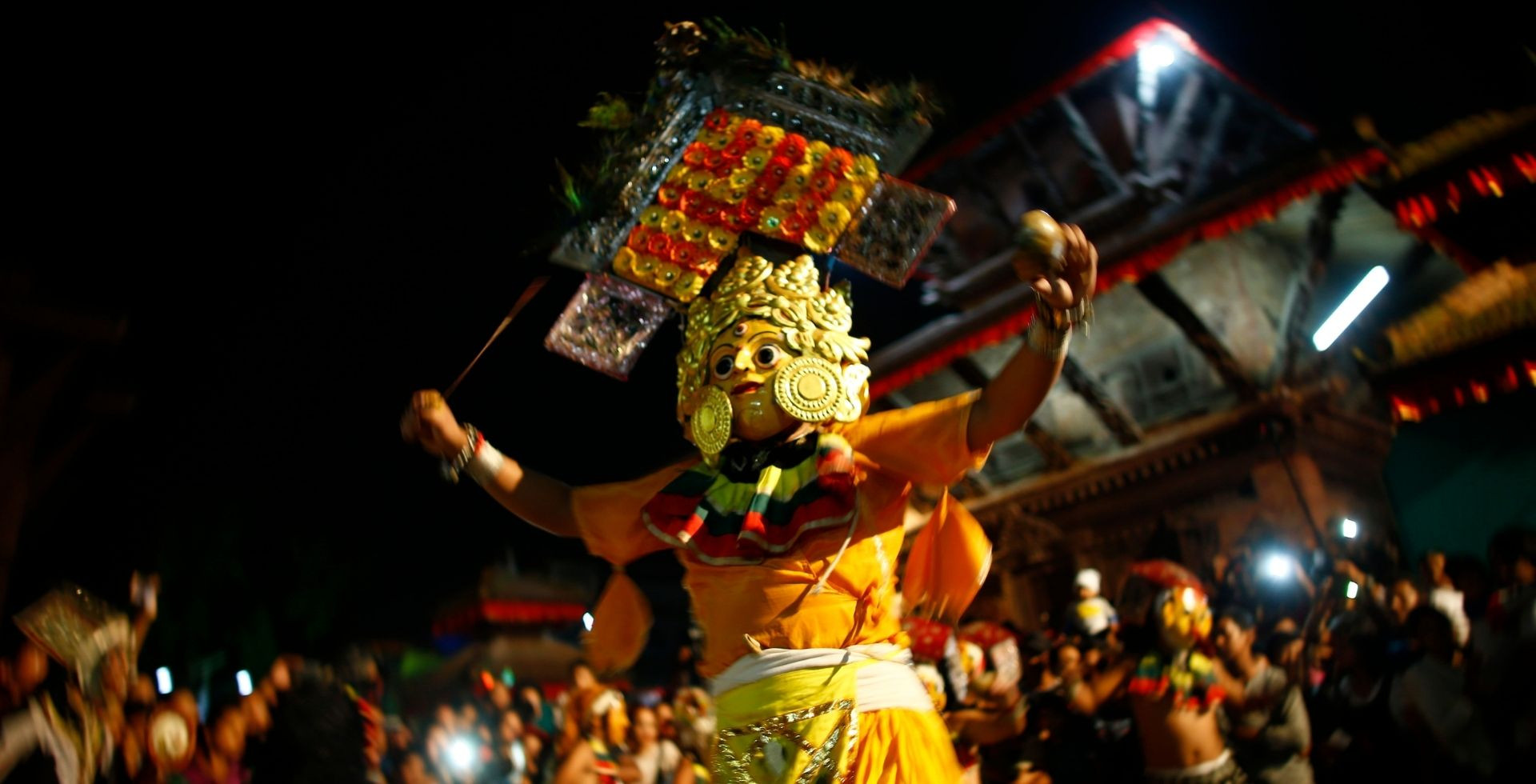
Beyond the horses, the day is deeply significant as it coincides with Pahan Charhe, a time when the historic streets of Asan and Indrachowk fill with color as beautiful chariot parades of local deities meet in the squares. Ghode Jatra offers a powerful look into Nepal’s living history, its celebration of spring, and the brave traditions that bind its people together.

Temples throughout Kathmandu Valley host special ceremonies, with Bhadrakali Temple near Tundikhel conducting elaborate rituals to honor protective deities.

Hindu priests carry out important rituals during the festival, including the renewal of a Vishnu statue and special pujas. Cultural groups perform mask dances that bring old stories and legends to life. Traditional music and smaller processions add to the festive mood of Ghode Jatra.

chatgpt image may 29 2026 01 09 36 pm

The shocking element of this story is what it reveals about the true nature of Ghode Jatra. The horse parade is not one festival but several festivals happening simultaneously, each belonging to a different layer of the city’s spiritual life. While the Nepal Army gallops across Tundikhel during Ghode Jatra, neighborhood deities are being carried through ancient alleyways in wooden chariots by communities who have performed the same ritual for five hundred years.

If you only watch the horses at Tundikhel, you have seen perhaps half of Ghode Jatra in Nepal. The other half lives in the back streets of Asan and Indrachowk, carried on the shoulders of the faithful, heard in the clashing of cymbals and the tolling of temple bells that echo across the Kathmandu Valley long after the Ghode Jatra horses have stopped running.

Story 5 — The Ghode Jatra That Can Never Be Cancelled

Of all the shocking stories behind Ghode Jatra in Nepal, this one is perhaps the most quietly powerful of them all.

Nepal has survived invasion, civil war, political revolution, devastating earthquakes, and global pandemics. Kingdoms have risen and fallen. Dynasties have been abolished. The political identity of the entire country has been transformed multiple times in living memory.

And through all of it, every earthquake, every revolution, and every upheaval, Ghode Jatra in Nepal has never been canceled.

When hooves strike earth above the old demon’s resting place, light wins again. Beneath the surface, Ghode Jatra speaks to pushing back darkness and keeping harm away from people. Festivals such as Ghode Jatra hold steady when everything else shifts, keeping culture alive through time. These moments hand down ways of life before they fade, linking one age to the next.

Elders warn that if the race is not held, the spirit might rise again to cause havoc.

There is something deeply profound in the unbroken continuity of Ghode Jatra. A city that has buried its fear in the ground and chosen, year after year, century after century, to keep it buried through the act of celebration. Ghode Jatra in Nepal is not just a festival. It is an act of collective will. It is Kathmandu saying, every single spring, “We are still here.” The demon stays down. Ghode Jatra will run.

Why is Ghode Jatra Celebrated — The Complete Answer

Now that the five stories have been told, the question of why Ghode Jatra is celebrated has a layered and deeply human answer that no single legend can fully capture.

To keep the demon underground. The parade of horses at Tundikhel keeps the demon’s spirit away. People believe the faster the horses run during Ghode Jatra, the better Tundi’s spirit is dispelled. Festivals like the Janai Purnima festival in Nepal also reflect the deep spiritual traditions of the country.

To mark the arrival of the New Year. As the New Year approaches in Chaitra Shukla Pratipada, the horse parade of Ghode Jatra serves as a symbolic cleansing to welcome the coming year.

To honor the horse as a symbol of power and dignity. Today, Kathmandu celebrates Ghode Jatra to honor these loyal, swift animals. Whether it is the statues of the Rana rulers or great warriors scattered across the city, the presence of a horse is essential to their grandeur. From Napoleon and Kublai Khan to Jung Bahadur and Mohan Shamsher, the horse represents dignity and power.

To celebrate seasonal transition and community health. The whole thought behind celebrating Ghode Jatra could also be the festival of the adjustment in season. The festivals guarantee good health through the use of nutritious food, and time spent with loved ones makes this day extraordinary.

To reinforce unity across caste and community. Ghode Jatra truly celebrates the unity and diversity within the Newar community. People from different castes and backgrounds join together to participate in the festivities, fostering a sense of harmony and companionship. It is a time for family gatherings, feasting, and reveling in the rich cultural heritage that defines the essence of the Kathmandu Valley.

Every one of these reasons is valid. Every one of them is true. And together, they explain why Ghode Jatra in Nepal has outlasted every king, every dynasty, and every political upheaval that the Kathmandu Valley has ever known. Nepal hosts many major festivals like Ghode Jatra, including the famous Maha Shivaratri festival in Nepal.

How Ghode Jatra is Celebrated Today—What to Expect

The Grand Horse Parade at Tundikhel

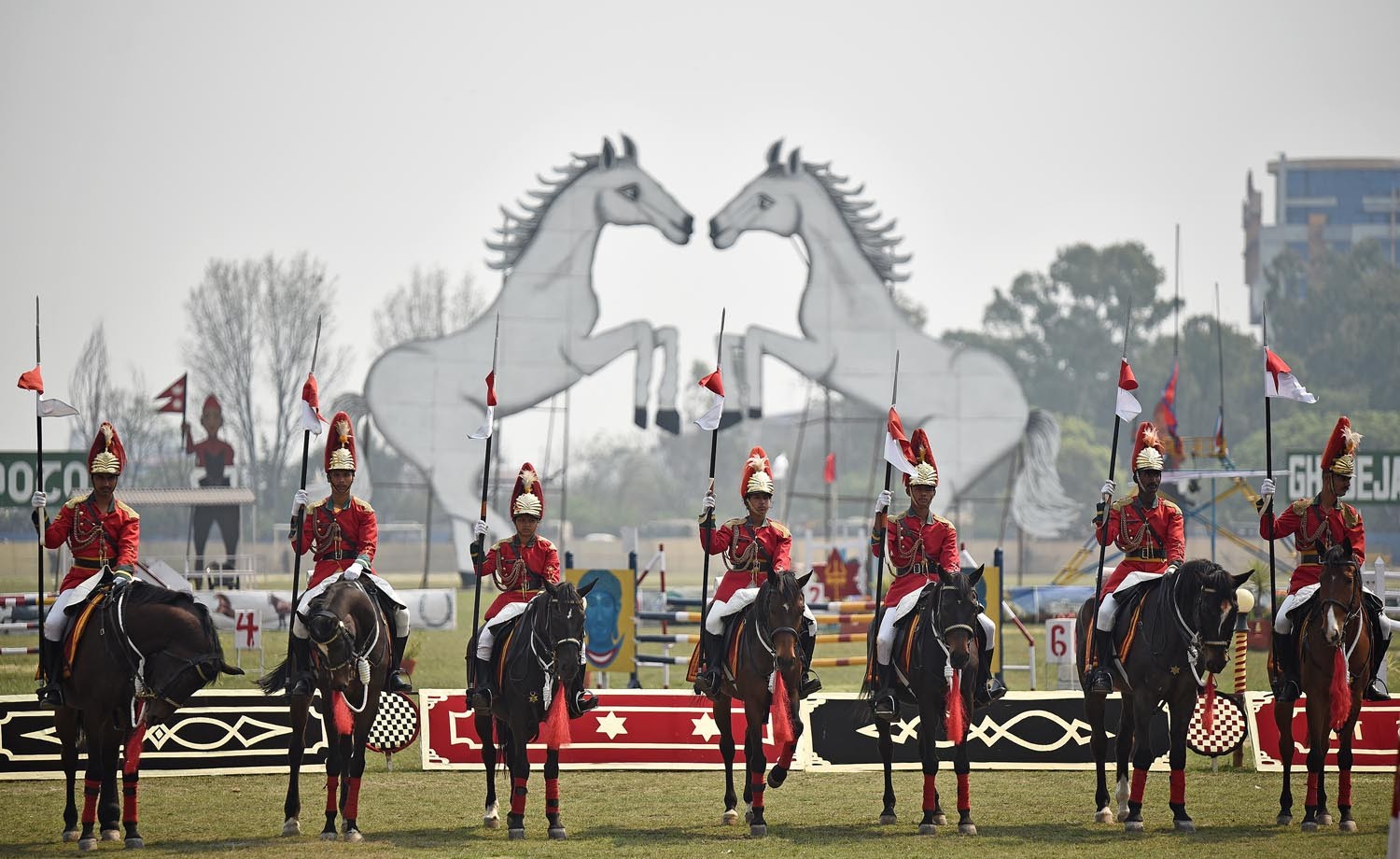
The grand horse parade and procession is the central event during the Ghode Jatra festival in Kathmandu. It takes place at the large open ground in Tundikhel. The Nepal Army organizes the parade, showcasing their cavalry skills through precision drills and choreographed routines. About 60 horses participate and perform various moves and stunts. Participants also perform motorcycle performances, rescue exercises, paratrooper displays, acrobatics, and gymnastics. The participants demonstrate their skills in front of high-ranking officials, including the president and prime minister of Nepal.

Ghode Jatra marked today (Photo Feature) – Public Service Broadcasting, Radio Nepal

The presence of the head of state at Ghode Jatra is not purely ceremonial. It is a continuation of a tradition stretching back to the Malla kings, who personally presided over the very first Ghode Jatra in Nepal celebrations at Tundikhel centuries ago.

The Newar Community Feast

Ghode Jatra is a time for family gatherings, feasting, and reveling in the rich cultural heritage that defines the essence of the Kathmandu Valley. For the Newar community, Ghode Jatra in Nepal is as much about the table as the track. Families gather for elaborate traditional feasts, recipes passed down through generations are carefully prepared, and the combination of celebration, seasonal transition, and community connection gives Ghode Jatra a warmth that the military spectacle alone cannot capture.

Newari Festivals, Major Newari Festivals of Kathmandu Valley

The Chariot Processions of Pahan Charhe

Simultaneously across the old city neighborhoods of Asan, Indrachowk, and Jaisidewal, smaller but deeply significant chariot processions carry neighborhood deities through streets that have not changed in five centuries. The historic streets of Asan and Indrachowk fill with color as beautiful chariot parades of local deities meet in the squares during Ghode Jatra. These processions are the community soul of Ghode Jatra in Nepal, intimate, neighborhood-level, and entirely authentic in a way that no ticketed event ever could be.

Pahan Charhe - Wikipedia

The Military Skills Display

The festivities of Ghode Jatra begin early in the morning when the Army offers a sacrifice at the Revanta Pith in Juddha Sadak, signaling the start of the skills display at Tundikhel. The breathtaking equestrian stunts, races, gymnastics, and martial arts performed during Ghode Jatra are the result of months of rigorous practice. What spectators witness at Ghode Jatra is not improvisation—it is the polished result of the Nepal Army’s dedicated preparation, making each Ghode Jatra performance a showcase of discipline that rivals any military parade in the world.

Glimpses of Ghode Jatra celebration

Practical Guide — How to Experience Ghode Jatra in Nepal

Arrive early at Tundikhel. The best viewing positions for Ghode Jatra fill up hours before the parade begins. Visitors are advised to arrive early at Ghode Jatra, as crowds gather rapidly, particularly on the western side of Tundikhel for the best viewing experience.

Get a viewing pass. Foreign visitors attending Ghode Jatra in Nepal can obtain special viewing passes through hotels, tour operators, or the Nepal Tourism Board for closer access to the main parade ground.

Explore beyond Tundikhel. After watching the main Ghode Jatra horse parade, make your way through the back streets of Asan and Indrachowk to witness the Pahan Charhe chariot processions. This is the layer of Ghode Jatra in Nepal that most visitors miss entirely, and it is extraordinary.

Dress appropriately. Ghode Jatra is both a public and religious event. Modest clothing is appropriate, especially when moving through neighborhood temple areas during the chariot processions.

Plan for traffic. If you are traveling around the Tundikhel and Ratnapark areas during Ghode Jatra, be prepared for heavy traffic congestion due to the celebrations. Plan ahead to avoid delays.

Combine with local food. The Newar feast tradition on Ghode Jatra day means that local restaurants and family-run eateries in the old city neighborhoods serve special seasonal dishes. Ask your hotel or guide for recommendations for an authentic taste of how Kathmandu celebrates Ghode Jatra in Nepal. Visitors often combine Ghode Jatra with a Kathmandu World Heritage Tour to explore historic sites.

FAQs About Ghode Jatra in Nepal

Q1. Why is Ghode Jatra celebrated?
It is celebrated to defeat evil spirits, especially the demon Tundi, and to mark the arrival of spring and Nepali New Year.

Q2. What is the history of Ghode Jatra, and who started it?
Ghode Jatra began during the Malla period and is believed to have been started to protect Kathmandu from the demon Tundi.

Q3. When is Ghode Jatra in Nepali date 2083?
Ghode Jatra 2083 falls on Chaitra Aunsi, likely around April 6, 2027 (Gregorian calendar).

Q4. Is Ghode Jatra a public holiday?
Yes, it is a public holiday in the Kathmandu Valley, with government offices and schools closed.

Q5. Where is Ghode Jatra celebrated?
It is mainly celebrated at Tundikhel, Kathmandu, with events also in nearby valley cities.

Q6. Who organizes the Ghode Jatra parade?
The Nepal Army and Nepal Police organize the main horse parade in Tundikhel.

Q7. What happens if Ghode Jatra is not celebrated?
It is believed the demon Gurumapa’s spirit could return, so the festival is never skipped.

Q8. Can tourists attend Ghode Jatra?
Yes, tourists can watch the parade in Kathmandu, often with access through tour operators or hotels.

There are festivals that entertain, festivals that educate, and festivals that carry entire civilizations on their backs. Ghode Jatra in Nepal is all three at once: a thundering military parade, an ancient demon-warding ritual, a community feast, a royal legacy, and a reminder that some stories are too important to ever stop telling. Whether you stand at the edge of Tundikhel as the Ghode Jatra horses gallop past or wander through the lantern-lit alleyways of Asan as the deity chariots roll by, you are not just watching a festival. You are watching Kathmandu remember who it is. And that is what makes Ghode Jatra year after year, century after century, completely unforgettable.

Spring Season in Nepal

The spring seasons start in Nepal from month March to May. Nepal the landlocked country lies on the Asian Continent of the Northern Hemisphere. It is a country full of varieties of biodiversity and cultural diversity.

The spring season starts to crawl when the winter season is having its last breath for that year. During the winter season, the trees and bushes have lost their charm. So, this season brings charm to trees and blushes through renewal of them. The renewal of them is possible because of the rising temperature of air and soil. Daylight in the spring season increases as the day progresses.

In the spring season when you come to Nepal to trek, you can have a glance at the greenish environment. You can eyewitness varieties of flora and fauna, white waterfalls, rivers, and a range of Himalayas on the way to trekking. You can glance at “Rhododendron“the national flower of Nepal. Rhododendrons blossom during the spring season only. Rhododendron has been used as a medical herb also. It is of two colors white and red.

You can do rafting during this period which is an adventurous and daring one. There are various Rafting routes such as Kali Gandaki, Trisuli, Bhote Kosi, and so on. During the spring season in Nepal you can witness festivals such as Holi “Colors Festival” and Sankranti Gigantic thing is that you can be part of these festivals also. It helps you to explore the lifestyle of Nepali people.

You can have a glimpse from your mind’s eyes of all sorts of things mentioned above and many more during you’re trekking to our country. So do not run your brain more, if you are willing to explore the world your first choice must be Nepal through Leaf Holidays. Leaf Holidays are ready for you at your every footstep to achieve your dreams through trekking

Trek to Ghorepani Poon Hill

Trek to Ghorepani Poon Hill

Ghorepanipoon hill

The Poon Hill morning vision of the snowy craggy Annapurna Himalaya range was worth every exhausting step it took to get there and having the Himalayas close by up, accurately almost in face, was a breathtaking sight!

This is a hike in the Annapurna Mountain range in Nepal. It takes a restrained level of fitness to complete, and the max elevation is 3,210 meters (so there’s no actual danger of altitude sickness). Pokhara is the bordering main access city to begin treks into the Annapurna range.

Ghorepani poonhill trek can be also taken as short and stimulating route which offers all the supreme of trekking in Nepal to enjoy the remarkable mountain scenery. This trek allows you splendid Himalayan views from the top of Poon Hill. Poon Hill is one of the most popular hilltops in Nepal, which offers spectacular Himalayan views during the sunrise.

The most patronized short trek in Nepal, Ghorepani Poonhill Trek is the best trekking destination for novice trekkers, families and students. Hundreds of trekkers gather at Poonhill before sunrise every day to witness the grand beauty of Himalayas and capture the magnificence into their cameras. Himalayan panorama that feast our eyes include virgin Fishtail, majestic Annapurna, grand Dhaulagiri and less known beauty Nilgiri and Dhampus Peaks among others.

This trek is also astonishing predominantly for the assessment of Mount Fishtail that keeps on changing from dissimilar positions. The walk through the striking woodlands embracing rhododendron, bamboos, birches and firs is great pleasure whereas; at places the vertical uphill and downhill climbs test your fortitude. The detections of species of birds living in Annapurna Conservation Area Project are also irrefutable highpoints of Ghorepani Poonhill Trek.

Garden of Dreams Kathmandu: Ticket Price, Timing & Visitor Guide

A Hidden Paradise in the Heart of the City

Kathmandu is a city of noise, color, and beautiful chaos. From the moment you step onto its streets, your senses are overwhelmed by traffic, temple bells, street vendors, and the constant movement of a city that never truly stops. Which is exactly why the Garden of Dreams Kathmandu feels like a miracle.

Step through its gates and the city disappears. The horns fade. The dust settles. The air smells of flowers. And suddenly you are standing in one of the most beautiful, peaceful, and historically extraordinary gardens in all of South Asia. Visitors often combine the Garden of Dreams with a Kathmandu World Heritage Tour to explore the city’s ancient temples and UNESCO sites.

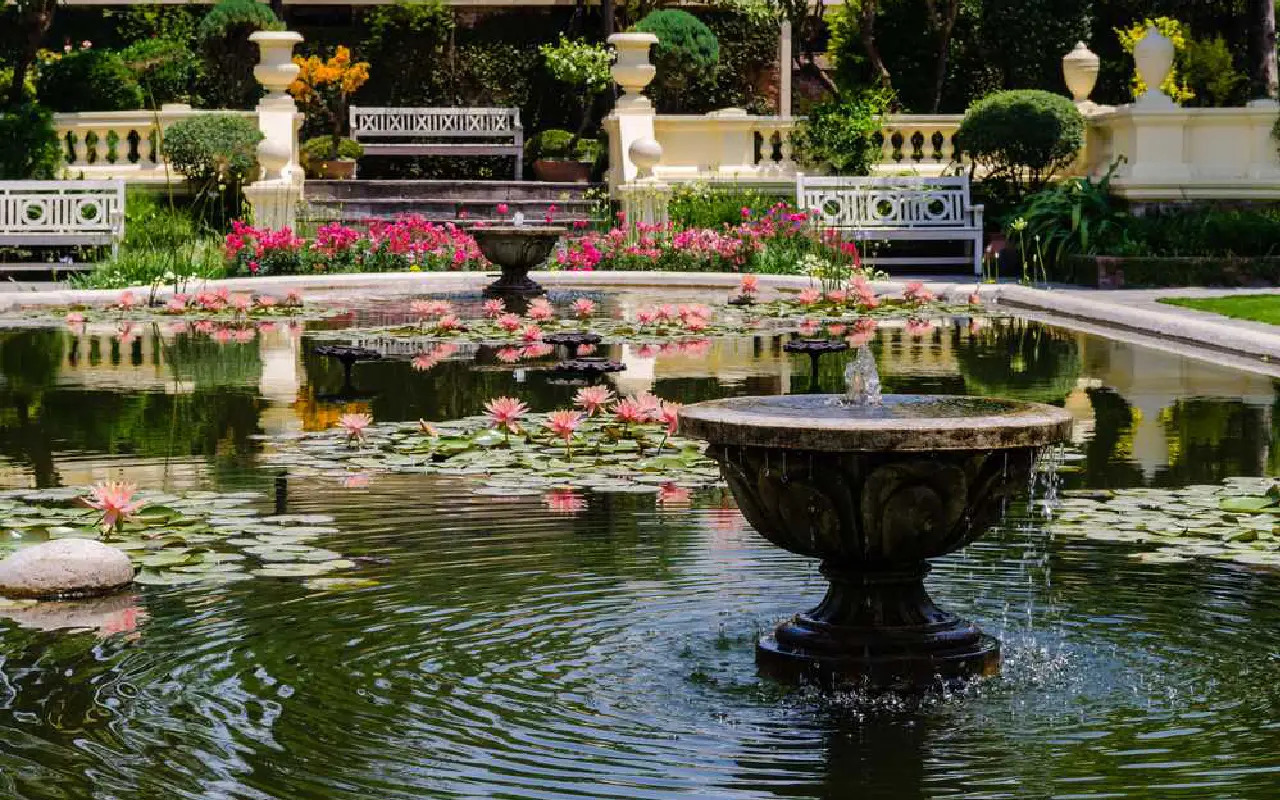
Garden of Dreams Kathmandu

Originally built in 1920 by Kaiser Shumsher Jung Bahadur Rana, the Garden of Dreams was inspired by Edwardian-era English design with a distinctly Nepali twist. It featured six pavilions, each representing one of Nepal’s six traditional seasons. Surrounded by manicured lawns, lotus ponds, pergolas, fountains, and neoclassical elements, the garden offers a unique setting rarely found in bustling Kathmandu. It is not just a sightseeing spot; it is a place to pause, a quiet haven where visitors can read, reflect, or simply enjoy the moment.

This complete guide to the Garden of Dreams, Kathmandu, covers everything: the history, the Garden of Dreams ticket price, the Garden of Dreams location in Kathmandu, the Garden of Dreams opening time, what to do inside, and exactly why this walled paradise belongs at the top of every Kathmandu visitor’s list.

The Extraordinary Story Behind Garden of Dreams, Kathmandu

Every great garden has a story. The story behind the Garden of Dreams Kathmandu is one of vision, neglect, and a remarkable second life that turned a crumbling ruin back into one of Nepal’s most beloved landmarks. The restoration of the Garden of Dreams remains one of the most interesting facts about Nepal’s cultural preservation efforts.

In the midst of downtown Kathmandu’s urban bustle, the tranquil oasis of the Kaiser Mahal Garden stands as an enduring legacy of the extraordinary vision and talent of one man, late Field Marshal Kaiser Shumsher Jung Bahadur Rana (1892 to 1964). Located just across the street from the former Royal Palace at the entrance to the Thamel tourist area, the garden was neglected for decades. Its neoclassical pavilions paying homage to Nepal’s six seasons were crumbling. The stately garden paths were overgrown, and the rich variety of subtropical flora was disappearing beneath a jumble of weeds.

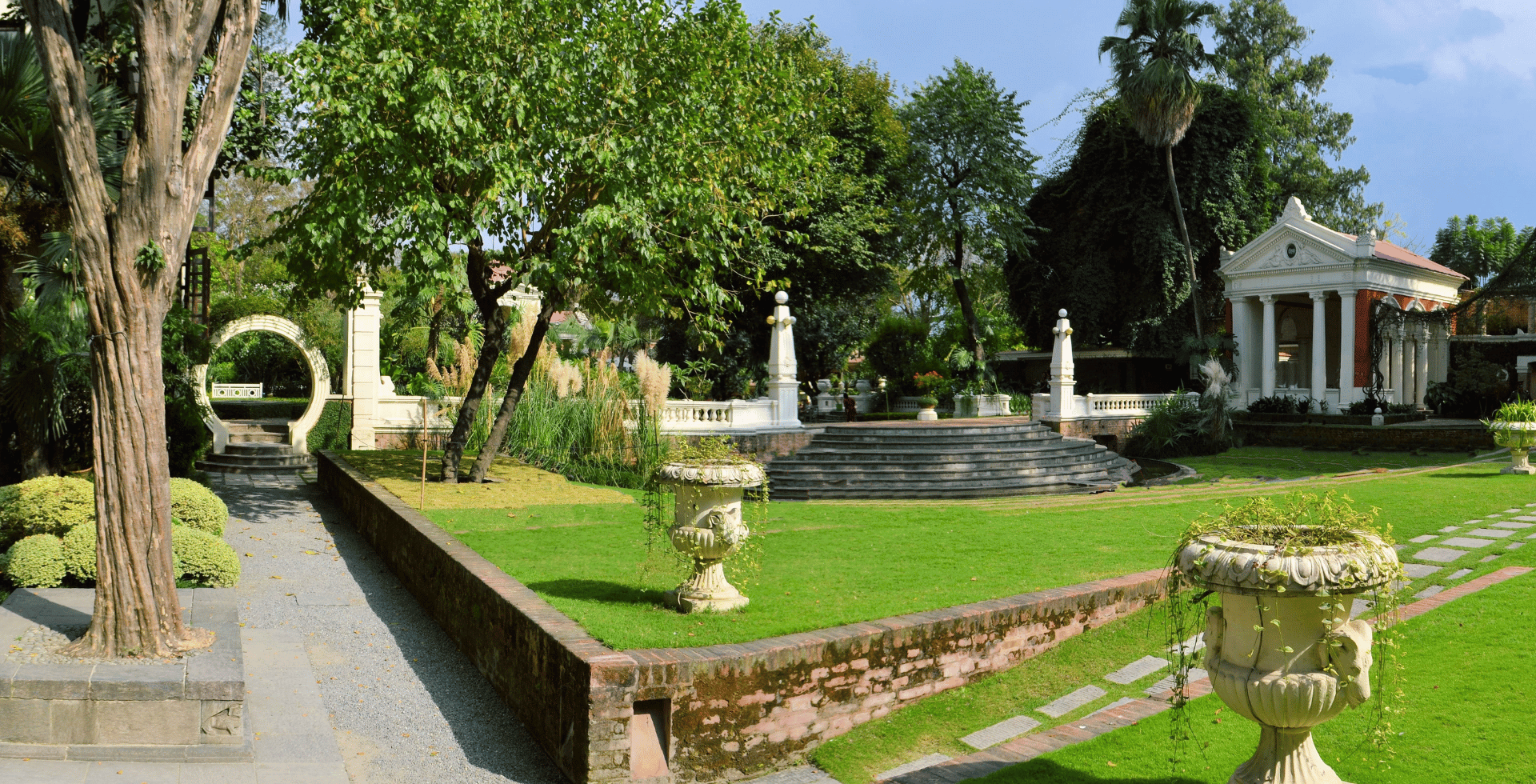
Garden of Dreams Kathmandu


The Garden of Dreams Kathmandu is centered around Kaiser Mahal, a grand palace built in the early 20th century by Kaiser Shumsher Rana. It was designed in a neoclassical European style, a stark contrast to traditional Nepali architecture, reflecting the Rana dynasty’s fascination with Western culture. The palace itself houses the Kaiser Library, a treasure trove of historical documents and books, making it a significant cultural landmark in Kathmandu. After years of neglect, the palace and its surrounding gardens underwent extensive restoration with the support of the Austrian government, transforming them into the serene urban oasis they are today.

Within the garden walls, Kaiser Sumsher created an exquisite ensemble of pavilions, fountains, decorative garden furniture, and European-inspired features such as verandas, pergolas, balustrades, urns, and birdhouses. He erected six impressive pavilions, each dedicated to one of the six seasons of Nepal. After the demise of Kaiser Sumsher, the garden was handed over to the government of Nepal. However, it was not properly managed for decades. A seven-year extensive renovation has revived the garden as per the original concept with added modern facilities.

The renovation project began in 2000 and was completed in 2007 with the aid of the Austrian government, the Nepalese Ministry of Education, and Eco Nepal. The chief architect was Götz Hagmüller, who also helped renovate both Patan Museum and Chyasalin Mandap in Bhaktapur. The goal was to demonstrate that sustainable development could succeed in Kathmandu.

Today the Garden of Dreams Kathmandu stands as proof that Nepal’s historical treasures, however neglected, are worth fighting to save.

Garden of Dreams Location in Kathmandu

One of the most remarkable facts about the Garden of Dreams is where it sits. In almost any other major city in the world, a garden this beautiful would be tucked away in a quiet suburb, requiring a long journey to reach. In Kathmandu, it is right in the middle of everything.

The Garden of Dreams is based on Tridevi Sadak between Thamel Marg and Kantipath. It is situated near the ever-popular Fire and Ice restaurant and next door to the Himalayan Java cafe.

The Garden of Dreams location in Kathmandu places it just a two-minute walk from the busy tourist district of Thamel. It is within Kaiser Mahal on Tridevi Sadak.

This Garden of Dreams location in Kathmandu makes it uniquely accessible. Whether you are staying in Thamel or anywhere in the central city, the garden is an easy walk from almost every major hotel, guesthouse, restaurant, and tourist attraction in the area. There is no need for a taxi, a tour, or advance planning; you can simply duck in off the street whenever the city feels like too much, which in Kathmandu happens regularly.

The Garden of Dreams Kathmandu address is Kaiser Mahal, Tridevi Sadak, Kathmandu 44600, Nepal. Ride-sharing apps like Pathao are readily available and can drop you directly at the entrance. From Tribhuvan International Airport, the journey to the Garden of Dreams location in Kathmandu takes approximately 30 to 45 minutes depending on traffic.

Garden of Dreams Opening Time and What to Expect

Planning your visit around the Garden of Dreams’ opening time is simple; the garden is one of the most generously open attractions in the city.

The Garden of Dreams is open from 9 AM to 10 PM every day of the week, giving visitors a great window of time to plan a visit.

The extended Garden of Dreams opening time until 10 PM makes it one of the few cultural attractions in Kathmandu that can be enjoyed after dark, when the garden takes on an entirely different atmosphere, softly lit, quiet, and romantically still. Evening visits to the Garden of Dreams Kathmandu is particularly popular with couples, students, and anyone wanting to wind down after a full day of sightseeing.

The best times to visit the Garden of Dreams, Kathmandu, are early morning shortly after the 9 AM opening, when the light is soft and the garden is at its quietest, and late afternoon around 4 to 6 PM. Spring is considered the best time to visit Nepal, especially for enjoying Kathmandu gardens and outdoor attractions.

This oasis can get busy, especially on weekends. Aim for weekdays or early mornings to truly soak in the peaceful atmosphere of the Garden of Dreams.

Garden of Dreams Ticket Price Nepal — Full Breakdown

Understanding the Garden of Dreams ticket price before your visit ensures a smooth and stress-free arrival.

The Garden of Dreams Kathmandu offers a variety of ticket prices for a range of visitors. For Nepalese citizens, the normal ticket price is NPR 150 per person. For non-Nepalese visitors, the Garden of Dreams ticket price is NPR 400 per person.

Children below the age of 5 do not require a ticket to enter the Garden of Dreams. Children between the ages of 5 and 12 years, elderly citizens above 60 years, students, and differently-abled individuals are subject to 50% discounts on their entry fees every day. Similarly, if you are a group of over 10 people, you will be given a 25% discount on Garden of Dreams tickets in Nepal.

The Garden of Dreams also offers an annual membership program. The annual membership fee is NPR 3,000 for Nepalese and NPR 5,000 for foreigners, which includes free entry for one year. The Corporate Membership program is also available with an annual fee of NPR 2,500 per year for groups of at least 10 individuals. Membership to the Garden of Dreams offers year-round access when presenting your membership card.

For international travelers, the Garden of Dreams ticket price of NPR 400, approximately USD 3, is extraordinary value for one of the most peaceful and historically significant experiences available anywhere in Kathmandu. Garden of Dreams tickets in Nepal are purchased at the entrance gate. It is advisable to carry cash in Nepali rupees, as the ticketing counter may not always accept digital payments.

What to Do Inside Garden of Dreams, Kathmandu

The Garden of Dreams Kathmandu is not a place you rush through. It is a place you settle into. Here is what awaits you inside the walls.

The Six-Season Pavilions

The Garden of Dreams consists of 6,895 square meters of gardens with three pavilions, an amphitheater, wetlands, pergolas, and urns, designed by Kishore Narshingh. The three surviving pavilions of the original six are exquisitely restored neoclassical structures that serve as focal points throughout the garden and provide shaded seating for visitors who want to sit and absorb the atmosphere.

The Central Pond and Water Features

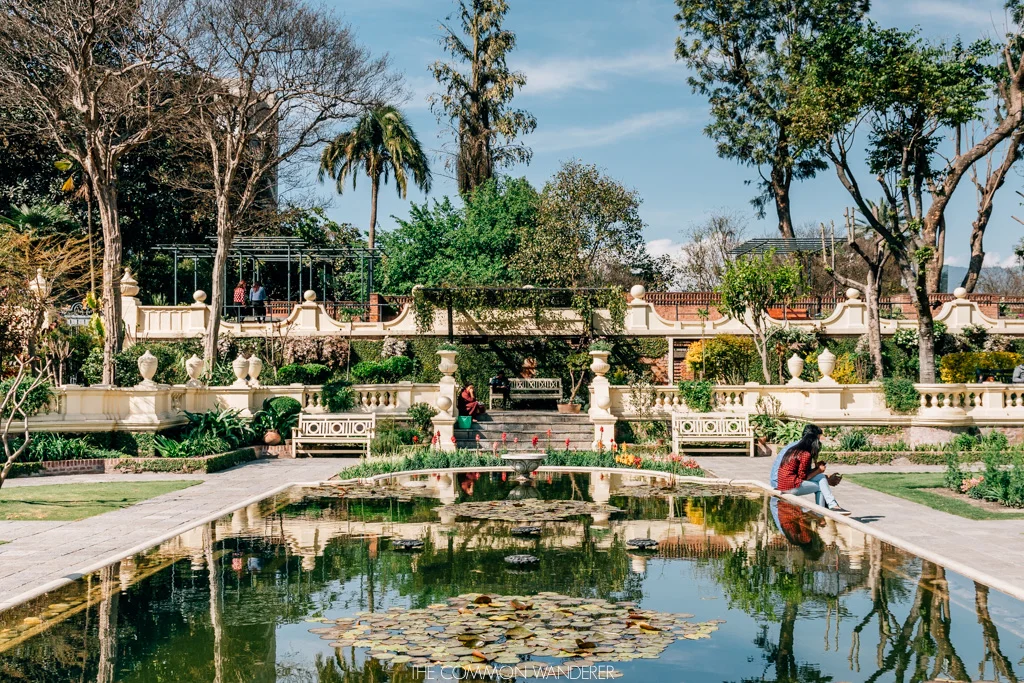
The lotus pond at the heart of the Garden of Dreams, Kathmandu, is one of the most photographed spots in the entire city. Surrounded by carefully tended flower beds, stone paths, and pergolas dripping with climbing plants, the pond creates a reflection of the surrounding pavilions on still mornings that feels genuinely unreal given that you are two minutes walk from one of Asia’s most chaotic streets.

The Kaiser Cafe

The Kaiser Café inside the Garden of Dreams Kathmandu is run by Dwarika’s Hotels, a luxury 5-star resort company that has a property in Kathmandu. Their prices are actually very reasonable, even for backpacker budgets. It is a wonderful spot for a cake and coffee on a sunny afternoon.

The Kaiser Café located inside the Garden of Dreams serves both Nepalese and Continental cuisine, making it a popular venue for lunches, meetings, and special events. Even if you are visiting the Garden of Dreams Kathmandu on a tight budget, a coffee or tea at the Kaiser Café while sitting under the shade of a pavilion is one of the most pleasant and affordable luxury experiences the city offers.

The Museum and Kaiser Library

Within the Garden of Dreams, you will find a small museum and the Kaiser Gallery, which offer additional cultural attractions. The museum explains the history of the gardens and provides more information on the restoration project. The palace itself houses the Kaiser Library, a treasure trove of historical documents and books, making the Garden of Dreams Kathmandu a significant cultural landmark beyond its horticultural beauty.

The Amphitheater

The open-air amphitheater within the Garden of Dreams Kathmandu is used for cultural events, performances, and private functions throughout the year. Visitors exploring festivals in Nepal often visit Kathmandu’s cultural landmarks like the Garden of Dreams as part of their trip.

Why Garden of Dreams, Kathmandu, is Perfect for Every Type of Traveler.

One of the most remarkable qualities of the Garden of Dreams Kathmandu is its ability to offer something genuinely meaningful to every kind of visitor.

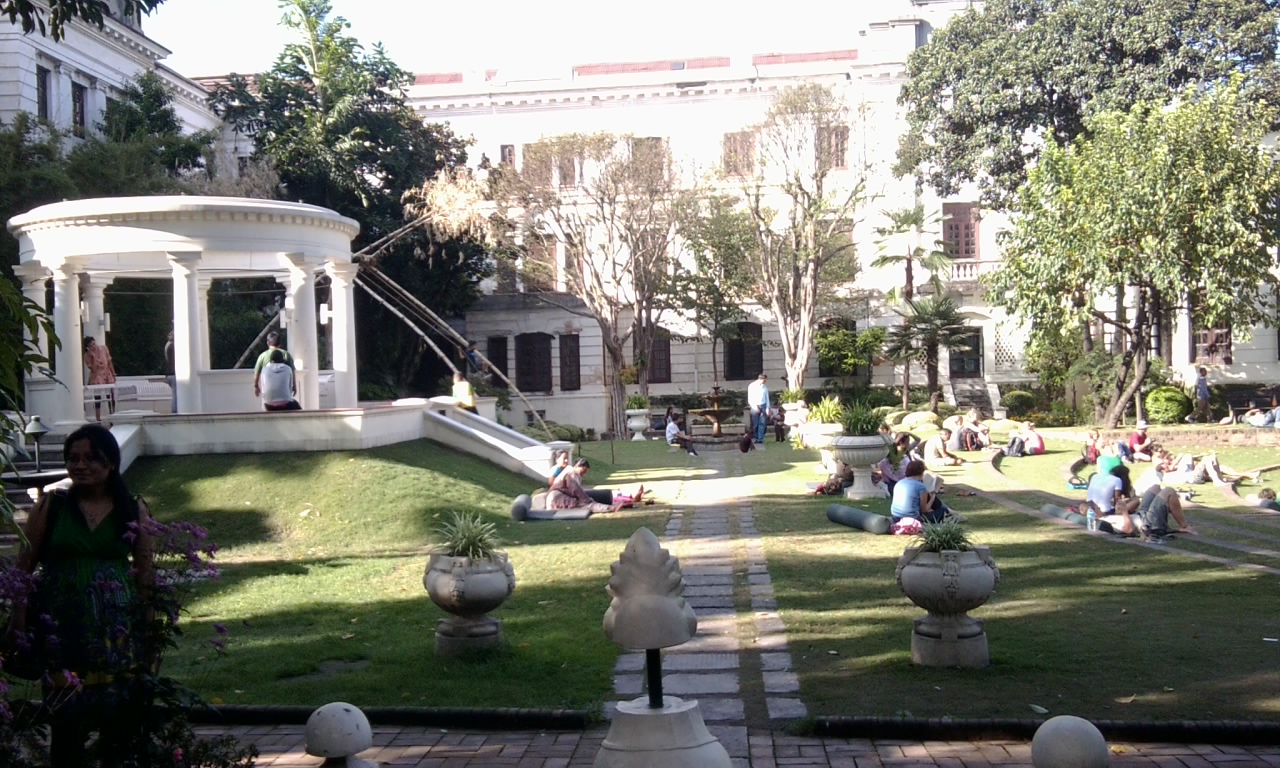
For exhausted trekkers and backpackers: After days or weeks on Himalayan trails, the Garden of Dreams Kathmandu offers soft grass, comfortable seating, and the rare sound of silence. Many travelers relax here after experiencing adventure activities in Nepal like trekking, rafting, and mountain tours.

For history and architecture enthusiasts: The neo-classical pavilions, the restored fountains, the Rana-era design philosophy, and the connection to Kaiser Shumsher’s extraordinary library make the Garden of Dreams, Kathmandu, one of the most intellectually rich sites in the valley.

For photographers: Every corner of the Garden of Dreams delivers a frame-worthy composition: the reflective pond at dawn, the dappled light through the pergolas at midday, and the warm glow of the garden after dark. Few places in Kathmandu reward the patient photographer more generously.

For couples and solo travelers: The Garden of Dreams Kathmandu is popular among students and courting couples seeking privacy and among solo visitors looking for a peaceful space to read, relax, or enjoy the company of nature.

For families: Yes, children can enjoy the open spaces and beautiful scenery of the Garden of Dreams Kathmandu, though supervision is recommended. The flat, well-maintained paths and open lawns make it accessible and enjoyable for visitors of all ages.

The Garden of Dreams, Kathmandu, as a Symbol of Preservation

Of all the amazing things about the Garden of Dreams Kathmandu, perhaps the most powerful is what it represents beyond its own beautiful walls.

The project to restore the Garden of Dreams has become a model for how to keep historic sites in good shape across Nepal. Due to decades of neglect that resulted in crumbling pavilions, overgrown paths, and the loss of subtropical flora, restorations were carried out between the years 2000 and 2007 with the assistance of the Austrian Development Aid in partnership with the Nepali Ministry of Education.

Now, with the support of Austrian Development Aid and in collaboration with the Ministry of Education, Government of Nepal, this national treasure has been restored and can once again assume its rightful place among the great landscape monuments of South Asia. The Garden of Dreams is now open for all who wish to experience and enjoy Kaiser Shumsher’s extraordinary legacy to Nepal.

Garden of Dreams Kathmandu

The Garden of Dreams Development Board, an independent entity under the Ministry of Education in Nepal, has been responsible for the management of the Garden of Dreams since its renovation in 2000. Despite some ups and downs in its maintenance and entry fees, the Garden of Dreams Kathmandu remains an important historical landmark in Nepal and a testament to the country’s enduring love of beauty and refinement.

Every Garden of Dreams ticket purchased by every visitor directly supports the ongoing maintenance and preservation of this irreplaceable landmark. When you buy Garden of Dreams tickets in Nepal, you are not just paying for an hour of peace and beauty. You are investing in the survival of one of Kathmandu’s most extraordinary cultural treasures.

Garden of Dreams Kathmandu — Quick Reference Guide

Here is everything you need for a perfect visit at a glance:

Garden of Dreams location in Kathmandu: Kaiser Mahal, Tridevi Sadak, between Thamel Marg and Kantipath, Kathmandu 44600, Nepal. Two minutes’ walk from Thamel.

Garden of Dreams opening time: 9 AM to 10 PM, seven days a week, all year round.

Garden of Dreams ticket price: NPR 400 for foreign nationals. NPR 150 for Nepali citizens. Children under 5 enter free. 50% discount for children aged 5 to 12, elderly citizens over 60, students, and differently-abled visitors. 25% group discount for parties of 10 or more.

Annual membership for Garden of Dreams tickets Nepal: NPR 5,000 for foreigners, NPR 3,000 for Nepali citizens, offering unlimited entry for one full year.

Best time to visit: Early morning or late afternoon on weekdays for the most peaceful experience.

Inside the Garden of Dreams, Kathmandu: three restored neoclassical pavilions, a central lotus pond, an amphitheater, Kaiser Café, Kaiser Library, a small museum, pergolas, fountains, and manicured gardens.

How to get there: Walk two minutes from Thamel. Use Pathao or InDrive ride-sharing for a direct drop-off at the gate. A taxi from Tribhuvan Airport takes 30 to 45 minutes. The Garden of Dreams is a perfect stop during a day tour in Kathmandu because of its central location near Thamel.

FAQs About Garden of Dreams Kathmandu

Q1. What is the Garden of Dreams ticket price for foreigners?

The Garden of Dreams ticket price for non-Nepali visitors is NPR 400 per person. For Nepali citizens, Garden of Dreams tickets in Nepal cost NPR 150 per person. Children under 5 enter free.

Q2. What are the Garden of Dreams opening times?

The Garden of Dreams opening time is 9 AM to 10 PM daily, seven days a week throughout the year.

Q3. Where is the Garden of Dreams location in Kathmandu?

The Garden of Dreams location in Kathmandu is Kaiser Mahal, Tridevi Sadak, just a two-minute walk from the Thamel tourist district, between Thamel Marg and Kantipath.

Q4. How long should I spend at the Garden of Dreams Kathmandu?

Most visitors spend between one and three hours at the Garden of Dreams Kathmandu. If you plan to have a meal at the Kaiser Café or browse the museum and library, allow at least two to three hours.

Q5. Is the Garden of Dreams, Kathmandu, worth visiting?

Absolutely. Having the peace and quiet of the Garden of Dreams Kathmandu, even for a few hours, is worth its weight in gold. It is one of the most unique and restorative experiences available anywhere in Nepal.

Q6. Can I buy Garden of Dreams tickets Nepal online?

Currently, Garden of Dreams tickets in Nepal are purchased at the entrance gate. Carry cash in Nepali rupees for a smooth entry experience.

Q7. Is the Kaiser Café inside the Garden of Dreams Kathmandu worth visiting?

Yes, the Kaiser Café inside the Garden of Dreams, Kathmandu, is run by Dwarika’s Hotels and offers very reasonable prices even for budget travelers. It is a wonderful spot for a cake and coffee on a sunny afternoon inside one of the city’s most beautiful settings.

Q8. What is the best time of day to visit the Garden of Dreams Kathmandu?

This oasis can get busy, especially on weekends. Aim for weekdays or early mornings to truly soak in the peaceful atmosphere of the Garden of Dreams in Kathmandu. Late afternoon visits between 4 and 6 PM are also beautiful when the golden light falls across the pavilions and pond.

Kathmandu will dazzle you with its temples, challenge you with its streets, and move you with its mountains. But the Garden of Dreams, Kathmandu, will give you something rarer than any of those things: a moment of stillness inside one of the world’s most alive cities. Buy your Garden of Dreams tickets, push open the gate, and let the city disappear for a while. You have earned it.