
- Mt. Kailash Tour
- Kailash Mansarovar Overland Tour
- Kailash Mansarovar Yatra by Helicopter – Complete Spiritual Journey Guide
- Kailash Yatra via Lucknow
- Kailash Mansarovar Tour via Lhasa
- Kailash Lhasa EBC Tour From Beijing
- Kailash Heli Tour via Kerung: Complete Spiritual Journey Guide
- Kailash Tour via Lhasa In Kerung Out
- Lhasa EBC Kailash Tour
- Kailash Heli Tour
- Kailash Mansarovar Yatra from Nepal 2027: Cost & Itinerary
- Kailash Nandi Kora
- Kailash Tour via Humla Simikot – 20 Days
- Mount Kailash Tour: 7 Amazing Experiences in 2027
- Trekking
-
-
- Everest Region
- Luxury Everest Base Camp Trek: 7 Unforgettable Highlights
- Everest Base Camp Trek 2026: Cost, Route, and Complete Guide
- Everest Three Passes Trek 2027: Cost, Route & Itinerary
- Everest Base Camp Short Trek
- Everest Panorama Trek: Amazing 10-Day Cost & Itinerary
- Everest Base Camp Island Peak Trek: Complete 19-Day Guide
- Gokyo Valley Trekking 2027: Easy Guide to Cost & Itinerary
- Mera Peak Climbing 2027: Complete Cost & Itinerary Guide
- Rolwaling Valley Trek: 23-Day Itinerary, Cost, Permits & Difficulty
- Dolpo Region Trek
- Everest Region
-
- Annapurna Region
- Annapurna Base Camp Trekking
- Annapurna Circuit Trek
- Annapurna Base Camp Trek: 7 Amazing Cost & Route Tips
- Mardi Himal Trek: 7 Amazing Highlights & Complete Guide
- Annapurna Alternative Combine Trek: 18 Amazing Days
- Mohare Dada Trek
- Ghorepani Poon Hill Trek: 7 Unforgettable Highlights
- Khopra Ridge Community Trek: 13-Day Ultimate Adventure
- Damodar Kunda Trek: 10-Day Ultimate Sacred Adventure
- Upper Mustang Trek: 10 Amazing Sights : Ultimate Guide
- Jomsom Muktinath Trek: Amazing 12-Day Ultimate Guide
- Ghale Gaun Trek: 7 Amazing Reasons : Ultimate Guide
- Dhampus Sarangkot Trek: 7 Incredible Experiences
- Dhaulagiri Region
- Annapurna Region
-
-
- Tours
-
-
- Day Tours
- Rickshaw–a three-wheeler Tour
- Pharping Dakshinkali Day Tour: 7 Amazing Highlights
- Historical Tour: 7 Amazing Places to Explore
- Kathmandu Temple Tour: 7 Amazing Spiritual Places
- Nagarkot Tour
- Bhaktapur City Tour: 7 Amazing Places to Explore
- Kathmandu City Tour – Complete Heritage & Cultural Experience in Nepal
- Chandragiri Hill: A Scenic Himalayan Escape Near Kathmandu
- Chitlang Hiking
- Shivapuri to Sundarijal Day Hiking
- Kulekhani Dam Day Tour — Complete Travel Guide
- Day Tours
-
- Package Tours
- Mustang Tour on Jeep
- Nepal Tour Package for Nepali: 12 Amazing Destinations to Explore (2026)
- Muktinath Tour: Complete Guide to Nepal’s Sacred Himalayan Pilgrimage
- 3N,4D Kathmandu Pilgrimage Tour
- Nepal Buddhist Pilgrimage Tour: 7 Sacred Sites Not to Miss
- 6D Nepal Pilgrimage Tour: 7 Amazing Sacred Places
- 7 Nights, 8 Days Nepal Tour
- Districts tour of Nepal
- Janakpur Tour Package: Price, Family Tour & Travel Guide from Kathmandu 2026
- Short Hike in Nepal: 7 Best Easy Treks for Beginners
- Package Tours
-
-
- Outbound
-
- Activities
- Climbing
- Bungee Jumping in Nepal
- Heli Skiing Adventure in the Himalayas
- Canoeing in Nepal
- Mountain Flight in Nepal
- Zip Flyer in Pokhara: The Ultimate Adventure Experience
- Paragliding in Pokhara: 7 Amazing Reasons to Experience Nepal’s Best Adventure
- Kathmandu Cycling Tour: 9 Amazing Adventures
- Rafting
- Rock Climbing
- Company
- Travel Info
- Travel Insurance
- Recommended Medical Kit
- Nepal Visa Information
- Flight delays and cancellation in Nepal
- Electricity in Nepal: Rates, Bill Check, Calculator and NEA Services
- Trekking Equipment Checklist: 40 Essential Items
- Best Kailash season in Tibet
- Best Trekking season in Nepal
- Trekking in Nepal 2027: 15 Best Himalayan Adventures
- Blogs
- Contact


WhatsApp
+977-9851035239

Email Us
[email protected]
Trek to Annapurna Region: 10 Incredible Adventures
25 January 2018
By Leaf Holidays
A Trek to Annapurna Region is one of the finest ways to experience Nepal’s mountains, cultures and changing landscapes. The region offers everything from short sunrise hikes to challenging high-altitude adventures, making it suitable for beginners, families and experienced trekkers.
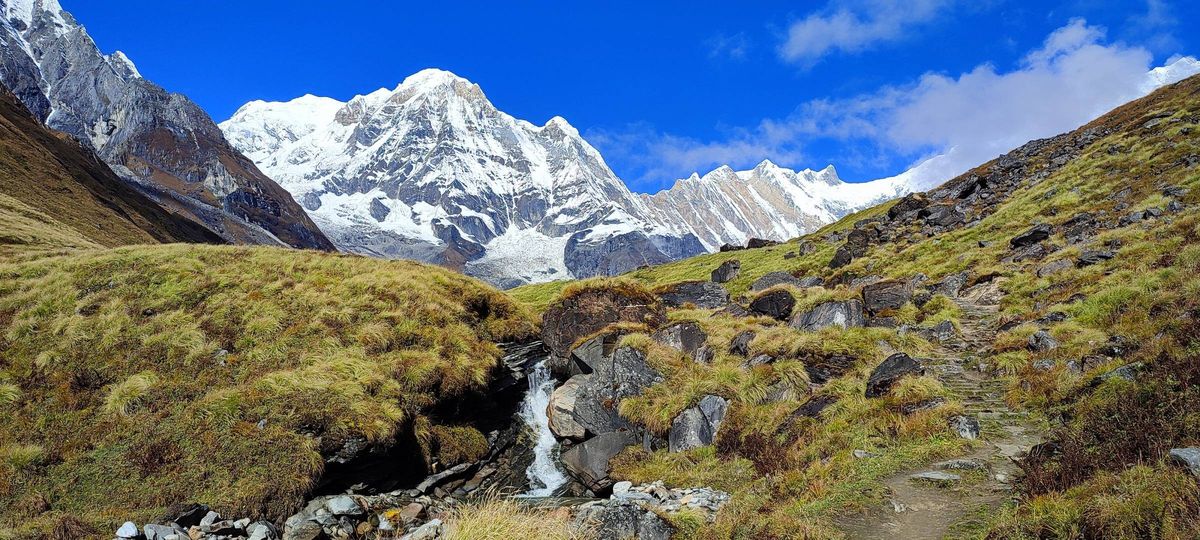
Located in north-central Nepal, the Annapurna region is home to Annapurna I, Dhaulagiri, Machhapuchhre, Gangapurna, Nilgiri and several other spectacular Himalayan peaks. A Trek to Annapurna Region can take you through subtropical forests, terraced farmland, traditional villages, alpine meadows, deep river valleys and dry mountain deserts.
The remarkable variety of routes is one of the region’s greatest attractions. Travelers can choose the legendary Annapurna Circuit, walk into Annapurna Base Camp, explore the quiet Khopra Ridge or complete a short adventure to Poon Hill. Every Trek to Annapurna Region provides a different combination of scenery, culture, altitude and physical challenge.
This complete guide introduces ten incredible adventures while explaining costs, permits, seasons, accommodation and practical preparation. Whether you want a short holiday or an extended Himalayan journey, you can find a Trek to Annapurna Region that suits your time, experience and budget.
Why Choose a Trek to Annapurna Region?
The Annapurna region is one of Nepal’s most accessible and geographically diverse trekking destinations. Pokhara provides convenient access to many trailheads, while Besisahar serves as the traditional gateway to the Annapurna Circuit.
A Trek to Annapurna Region can be designed for almost any duration. Short routes may take three to five days, while longer adventures through Nar Phu Valley or around the Annapurna Massif can require two or three weeks.
Another advantage is the extensive teahouse network. Most established trails have locally operated lodges providing rooms, meals, hot drinks and basic facilities. This allows visitors to complete a Trek to Annapurna Region without organizing a full camping expedition.
The region also provides exceptional cultural diversity. Gurung, Magar, Manangi, Thakali and Tibetan-influenced communities live throughout the mountains. Traditional houses, Buddhist monasteries, Hindu temples, prayer wheels and agricultural settlements add cultural depth to the journey.
Major reasons to explore the region include:
- Numerous routes for different experience levels
- Easy access from Pokhara and Besisahar
- Outstanding views of the Annapurna mountain range
- Well-developed teahouse accommodation
- Traditional Gurung, Magar, Manangi and Thakali villages
- Options ranging from three days to three weeks
- Famous destinations such as Manang, Muktinath and Poon Hill
- Opportunities for high-altitude adventure
- Diverse forests, valleys and mountain deserts
- Flexible private and group trekking programs
These advantages make a Trek to Annapurna Region suitable for travelers with different interests and physical abilities.
Understanding the Annapurna Region Nepal
The Annapurna region Nepal lies within the Annapurna Conservation Area, the country’s largest protected area. It covers portions of Kaski, Lamjung, Manang, Mustang and Myagdi districts.
The region surrounds the Annapurna mountain range and includes elevations ranging from warm river valleys to summits above 8,000 metres. Annapurna I reaches 8,091 metres and is the tenth-highest mountain in the world.
The landscapes change dramatically as trekkers move north. Southern areas around Pokhara, Ghandruk and Ghorepani contain green forests and productive farmland. Manang and Mustang have drier terrain influenced by the rain shadow of the Himalayas.
A Trek to Annapurna Region may remain entirely on the southern side of the mountains or cross to the northern valleys through a high pass. This geographical variety allows several distinct adventures to exist within the same trekking region.
The official Nepal Tourism Board overview of the Annapurna region describes it as one of Nepal’s most diverse and popular trekking areas, offering routes ranging from short hikes to extended circuits.
Ten Best Treks in the Annapurna Region
Annapurna Circuit Trek
The Annapurna Circuit Trek is one of Nepal’s most legendary high-altitude journeys. It traditionally circles the Annapurna Massif while passing through Lamjung, Manang and Mustang.
The route begins from Besisahar or a road-accessible settlement farther along the Marshyangdi Valley. Trekkers continue through Dharapani, Chame, Pisang and Manang before approaching Thorong La Pass.
At approximately 5,416 metres, Thorong La is the highest and most physically demanding point. After crossing the pass, the trail descends to Muktinath and enters the Kali Gandaki Valley.
This Trek to Annapurna Region is suitable for physically prepared travelers who want dramatic scenery, cultural variety and a challenging mountain crossing. Depending on the starting and finishing points, the route generally takes 12 to 18 days.
Annapurna Base Camp Trek
The Annapurna Base Camp Trek leads into a natural mountain amphitheatre surrounded by towering Himalayan peaks. The base camp stands at approximately 4,130 metres.
The trail passes through Gurung villages, terraced fields, rhododendron forests, bamboo groves and the narrow Modi Khola Valley. Important stops commonly include Chhomrong, Bamboo, Deurali and Machapuchhre Base Camp.
Annapurna I, Annapurna South, Hiunchuli and Machhapuchhre dominate the scenery. Sunrise from the sanctuary is one of the most memorable experiences available on a Trek to Annapurna Region.
The route is usually completed in seven to ten days. It is considered moderate and can be suitable for fit beginners when enough time is provided for gradual ascent.
Ghorepani Poon Hill Trek
The Ghorepani Poon Hill Trek is an excellent short adventure near Pokhara. It is famous for sunrise views over the Annapurna and Dhaulagiri ranges.
Trekkers pass through traditional Magar villages, terraced hills and colourful rhododendron forests. The early-morning climb to Poon Hill reaches approximately 3,210 metres and offers an extensive Himalayan panorama.
Because it remains at a moderate altitude, this Trek to Annapurna Region involves less risk of altitude sickness than routes reaching Thorong La or Annapurna Base Camp. However, the numerous stone steps still require reasonable fitness.
The journey usually takes four to six days and is suitable for beginners, families and travelers with limited time.
Mardi Himal Trek
The Mardi Himal Trek follows a forested ridge toward the base of Mardi Himal and Machhapuchhre. It has become popular for its close mountain views and relatively short duration.
The trail climbs through rhododendron forest before reaching Low Camp, High Camp and the upper viewpoint. As elevation increases, the forest opens to reveal impressive views of Machhapuchhre, Annapurna South and Hiunchuli.
This Trek to Annapurna Region usually requires five to seven days. The route is moderately challenging, with some steep and exposed sections near the upper viewpoint.
Mardi Himal is ideal for travelers who want a quieter alternative to Annapurna Base Camp without committing to a long circuit.
Khopra Ridge Community Trek
The Khopra Ridge Community Trek is a peaceful route managed partly through community-operated lodges. It provides wide views of Dhaulagiri, Annapurna South, Nilgiri and surrounding peaks.
The trail passes through forests, villages and open ridges before reaching Khopra Danda. Some itineraries include a demanding side trip to the sacred Khayar Lake.
Compared with Poon Hill, this Trek to Annapurna Region receives fewer visitors and offers a stronger feeling of isolation. Accommodation is simpler, but income from community lodges directly benefits local residents.
The route generally takes seven to twelve days, depending on whether Khayar Lake and surrounding villages are included.
Jomsom Muktinath Trek
The Jomsom Muktinath Trek explores the Kali Gandaki Valley and the dry landscapes of Lower Mustang. It combines mountain scenery with religious and cultural experiences.
Muktinath is sacred to both Hindus and Buddhists. The temple complex contains 108 water spouts, religious shrines and a natural flame. Pilgrims travel from Nepal, India and other countries to worship here.
The route also introduces visitors to Thakali culture, apple-growing villages and the windswept terrain around Jomsom. Views of Nilgiri and Dhaulagiri accompany much of the journey.
This Trek to Annapurna Region can be adjusted using flights and jeep transportation, making it suitable for travelers who prefer a combination of walking and road travel.
Nar Phu Valley Trek
Nar Phu Valley is a restricted trekking destination in northern Manang. The route explores remote settlements with Tibetan-influenced culture, traditional stone houses, monasteries and ancient trade routes.
The trail separates from the Annapurna Circuit at Koto and continues through narrow gorges toward Meta, Phu Gaon and Nar Village. The terrain becomes increasingly dry and dramatic at higher elevations.
Some itineraries return through the same valley, while others cross Kang La Pass and join the Annapurna Circuit near Ngawal. Kang La rises above 5,300 metres and requires good acclimatization.
This Trek to Annapurna Region is ideal for experienced travelers seeking isolation and cultural discovery. A special restricted-area permit and licensed guide are required.
Tilicho Lake Trek
Tilicho Lake is one of the most famous high-altitude destinations in the Annapurna region. Situated at approximately 4,919 metres, the lake lies beneath dramatic mountain slopes west of Manang.
The route generally follows the Annapurna Circuit to Manang before separating toward Khangsar, Tilicho Base Camp and the lake. The trail includes steep and potentially exposed sections affected by loose rock.
Weather can change quickly near the lake, and snow may make access difficult. Trekkers need proper equipment, good acclimatization and reliable local information.
A Trek to Annapurna Region through Tilicho can reconnect with the Annapurna Circuit or return toward Manang. It is suitable for travelers seeking a demanding side adventure.
Mohare Danda Trek
The Mohare Danda Trek is a community-focused alternative to the busier Poon Hill route. It passes through forests and rural settlements before reaching a ridge with panoramic Himalayan views.
From Mohare Danda, trekkers can see sections of the Annapurna and Dhaulagiri ranges. Sunrise and sunset are particularly impressive when the peaks reflect warm light.
Community lodges provide basic accommodation while helping support local development. The quieter trails encourage more meaningful interactions with residents.
This Trek to Annapurna Region generally takes five to seven days and remains at a manageable altitude. It is suitable for beginners and travelers interested in responsible tourism.
Annapurna Alternative Combine Trek
The Annapurna Alternative Combine Trek connects Nar Phu Valley with the classic Annapurna Circuit. It is one of the region’s most varied and demanding adventures.
Trekkers enter the restricted valley from Koto, explore Phu and Nar, cross Kang La and join the main trail near Ngawal. The journey then continues through Manang, Yak Kharka and Thorong Phedi before crossing Thorong La.
After descending to Muktinath, the walking section finishes around Jomsom. This combination provides secluded trails, preserved mountain culture and two major high-pass crossings.
This Trek to Annapurna Region generally requires around 18 days. It is best suited to fit trekkers who have sufficient time for acclimatization and remote travel.
Which Is the Best Trek to Annapurna Region?
The best Trek to Annapurna Region depends on your available time, fitness, previous experience and preferred scenery. There is no single route that is perfect for every traveler.
Beginners and families may prefer Ghorepani Poon Hill or Mohare Danda. Both offer mountain views without reaching extreme elevations.
Travelers seeking a moderate adventure can choose Mardi Himal or Annapurna Base Camp. These routes provide close mountain views within a manageable duration.
The Annapurna Circuit is suitable for trekkers interested in changing landscapes, cultural variety and a high-pass crossing. Nar Phu and the combined route are more appropriate for experienced travelers wanting remote terrain.
Use this comparison when selecting the best trek to Annapurna region:
| Trek | Typical duration | Maximum altitude | General difficulty |
|---|---|---|---|
| Ghorepani Poon Hill | 4–6 days | 3,210 m | Easy to moderate |
| Mohare Danda | 5–7 days | Approximately 3,300 m | Moderate |
| Mardi Himal | 5–7 days | Approximately 4,200 m | Moderate |
| Annapurna Base Camp | 7–10 days | 4,130 m | Moderate |
| Khopra Ridge | 7–12 days | Approximately 4,660 m with Khayar Lake | Moderate to challenging |
| Jomsom Muktinath | 7–12 days | Approximately 3,800 m | Moderate |
| Annapurna Circuit | 12–18 days | 5,416 m | Challenging |
| Nar Phu Valley | 10–16 days | Above 5,300 m with Kang La | Challenging |
| Tilicho Lake | 10–16 days | Approximately 4,919 m | Challenging |
| Alternative Combine Trek | Approximately 18 days | 5,416 m | Challenging |
The duration and difficulty may change according to the trailhead, transportation and selected itinerary.
Trek to Annapurna Region Itinerary Planning
A Trek to Annapurna Region itinerary should provide a realistic balance between walking time, altitude gain and rest. Shortening the journey without considering acclimatization can increase health risks.
Most trips begin with arrival in Kathmandu and transportation to Pokhara or Besisahar. Routes on the southern side usually begin near Nayapul, Ghandruk, Kande, Dhampus or Jhinu Danda. Circuit and Nar Phu adventures generally begin through Besisahar.
A suitable Trek to Annapurna Region itinerary should include:
- Realistic daily walking times
- Gradual increases in sleeping altitude
- Acclimatization before high passes
- Flexible time for weather disruptions
- Appropriate arrival and departure transfers
- Suitable overnight settlements
- Emergency and alternative-route planning
Trekkers should avoid selecting an itinerary solely because it is shorter or cheaper. A responsible schedule protects health and allows enough time to appreciate the landscape and local culture.
Annapurna Region Map and Main Gateways
An Annapurna region map helps travelers understand the relationship between the southern trails, northern valleys and major transportation hubs.
Pokhara is the main gateway for Annapurna Base Camp, Poon Hill, Mardi Himal, Khopra Ridge and Mohare Danda. Trailheads are reached by private jeep, local bus or shared vehicle.
Besisahar is the principal entrance for the Annapurna Circuit, Nar Phu Valley and several Manang routes. Road extensions now allow vehicles to travel farther toward Dharapani, Chame and Koto, although road conditions vary.
Jomsom is an important gateway for Lower Mustang and Muktinath. It can be reached by road or a weather-dependent flight from Pokhara.
Any Annapurna region map used for planning should show:
- Kathmandu
- Pokhara
- Besisahar
- Nayapul
- Ghandruk
- Chhomrong
- Annapurna Base Camp
- Mardi Himal
- Ghorepani and Poon Hill
- Manang
- Tilicho Lake
- Thorong La
- Muktinath
- Jomsom
- Nar and Phu
A printed map provides useful geographical context, but it should not replace current trail information or professional navigation.
Best Time for Trekking Annapurna Region
The best seasons for trekking Annapurna region are generally spring and autumn. Weather is usually more stable, teahouses are operating and mountain visibility is often excellent.
Spring: March to May
Spring brings warmer temperatures and blooming rhododendrons. Lower forests become colourful, while higher areas gradually become accessible as winter snow melts.
March can remain cold around high passes. April often provides comfortable conditions, while May becomes warmer with a greater chance of afternoon clouds.
Autumn: September to November
Autumn is the most popular period for a Trek to Annapurna Region. The atmosphere becomes clearer after the summer monsoon, creating excellent mountain visibility.
September may retain occasional rainfall. October offers generally stable conditions, while November becomes colder but often provides crisp views.
Winter: December to February
Winter can be suitable for lower routes such as Poon Hill, Mohare Danda and selected sections around Pokhara. High passes may be affected by snow, extreme cold and temporary closures.
Monsoon: June to August
The monsoon brings rain, clouds, slippery trails and possible landslides. Manang and Lower Mustang receive less rainfall than the southern hills, but transportation and access routes can still be disrupted.
Every Trek to Annapurna Region requires a weather-appropriate itinerary and equipment.
Trekking Annapurna Region Difficulty
The difficulty of trekking Annapurna region varies considerably. A short Poon Hill journey cannot be compared directly with an expedition across Kang La or Thorong La.
Major factors include altitude, duration, trail condition, daily elevation gain and weather. Stone staircases can make lower routes tiring, while high-altitude routes present acclimatization and cold-related challenges.
Walking regularly, climbing stairs, cycling and completing strength exercises can improve preparation. Training should begin six to eight weeks before departure.
A Trek to Annapurna Region does not normally require technical climbing skills. Nevertheless, high passes and exposed trails demand good judgment and professional support.
Permits and Guide Requirements
Most routes require an Annapurna Conservation Area Permit. Current applications and rates are available through the official NTNC permit portal.
The Annapurna Conservation Area entry fee currently differs for Nepali citizens, SAARC nationals and other foreign visitors. Children below the applicable age may qualify for free entry.
Several routes are also covered by revised TIMS and licensed-guide provisions. The official TIMS Card information lists the Annapurna Circuit, Nar Phu–Annapurna Circuit, Poon Hill–ABC, Khopra and Mardi Himal among the relevant routes.
Restricted destinations such as Nar Phu require an additional special permit arranged through a registered trekking agency. Travelers should verify current rules before beginning their Trek to Annapurna Region.
Accommodation and Meals
Teahouses and mountain lodges provide accommodation throughout most established routes. Rooms are generally simple and include twin beds, mattresses, pillows and blankets.
Facilities become more basic at higher elevations. Hot showers, battery charging and Wi-Fi may be available for an additional fee.
Menus commonly include dal bhat, fried rice, noodles, soup, potatoes, pasta, eggs, Tibetan bread and seasonal vegetables. Food prices increase with altitude because supplies require more difficult transportation.
A Trek to Annapurna Region can be completed comfortably with teahouse accommodation, but carrying a suitable sleeping bag remains advisable.
Trek to Annapurna Region Cost
The cost of a Trek to Annapurna Region depends on route length, group size, transportation, accommodation, permits and guide services.
Short routes near Pokhara are generally more affordable than the Annapurna Circuit or Nar Phu Valley. Restricted-area permits, domestic flights and private transportation increase the total price.
Typical expenses include:
- Trekking permits
- Licensed guide
- Porter service
- Ground transportation
- Domestic flights when required
- Teahouse accommodation
- Meals and drinking water
- Equipment rental
- Travel insurance
- Charging, showers and Wi-Fi
- Staff tips
- Emergency expenses
Travelers should compare complete packages instead of selecting only the lowest advertised price. An appropriate itinerary, experienced guide and reliable emergency plan provide greater value than an unrealistically cheap package.
Essential Packing List
Equipment should be selected according to season, altitude and route difficulty. Important items include:
- Broken-in trekking boots
- Moisture-wicking base layers
- Warm fleece or insulated layer
- Down jacket
- Waterproof jacket and trousers
- Thermal underwear
- Warm hat and gloves
- Sun hat and sunglasses
- Sleeping bag
- Trekking poles
- Headlamp
- Reusable water bottles
- Water-purification method
- Sunscreen and lip balm
- Personal first-aid supplies
- Power bank
- Comfortable daypack
A Trek to Annapurna Region involves significant temperature changes, so layered clothing is more practical than one heavy garment.
Altitude and Health Considerations
Altitude sickness can affect anyone, regardless of fitness or previous experience. Routes reaching Annapurna Base Camp, Tilicho Lake, Kang La or Thorong La require gradual ascent.
Symptoms may include headache, nausea, dizziness, unusual tiredness and disturbed sleep. Trekkers should inform their guide immediately if symptoms develop.
Drinking sufficient water, maintaining a slow pace and avoiding unnecessary alcohol support acclimatization. Continuing upward with worsening symptoms can be dangerous.
A Trek to Annapurna Region should always prioritize health over reaching a viewpoint, lake or pass.
Responsible Trekking Practices
The mountains are environmentally fragile and culturally significant. Trekkers should minimize waste, carry reusable bottles and avoid unnecessary plastic packaging.
Visitors should ask permission before photographing people, ceremonies or religious objects. Walk clockwise around Buddhist monuments and follow instructions inside temples and monasteries.
Using locally owned lodges and purchasing community products helps distribute tourism income. Conserving water and electricity is also important in remote settlements.
Responsible behavior ensures that every Trek to Annapurna Region contributes positively to the environment and local communities.
Travel Insurance and Safety
Travel insurance should cover the maximum altitude of the selected route. High-altitude adventures require coverage for emergency helicopter evacuation and medical treatment.
Road travel and mountain flights may be delayed by weather. Keeping at least one flexible day before an international departure is recommended.
A licensed guide provides navigation, manages accommodation, monitors altitude symptoms and responds to changing conditions. This support is especially important on remote and high-altitude routes.
Before starting a Trek to Annapurna Region, travelers should share emergency contacts, insurance details and relevant medical information with their trekking company.
Conclusion
A Trek to Annapurna Region provides an extraordinary mixture of natural beauty, mountain culture and physical adventure. Few destinations offer such a wide selection of routes within one accessible region.
Beginners can enjoy Poon Hill, Mohare Danda or shorter village trails. Travelers seeking close mountain views can choose Mardi Himal or Annapurna Base Camp. Experienced trekkers can challenge themselves on the Annapurna Circuit, Tilicho Lake or Nar Phu Valley.
The best Trek to Annapurna Region is the one that matches your available time, fitness and expectations. Selecting a realistic itinerary and traveling during a suitable season will make the journey safer and more enjoyable.
Whether you walk through rhododendron forests, enter the Annapurna Sanctuary or cross Thorong La, a Trek to Annapurna Region creates memories that remain long after the journey ends.
With proper preparation, responsible travel and professional support, your Trek to Annapurna Region can become one of the most rewarding adventures of your life. Explore more trekking experiences with Nepal Trekking and begin planning your Himalayan journey.

Table of Contents
- Why Choose a Trek to Annapurna Region?
- Understanding the Annapurna Region Nepal
- Ten Best Treks in the Annapurna Region
- Which Is the Best Trek to Annapurna Region?
- Trek to Annapurna Region Itinerary Planning
- Annapurna Region Map and Main Gateways
- Best Time for Trekking Annapurna Region
- Trekking Annapurna Region Difficulty
- Permits and Guide Requirements
- Accommodation and Meals
- Trek to Annapurna Region Cost
- Essential Packing List
- Altitude and Health Considerations
- Responsible Trekking Practices
- Travel Insurance and Safety
- Conclusion

Need Help?
Ask to Travel Expert