
- Mt. Kailash Tour
- Kailash Mansarovar Overland Tour
- Kailash Mansarovar Yatra by Helicopter – Complete Spiritual Journey Guide
- Kailash Yatra via Lucknow
- Kailash Mansarovar Tour via Lhasa
- Kailash Lhasa EBC Tour From Beijing
- Kailash Heli Tour via Kerung: Complete Spiritual Journey Guide
- Kailash Tour via Lhasa In Kerung Out
- Lhasa EBC Kailash Tour
- Kailash Heli Tour
- Kailash Mansarovar Yatra from Nepal 2027: Cost & Itinerary
- Kailash Nandi Kora
- Kailash Tour via Humla Simikot – 20 Days
- Mount Kailash Tour: 7 Amazing Experiences in 2027
- Trekking
-
-
- Everest Region
- Luxury Everest Base Camp Trek: 7 Unforgettable Highlights
- Everest Base Camp Trek 2026: Cost, Route, and Complete Guide
- Everest Three Passes Trek 2027: Cost, Route & Itinerary
- Everest Base Camp Short Trek
- Everest Panorama Trek: Amazing 10-Day Cost & Itinerary
- Everest Base Camp Island Peak Trek: Complete 19-Day Guide
- Gokyo Valley Trekking 2027: Easy Guide to Cost & Itinerary
- Mera Peak Climbing 2027: Complete Cost & Itinerary Guide
- Rolwaling Valley Trek: 23-Day Itinerary, Cost, Permits & Difficulty
- Dolpo Region Trek
- Everest Region
-
- Annapurna Region
- Annapurna Base Camp Trekking
- Annapurna Circuit Trek
- Annapurna Base Camp Trek: 7 Amazing Cost & Route Tips
- Mardi Himal Trek: 7 Amazing Highlights & Complete Guide
- Annapurna Alternative Combine Trek: 18 Amazing Days
- Mohare Dada Trek
- Ghorepani Poon Hill Trek: 7 Unforgettable Highlights
- Khopra Ridge Community Trek: 13-Day Ultimate Adventure
- Damodar Kunda Trek: 10-Day Ultimate Sacred Adventure
- Upper Mustang Trek: 10 Amazing Sights : Ultimate Guide
- Jomsom Muktinath Trek: Amazing 12-Day Ultimate Guide
- Ghale Gaun Trek: 7 Amazing Reasons : Ultimate Guide
- Dhampus Sarangkot Trek: 7 Incredible Experiences
- Dhaulagiri Region
- Annapurna Region
-
-
- Tours
-
-
- Day Tours
- Rickshaw–a three-wheeler Tour
- Pharping Dakshinkali Day Tour: 7 Amazing Highlights
- Historical Tour: 7 Amazing Places to Explore
- Kathmandu Temple Tour: 7 Amazing Spiritual Places
- Nagarkot Tour
- Bhaktapur City Tour: 7 Amazing Places to Explore
- Kathmandu City Tour – Complete Heritage & Cultural Experience in Nepal
- Chandragiri Hill: A Scenic Himalayan Escape Near Kathmandu
- Chitlang Hiking
- Shivapuri to Sundarijal Day Hiking
- Kulekhani Dam Day Tour — Complete Travel Guide
- Day Tours
-
- Package Tours
- Mustang Tour on Jeep
- Nepal Tour Package for Nepali: 12 Amazing Destinations to Explore (2026)
- Muktinath Tour: Complete Guide to Nepal’s Sacred Himalayan Pilgrimage
- 3N,4D Kathmandu Pilgrimage Tour
- Nepal Buddhist Pilgrimage Tour: 7 Sacred Sites Not to Miss
- 6D Nepal Pilgrimage Tour: 7 Amazing Sacred Places
- 7 Nights, 8 Days Nepal Tour
- Districts tour of Nepal
- Janakpur Tour Package: Price, Family Tour & Travel Guide from Kathmandu 2026
- Short Hike in Nepal: 7 Best Easy Treks for Beginners
- Package Tours
-
-
- Outbound
-
- Activities
- Climbing
- Bungee Jumping in Nepal
- Heli Skiing Adventure in the Himalayas
- Canoeing in Nepal
- Mountain Flight in Nepal
- Zip Flyer in Pokhara: The Ultimate Adventure Experience
- Paragliding in Pokhara: 7 Amazing Reasons to Experience Nepal’s Best Adventure
- Kathmandu Cycling Tour: 9 Amazing Adventures
- Rafting
- Rock Climbing
- Company
- Travel Info
- Travel Insurance
- Recommended Medical Kit
- Nepal Visa Information
- Flight delays and cancellation in Nepal
- Electricity in Nepal: Rates, Bill Check, Calculator and NEA Services
- Trekking Equipment Checklist: 40 Essential Items
- Best Kailash season in Tibet
- Best Trekking season in Nepal
- Trekking in Nepal 2027: 15 Best Himalayan Adventures
- Blogs
- Contact


WhatsApp
+977-9851035239

Email Us
[email protected]
Everest Base Camp Heli Tour: 7 Unforgettable Highlights


Trip Duration
1 Day
Trip Difficulty
Easy
Max. Altitude
5,364m. / 17,598ft.
Activity
Helicopter sightseeing tour
Destination
Everest Base Camp, Nepal
Group Size
1-5
Accommodation
Not required for day tour
Meals
Breakfast or refreshments, subject to packageHighlights of Everest Base Camp Heli Tour: 7 Unforgettable Highlights
- Enjoy a spectacular helicopter flight from Kathmandu
- Witness aerial views of Mount Everest, Lhotse, and Nuptse
- Fly above Lukla and the beautiful Dudh Koshi Valley
- View Namche Bazaar and traditional Sherpa settlements
- See Tengboche Monastery and the magnificent Ama Dablam
- Fly over the Khumbu Glacier and Everest Base Camp
- Capture breathtaking Himalayan photographs
- Enjoy a possible authorized viewpoint or hospitality stop
- Complete the Everest experience within a single day
- Choose between shared flights and private charters

Need Help?
Ask to Travel Expert
Trip Overview of Everest Base Camp Heli Tour: 7 Unforgettable Highlights
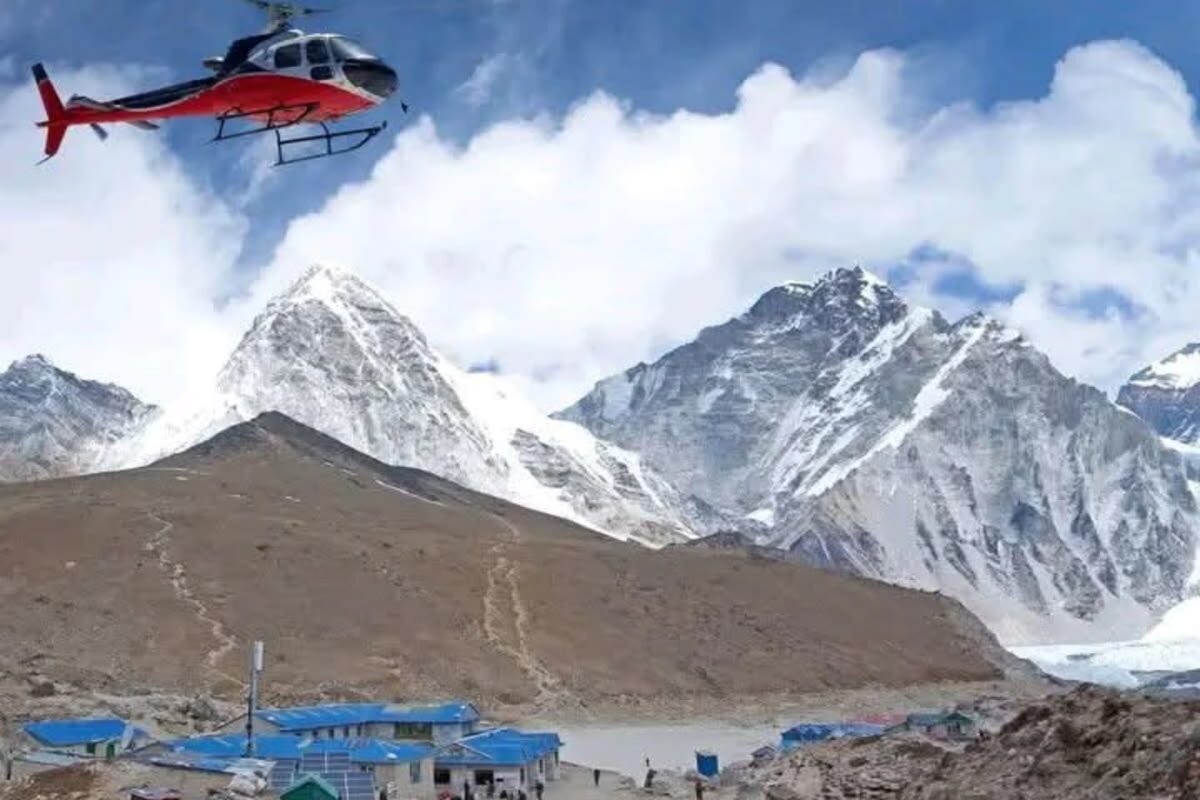
The Everest Base Camp Heli Tour offers a remarkable opportunity to experience the world’s highest mountains without completing a multi-day trek. Departing from Kathmandu, the flight carries travelers above green hills, isolated Sherpa villages, deep Himalayan valleys, glaciers, and some of the most famous peaks on Earth.
An Everest Base Camp Heli Tour is ideal for travelers with limited time, families, senior visitors, and anyone who wants to see Mount Everest from the air. Instead of walking for nearly two weeks, passengers can explore the Everest region during a scenic journey lasting several hours.
The flight usually follows the Himalayan corridor toward Lukla before continuing deeper into the Khumbu region. Depending on aviation permission, weather, and the confirmed operating plan, the experience may include authorized ground stops or scenic flyovers near major viewpoints.
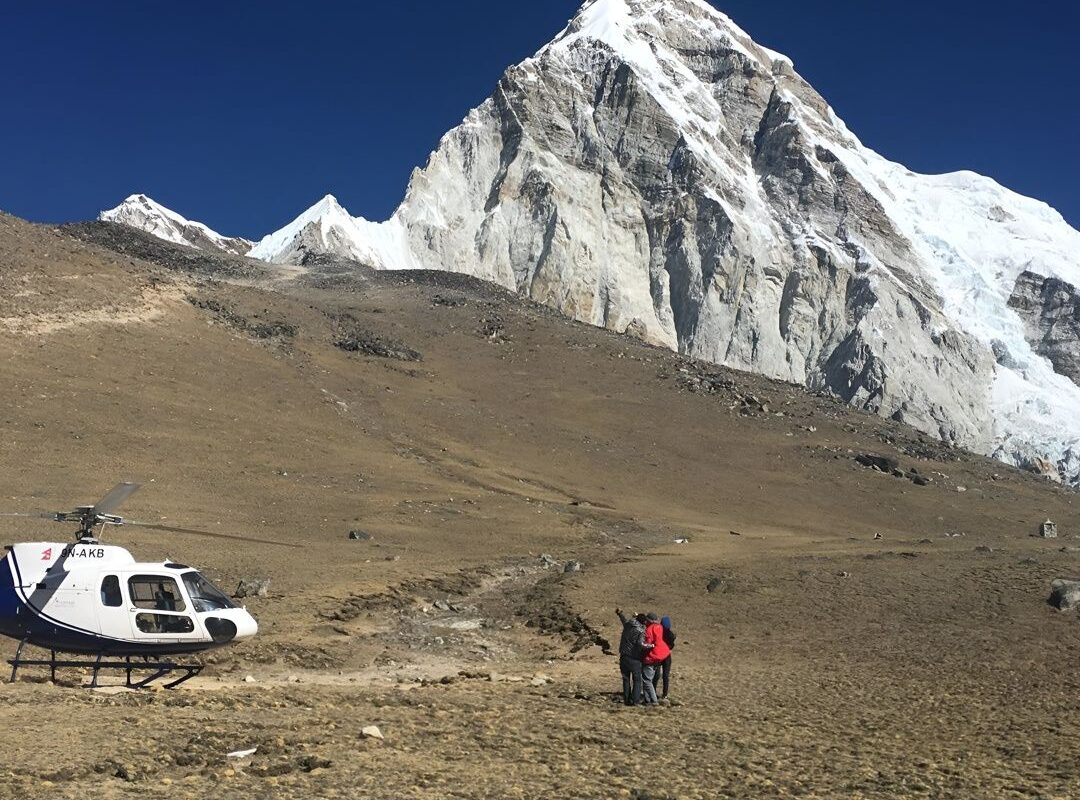
It is important to understand that an Everest Base Camp Heli Tour does not mean landing on the summit of Mount Everest. Routine tourist landings at Everest Base Camp or Kala Patthar may be restricted, unavailable, or changed by local and aviation authorities. The exact flight path and permitted landing locations must always be confirmed before departure.
What Is an Everest Base Camp Heli Tour?
An Everest Base Camp Heli Tour is a scenic helicopter journey from Kathmandu into the Everest region of Nepal. It provides aerial views of Mount Everest, Lhotse, Nuptse, Ama Dablam, Pumori, Thamserku, and several other Himalayan peaks.
The helicopter generally flies east from Kathmandu and enters the mountain region near Lukla. As the flight continues, passengers can see river valleys, mountain settlements, suspension bridges, monasteries, and trekking trails below.
Depending on the approved route, an Everest Base Camp Heli Tour may include a technical or passenger stop at Lukla, an authorized viewpoint, or a lower-altitude hospitality stop. Some programs may include a scenic breakfast stop when weather and operations allow.
The phrase “Everest Base Camp helicopter tour with landing” is widely used by travelers and tour operators. However, the actual landing point may not be Everest Base Camp. Landing permissions, environmental restrictions, passenger weight, and weather conditions determine what is possible on the day.
Every traveler should request a written operating plan identifying the expected route, possible landing places, inclusions, and alternatives before booking.
Why Choose an Everest Base Camp Heli Tour?
The Everest Base Camp Heli Tour makes the Himalayan landscape accessible to people who cannot commit to a long trekking itinerary. It compresses one of Nepal’s most famous mountain experiences into a single morning or half-day journey.
A traditional Everest Base Camp trek usually requires around 12 to 15 days, including acclimatization and return travel. The helicopter experience offers an alternative for travelers with limited holiday time.
Major reasons to choose an Everest Base Camp Heli Tour include:
- Aerial views of Mount Everest and surrounding peaks
- Shorter duration than the traditional trek
- Departure and return from Kathmandu
- Views of glaciers, valleys, and Sherpa settlements
- Comfortable transportation compared with trekking
- Opportunities for Himalayan photography
- Private and shared-flight options
- Suitable for travelers with limited time
- No technical climbing experience required
- An unforgettable perspective of the Khumbu region
Although the flight reduces physical effort, passengers must still consider altitude, weather, and aviation safety.
How the Everest Base Camp Heli Tour Operates
The Everest Base Camp Heli Tour commonly begins early in the morning. Morning departures are preferred because Himalayan weather is often clearer and winds are generally lighter.
Passengers are transferred to the domestic terminal of Tribhuvan International Airport. After completing check-in and security procedures, the helicopter crew provides a safety briefing.
The pilot explains boarding order, seatbelt use, emergency procedures, and rules near the aircraft. Passengers must follow crew instructions while approaching or leaving the helicopter because the rotor blades remain dangerous even when they appear to be moving slowly.
After departure, the flight heads east toward the Everest region. Kathmandu’s urban landscape gradually changes into green hills, river valleys, and mountain terrain.
The exact route may vary according to visibility, wind, air traffic, regulatory instructions, and helicopter performance. The pilot has final responsibility for deciding whether the Everest Base Camp Heli Tour can proceed, land, divert, or return.
Seven Highlights of the Everest Base Camp Heli Tour
Spectacular Flight from Kathmandu
The adventure begins as the helicopter rises above Kathmandu Valley. On a clear morning, passengers may see layers of hills and distant Himalayan peaks shortly after takeoff.
As the Everest Base Camp Heli Tour continues eastward, dense settlements give way to forests, farmland, and steep river valleys. The changing landscape creates a visual introduction to Nepal’s remarkable geography.
Unlike a fixed-wing flight, the helicopter flies at a height and speed that can provide detailed views of the terrain below. Passengers may see isolated houses, mountain roads, rivers, and traditional settlements.
The flight from Kathmandu is not simply transportation. It is an important part of the overall experience.
Aerial View of Lukla Airport
Lukla is the main aviation gateway to the Everest trekking region. Its mountain airport is located on a short, sloping runway surrounded by dramatic terrain.
Many Everest Base Camp Heli Tour programs include a brief operational stop at Lukla for fuel management, air-traffic coordination, or passenger arrangements. Whether the helicopter stops depends on the flight plan.
From the air, travelers can see the settlement of Lukla and the trekking trail that leads toward Phakding and Namche Bazaar. The surrounding hills reveal how challenging the geography of the Khumbu region is.
The Lukla section provides passengers with a fascinating view of the point where most Everest trekking adventures begin.
Views of Namche Bazaar
Namche Bazaar is the largest trading center in the Khumbu region. The settlement is built in a natural amphitheater at approximately 3,440 meters.
During favorable visibility, passengers on an Everest Base Camp heli tour may see its colorful buildings arranged across the mountainside. Namche contains lodges, bakeries, shops, and services used by trekkers, climbers, and local residents.
The surrounding landscape includes forested slopes and snow-covered peaks. The Dudh Koshi River flows through the valley below, crossed by several suspension bridges.
Viewing Namche from the air highlights the extraordinary relationship between Sherpa communities and the surrounding mountains.
Tengboche Monastery and Ama Dablam
Tengboche is home to one of the most important Buddhist monasteries in the Everest region. The monastery stands on a ridge surrounded by forests and Himalayan peaks.
Ama Dablam dominates the scenery with its elegant shape. Although it is lower than Everest, many travelers consider it one of the most beautiful mountains in Nepal.
An Everest Base Camp Heli Tour may provide aerial views of Tengboche, Pangboche, and the surrounding valley. The contrast between small settlements and enormous mountains demonstrates the scale of the Khumbu landscape.
Weather and flight direction determine how clearly these locations can be seen.
Khumbu Glacier and Everest Base Camp
The Khumbu Glacier is one of the most dramatic natural features visible during an Everest Base Camp heli tour. It flows down from the high mountains and contains ice formations, deep crevasses, and constantly changing terrain.
Everest Base Camp is located beside the glacier at approximately 5,364 meters. During the spring climbing season, colorful expedition tents may be visible from the air.
The helicopter may perform a scenic flyover when conditions and permissions allow. However, passengers should not assume that the aircraft will land at Everest Base Camp.
The ground at base camp is uneven and situated on moving glacial material. Operational, environmental, and seasonal restrictions can prevent tourist landings.
Even without a ground stop, seeing the Khumbu Glacier and Everest Base Camp from the air is one of the greatest highlights of the Everest Base Camp Heli Tour.
Views of Mount Everest and Neighboring Peaks
Mount Everest rises to 8,848.86 meters and is the central attraction of the flight. However, it is surrounded by other enormous peaks that make the panorama equally impressive.
Major mountains visible during clear conditions may include:
- Mount Everest
- Lhotse
- Nuptse
- Pumori
- Ama Dablam
- Thamserku
- Kangtega
- Cho Oyu
- Makalu
- Island Peak
The precise view depends on the flight direction, cloud cover, and the helicopter’s position. Passengers should remember that Everest does not always appear as the largest visible peak because closer mountains can dominate the foreground.
A knowledgeable pilot or flight representative may help passengers identify major summits during the Everest Base Camp Heli Tour.
Himalayan Breakfast or Authorized Ground Stop
Some flight programs include a stop at an authorized location for refreshments or breakfast. Everest View Hotel near Syangboche has traditionally been associated with panoramic views and hospitality stops, but availability depends on the confirmed route and current permissions.
A ground stop provides time to enjoy the mountain atmosphere and take photographs. However, breakfast and beverages may not be included in the advertised tour price.
The location and duration of any stop can change because of weather, passenger weight, air traffic, and aviation instructions.
Travelers should confirm whether their Everest Base Camp Heli Tour includes a hospitality stop, how long it is expected to last, and which expenses must be paid separately.
Everest Base Camp Helicopter Tour With Landing
The term “Everest Base Camp helicopter tour with landing” can create confusion. Many travelers assume it guarantees a landing directly at Everest Base Camp or Kala Patthar, but this should never be taken for granted.
Routine high-altitude tourist landings may be restricted because of aviation safety, environmental concerns, and local regulations. Ground conditions near Everest Base Camp also change because it is situated on glacial terrain.
When a tour is advertised as an Everest Base Camp helicopter tour with landing, ask the operator the following questions:
- What is the exact proposed landing location?
- Is the landing currently authorized?
- Is it a guaranteed stop or weather-dependent?
- What alternative is offered if landing is unavailable?
- Are airport and landing fees included?
- How much time is permitted on the ground?
- Will the helicopter perform a flyover instead?
- Is breakfast included at the hospitality stop?
The operator should clearly distinguish between an Everest Base Camp flyover, a Kala Patthar-area landing, a Lukla stop, and a landing at a lower viewpoint.
Current aviation instructions should be confirmed through the helicopter company and the Civil Aviation Authority of Nepal. The pilot’s decision on the day is final.
Everest Base Camp Heli Tour Route
A typical heli tour to Everest Base Camp follows an eastward route from Kathmandu into the Khumbu region.
The general sequence may include:
Kathmandu → Lukla → Namche Bazaar area → Tengboche → Pheriche → Lobuche → Khumbu Glacier → Everest Base Camp flyover → authorized viewpoint or hospitality stop → Lukla → Kathmandu
This route is only a general representation. The actual Everest Base Camp Heli Tour route depends on weather, regulatory permission, fuel planning, air traffic, and aircraft performance.
The helicopter may stop at Lukla while traveling toward or returning from the high mountains. In some circumstances, passengers may be divided into smaller groups for high-altitude sectors because helicopter lifting capacity decreases as altitude increases.
Travelers should not treat an online route map as a guarantee. The approved flight plan and pilot’s judgment determine the final path.
Duration of the Helicopter Tour
An Everest Base Camp Heli Tour generally requires approximately four to five hours from departure to return. However, the total time can be shorter or longer.
The duration depends on:
- Weather conditions
- Visibility
- Air-traffic congestion
- Fuel or operational stops
- Passenger rearrangement
- Landing permission
- Time spent at an authorized stop
- Delays at Kathmandu or Lukla
Passengers should keep the entire morning free and avoid scheduling an international flight immediately afterward.
Mountain weather can change quickly. If the Everest Base Camp Heli Tour is delayed, the operator may wait for conditions to improve, reschedule the flight, or issue a refund according to its booking terms.
Everest Base Camp Heli Tour Price
The Everest Base Camp heli tour price depends on whether the passenger joins a shared departure or books a private charter.
Shared flights generally divide the total operating cost among several passengers. Private charters provide greater privacy but are considerably more expensive.
As a broad market estimate, shared flights are often advertised from approximately USD 1,000 to USD 1,500 per person. Private charters can cost approximately USD 4,500 to USD 6,000 or more for the aircraft, depending on the operator, passenger number, and confirmed route.
These figures are estimates rather than guaranteed prices. The Everest Base Camp heli tour price can change because of fuel costs, aviation fees, exchange rates, season, and landing arrangements.
The final quotation should clearly state whether it includes:
- Hotel-to-airport transfers
- Helicopter flight
- Airport service charges
- National park entry fees
- Local government charges
- Applicable taxes
- Authorized landing fees
- Breakfast or refreshments
- Oxygen availability
- Rescheduling arrangements
- Passenger insurance provided by the carrier
Request a written price breakdown before paying a deposit.
Kathmandu to Everest Base Camp Helicopter Price
The Kathmandu to Everest Base Camp helicopter price is usually offered as either a shared-seat rate or a private charter rate.
A shared departure is more economical because several passengers divide the aircraft cost. The flight generally operates only after enough travelers have booked and the total passenger weight remains within the aircraft’s operating limit.
A private charter provides the entire helicopter for one family or group. The Kathmandu to Everest Base Camp helicopter price for a private flight depends on passenger weight, aircraft availability, and the permitted itinerary.
A cheaper quotation is not automatically the best option. Confirm that the flight will be operated by a licensed helicopter company and that the advertised price includes all necessary charges.
Travelers should also check cancellation and rescheduling policies. Weather-related delays are common in mountain aviation, and different operators apply different terms.
Shared Flight Versus Private Charter
Both options provide similar mountain scenery, but they offer different levels of flexibility.
Shared Helicopter Tour
A shared Everest Base Camp Heli Tour is suitable for solo travelers, couples, and small groups wanting to reduce the cost.
Advantages include:
- Lower per-person price
- Opportunity to join other travelers
- Same general Himalayan flight experience
- Suitable for solo passengers
Possible limitations include:
- Fixed departure arrangements
- Passenger-weight restrictions
- Less control over seating
- Dependence on sufficient bookings
- Possible group division at higher elevations
Private Helicopter Charter
A private Everest Base Camp heli tour is designed for families, groups, or travelers seeking more privacy.
Advantages include:
- Exclusive aircraft use
- Greater privacy
- Easier coordination for known passengers
- Personalized support from the tour company
However, private flights remain subject to the same aviation, weather, and landing restrictions. Paying for a charter does not guarantee access to prohibited or unsafe landing locations.
Passenger Weight and Seat Arrangement
Passenger weight is an important factor during every Everest Base Camp Heli Tour. Helicopter performance decreases at high altitude because the air becomes thinner.
Operators require accurate passenger weights when planning the flight. Providing incorrect information can create serious operational problems.
The helicopter may carry several passengers from Kathmandu but divide them into smaller groups for a high-altitude sector. This procedure is commonly called a shuttle.
Seat allocation is controlled by the crew to maintain proper aircraft balance. A window seat may not be guaranteed on every section, even when all passengers receive opportunities to enjoy the scenery.
Travelers should cooperate with the crew and never change seats without permission.
Best Time for an Everest Base Camp Heli Tour
Spring: March to May
Spring is one of the best seasons for an Everest Base Camp heli tour. Temperatures become warmer, and many days provide good mountain visibility.
April and May coincide with the main Everest climbing season. Expedition camps may be visible near the Khumbu Glacier, although seasonal activity can also create additional restrictions.
Autumn: September to November
Autumn generally brings clear skies after the monsoon. October and November are particularly popular for Himalayan flights.
Demand can be high, so early booking is recommended. Morning temperatures become colder toward November.
Winter: December to February
Winter can offer exceptionally clear views, but temperatures are very cold. Snowfall may affect landing sites and flight operations.
Passengers should wear warm clothing even though the helicopter cabin provides some protection.
Monsoon: June to August
Clouds, rainfall, and limited visibility make the monsoon less reliable. The Everest Base Camp Heli Tour may experience delays or cancellations during this season.
Regardless of the month, weather cannot be guaranteed.
Weather and Flight Cancellation
The Everest Base Camp Heli Tour operates under visual and aviation safety requirements. Clear visibility is essential because the route passes through complex mountain terrain.
Flights may be delayed, diverted, shortened, or cancelled because of:
- Low cloud
- Strong wind
- Snowfall
- Rain
- Poor visibility
- Air-traffic restrictions
- Unsafe landing conditions
- Technical or operational issues
Passengers should not pressure the pilot to continue in unsuitable weather. A cancelled flight can be disappointing, but safety must remain the highest priority.
Before booking, review the refund and rescheduling policy. Some operators provide a full refund after deducting unavoidable administrative costs, while others offer the next available departure.
Altitude Considerations
An Everest Base Camp Heli Tour reduces exposure compared with trekking, but passengers still travel rapidly from Kathmandu to elevations above 5,000 metres.
The body has little time to acclimatize. Some people may experience headache, dizziness, nausea, shortness of breath, or unusual fatigue during a high-altitude stop.
Passengers should:
- Move slowly after leaving the helicopter
- Avoid running or jumping
- Follow the crew’s time limit
- Remain hydrated
- Avoid alcohol before the flight
- Inform the crew about symptoms
- Return to the helicopter when instructed
People with heart, lung, blood pressure, or serious medical conditions should consult a qualified doctor before booking.
Pregnant travelers and passengers with recent surgery should obtain medical guidance. The operator must be informed of relevant health or mobility concerns.
What to Wear and Carry
Passengers do not need full expedition equipment, but high-altitude conditions can be extremely cold.
Recommended items include:
- Warm base layer
- Fleece or insulated jacket
- Down jacket
- Windproof outer layer
- Warm trousers
- Gloves
- Woollen hat
- UV-protection sunglasses
- Sunscreen
- Comfortable closed shoes
- Camera or smartphone
- Personal medication
- Passport or identification
- Small water bottle
Large bags are generally not permitted because space and payload are limited. Carry only necessary personal items.
Secure loose objects before approaching the aircraft. Scarves, hats, and lightweight items can be affected by rotor wash.
Photography Tips
The Everest Base Camp Heli Tour provides outstanding photography opportunities, but reflections from helicopter windows can affect image quality.
Wear dark clothing to reduce window reflections. Keep the camera lens close to the glass without touching it, and use a fast shutter speed to manage vibration.
Avoid carrying large lenses unless the operator permits them. A smartphone or compact camera is often sufficient.
Passengers must not open doors or windows without authorization. Drones should not be carried or operated without the required permissions.
Photography must never interfere with boarding instructions, passenger safety, or time restrictions during a ground stop.
Is the Everest Base Camp Heli Tour Worth It?
For travelers with limited time, the Everest Base Camp Heli Tour can be one of the most memorable experiences in Nepal. It provides access to scenery that would otherwise require many days of trekking.
The experience may be worth considering if you:
- Have limited vacation time
- Cannot complete a long trek
- Want aerial Himalayan views
- Are traveling with family
- Prefer a private scenic experience
- Want to photograph the Everest region
- Understand that weather can change the plan
- Accept that high-altitude landings are not guaranteed
Travelers seeking cultural immersion and physical achievement may prefer the traditional trek. A helicopter flight provides impressive views, but it cannot recreate the experience of walking through Sherpa villages and spending several days in the mountains.
Responsible Helicopter Tourism
Helicopters provide essential transportation, rescue, and supply services in remote Nepal. However, frequent tourism flights can contribute to noise, emissions, and disturbance in mountain communities.
A responsible Everest Base Camp heli tour should follow local restrictions and avoid unauthorized landings. Operators must respect national park requirements, community concerns, and aviation rules.
Passengers can support responsible operations by:
- Booking a licensed company
- Avoiding operators promising unauthorized landings
- Following local environmental rules
- Minimizing unnecessary baggage
- Respecting residents and trekkers
- Accepting safety-related route changes
- Avoiding litter during ground stops
The Everest region lies within Sagarmatha National Park, a sensitive high-altitude ecosystem and UNESCO World Heritage Site. Travelers can review official destination information through the Nepal Tourism Board.
How to Choose a Reliable Operator
Select a registered travel company working with a licensed Nepalese helicopter operator. Ask for the name of the operating airline rather than relying only on the travel agency’s advertisement.
Before confirming your Everest Base Camp Heli Tour, request:
- Written itinerary
- Helicopter company name
- Total price and inclusions
- Proposed landing locations
- Alternative plan if landing is restricted
- Cancellation and refund policy
- Passenger-weight requirements
- Required identification
- Emergency procedures
- Contact information in Nepal
Be cautious of advertisements guaranteeing a landing at Everest Base Camp or Kala Patthar regardless of weather and regulations. No responsible company can guarantee an operation that depends on aviation permission and the pilot’s safety assessment.
Why Book the Everest Base Camp Heli Tour?
The Everest Base Camp Heli Tour combines convenience, adventure, and extraordinary scenery in one carefully managed journey. Passengers can see famous Himalayan landmarks without spending several weeks on the trail.
The experience includes much more than a view of Mount Everest. The flight reveals the geography of the entire Khumbu region, from Lukla and Namche Bazaar to Tengboche, glaciers, and towering mountain walls.
A well-organized Everest Base Camp Heli Tour provides clear communication, licensed aviation services, and realistic expectations. It does not make misleading promises about landings or ignore the possibility of weather-related changes.
Professional planning is particularly important when comparing the Everest Base Camp heli tour price. The lowest quotation may exclude essential charges or rely on unrealistic landing claims.
Conclusion
The Everest Base Camp Heli Tour is one of Nepal’s most spectacular scenic aviation experiences. It offers aerial views of Himalayan valleys, Sherpa settlements, glaciers, and some of the highest mountains in the world.
From the first view of Lukla to the dramatic scenery surrounding Everest, Lhotse, Nuptse, and Ama Dablam, every stage provides a new perspective.
However, travelers must book with realistic expectations. An Everest Base Camp helicopter tour with landing may involve an authorized location rather than Everest Base Camp itself. Flight paths and ground stops depend on current regulations, weather, aircraft performance, and the pilot’s judgment.
Confirm the current Everest Base Camp heli tour price, exact route, landing arrangements, and cancellation policy before paying. Choose an experienced company that prioritizes safety and communicates honestly.
With proper planning and favorable weather, an Everest Base Camp heli tour can deliver an unforgettable Himalayan experience and a remarkable view of the world’s highest mountain.
Detail Itinerary of Everest Base Camp Heli Tour: 7 Unforgettable Highlights
Day 1: Everest Base Camp Heli Tour from Kathmandu
Your Everest Base Camp Heli Tour begins early in the morning with a hotel pickup and transfer to Kathmandu Domestic Airport. After check-in and a safety briefing, board the helicopter for a scenic flight toward Lukla.
Continue above the Dudh Koshi Valley, Namche Bazaar, Tengboche, and the Khumbu region while enjoying views of Mount Everest, Lhotse, Nuptse, and Ama Dablam. The flight may include an Everest Base Camp and Khumbu Glacier flyover, followed by an authorized viewpoint or hospitality stop subject to weather, regulations, and the approved flight plan.
After completing the Himalayan flight, return to Kathmandu and transfer to your hotel. The entire experience usually takes approximately four to five hours. Landing at Everest Base Camp or Kala Patthar is not guaranteed.

Activity & Duration
Helicopter sightseeing tour – approximately 4–5 hours
Highest Altitude
5364m. (Kathmandu – Everest Region – Kathmandu)
Meals
Breakfast or refreshments, subject to package
Accommodation
Not required
- The itinerary is subject to weather, visibility, aviation regulations, and operational conditions.
- The flight may be delayed, rescheduled, diverted, or cancelled for safety reasons.
- The pilot has final authority over the route, stops, and overall flight operation.
- Landing at Everest Base Camp or Kala Patthar is not guaranteed.
- Any ground stop depends on current permission, passenger weight, and the approved flight plan.
- The helicopter may stop at Lukla for fuel or other operational requirements.
- Passengers may be divided into smaller shuttle groups for high-altitude sections.
- The total duration of four to five hours is approximate.
- Breakfast or refreshments are included only when specified in the confirmed package.
- Passengers must provide accurate body weight and valid identification before departure.
- Additional expenses resulting from weather delays or personal services are not included.
- The final itinerary will be confirmed by the helicopter operator on the day of departure.
Includes and Excludes
What is included?
- Hotel pickup and drop-off within Kathmandu
- Airport transfers by private vehicle
- Shared or private helicopter flight, according to booking
- Scenic flight over the Everest region
- Aerial views of Lukla, Namche Bazaar, and Tengboche
- Everest Base Camp and Khumbu Glacier flyover, subject to conditions
- Authorized ground stops according to the confirmed flight plan
- Experienced and licensed helicopter pilot
- Passenger insurance provided by the helicopter operator
- Airport service and handling charges
- Applicable government taxes
- Oxygen support inside the helicopter for emergencies
- Assistance from the tour operator’s representative
What is excluded?
- Nepal entry visa fee
- International flight tickets
- Accommodation in Kathmandu
- Breakfast, meals, and beverages unless mentioned in the package
- Sagarmatha National Park and local government fees, unless included
- Personal travel and medical insurance
- Emergency rescue or medical expenses
- Personal expenses and additional services
- Camera or filming permit fees, when applicable
- Expenses caused by weather delays or flight cancellations
- Additional transportation outside the scheduled service
- Tips for the pilot, driver, and support staff
- Guaranteed landing at Everest Base Camp or Kala Patthar
- Services not specifically mentioned under “What Is Included?”
Trip Information
| Trip information | Details |
|---|---|
| Trip name | Everest Base Camp Heli Tour |
| Destination | Everest Base Camp region, Nepal |
| Tour duration | Approximately 4–5 hours |
| Package duration | 1 day |
| Trip difficulty | Easy |
| Everest Base Camp elevation | Approximately 5,364 meters |
| Departure point | Kathmandu |
| Return point | Kathmandu |
| Group size | Generally 1–5 passengers |
| Activity | Scenic helicopter sightseeing |
| Transportation | Shared or private helicopter |
| Accommodation | Not required for the day tour |
| Meals | Breakfast or refreshments, subject to package |
| Best seasons | March–May and September–November |
| Major attractions | Mount Everest, Lukla, Namche, Tengboche, and Khumbu Glacier |
| Mountain views | Everest, Lhotse, Nuptse, Ama Dablam, and Pumori |
| Landing arrangement | Subject to current permission, weather, and flight plan |
| Tour type | Shared departure or private charter |
| Suitable for | Families, senior travelers, and visitors with limited time |
| Required documents | Passport or valid identification |
| Weather dependency | The flight may be delayed, diverted or cancelled |
| Safety authority | The pilot has final authority over the flight |
Frequently Asked Questions
How long does the Everest Base Camp Heli Tour take?
The tour usually takes approximately four to five hours, including possible operational and authorized ground stops.
Does the helicopter land at Everest Base Camp?
A landing at Everest Base Camp is not guaranteed. The helicopter may provide a scenic flyover, while any landing location depends on current regulations, weather, and the approved flight plan.
Can the helicopter land at Kala Patthar?
Kala Patthar landings may be restricted or unavailable. The operator must confirm the currently authorized landing arrangements before departure.
How much does the Everest Base Camp Heli Tour cost?
Shared flights commonly cost approximately USD 1,000–1,500 per person, while private charters may cost USD 4,500–6,000 or more. Prices depend on the operator, season, group size, and inclusions.
What is the best time for the helicopter tour?
Spring from March to May and autumn from September to November generally offer favorable weather and clearer Himalayan views.
Is the Everest Base Camp Heli Tour safe?
Licensed operators follow aviation safety procedures, but mountain flying remains weather-dependent. The pilot has final authority over departure, routing, and landing decisions.
Can children and senior travelers join the tour?
Children and senior travelers can usually participate. Anyone with heart, lung, blood pressure, or serious medical conditions should consult a doctor before booking
What should I wear during the helicopter tour?
Wear warm layers, a down jacket, gloves, closed shoes, sunglasses, and sunscreen. High-altitude locations can be extremely cold, even when Kathmandu is warm.
What happens if the flight is cancelled due to bad weather?
The operator may reschedule the flight or provide a refund according to its booking policy. Travelers should review the cancellation and refund conditions before paying.
What should I carry on the helicopter?
Carry your passport or identification, warm clothing, sunglasses, sunscreen, a camera, personal medication, and a small water bottle. Large or heavy baggage is generally not allowed.
Trip Reviews
Need Help?
Ask to Travel Expert