
- Mt. Kailash Tour
- Kailash Mansarovar Overland Tour
- Kailash Mansarovar Yatra by Helicopter – Complete Spiritual Journey Guide
- Kailash Yatra via Lucknow
- Kailash Mansarovar Tour via Lhasa
- Kailash Lhasa EBC Tour From Beijing
- Kailash Heli Tour via Kerung: Complete Spiritual Journey Guide
- Kailash Tour via Lhasa In Kerung Out
- Lhasa EBC Kailash Tour
- Kailash Heli Tour
- Kailash Mansarovar Yatra from Nepal 2027: Cost & Itinerary
- Kailash Nandi Kora
- Kailash Tour via Humla Simikot – 20 Days
- Mount Kailash Tour: 7 Amazing Experiences in 2027
- Trekking
-
-
- Everest Region
- Luxury Everest Base Camp Trek: 7 Unforgettable Highlights
- Everest Base Camp Trek 2026: Cost, Route, and Complete Guide
- Everest Three Passes Trek 2027: Cost, Route & Itinerary
- Everest Base Camp Short Trek
- Everest Panorama Trek: Amazing 10-Day Cost & Itinerary
- Everest Base Camp Island Peak Trek: Complete 19-Day Guide
- Gokyo Valley Trekking 2027: Easy Guide to Cost & Itinerary
- Mera Peak Climbing 2027: Complete Cost & Itinerary Guide
- Rolwaling Valley Trek: 23-Day Itinerary, Cost, Permits & Difficulty
- Dolpo Region Trek
- Everest Region
-
- Annapurna Region
- Annapurna Base Camp Trekking
- Annapurna Circuit Trek
- Annapurna Base Camp Trek: 7 Amazing Cost & Route Tips
- Mardi Himal Trek: 7 Amazing Highlights & Complete Guide
- Annapurna Alternative Combine Trek: 18 Amazing Days
- Mohare Dada Trek
- Ghorepani Poon Hill Trek: 7 Unforgettable Highlights
- Khopra Ridge Community Trek: 13-Day Ultimate Adventure
- Damodar Kunda Trek: 10-Day Ultimate Sacred Adventure
- Upper Mustang Trek: 10 Amazing Sights : Ultimate Guide
- Jomsom Muktinath Trek: Amazing 12-Day Ultimate Guide
- Ghale Gaun Trek: 7 Amazing Reasons : Ultimate Guide
- Dhampus Sarangkot Trek: 7 Incredible Experiences
- Dhaulagiri Region
- Annapurna Region
-
-
- Tours
-
-
- Day Tours
- Rickshaw–a three-wheeler Tour
- Pharping Dakshinkali Day Tour: 7 Amazing Highlights
- Historical Tour: 7 Amazing Places to Explore
- Kathmandu Temple Tour: 7 Amazing Spiritual Places
- Nagarkot Tour
- Bhaktapur City Tour: 7 Amazing Places to Explore
- Kathmandu City Tour – Complete Heritage & Cultural Experience in Nepal
- Chandragiri Hill: A Scenic Himalayan Escape Near Kathmandu
- Chitlang Hiking
- Shivapuri to Sundarijal Day Hiking
- Kulekhani Dam Day Tour — Complete Travel Guide
- Day Tours
-
- Package Tours
- Mustang Tour on Jeep
- Nepal Tour Package for Nepali: 12 Amazing Destinations to Explore (2026)
- Muktinath Tour: Complete Guide to Nepal’s Sacred Himalayan Pilgrimage
- 3N,4D Kathmandu Pilgrimage Tour
- Nepal Buddhist Pilgrimage Tour: 7 Sacred Sites Not to Miss
- 6D Nepal Pilgrimage Tour: 7 Amazing Sacred Places
- 7 Nights, 8 Days Nepal Tour
- Districts tour of Nepal
- Janakpur Tour Package: Price, Family Tour & Travel Guide from Kathmandu 2026
- Short Hike in Nepal: 7 Best Easy Treks for Beginners
- Package Tours
-
-
- Outbound
-
- Activities
- Climbing
- Bungee Jumping in Nepal
- Heli Skiing Adventure in the Himalayas
- Canoeing in Nepal
- Mountain Flight in Nepal
- Zip Flyer in Pokhara: The Ultimate Adventure Experience
- Paragliding in Pokhara: 7 Amazing Reasons to Experience Nepal’s Best Adventure
- Kathmandu Cycling Tour: 9 Amazing Adventures
- Rafting
- Rock Climbing
- Company
- Travel Info
- Travel Insurance
- Recommended Medical Kit
- Nepal Visa Information
- Flight delays and cancellation in Nepal
- Electricity in Nepal: Rates, Bill Check, Calculator and NEA Services
- Trekking Equipment Checklist: 40 Essential Items
- Best Kailash season in Tibet
- Best Trekking season in Nepal
- Trekking in Nepal 2027: 15 Best Himalayan Adventures
- Blogs
- Contact


WhatsApp
+977-9851035239

Email Us
[email protected]
Is Nepal Safe to Visit After the Flash Floods? Latest Travel Update
18 September 2026
By Leaf Holidays
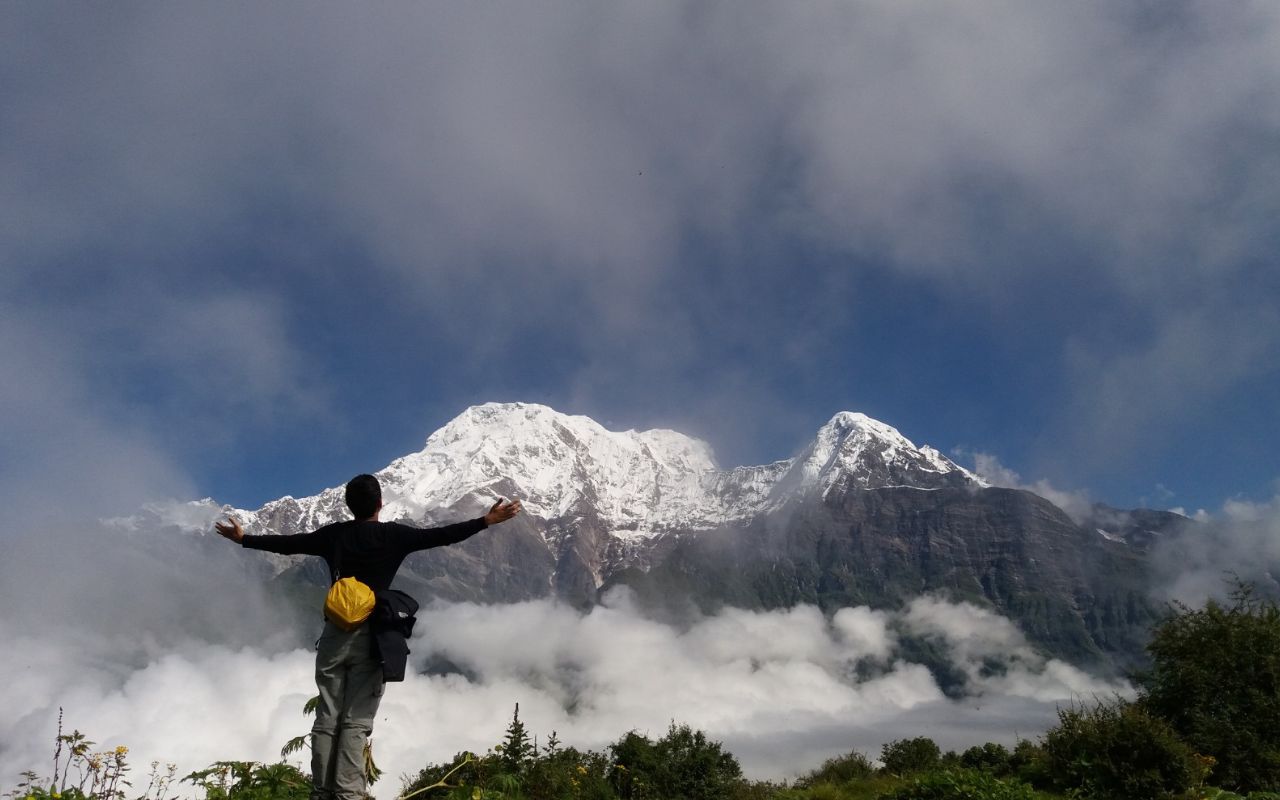
As the 2026 autumn (September to November) trekking and tour season begins, many of you might be wondering: Is Nepal safe to visit after the flash floods? Should you postpone or cancel your upcoming trek or tour?
These are understandable questions after the unfortunate news of the flooding. However, we want you to know that the impact of the flash flood is limited to certain areas and not all of Nepal’s trekking and tour regions.
Although the loss was heavy in the affected areas and our hearts go out to the families who suffered, we are also relieved to share that most of the trekking regions and locals are safe. So, you do not necessarily have to cancel or postpone your trips.
In this article, we have shared Nepal flash flood updates, along with trekking, peak climbing, and tour scenarios between September 2026 and November 2026.
Nepal flash flood update and latest travel update
We have used reliable sources, including the Ministry of Foreign Affairs and the Nepal Tourism Board, to extract the latest updates on the flash flood.
On August 26, 2026, we were all stunned to see the devastating flash flood unfold on the border of Nepal and Tibet. After almost three weeks of recovery and rescue, we saw huge progress.
As of the September 17 report, the infrastructural damage and death toll were severe in the affected region. At the same time, we have also seen many rescues, including lives saved miraculously.
The world came together and stood with Nepal in every way. From medical and food relief to rescue resources and financial aid, countries around the world came together to save and recover what has remained.
The recoveries are still ongoing. Aid is still coming in, and slowly roads and bridges are being built. The hearts are still heavy with all the losses. However, as we say, life must go on, so we are all doing whatever we can to make sure life goes on for what remains.
And you can play a big role by not canceling your trip to Nepal. Your visit will uplift the morale of mountain communities and Nepali people around the country and help the local and state economy.
| Area | Current situation | Traveler advice |
|---|---|---|
| Rasuwa, Timure, Rasuwagadhi | Severely affected | Avoid unless officially confirmed. |
| Syabrubesi | Access may be disrupted. | Check alternative routes. |
| Kathmandu | Open | Normal travel precautions |
| Pokhara | Open | Confirm road and weather conditions. |
| Everest Region | Open | Check the Lukla flight status. |
| Annapurna Region | Open | Confirm road conditions |
The flash flood affected the Rasuwagadhi (Nepal-Tibet) border and downstream areas. The affected area was close to the Langtang region. So, if you have an upcoming Langtang Valley trek, Gosaikunda trek, or Kailash Yatra via the Kerung border, you should postpone/reroute your trip as per your travel company’s suggestion.
On the other hand, other parts of Nepal are open for all treks and tours. Nevertheless, we advise you to inquire about the current situation of the region you are traveling to and the highway conditions your itinerary includes.
The good news is that, as the weather is settling, the mountain roads are open and safe to travel. The Nepalese government is actively working to clear any landslide debris that has blocked the highways all around the country.
Locals from different regions, including Everest, Manaslu, Annapurna, and others, are stocking up to welcome trekkers from around the world. Likewise, famous tourist cities have started to see the buzz of travelers from around the world.
Which areas of Nepal have been affected by the flash floods?
Northern Nepal, along the Bhote Koshi River, Trishuli River, and the Rasuwa border region, particularly saw severe damage in the recent flash floods.
As per the humanitarian reports, communities in Nuwakot, Gorkha, Dhading, and Tanahun have also been affected to some extent. Travelers should understand that the situation varies by destination.
On September 6th, the U.S. Embassy in Nepal reported that most destinations in Nepal remain open.
We have shared updated information on flash flood-affected areas below:
Rasuwa district—Timure, Rasuwagadhi, and Syabrubesi:
- The most affected areas. Severe damage to communities, roads, bridges, and border-area infrastructure
- Roads and access routes are still under construction and in bad condition. You have to obtain current local confirmation before traveling in this area.
Bhote Koshi River area:
- Extensive damage to houses, roads, bridges, hydropower facilities, and other infrastructure along the Bhote Koshi River area.
- Check the road conditions before traveling through the affected river corridors.
Nuwakot, Dhading, Gorkha, and Tanahun:
- As per the humanitarian reports, local communities were affected by fast-moving floodwaters causing damage to homes, roads, and bridges.
- Confirmation is needed before planning road journeys in these areas.
Kathmandu Valley and other tourist areas:
- Not affected. Most other destinations are open for trekking.
- It is best to ask about the road conditions, transportation, and weather.
Is Nepal open for tourists?
Yes, Nepal is open for tourists. It would be unfair to assume that all of Nepal is affected by the flash floods. The country has numerous trekking regions, river systems, roads, terrain, landscapes, and tourism routes. And the recent flash flood has only affected a small part of it.
In fact, the Nepal Tourism Board has explicitly stated that “Nepal is not closed” on September 1 during its situation update. Much of the country continues to work, travel, live, and welcome tourists.
The flash flood has already caused severe loss and damage in many sectors, including tourism, as travelers continue to cancel their trips.
The Nepalese government is working its best to provide accurate information and promote other travel destinations within the country that have seen no disturbance at all due to recent flash floods.
If you are doing popular treks like Everest Base Camp, Annapurna Base Camp, Annapurna Circuit, or Upper Mustang in September, October, or November, you do not have to worry about anything.
Are international flights to Nepal operating?
Yes, all international air connections to Nepal remain operational. Tribhuvan International Airport (TIA) is the main gateway to Nepal for tourists, and it is not affected at all due to flash floods.
So, whether you are flying to Nepal from the Middle East, Europe, Australia, the USA, or any other continent, you can get a regular flight.
Are hotels, restaurants, and tourism services operating?
All tourism businesses continue to operate in most parts of Nepal. Travel agencies are welcoming their guests from around the world as peak season is here.
Hotels, restaurants, cafes, guides, transportation, and all other tourism-related businesses are open. Mountain villages are also open for trekkers and climbers.
Nepal trekking after floods
Only the starting point of the Langtang region is affected due to the recent flash floods. Above Syabrubesi, the region remains open for trekkers. Instead of Syabrubesi, talk to your travel agency about an alternative route.
Similarly, Everest, Manaslu, Annapurna, Mustang, Dolpo, Kanchenjunga, and other trekking regions are open. You can trek there following the standard safety precautions.
There is no difference in the trekking experience in these regions due to the recent flood. The mountain vistas, adventure, cultural immersion, and interaction with the locals remain the same.
Nepal flash flood and travel safety FAQs
Below, we have collected all the burning questions related to Nepal flash floods and travel safety. This section will answer most of your Nepal queries regarding Nepal travel conditions.
Is Nepal safe to visit after the flash floods?
This is definitely the most asked question among international travelers. First of all, yes, Nepal is safe to visit after the flash floods.
As the 2026 autumn season is here, the country is welcoming travelers from around the world. Apart from the small flash flood-affected area, the rest of the trekking and tour destinations are safe.
Is Nepal currently open for tourists?
Yes. You can visit Nepal in September, October, November, and December. The Nepalese government has also explicitly stated that the country is open for tourists and all the tourism services, including international airports, hotels, transportation, etc., are operational.
Is Nepal open for trekking after the floods?
Apart from the Langtang region, no other trekking region is affected due to the flash floods. You can ask your travel company about the transportation and condition of other infrastructure before flying to Nepal for the trek.
Note that only Syabrubesi is affected by flash floods. The rest of the region is safe to explore. Check your itinerary and see if any other route is available.
Which regions of Nepal have been affected by flash floods?
The August 26th flash flood has caused serious damage along the Bhote Koshi River corridors and downstream areas. Rasuwa was most affected by this flood. Similarly, areas of Nuwakot, Gorkha, Dhading, Tanahun, and Chitwan have also seen some effects.
Are Kathmandu and Pokhara affected by the floods?
No, Kathmandu and Pokhara are not affected by the recent flood in Nepal. Both cities are functioning normally and are even seeing a rise in tourists as the autumn season has started.
Is the Everest Base Camp trek open after the flash floods?
Yes. The Everest Base Camp trek route is situated far away from the main Bhote Koshi-Trishuli disaster corridor. So, there is no impact on the Dudh Koshi River that runs along the Everest Base Camp trail.
Is Annapurna trekking safe after the floods?
Yes, you can do any trek in the Annapurna region. It is also a separate trekking region that is not affected by the recent flash flood at all.
Should I cancel my Nepal trip because of the floods?
No, you do not have to cancel your Nepal trip because of the floods. If your itinerary does not involve the Rasuwagadhi-Timure-Syabrubesi area, you do not need to cancel your trip.
Even if these areas are included, look for an alternative route and customize the itinerary or visit some other trekking region.
Are Nepal’s roads and highways operating normally?
As we are at the end of the third week of September, the monsoon season is slowly disappearing. So, floods and landslides on the major highways have significantly reduced.
Likewise, the government is working day and night to clear any landslide blockages and fix the roads. Most highways are operating, and many are coming into operation regularly.
Are domestic flights in Nepal affected by the weather?
Yes, domestic flights in Nepal are affected by the weather. However, with the start of the autumn season, the weather in the mountains is gradually becoming stable with excellent visibility. So, most flights are on time.
What should I do if my trekking route is affected?
In case your chosen trekking route is affected by flash floods, do not travel there. Instead, visit some other trekking regions. Nepal has many amazing trekking options along with a plethora of tours and adventurous sports that may interest you.
Is it safe to travel to Nepal with children after the floods?
Yes, families can travel to Nepal with their children after the floods. But make sure your itinerary does not include the flood-affected areas.
Is Nepal safe for solo travelers after the floods?
Solo travelers can safely travel in Nepal after the floods. However, if you are planning to visit the affected areas, definitely travel with a trusted local partner.
Conclusion: Nepal travel conditions
The recent flash floods have definitely created lots of concerns among international travelers. But we want to say that Nepal travel conditions are safe.
Do not cancel your trip just because of the flash flood. The water levels have significantly decreased, and construction of bridges and other infrastructure has already started, alongside continuous search and rescue operations.
Talk to your travel operator and ask them about the region you are traveling to and the transportation conditions before canceling your trip.
If you are anxious to travel in September, postpone your trip to October or November. The weather is excellent in these two months.
If you are still planning your trip to Nepal and looking for a Nepali travel agency, you can get in touch with us, Leaf Holidays.
Kindly understand that your trip to Nepal at this time will only help the locals. It will mean a lot to Nepalese communities and businesses.


Need Help?
Ask to Travel Expert