notification-icon Kailash Mansarovar Tour booking open for 2027

How to Plan Your Trip to the Country of Nepal: Visas, Permits, Packing, and Local Guides
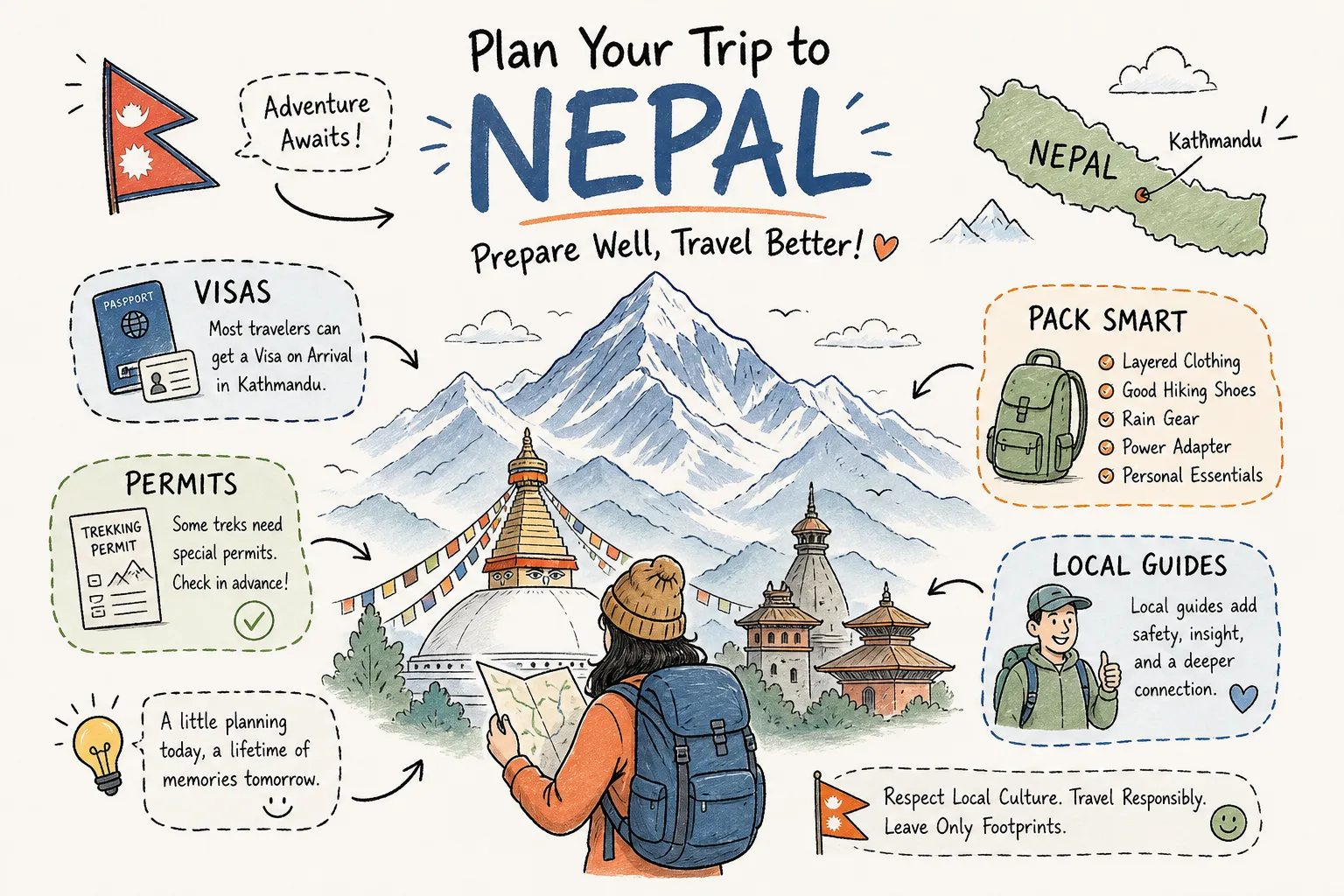
How to Plan Your Trip to the Country of Nepal: Visas, Permits, Packing, and Local Guides

The country of Nepal sits in South Asia between India and China. It is an independent nation with Himalayan peaks, historic cities, subtropical wildlife habitats, and travel experiences that vary greatly from one region to another. That variety makes planning important: a short cultural holiday in Kathmandu requires different arrangements from a high-altitude trek or a visit to a restricted area.

If you are planning your first visit to the country of Nepal, start with four decisions: when you want to travel, where you want to go, how long you can stay, and what level of activity suits you. Once those are clear, you can check your visa, route-specific permits, transport, and packing list.

This guide takes you through those steps so you can build a realistic trip to the country of Nepal.

1. Understand the Country of Nepal Before Choosing a Route

A map of the country of Nepal shows three broad landscapes. The southern Terai contains plains and national parks. The middle hills include Kathmandu and Pokhara. Farther north, the Himalayas contain many of the country’s best-known trekking routes.

These regions have different climates, travel times and activities. You could spend one week visiting temples and wildlife reserves, or use the same amount of time for a single mountain route. Trying to fit both into a tight schedule can leave little room for road delays or changing weather.

Kathmandu is the capital and a common starting point. It is a useful place to settle in, explore cultural sites, and organize onward travel. The Kathmandu Valley World Heritage Site includes the Durbar Squares of Kathmandu, Patan, and Bhaktapur, along with four major religious monument zones.

A trip to the country of Nepal becomes more rewarding when you give each destination enough time. Choose a small number of places that match your interests, then build your route around them.

2. Choose the Experiences You Want

The country of Nepal offers far more than trekking. Your route might focus on culture, mountain scenery, wildlife, pilgrimage or a combination of these interests.

Kathmandu Valley for Culture

Kathmandu Valley is a strong starting point for travellers interested in temples, stupas, old palace squares and traditional neighbourhoods. Kathmandu, Patan and Bhaktapur each have their own character, so allow time to explore on foot instead of treating every site as a quick stop.

A cultural visit also helps you understand the religious customs and craftsmanship you may encounter elsewhere in the country of Nepal.

Everest and Annapurna for Trekking

The Everest and Annapurna regions attract travelers who want to walk through mountain villages and see the Himalayas at close range. Routes differ considerably in duration, altitude, and difficulty.

If Everest is your priority, review an Everest Base Camp trek before booking flights and leave enough time for acclimatization and possible transport delays.

For Annapurna, compare the Annapurna Base Camp trek with the longer Annapurna Circuit Trek. Their routes and time requirements are different, even though both explore the Annapurna region.

Pokhara and Chitwan for a Varied Holiday

Pokhara offers lakeside relaxation and access to the Annapurna area. It works well as a destination in its own right or as a stop before or after a trek.

For a different landscape, consider a Chitwan National Park tour. Guided wildlife activities in the Terai can add variety to a holiday focused mainly on the hills and cities.

The best route through the country of Nepal depends on what you most want to experience. Decide on your main destination first, then add nearby places if your schedule allows.

3. Pick the Right Season for Your Trip

There is no single best month for every journey through the country of Nepal. The right time depends on your route and activities.

Autumn: September to November

Autumn is popular for trekking and sightseeing. After the monsoon, clearer skies often improve mountain visibility, especially in October and November. Popular routes and hotels can be busy, so book key services in advance.

Spring: March to May

Spring brings warmer conditions and rhododendron blooms in many hill areas. It is another popular trekking period, although haze and changing afternoon weather can affect mountain views.

Monsoon: June to September

Rain can make roads and trails muddy and disrupt travel plans. Some trans-Himalayan routes, including parts of Upper Mustang, may still appeal to travellers during this period. Conditions vary, so assess the specific route before booking.

Winter: December to February

Winter can be comfortable for lower-altitude sightseeing, while high mountain routes may be very cold or affected by snow. A cultural tour of the country of Nepal can work well in winter if you pack for chilly mornings and evenings.

Check the conditions for your actual destinations shortly before departure. Weather in Kathmandu may be very different from conditions on a mountain pass.

4. Check Your Visa and Travel Documents

Entry requirements for the country of Nepal depend on your nationality and how you enter. Many visitors can obtain a tourist visa on arrival, while others need to make arrangements before travelling.

Check your passport validity, visa eligibility, current fees, and application process through the Nepal Tourism Board’s tourist visa guidance. Rules and fees can change, so check them again close to your travel date.

Keep digital and paper copies of your passport, visa information, insurance policy, and important bookings. If you are travelling with a guide, share the details they need to arrange any route-specific paperwork.

For help preparing before arrival, see this Nepal visa information guide. Use the current official requirements when making your final application.

5. Confirm the Permits for Your Exact Route

A tourist visa does not cover every activity in the country of Nepal. Treks and protected-area visits may require separate documents. The requirements depend on where you are going.

For example, a national park or conservation area may have its own entry fee. Some trekking routes also require additional documentation, while restricted areas have special permit rules. The Nepal Tourism Board trekking permit page explains restricted-area requirements, and its park entry fee guide is a useful starting point for protected-area costs.

Before paying for a tour, ask your operator to list every permit required for your route. Confirm which fees are included in the quoted price and who will obtain each document.

This step matters particularly if your journey through the country of Nepal combines destinations. Permits for one trekking area do not automatically apply to another.

6. Prepare for Altitude and Pack for the Route

A visit to Kathmandu or Chitwan calls for a different packing list from a high-altitude trek. For a mountain journey in the country of Nepal, clothing should protect you from sun, rain, wind, and cold temperatures that can change quickly.

Useful trekking items include:

  • Broken-in walking boots
  • Warm base and insulating layers
  • A waterproof outer jacket
  • A sun hat, sunglasses, and sunscreen
  • A reusable water bottle and a safe way to treat drinking water
  • Personal medication and a small first-aid kit
  • A power bank
  • Copies of essential travel documents

Altitude needs careful planning. Ascending too quickly increases the risk of altitude illness, and symptoms should never be ignored or treated as something to push through. Read the MedlinePlus guidance on acute mountain sickness, allow time to acclimatize and discuss personal health concerns with a qualified clinician before travelling.

Your itinerary in the country of Nepal should include a sensible pace, especially when overnight stops rise substantially in altitude. A guide can help manage the route, but tell them promptly if you feel unwell.

For a cultural holiday, pack lighter. Comfortable shoes, sun protection and a layer for cooler evenings may be more useful than technical trekking equipment.

7. Build a Realistic Itinerary and Choose Local Support

Travel times in the country of Nepal are affected by terrain, road conditions and weather. A route that looks short on a map can take much of the day by vehicle. Domestic flights can also change schedule, so leave flexibility around important connections.

Start by counting your available nights, then reserve time for arrival, departure, and travel between regions. After that, decide how many days you can give to the activities that matter most.

A practical plan might focus on one of these combinations:

  • Kathmandu Valley and Pokhara for culture and scenery
  • Kathmandu Valley and Chitwan for heritage and wildlife
  • An Annapurna trek with time in Pokhara
  • An Everest trek with sufficient acclimatization and travel flexibility

When comparing operators in the country of Nepal, request an itinerary and written list of inclusions. Check accommodation, meals, transport, guides, permits, and what happens if the weather changes the schedule. This makes packages easier to compare than price alone.

A local guide can add valuable context to cultural sites and help manage mountain logistics. Choose someone experienced with your specific route, and make sure the daily plan matches your fitness and interests.

Conclusion

Planning a trip to the country of Nepal starts with choosing the experience you want most. Its cities, hills, national parks, and Himalayan trails offer very different holidays, so let your interests determine the route.

Confirm your visa and permits, allow realistic travel time, and pack for the conditions at your destinations. With those essentials in place, the country of Nepal offers the freedom to enjoy its landscapes, communities, and cultural sites at a pace that suits you.