
- Mt. Kailash Tour
- Kailash Mansarovar Overland Tour
- Kailash Mansarovar Yatra by Helicopter – Complete Spiritual Journey Guide
- Kailash Yatra via Lucknow
- Kailash Mansarovar Tour via Lhasa
- Kailash Lhasa EBC Tour From Beijing
- Kailash Heli Tour via Kerung: Complete Spiritual Journey Guide
- Kailash Tour via Lhasa In Kerung Out
- Lhasa EBC Kailash Tour
- Kailash Heli Tour
- Kailash Mansarovar Yatra from Nepal 2027: Cost & Itinerary
- Kailash Nandi Kora
- Kailash Tour via Humla Simikot – 20 Days
- Mount Kailash Tour: 7 Amazing Experiences in 2027
- Trekking
-
-
- Everest Region
- Luxury Everest Base Camp Trek: 7 Unforgettable Highlights
- Everest Base Camp Trek 2026: Cost, Route, and Complete Guide
- Everest Three Passes Trek 2027: Cost, Route & Itinerary
- Everest Base Camp Short Trek
- Everest Panorama Trek: Amazing 10-Day Cost & Itinerary
- Everest Base Camp Island Peak Trek: Complete 19-Day Guide
- Gokyo Valley Trekking 2027: Easy Guide to Cost & Itinerary
- Mera Peak Climbing 2027: Complete Cost & Itinerary Guide
- Rolwaling Valley Trek: 23-Day Itinerary, Cost, Permits & Difficulty
- Dolpo Region Trek
- Everest Region
-
- Annapurna Region
- Annapurna Base Camp Trekking
- Annapurna Circuit Trek
- Annapurna Base Camp Trek: 7 Amazing Cost & Route Tips
- Mardi Himal Trek: 7 Amazing Highlights & Complete Guide
- Annapurna Alternative Combine Trek: 18 Amazing Days
- Mohare Dada Trek
- Ghorepani Poon Hill Trek: 7 Unforgettable Highlights
- Khopra Ridge Community Trek: 13-Day Ultimate Adventure
- Damodar Kunda Trek: 10-Day Ultimate Sacred Adventure
- Upper Mustang Trek: 10 Amazing Sights : Ultimate Guide
- Jomsom Muktinath Trek: Amazing 12-Day Ultimate Guide
- Ghale Gaun Trek: 7 Amazing Reasons : Ultimate Guide
- Dhampus Sarangkot Trek: 7 Incredible Experiences
- Dhaulagiri Region
- Annapurna Region
-
-
- Tours
-
-
- Day Tours
- Rickshaw–a three-wheeler Tour
- Pharping Dakshinkali Day Tour: 7 Amazing Highlights
- Historical Tour: 7 Amazing Places to Explore
- Kathmandu Temple Tour: 7 Amazing Spiritual Places
- Nagarkot Tour
- Bhaktapur City Tour: 7 Amazing Places to Explore
- Kathmandu City Tour – Complete Heritage & Cultural Experience in Nepal
- Chandragiri Hill: A Scenic Himalayan Escape Near Kathmandu
- Chitlang Hiking
- Shivapuri to Sundarijal Day Hiking
- Kulekhani Dam Day Tour — Complete Travel Guide
- Day Tours
-
- Package Tours
- Mustang Tour on Jeep
- Nepal Tour Package for Nepali: 12 Amazing Destinations to Explore (2026)
- Muktinath Tour: Complete Guide to Nepal’s Sacred Himalayan Pilgrimage
- 3N,4D Kathmandu Pilgrimage Tour
- Nepal Buddhist Pilgrimage Tour: 7 Sacred Sites Not to Miss
- 6D Nepal Pilgrimage Tour: 7 Amazing Sacred Places
- 7 Nights, 8 Days Nepal Tour
- Districts tour of Nepal
- Janakpur Tour Package: Price, Family Tour & Travel Guide from Kathmandu 2026
- Short Hike in Nepal: 7 Best Easy Treks for Beginners
- Package Tours
-
-
- Outbound
-
- Activities
- Climbing
- Bungee Jumping in Nepal
- Heli Skiing Adventure in the Himalayas
- Canoeing in Nepal
- Mountain Flight in Nepal
- Zip Flyer in Pokhara: The Ultimate Adventure Experience
- Paragliding in Pokhara: 7 Amazing Reasons to Experience Nepal’s Best Adventure
- Kathmandu Cycling Tour: 9 Amazing Adventures
- Rafting
- Rock Climbing
- Company
- Travel Info
- Travel Insurance
- Recommended Medical Kit
- Nepal Visa Information
- Flight delays and cancellation in Nepal
- Electricity in Nepal: Rates, Bill Check, Calculator and NEA Services
- Trekking Equipment Checklist: 40 Essential Items
- Best Kailash season in Tibet
- Best Trekking season in Nepal
- Trekking in Nepal 2027: 15 Best Himalayan Adventures
- Blogs
- Contact


WhatsApp
+977-9851035239

Email Us
[email protected]
Bhote Koshi Flood 2026: What Happened, Affected Areas, and Travel Updates.
01 September 2026
By Leaf Holidays
The Bhote Koshi Flood 2026 has become one of Nepal’s most destructive recent disasters. On the morning of August 26, a sudden surge of water, mud, rock, and ice traveled through the Bhote Koshi and Trishuli river systems, devastating settlements, roads, bridges, hydropower projects, and border infrastructure.
Rasuwa was the center of the Bhote Koshi Flood 2026, but its effects extended downstream through Nuwakot, Dhading, Gorkha, and other areas connected to the Trishuli River. Entire communities faced displacement, interrupted communication, damaged drinking-water systems, and difficult access to medical assistance.
The Bhote Koshi Flood 2026 quickly developed from a remote mountain hazard into a national humanitarian emergency.
According to Nepal’s Ministry of Home Affairs, the Bhote Koshi Flood 2026 struck at approximately 8:40 AM on August 26, 2026. The government immediately began search, rescue, and emergency relief operations while damage assessments continued.
This report explains seven major facts about the Bhote Koshi Flood 2026, including its suspected cause, affected areas, human impact, infrastructure losses, rescue operations, and lessons for disaster preparedness. Because the emergency remains active, casualty and missing-person figures should always be read together with the date of the update.
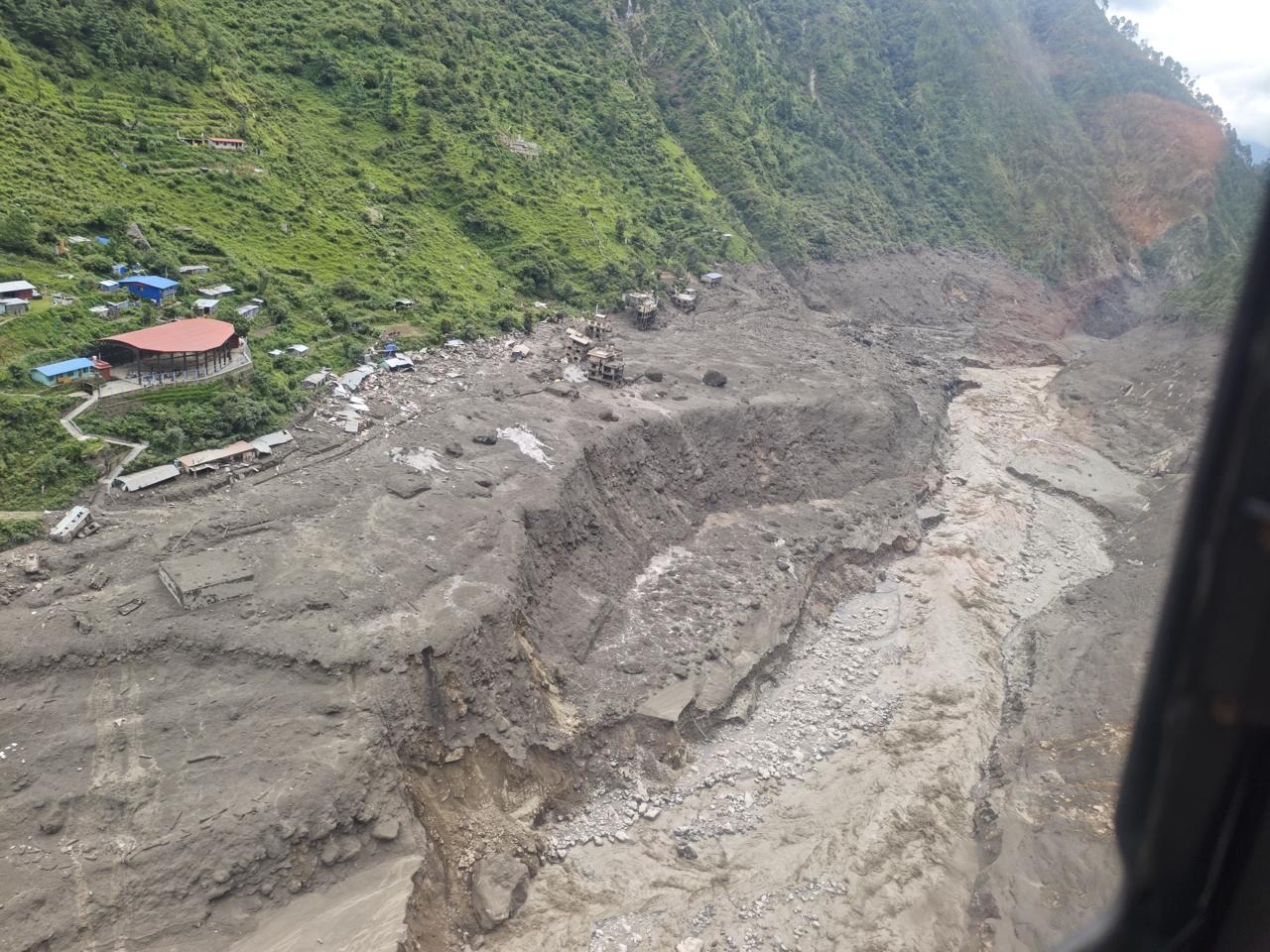
The Bhote Koshi flood of 2026 sent water, sediment, and boulders through the Bhote Koshi and Trishuli river systems. Image: Screenshot from video by Upendra Mansingh/Associated Press, published by ICIMOD.
Bhote Koshi Flood 2026 at a Glance
| Event detail | Verified information |
|---|---|
| Date | August 26, 2026 |
| Nepali date | Bhadra 10, 2083 |
| Approximate time | 8:40–9:00 AM |
| Central disaster area | Rasuwa District |
| Main river systems | Bhote Koshi and Trishuli |
| Other affected districts | Nuwakot, Dhading, Gorkha, and downstream areas |
| Suspected initial trigger | High-altitude ice-rock avalanche |
| Major impacts | Deaths, displacement, and damage to settlements, roads, bridges, hydropower sites, and trade infrastructure |
| Response | Search, rescue, relief, evacuation, and damage assessment |
| Status | Recovery and investigation continuing |
Figures concerning deaths, missing people, injuries, and rescues changed rapidly during the first week. Nepal Police reported that 951 bodies had been recovered by September 1, 2026. Earlier humanitarian updates recorded thousands of people missing, but identification and reconciliation were continuing.
These figures must not be treated as final. Some people initially listed as missing may later be rescued or located, while recovered victims may take time to identify. The Nepal Police latest-news section should be checked before updating statistics in this article.
Where Did the Bhote Koshi Flood Occur?
The Bhote Koshi Flood 2026 began in the high Himalayan border region north of Rasuwa. Preliminary scientific assessments indicate that a large volume of ice and rock may have entered Lhende Khola, a tributary connected to the Bhote Koshi river system.
The surge then traveled downstream through the Bhote Koshi and into the Trishuli River. This river connection allowed the Bhote Koshi Flood 2026 to affect places far beyond its suspected source.
Rasuwa: The Central Disaster Area
Rasuwa experienced some of the most immediate and severe destruction. Communities around the border corridor, including areas connected with Timure, Rasuwagadhi, and Syabrubesi, faced sudden flooding, debris deposition, and disrupted road access.
The Bhote Koshi Flood 2026 damaged homes, commercial facilities, border infrastructure, and projects constructed close to the river. The mountainous landscape complicated rescue work because damaged roads and bridges isolated several locations.
Rasuwa is also an important gateway between Nepal and China. Destruction along this corridor affected local residents, transport workers, traders, tourists, and employees at infrastructure and hydropower projects.
Nuwakot and the Trishuli Corridor
As the surge moved downstream, communities in Nuwakot faced a rapid rise in the Trishuli River. ICIMOD reported that the water level at Galchhi rose by as much as nine metres within approximately 30 minutes, while Malekhu recorded an increase of around seven metres in a similar period.
The speed of the Bhote Koshi Flood 2026 gave downstream communities very little time to respond. In one widely reported case, an urgent warning helped more than 900 students and school staff evacuate before their school was destroyed.
Dhading, Gorkha, and Downstream Areas
The Bhote Koshi Flood 2026 also affected riverbank areas in Dhading and Gorkha. Floodwater carried debris, damaged transport links, and increased the danger of landslides and bank erosion.
Bodies and debris were later recovered far downstream, demonstrating the extraordinary reach of the Bhote Koshi Flood 2026. This made search, recovery, and victim identification more difficult, requiring coordination among several districts.
People traveling through affected districts should review the latest Nepal travel safety information and verify road conditions through official authorities before departure.
What Caused the Bhote Koshi Flood 2026?
The exact sequence that produced the Bhote Koshi Flood 2026 remains under scientific investigation. Early evidence points toward an ice-rock avalanche in a high-altitude area rather than an ordinary monsoon flood.
ICIMOD reported that a substantial quantity of ice and rock may have entered Lhende Khola. The falling material could have displaced water, collected sediment, and created a powerful debris-filled surge.
Scientists are also examining whether the avalanche temporarily blocked the river. A temporary blockage can form a natural dam. When water builds behind such a barrier and suddenly escapes, it can produce a destructive downstream flood.
Was the Flood Caused by an Earthquake?
Initial reports associated the Bhote Koshi Flood 2026 with a seismic event recorded around the same time. However, the relationship between the seismic signal and the event required further analysis.
A large rock or ice collapse can itself generate ground vibrations detectable by seismic instruments. Therefore, the existence of a seismic signal does not automatically mean that an earthquake triggered the Bhote Koshi Flood 2026.
ICIMOD stated that no causal relationship between seismic activity and the Bhote Koshi Flood 2026 had been established during its preliminary assessment. Professional reporting should therefore avoid claiming that an earthquake caused the disaster unless later scientific findings confirm it.
Was It a Glacial Lake Outburst Flood?
The terms “glacier burst” and “glacial lake outburst flood” appeared in early discussions. However, these terms should not be used interchangeably.
A glacial lake outburst flood occurs when water stored in or near a glacier is released suddenly. An ice-rock avalanche involves the collapse and rapid movement of ice, snow, and rock. Either process may create a downstream flood, but the mechanisms are different.
Current evidence indicates that an ice-rock avalanche is the suspected trigger of the Bhote Koshi Flood 2026. Scientists are still examining satellite images, seismic records, hydrological data, and field evidence. It is therefore safer to describe the mechanism as preliminary rather than final.
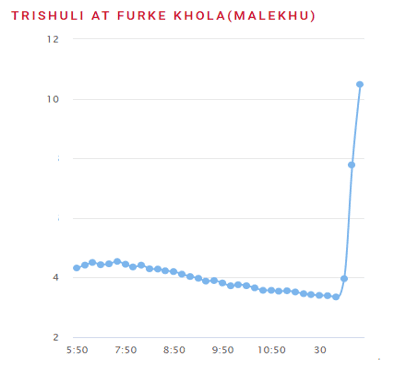
Hydrological data showing the rapid rise in the Trishuli River during the flood. Image source: Department of Hydrology and Meteorology via ICIMOD.
7 Shocking Facts About the Bhote Koshi Flood 2026
The Flood Struck With Exceptional Speed
The first shocking fact about the Bhote Koshi Flood 2026 was the speed at which the river rose. According to ICIMOD, some downstream monitoring locations recorded increases of seven to nine meters in approximately half an hour.
A flood traveling this quickly gives communities only minutes to make life-saving decisions. People may not have time to collect belongings, locate family members, or move livestock. Roads and bridges can become unusable before organized evacuation begins.
The Bhote Koshi Flood 2026 demonstrates why automatic gauges alone are not enough. Warning messages must move quickly from monitoring agencies to district officials, local governments, schools, hydropower sites, transport operators, and residents.
The Disaster Crossed Administrative and National Boundaries
The suspected source was located in a high-altitude transboundary area connected with Nepal and China. The Bhote Koshi Flood 2026 then travelled through several districts of Nepal.
This makes the Rasuwa Flood of 2026 a transboundary disaster rather than a purely local incident. Risk monitoring, weather information, satellite observations, and emergency warnings must be shared across national borders.
A hazard beginning upstream can reach Nepalese settlements before local institutions have enough time to independently confirm it. Nepal and China, therefore, need clear protocols for transmitting urgent information between scientific institutions, border authorities, and downstream communities.
Debris Made the Flood More Destructive
The Bhote Koshi Flood 2026 was not simply a large volume of clear water. It carried ice, mud, rock, sediment, trees, and structural debris. This mixture can behave more like moving concrete than a normal river flood.
Debris increases destructive force, blocks channels, and damages structures that might withstand ordinary high water. It can also bury roads, agricultural land, and buildings beneath thick sediment.
The Bhote Koshi Flood 2026 demonstrated how a cryosphere event can transform into a cascading debris disaster. The initial collapse may mobilize water, which then erodes riverbanks and collects more material as it moves downstream.
Hydropower Projects Became Major Rescue Sites
Several hydropower projects were located along the affected river corridor. Workers at construction sites, tunnels, and power facilities faced dangerous conditions when the Bhote Koshi Flood 2026 arrived.
Rescue efforts focused on projects including Upper Trishuli-1, Upper Trishuli-3A, Upper Trishuli-3B, Rasuwagadhi, and other facilities in the region. Some workers were rescued from difficult locations, while others remained missing.
The Bhote Koshi Flood 2026 raises urgent questions about emergency exits, worker-registration systems, tunnel safety, communication equipment, and evacuation procedures at Himalayan hydropower projects.
Hydropower remains important to Nepal’s economy and energy supply. However, projects in narrow river valleys must account for multiple hazards, including floods, landslides, debris flows, avalanches, and temporary river blockages.
Transport and Trade Connections Were Severely Disrupted
Rasuwa is strategically important because it connects Nepal with the Kerung–Rasuwagadhi border route. Flood damage affected roads, bridges, border facilities, cargo movement, and access to communities.
The disruption created consequences far beyond the immediate disaster zone. Traders faced delayed shipments, vehicles were stranded or damaged, and alternative border or road routes experienced additional pressure.
Reconstruction will require more than rebuilding individual sections of road. Authorities must study river behavior, slope stability, bridge design, and safe construction setbacks before restoring permanent infrastructure.
The Human Impact Extended Beyond the Death Toll
Death and missing-person figures communicate the scale of the Bhote Koshi Flood 2026, but they cannot fully describe the human consequences.
Survivors may have lost homes, family members, businesses, identification documents, and sources of income. Children have experienced displacement and interrupted education. People requiring regular medication or treatment may face difficulty reaching health facilities.
Families searching for missing relatives also experience prolonged uncertainty. When bodies are found far downstream or cannot be visually identified, forensic teams may need fingerprints, dental information, and DNA samples.
Mental-health and psychosocial support should therefore be treated as an essential part of recovery rather than an optional service.
The Event Exposed Major Early-Warning Gaps
Some communities received informal warnings from people upstream, and those calls saved lives. However, the Bhote Koshi Flood 2026 also exposed weaknesses in formal cross-border and downstream warning systems.
Monitoring equipment can be damaged by the very event it is designed to record. Communication networks may fail, and isolated communities may not receive digital alerts.
An effective warning system requires several overlapping channels:
- Automatic river and weather stations
- Satellite and seismic monitoring
- Direct communication between Nepal and China
- Sirens in vulnerable settlements
- Mobile alerts in local languages
- Trained community response groups
- Evacuation routes and marked safe zones
- Regular drills at schools and workplaces
- Backup radio and satellite communication
A warning becomes valuable only when people receive it, understand it, and know how to respond.
Human Loss, Missing People and Displacement
The human impact of the Bhote Koshi Flood 2026 is still being documented. Nepal Police reported 951 recovered bodies by September 1, while earlier humanitarian updates listed thousands of people as missing.
The numbers changed as rescue teams entered isolated areas, survivors contacted authorities, and victim-identification work progressed. Duplicate reports can also occur when different family members report the same missing person in multiple districts.
For this reason, reports should state:
- The date and time of the figure
- The authority that published it
- Whether the number refers to confirmed deaths or recovered bodies
- Whether unidentified victims are included
- Whether missing-person lists have been reconciled
It is irresponsible to publish casualty numbers without this context. Readers seeking current information should check official Nepal Police updates and government disaster bulletins.
Damage to Homes and Essential Services
The Bhote Koshi Flood 2026 caused extensive damage to homes, utilities, public facilities, and essential community services.
The Nepal Flash Flood of 2026 destroyed or damaged homes across affected riverbank communities. Some structures were swept away, while others became unsafe due to erosion, cracks, sediment, or unstable nearby slopes.
Drinking-water systems were also affected. Floodwater can contaminate springs, pipes, tanks, and wells with sediment, sewage, fuel, and chemicals. Even communities surrounded by water may face a shortage of safe drinking water.
Other damaged or disrupted services included:
- Electricity distribution
- Mobile and internet communication
- Schools
- Health posts
- Local markets
- Roads and bridges
- Public transport
- Irrigation channels
- Agricultural land
- Waste-management systems
Temporary shelters need safe water, toilets, lighting, menstrual-hygiene materials, child-friendly spaces, and protection services. Relief distribution must also reach older people, persons with disabilities, pregnant women, and remote households.
Rescue and Relief Operations
The response to the Bhote Koshi Flood 2026 required coordination among government agencies, security forces, medical teams, volunteers, and international partners.
Following the Bhote Koshi Flood 2026, Nepal deployed police, military personnel, armed police, medical teams, local authorities, and volunteers. Helicopters were used where damaged roads prevented ground access.
Search teams used drones, rescue dogs, and specialized equipment. International support also arrived or was pledged, including personnel and technical assistance from neighboring and partner countries.
By September 1, Reuters reported that approximately 11,000 people had been rescued, while difficult operations continued at isolated hydropower sites and damaged communities.
Nepal’s Home Ministry issued an official disaster relief appeal and requested support for authorized government relief funds.
People wishing to donate should verify account information on official government websites. Nepal Police has warned that criminals may exploit disasters through fake QR codes, bank accounts, social media pages, and relief appeals.
Never share an OTP, PIN, password, or complete banking information with anyone claiming to collect disaster assistance.
Economic Impact of the Bhote Koshi Flood 2026
The economic cost of the Bhote Koshi Flood 2026 will take months to calculate accurately. Initial estimates may change as engineers inspect roads, hydropower plants, bridges, buildings, and agricultural land.
Hydropower and Energy
Damage to hydropower construction sites and operational plants affects workers, investors, contractors, and Nepal’s electricity system. Repairing tunnels, access roads, transmission equipment, and river-control structures can require substantial time and investment.
The Bhote Koshi Flood 2026 also highlights the financial risk of concentrating critical infrastructure within narrow, hazard-prone corridors.
Cross-Border Trade
The Bhote Koshi Flood 2026 damaged areas around Rasuwagadhi and affected a major Nepal–China trade connection. Delays can increase transport expenses, disrupt supply chains, and affect government customs revenue.
Businesses dependent on imported goods may face additional costs if cargo must be redirected through alternative routes.
Tourism
The Bhote Koshi Flood 2026 affected a district containing important tourism areas, including routes connected with Langtang and the Nepal–China border. Dramatic flood reporting can create the false impression that every destination in Nepal is affected.
Visitors should not make decisions based on viral videos alone. They should check the current trekking conditions in Nepal and obtain destination-specific guidance before changing a trip.
Local Livelihoods
Residents may lose shops, vehicles, farms, livestock, tourism businesses, and wage employment. Compensation for buildings alone will not restore these livelihoods.
Recovery programs should include grants, affordable credit, replacement tools, agricultural support, document recovery, and employment in reconstruction.
Did Climate Change Cause the Bhote Koshi Flood?
Scientific analysis of the Bhote Koshi Flood 2026 must distinguish confirmed evidence from broader concerns about climate-related Himalayan hazards.
Scientists have warned that climate change is affecting glaciers, snow conditions, permafrost, and mountain slopes across the Hindu Kush Himalaya. Warmer temperatures can influence glacier retreat, snowmelt, and slope stability.
However, ICIMOD cautioned that it was too early to determine the precise role of climate change in the Bhote Koshi Flood 2026. A responsible article should not present a direct climate attribution as a confirmed fact before detailed scientific analysis is completed.
The correct conclusion is more careful: climate change is increasing concern about cryosphere instability and cascading hazards across the Himalayas, while the contribution of climate change to this specific event remains under investigation.
The distinction matters because credible environmental reporting must separate broader scientific trends from the confirmed cause of one disaster.
Is It Safe to Travel in Nepal After the Flood?
The Bhote Koshi Flood 2026 affected a specific river corridor and connected downstream areas. It did not affect every destination in Nepal.
Travel conditions vary by location. Roads in Rasuwa, Nuwakot, and Dhading may be closed, restricted, or diverted. Other destinations may remain open and safe, but monsoon weather can still cause local floods and landslides.
Before traveling:
- Check official road updates
- Review weather and flood bulletins
- Contact local authorities or a registered travel operator
- Avoid riverbanks and unstable slopes
- Do not enter restricted rescue areas
- Carry emergency contacts
- Keep additional food, water and medicine
- Inform someone about your route
- Follow evacuation instructions immediately
The Department of Hydrology and Meteorology provides official weather and flood information. Its toll-free number 1155 provides weather and flood early-warning services.
Travelers can also read a detailed monsoon travel guide for Nepal before planning road journeys during unstable weather.
Lessons From the Bhote Koshi Flood 2026
Strengthen Cross-Border Early Warning
Upstream hazards do not respect national boundaries. Nepal and China need a permanent system for sharing satellite observations, river data, seismic signals, and emergency warnings.
Messages must move from national institutions to vulnerable settlements within minutes.
Map Cascading Hazards
Planning cannot examine floods, glaciers, landslides, and earthquakes separately. One event may trigger another, producing a chain of hazards.
Risk maps should show potential avalanche sources, temporary river-blockage locations, flood paths, debris-deposition zones, and exposed infrastructure.
Reassess Infrastructure Locations
Hydropower plants, schools, settlements, roads, and border facilities should be evaluated against updated hazard maps. Reconstruction in the same exposed location can reproduce the same disaster risk.
“Build back better” must mean safer design and safer location, not simply faster reconstruction.
Create Community Evacuation Plans
Every exposed school, workplace, and settlement needs a practical evacuation plan. Residents should know:
- Which alarm means immediate evacuation
- Where the nearest safe location is
- Which route avoids bridges and riverbanks
- Who assists children, older people and persons with disabilities
- Where families reunite after evacuation
- Who communicates with district authorities
Protect Monitoring and Communication Systems
River gauges and communication towers can fail during extreme events. Backup systems are essential.
Nepal needs resilient stations, satellite communication, local sirens, radio networks, and trained residents capable of spreading warnings when digital systems stop working.
How Communities Can Prepare for Future Flash Floods
The Bhote Koshi Flood 2026 shows that people living downstream may have only a short time to react. Preparation must happen before warning signs appear.
Households in exposed areas should prepare an emergency bag containing:
- Drinking water
- Dry food
- First-aid supplies
- Necessary medicines
- Flashlight and batteries
- Power bank
- Warm clothing
- Copies of identification documents
- Cash in small denominations
- Whistle
- Radio
- Emergency contact list
Residents should never approach a swollen river to film videos. Sudden surges can arrive without warning, and riverbanks may collapse under a person’s weight.
If the river rises rapidly, changes color, produces unusual noise, or carries large amounts of debris, move immediately toward higher ground. Do not wait for confirmation if clear danger signs are present.
For additional preparation advice, read the flood safety guide for Nepal.
Frequently Asked Questions
When did the Bhote Koshi Flood 2026 occur?
The Bhote Koshi Flood 2026 occurred on August 26, 2026, corresponding to Bhadra 10, 2083. Nepal’s Ministry of Home Affairs reported that the major surge struck at approximately 8:40 AM.
Where did the Bhote Koshi Flood 2026 occur?
The Bhote Koshi Flood 2026 was centered in Rasuwa District near the Nepal–China border. It traveled through the Bhote Koshi and Trishuli river systems and affected downstream areas in Nuwakot, Dhading, Gorkha, and other districts.
What caused the Bhote Koshi Flood 2026?
Preliminary evidence indicates that a high-altitude ice-rock avalanche entered Lhende Khola and produced a large debris-filled surge. Scientists are still examining whether temporary river blockage and sudden release increased the Bhote Koshi Flood 2026’s magnitude.
Was the Bhote Koshi Flood 2026 caused by an earthquake?
A seismic signal was recorded around the time of the Bhote Koshi Flood 2026, but this does not prove that an earthquake triggered it. A large ice-rock collapse can itself generate seismic vibrations. The relationship remains under scientific investigation.
Was it a glacial lake outburst flood?
It has not been conclusively identified as a glacial lake outburst flood. Current scientific reporting describes an ice-rock avalanche as the suspected trigger, but the complete mechanism remains under investigation.
How many people died in the Bhote Koshi Flood 2026?
Nepal Police reported that 951 bodies had been recovered by September 1, 2026. Identification and missing-person reconciliation were continuing, so this figure should be updated whenever new official information becomes available.
Which districts were affected?
Rasuwa was the main disaster area. Riverbank communities in Nuwakot, Dhading, and Gorkha were also severely affected, while debris and victims were recovered farther downstream.
Were hydropower projects damaged?
Yes. Several hydropower projects along the Bhote Koshi and Trishuli corridor were damaged or became major rescue sites. Workers were rescued from some locations, while searches continued at others.
Is Rasuwa safe to visit now?
Travel conditions remain location-specific and may change quickly. Some roads, bridges, and settlements have been damaged or restricted. Visitors should contact local authorities and review official weather, flood, and road updates before traveling.
Is the rest of Nepal safe for tourists?
The Bhote Koshi Flood 2026 did not affect every destination in Nepal. However, travelers should check the current situation for their exact route because monsoon rain can cause local landslides, road closures, and flooding.
How can people help flood survivors?
Donate only through verified government funds, recognized humanitarian organizations, or transparent local initiatives. Avoid unverified QR codes, personal accounts, and social media appeals.
Could a similar flood happen again?
Additional flash floods remain possible in glacier-fed and landslide-prone Himalayan valleys. Monitoring, cross-border warnings, safer infrastructure, and community evacuation planning can reduce future loss of life.
Conclusion
The Bhote Koshi Flood 2026 remains an important case study in Himalayan disaster risk, emergency response, and long-term resilience.
The Bhote Koshi Flood 2026 was not an ordinary seasonal flood. It was a fast-moving, debris-filled Himalayan disaster that traveled through connected river systems and affected communities far downstream from its suspected source.
The Bhote Koshi Flood 2026 caused extensive human suffering, destroyed infrastructure, disrupted hydropower and trade, and exposed major weaknesses in early-warning and evacuation systems. It also demonstrated how an ice-rock avalanche, temporary river blockage, and downstream debris movement can combine into a cascading disaster.
Scientific investigation must continue before the exact cause and climate connection are presented as final. At the same time, Nepal cannot wait for another emergency before improving monitoring, communication, construction standards, and cross-border cooperation.
The most important lesson from the Bhote Koshi Flood 2026 is that early information must become early action. Accurate warnings, prepared communities, and safer infrastructure can determine whether a Himalayan hazard becomes another national tragedy.

Table of Contents
- Bhote Koshi Flood 2026 at a Glance
- Where Did the Bhote Koshi Flood Occur?
- What Caused the Bhote Koshi Flood 2026?
- 7 Shocking Facts About the Bhote Koshi Flood 2026
- Human Loss, Missing People and Displacement
- Damage to Homes and Essential Services
- Rescue and Relief Operations
- Economic Impact of the Bhote Koshi Flood 2026
- Did Climate Change Cause the Bhote Koshi Flood?
- Is It Safe to Travel in Nepal After the Flood?
- Lessons From the Bhote Koshi Flood 2026
- How Communities Can Prepare for Future Flash Floods
- Frequently Asked Questions
- Conclusion

Need Help?
Ask to Travel Expert