
- Mt. Kailash Tour
- Kailash Mansarovar Overland Tour
- Kailash Mansarovar Yatra by Helicopter – Complete Spiritual Journey Guide
- Kailash Yatra via Lucknow
- Kailash Mansarovar Tour via Lhasa
- Kailash Lhasa EBC Tour From Beijing
- Kailash Heli Tour via Kerung: Complete Spiritual Journey Guide
- Kailash Tour via Lhasa In Kerung Out
- Lhasa EBC Kailash Tour
- Kailash Heli Tour
- Kailash Mansarovar Yatra from Nepal 2027: Cost & Itinerary
- Kailash Nandi Kora
- Kailash Tour via Humla Simikot – 20 Days
- Mount Kailash Tour: 7 Amazing Experiences in 2027
- Trekking
-
-
- Everest Region
- Luxury Everest Base Camp Trek: 7 Unforgettable Highlights
- Everest Base Camp Trek 2026: Cost, Route, and Complete Guide
- Everest Three Passes Trek 2027: Cost, Route & Itinerary
- Everest Base Camp Short Trek
- Everest Panorama Trek: Amazing 10-Day Cost & Itinerary
- Everest Base Camp Island Peak Trek: Complete 19-Day Guide
- Gokyo Valley Trekking 2027: Easy Guide to Cost & Itinerary
- Mera Peak Climbing 2027: Complete Cost & Itinerary Guide
- Rolwaling Valley Trek: 23-Day Itinerary, Cost, Permits & Difficulty
- Dolpo Region Trek
- Everest Region
-
- Annapurna Region
- Annapurna Base Camp Trekking
- Annapurna Circuit Trek
- Annapurna Base Camp Trek: 7 Amazing Cost & Route Tips
- Mardi Himal Trek: 7 Amazing Highlights & Complete Guide
- Annapurna Alternative Combine Trek: 18 Amazing Days
- Mohare Dada Trek
- Ghorepani Poon Hill Trek: 7 Unforgettable Highlights
- Khopra Ridge Community Trek: 13-Day Ultimate Adventure
- Damodar Kunda Trek: 10-Day Ultimate Sacred Adventure
- Upper Mustang Trek: 10 Amazing Sights : Ultimate Guide
- Jomsom Muktinath Trek: Amazing 12-Day Ultimate Guide
- Ghale Gaun Trek: 7 Amazing Reasons : Ultimate Guide
- Dhampus Sarangkot Trek: 7 Incredible Experiences
- Dhaulagiri Region
- Annapurna Region
-
-
- Tours
-
-
- Day Tours
- Rickshaw–a three-wheeler Tour
- Pharping Dakshinkali Day Tour: 7 Amazing Highlights
- Historical Tour: 7 Amazing Places to Explore
- Kathmandu Temple Tour: 7 Amazing Spiritual Places
- Nagarkot Tour
- Bhaktapur City Tour: 7 Amazing Places to Explore
- Kathmandu City Tour – Complete Heritage & Cultural Experience in Nepal
- Chandragiri Hill: A Scenic Himalayan Escape Near Kathmandu
- Chitlang Hiking
- Shivapuri to Sundarijal Day Hiking
- Kulekhani Dam Day Tour — Complete Travel Guide
- Day Tours
-
- Package Tours
- Mustang Tour on Jeep
- Nepal Tour Package for Nepali: 12 Amazing Destinations to Explore (2026)
- Muktinath Tour: Complete Guide to Nepal’s Sacred Himalayan Pilgrimage
- 3N,4D Kathmandu Pilgrimage Tour
- Nepal Buddhist Pilgrimage Tour: 7 Sacred Sites Not to Miss
- 6D Nepal Pilgrimage Tour: 7 Amazing Sacred Places
- 7 Nights, 8 Days Nepal Tour
- Districts tour of Nepal
- Janakpur Tour Package: Price, Family Tour & Travel Guide from Kathmandu 2026
- Short Hike in Nepal: 7 Best Easy Treks for Beginners
- Package Tours
-
-
- Outbound
-
- Activities
- Climbing
- Bungee Jumping in Nepal
- Heli Skiing Adventure in the Himalayas
- Canoeing in Nepal
- Mountain Flight in Nepal
- Zip Flyer in Pokhara: The Ultimate Adventure Experience
- Paragliding in Pokhara: 7 Amazing Reasons to Experience Nepal’s Best Adventure
- Kathmandu Cycling Tour: 9 Amazing Adventures
- Rafting
- Rock Climbing
- Company
- Travel Info
- Travel Insurance
- Recommended Medical Kit
- Nepal Visa Information
- Flight delays and cancellation in Nepal
- Electricity in Nepal: Rates, Bill Check, Calculator and NEA Services
- Trekking Equipment Checklist: 40 Essential Items
- Best Kailash season in Tibet
- Best Trekking season in Nepal
- Trekking in Nepal 2027: 15 Best Himalayan Adventures
- Blogs
- Contact


WhatsApp
+977-9851035239

Email Us
[email protected]
A spiritual sojourn to Kailash Mansarovar
06 October 2019
By Leaf Holidays
A Spiritual Sojourn to Kailash Mansarovar
Considered to be the center of the Universe, and revered by people all over the globe, Mt. Kailash and Mansarovar region in Tibet is truly a bliss! It is widely said that only those who have the purest of hearts can make it to this almost impossible terrain. Learn more about this once-in-a-lifetime Kailash Mansarovar trip in our blog.
The adverse weather status and treacherous pathways also compound to make it a less visited place, and tourism hasn’t hit hard yet. It’s no wonder that only a few thousand people can make this Mount Kailash journey. One who reaches there is among those fortunate few.
A spiritual Kailash trip also widely known as the Kailash pilgrimage tour is one of the most famous pilgrimage experiences in Tibet, offering staggering Himalayan vistas including of holy Mt. Kailash and the other giant hills lying around the area. Sarovar indicates “the holy pond” in the Nepali language, hence the name Mansarovar.
Along with this, the sojourn also offers the bewitching appearance of the holy Mansarovar Lake, astounding landscapes, lush valleys, trails, ancient monasteries, and Tibetan cultures. Choosing a thoughtfully curated Kailash tour package is the perfect way to traverse the hidden treasures of the Tibetan plateau.
As hikers, trekkers, and pilgrims have to walk from low to high altitude gradually, we can reach there without high altitude sickness complexities.
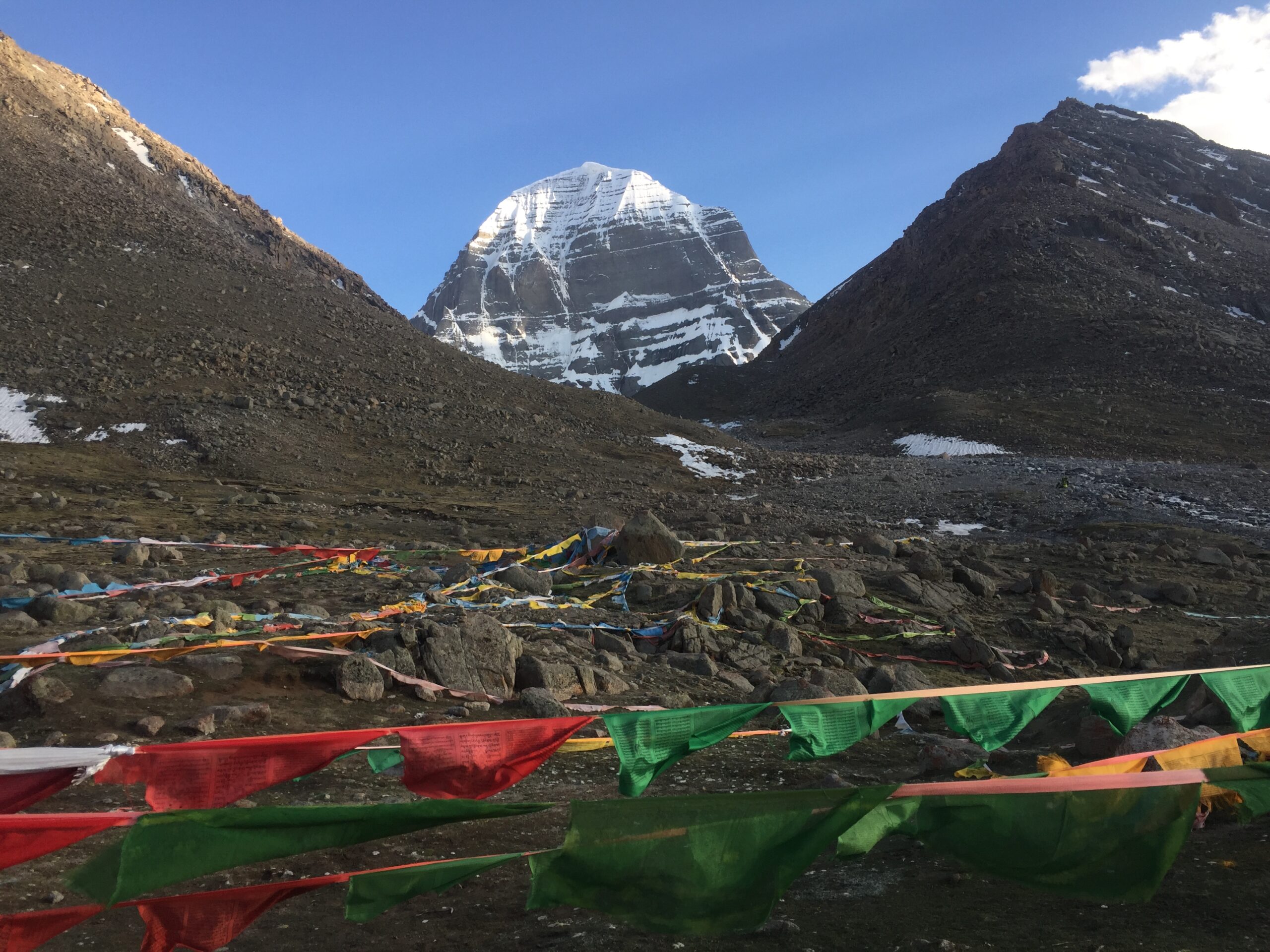
About Mt. Kailash – The Center of the Universe
Mt. Kailash is regarded to be the physical embodiment of the mythological Mt. Meru, which is believed to be the holiest mountain in the world. Its snow-dusted rock pyramid is situated in the scenically rich region of western Tibet. Mt. Kailash an abode of the divine is also assumed as the most auspicious place to undertake a religious Kailash Mansarovar Yatra, performing the sacred Kora circumambulation around the mountain.
Indeed, the entire region holds immense religious significance and encompasses two turquoise-blue, unspoiled high-altitude freshwater lakes Mansarovar and Rakshas Tal.
Did you know? Mt. Kailash is revered not just by Hindus but by followers of seven religions. For Hindus, it is the abode of Shiva, while nearby Mansarovar Lake represents Brahma’s soul. Tibetans call it Kang Rimpoche; Jains venerate it as Mt. Ashtapada; and followers of Bon-Po, the ancient pre-Buddhist shamanistic religion of Tibet, refer to it as the soul of Tibet. The best time to undertake a Kailash Mansarovar tour is during May, June, July, and August, when pilgrims flock to this sacred region.
A spiritual sojourn to Kailash Mansarovar is recommended to all of us as it is a once-in-lifetime experience for real.
Towering with a dignified presence, Mt Kailash resides at 6,638m [22,000 ft.] According to Hindu beliefs, it is the abode of Shiva and his wife Goddess Parvati. It is part of the Trans-Himalayan belt in Tibet.
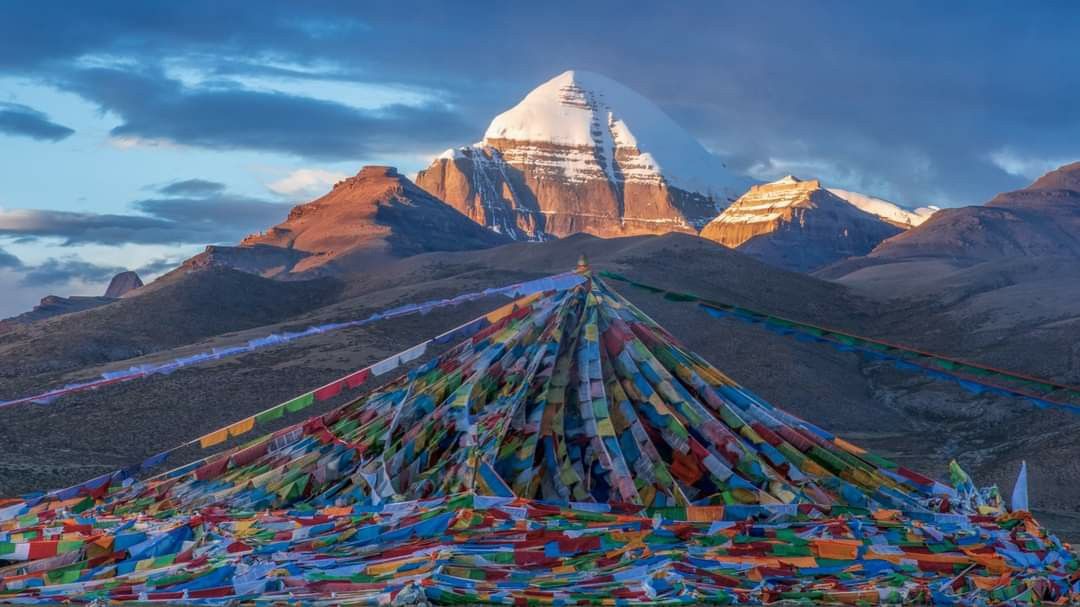
Resembling its shape with a cone of pure white snow, Mt. Kailash has the distinct appearance of being one of the world’s most venerated holy places. As we mentioned already, Mount Kailash is also a portrait of the mythical Mount Meru, which many religions contemplate to be the cosmic mountain positioned at the exact center of the universe.
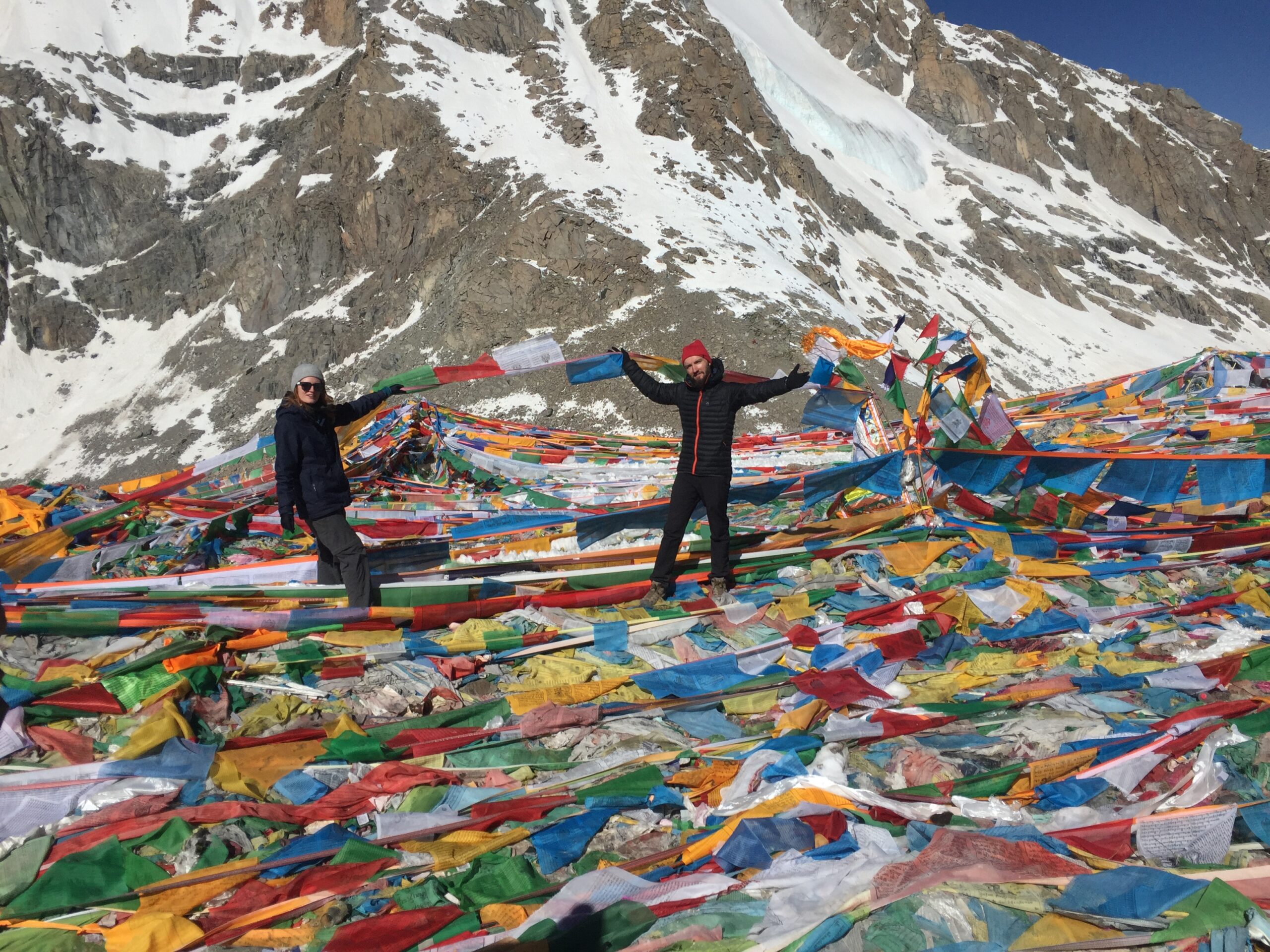
On reaching there, all pilgrims complete a circumambulation (Kora or Parikrama) of approximately 53 km around the mountain, which usually takes about three days. Enlightenment is said to be guaranteed especially to those devoted souls who complete the circuit 108 times.
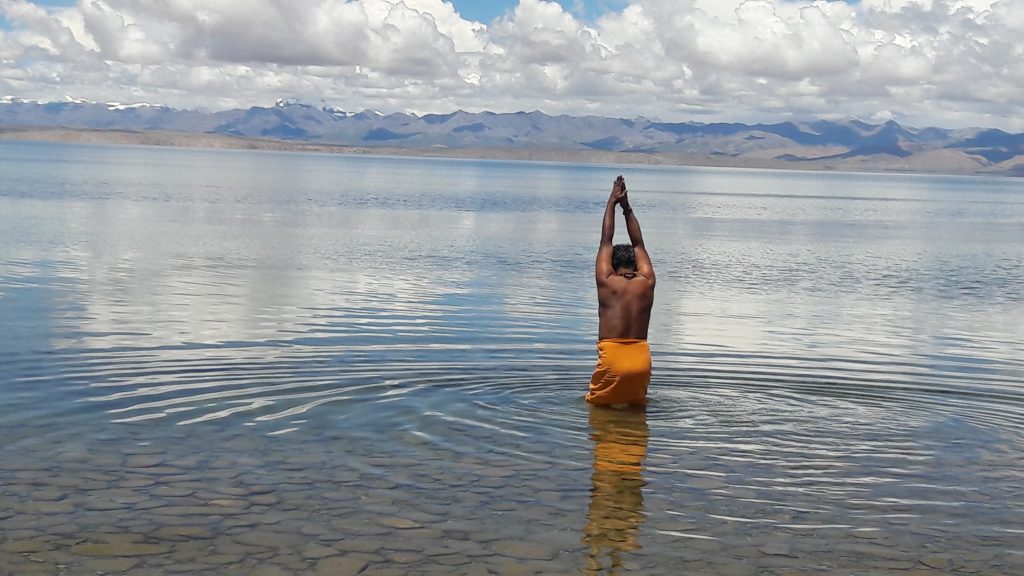
At the base of this giant mountain lies Mansarovar (‘the lake of consciousness and enlightenment’: 4,500m), a beautiful cobalt-blue lake. According to legend, a dip into its icy waters is considered essential for most pilgrims. Nearby lies the Rakshas Tal, or Lake of Demons.
The Toughest Pilgrimage | Mt. Kailash Mansarovar
A spiritual sojourn to Kailash Mansarovar is widely regarded as the toughest pilgrimage in the entire world. Situated about 20 km from Mt. Kailash, Lake Mansarovar holds major significance in mythology and acts as the origin of four great rivers the Indus, Sutlej, Brahmaputra, and Karnali. The Kailash Mansarovar Yatra is renowned for its cultural significance, religious value, spiritual awakening, physical grandeur, and thrilling nature.
How do I get there?
There are several exciting routes to undertake this Mount Kailash journey. One popular route leads through Xigatse via Saga to Mansarovar traveling from Kathmandu westward to Mansarovar’s eastern shore, a four to five-day journey. You’ll arrive at the tiny settlement of Darchen (14,000 ft.), the traditional starting point of the Kailash Parikrama.
Alternatively, you can travel on a 6-day drive from Xigatse to Ali and on to Darchen, from Kashgar through Ali, or from Nepal’s Simikot via Purang. The Simikot route (in the far northwestern district of Humla) proceeds to Hilsa on the western border, then into Tibet and to Taklakot in the Purang Valley. From Nepalgunj, you fly to Simikot, then trek along the Karnali River to the Tibetan border, crossing Nara-La pass before reaching Hilsa. A four-wheel drive then takes you through the Dolma-La pass (18,417 ft.) to Mt. Kailash and Mansarovar.
To reach Simikot, we need to get to Nepalgunj in western Nepal first (by air or by road) from where we can use the airways to Simikot. From there, the trekking trail follows the grumbling Karnali River right up to Tibet’s border. Next, we cross the Nara-la pass from where the trail drops exponentially down to the border town of Hilsa in Tibet. And then, there is no option except to take a ride on a four-wheeler to Purang through the Dolma-La pass (18,417 ft.) on the way, so that we can reach Mount Kailash and Mansarovar.
Itinerary | Kailash Tour Package
Our carefully designed Kailash tour package follows this itinerary:
- Day 01: Arrive in Kathmandu (1,300 m)
- Day 02: Half-day sightseeing in Kathmandu — the City of Temples
- Day 03: Drive from Kathmandu to Syabrubesi
- Day 04: Drive from Syabrubesi to Kerung
- Day 05: Kerung – Saga (4,400 m)
- Day 06: Saga – Mansarovar (4,558 m)
- Day 07: Mansarovar – Darchen (4,575 m)
- Day 08: Darchen – Yamadwar (7 km drive / 13 km walk) – Dirapuk (4,909 m)
- Day 09: Trek to Zuthulphuk (4,760 m) via East Face Kuberkunda Pass (5,700 m)
- Day 10: Zuthulphuk – Darchen – Mansarovar – Saga (end of Kailash Parikrama)
- Day 11: Drive from Saga to Syabrubesi via Kerung
- Day 12: Drive back to Kathmandu
- Day 13: Final Departure
A spiritual sojourn to Kailash Mansarovar: beyond our words and imagination
Having seen the place only in pictures, any soul will be left in awe to behold its captivating beauty in person. The geographical structure around the mountain is rugged and dry but embellished by crystalline blue streams and pristine water bodies a contrast as beautifully blended as an artist’s canvas.
Mansarovar, the emerald-hued lake, is one of the highest freshwater lakes in the world. Around ninety kilometers in circumference, its crystal-clear reflections of surrounding snow-capped peaks, sun, and sky make it an epitome of purity and tranquility. A Parikrama of the lake is believed to purge all evils from the inner soul. Pilgrims bow in reverence as they touch the holy water, drink from it, and take a dip in a humble attempt to cleanse all sins.
A ‘Parikrama’ of the lake is believed to kick out all evils and sins from the inner soul and body. Generally, pilgrims bow down in respect and reverence as they touch the holy water. Also, one can drink the pure and sweet water and take a dip in the lake in a humble attempt to cleanse all sins. It is urged to all the pilgrims (trekkers) to take utmost care neither to use any chemical (even soap) nor pollute the water in any way.
Why is Kailash Mansarovar taken as literally “heaven on Earth”?
In several religions, Kailash Mansarovar named after Mt. Kailash (6,636 m) and Lake Mansarovar, the “Gem of Tibet” is considered the haven of Lord Shiva and other ethereal beings. The shores of Mansarovar are graced by ancient monasteries, most notably the Chiu Monastery, built dramatically on a steep hillock as if carved from living rock. Nearby, Rakshastal the Lake of Demons sits in striking contrast to the sacred Mansarovar, creating a fascinating juxtaposition of the divine and the fallen.
More Exciting Attractions | Kailash and Mansarovar area
As Mt. Kailash is an abode of Shiva, the lake is supposed to be the abode of summer birds called ‘Hansa’ which represents wisdom and beauty. Surrounded by a few monasteries on its shores, the Lake presents the most notable ancient Chiu Monastery built on a steep hillock, which looks as if it has been carved right out of the rock. Yeah! It seems to be emerging outright. The gateway to ancient civilization with placid beauty.
Another, lake during our journey is the lake, Rakshastal, which is considered to be the place of severe atonement by ‘Ravana’, which is around two miles away from Mansarovar. Not only that, sometimes it seems juxtaposed, to witness the concurrence of two contrasting ponds at the same place; one being held in high consideration and revered while the other considered the lake of fallen angels and denounced by the locals.
The amalgamating spirit
No matter which religion, the visitors believe in, the noteworthy point is the dedication and human zeal which unifies people representing different castes and age groups while visiting this region. Visitors are drawn to the simplicity of life and find satisfaction in the toughest terrain, trek, and climate during the ‘The Spiritual Journey’. After the trip, one will find them different not only in terms of physical sense but also spiritual tone, it matters a lot.
Farewell to materialism
Unlike many religious destinations, Mt. Kailash Mansarovar has no elaborate temples, loud rituals, or donation boxes. The heavenly place engages the mind, captures the nerves, and frees the soul to find the divine beyond any temple walls.
Conclusion
On a concluding note, a spiritual sojourn to Kailash Mansarovar is a life-changing experience for most of the pilgrims who undertake it each year, providing them with a sense of self like nothing else can. A pilgrimage to this serene timeless, breathtaking, and fascinating spiritual spot is like a sojourn within him/her (self).
The Leaf Holidays offers you a once-in-a-lifetime opportunity to embark on a spiritual sojourn to Kailash Mansarovar . All our fellow holidaymakers will unanimously agree that they all returned from this trip completely enlightened. The magical and mystical spot has been drawing people to its divine appearance for several reasons. That is why you should not miss the chance to be a part of the Kailash Mansarovar awakening.
FAQs About Kailash Mansarovar Yatra
Is Kailash Mansarovar Yatra difficult?
Yes, the Kailash Mansarovar Yatra is physically challenging due to high altitude, long travel days, and difficult terrain. Proper fitness and acclimatization are important.
What is the best time for Kailash Mansarovar tour?
The best time for the Kailash Mansarovar tour is from May to September when the weather is clearer and more suitable for travel.
How many days does the Kailash Yatra take?
Most Kailash Mansarovar Yatra packages take around 12 to 14 days depending on the route and itinerary.
Do I need permits for Mount Kailash journey?
Yes, travelers need special Tibet travel permits and a Chinese visa for the Mount Kailash journey.
Can beginners join the Kailash pilgrimage tour?
Yes, beginners can join the Kailash pilgrimage tour if they are physically fit and mentally prepared for high-altitude travel.


Need Help?
Ask to Travel Expert