
- Mt. Kailash Tour
- Kailash Mansarovar Overland Tour
- Mount Kailash Yatra By Helicopter
- Kailash Yatra via Lucknow
- Kailash Mansarovar Tour via Lhasa
- Kailash Lhasa EBC Tour From Beijing
- Kailash Heli tour via Kerung
- Kailash Tour via Lhasa In Kerung Out
- Lhasa EBC Kailash Tour
- Kailash Heli Tour
- Kailash Mansarovar Yatra
- Kailash Nandi Kora
- Kailash Tour via Humla Simikot – 20 Days
- Mount Kailash Tour : Best Package and Cost for 2025
- Trekking
- Tours
- Outbound
- Activities
- Company
- Travel Info
- Blogs
- Contact


WhatsApp +977-9851035239

Email Us [email protected]
Mount Kailash Inner Kora and Outer Kora
15 February 2026 By Leaf Holidays
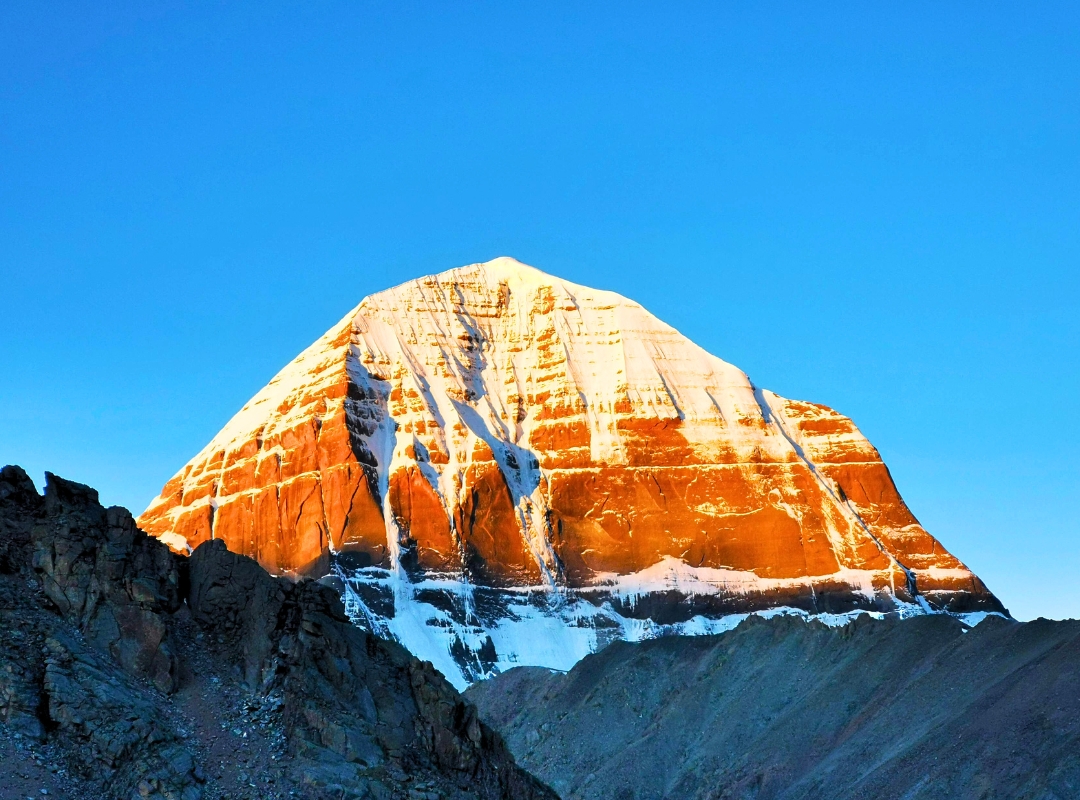
Mount Kailash is more than just a mountain in the Himalayan range. It is religion, spirituality, hope, and faith for millions of humans around the world. The Mount Kailash Inner Kora and Outer Kora are the most significant pilgrimages for Hindus, Buddhists, Jains, and Bon followers.
If you have decided to embark on the Kailash Yatra, you must read this Mount Kailash Inner Kora and Outer Kora blog. The blog explains the Kailash Inner Kora and Outer Kora in detail.
You will learn all the key places you will visit during the Mount Kailash Inner Kora and Outer Kora, their duration, distance, and fitness requirements. Along with that, short yet helpful information about how many Kailash Koras you should do.
Check out Kailash Mansarovar Yatra blog for updated information for 2026 dpearture.
What is Kailash Outer Kora?
The Kailash Outer Kora (parikrama) is three days of circumambulation around Mount Kailash. The Outer Kora forms a complete circle around Mount Kailash.
Pilgrims believe that the Kailash Outer Kora cleanses the sins of a lifetime, breaks the karmic cycle, brings spiritual rebirth, and allows them to form a deeper creation with Lord Shiva and the Universe.
Most pilgrims do the Outer Kora of Mount Kailash during their Kailash Yatra. It doesn’t involve technical sections or require a special permit.
Interesting fact: As per the ancient belief
➜ 1 Kailash Outer Kora equals one lifetime of purification.
➜ 13 Kailash Outer Kora leads to enlightenment.
➜ 108 Kailash Outer Kora leads to complete liberation (Moksha).
Kailash Outer Kora distance:
The Kailash Outer Kora distance is 52 kilometers. Devotees walk this distance in three days.
Kailash Outer Kora route:
Day 1: Drive from Darchen to Yam Dwar (6 km) and hike to Dirapuk
Day 2: Hike from Dirapuk to Dolma La Pass and descend to Zuthulpuk
Day 3: Descend from Zuthulpuk to Zongdui (ending point of Kailash Kora)
Kailash Outer Kora itinerary in detail:
Below, we have explained each day of the Kailash Outer Kora in detail:
Day 1: Drive from Darchen to Yam Dwar (6 km) and hike to Dirapuk
Distance: 17 km/10.5 miles
Altitude: 5,210 m/17,093 ft
Duration: 7-8 hours
Accommodation: Guesthouse
Yam Dwar (located in Tarboche) is the starting point of the Kailash Kora. From Darchen, Yam Dwar is located 6 km away. You will travel a distance in your vehicle. From Yam Dwar, you begin the Kailash Kora.
The trail follows the Lha Chu Valley northwards and ascends to the Dirapuk Monastery. On the way, you will witness stunning views of the north face of Mt. Kailash, Nandi Parvat, and Mt. Arawat.
We take a break for refreshments and enjoy a picnic lunch about halfway along the trail. Then, continue walking, enjoying the views of horses, blue sheep, and yaks grazing peacefully.
As you are walking above 4,500 meters, the weather will be cold and windy. So, dress up properly. Devotees who find walking at this elevation extremely challenging can hire a horse with a horseman.
Day 2: Hike from Dirapuk to Dolma La Pass (5,630 m/18,471 ft) and descend to Zuthulpuk
Distance: 22 km/13.6 miles
Altitude: 4,760 m/15,616 ft
Duration: 7-8 hours
Accommodation: Guesthouse
Begin the day early with a steep climb from Dirapuk. You will pass by Shivasthal (Jarok Donkhang) on the way. The trail offers a mesmerizing view of the eastern face of Mt. Kailash.
The top of the pass is marked with hundreds of prayer flags. Here, you can do a puja. You can see pilgrims following the Bon religion crossing the pass in an anti-clockwise direction.
Then descend from the pass to Zuthupuk following a long, rocky terrain that goes down to a valley. You can see Gauri Kunda while descending. Explore the Zuthulpuk Monastery, also known as Miracle Cave.
Hiking from Dirpauk to Dolama La Pass is challenging due to the thin air and low oxygen levels. You must maintain your pace and stay hydrated.
Day 3: Descend from Zuthulpuk to Zongdui (ending point of Kailash Kora)
Distance: 12 km/7.4 miles
Altitude: 4,670 m/15,321 ft
Duration: 5 hours
On the last day of the Kailash Kora, you will descend from Zuthulpuk to Zongdui. The terrain is not as steep as it was over the last two days. You will follow a river valley as you descend to Zongdui. From Zongdui, pilgrims usually drive to Saga the same day.
Places you will visit during the Kailash Outer Kora
While doing the Outer Kora of Mount Kailash, you will come across these places:
Yam Dwar (or Yama Dwar) – The gate of the God of Death
- Yam Dwar is the starting point of the Kailash Outer Kora.
- Yama or Yam is the god of death in Hindu mythology.
- As per Hindu mythology, Yam Dwar is considered the gateway of heaven, and Yam guards the gate.
- Many believe that passing through the Yam Dwar means you are leaving behind worldly sins and beginning a journey of spiritual purification and rebirth.
Dirapuk Monastery –
- Dirapuk Monastery is the first place where you spend the night after starting the Kailash Kora.
- It is situated at the northern base of Mount Kailash near the Lha-Chu river. So, from here you will see the closest view of the north face of Mount Kailash.
- The Dirapuk Monastery is built around the retreat cave of the yogi Gotsangpa. He is believed to have discovered the way around Mount Kailash.
Dolma La Pass – The highest point you reach on Mount Kailash
- Dolma La Pass is the highest point of the Kailash Yatra. Crossing this pass is also the most challenging part of the Kailash Kora.
- The trail is steep and rocky, and pilgrims also have to deal with high altitude, strong winds, and cold.
- The top of the pass is marked with colorful prayer flags and stupas.
- Gauri Kund, a sacred lake, is situated just below the Dolmal Pass. This lake is associated with the goddess Parvati in the Hindu religion.
Zuthulpuk Monastery – The Miracle Cave
- From Dolma La Pass, you descend to Zuthulpuk to spend the night.
- Zuthulpuk Monastery is located on the east side of Mount Kailash.
- It was built in the 13th century, but the present-day structure is from 1983.
- In the center of the monastery, there is a meditation cave that is associated with Milarepa.
- Milarepa brought Buddhism, and Naro Bonchung carried the Bon religion to Kailash. It is believed that they together built the Zuthulpuk Monastery.
What is Kailash Inner Kora?
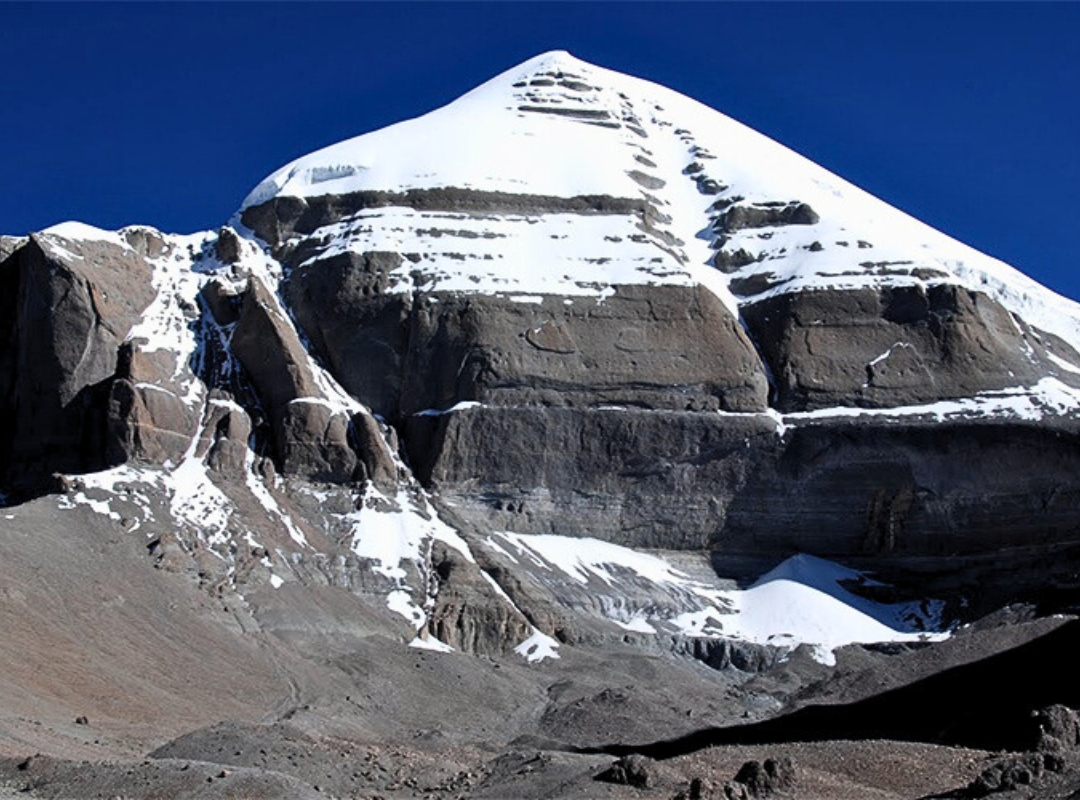
The Kailash Inner Kora brings pilgrims to the heart of Mount Kailash. During the Kailash Inner Kora, devotees experience deepest spiritual energy.
Unlike the Kailash Outer Kora, pilgrims perform the Kailash Inner Kora in one day. It is an intense 34 kilometers of walking that also includes navigating technical terrain.
On the Kailash Inner Kora route, there are no teashops for refreshments. Therefore, devotees must be well-equipped and carry sufficient drinking water and food for the trail.
The Kailash Inner Kora brings you to the most sacred sites, including the feet of Lord Shiva. According to Tibetan spiritual masters and ancient texts, walking the Inner Kora of Mount Kailash is equivalent to attaining Moksha.
Kailash Inner Kora distance:
The Kailash Inner Kora distance is approximately 34 kilometers. You walk this distance in one day.
Kailash Inner Kora route:
The Kailash Inner Kora starts from Darchen. From here, you will hike to Serlung Gompa and continue to Ashthpad. The trail then follows steep, rocky terrain to Atma Linga and Saptarishi Cave, crossing Nandi La Pass. From Nandi La Pass, the trail descends back to Darchen, completing the Kailash Inner Kora.
Devotees who do the Kailash Inner Kora also cross the Kuberkunda Pass. They first ascend from Darchen to Dirapuk. Then, cross the Kuberkunda Pass and descend to Zuthulpuk.
The trail from Dirpauk to Shivasthal is the same. From Shivasthal, follow a different route that leads to the Kuberkunda Pass instead of the Dolma La Pass, and descend to Zuthulpuk.
Kailash Inner Kora itinerary in detail:
Below, we have explained each day of the Kailash Inner Kora in detail:
Day 1: Hike to Serlung Gumba (5,020 m/16,470 ft) and Saptarishi Cave (5,860 m/19,226 ft) via Atma Linga, cross Nandi Pass (5,805 m/19,045 ft) on the way, and descend to Darchen (4,670 m/15,321 ft)
Distance: 34 km/21 miles
Altitude: 5,805 m/19,045 ft
Duration: 9-10 hours
The Kailash Inner Kora begins from Darchen. From here, you will hike following a steep, downhill route west of the Nandi River to reach Serlung Gompa. Explore the monastery and continue hiking to the Saptarishi Cave.
The terrain to the Saptarishi Cave is quite technically challenging and requires the assistance of a professional guide who is knowledgeable about this route.
You may also have to use climbing gear such as crampons to cross this section. From here, you will hike to Atma Linga and cross the 13 Golden Chortens.
The 13 Golden Chortens are situated in a narrow fissure on the south face of Mount Kailash and are quite thrilling to navigate. Finally, you will reach the top of Nandi La Pass and descend back to Darchen.
Kuberkunda Pass route:
If you are interested in Kuberkunda Pass, look at the itinerary below:
Day 1: Hike from Darchen to Dirapuk
Distance: 17 km/10.5 miles
Altitude: 5,210 m/17,093 ft
Duration: 7-8 hours
Accommodation: Guesthouse
First hike from Darchen to Dirapuk. It is the same route as the Kailash Outer Kora. You will drive to Yam Dwar and begin hiking from here, following the Lha-Chu Valley northwards.
Day 2: Hike from Dirapuk to Zuthulpuk, crossing the east face of the Kuberkunda Pass (5,600 m/18,373 ft)
Distance: 22 km/13.6 miles
Altitude: 4,760 m/15,616 ft
Duration: 7-8 hours
Accommodation: Guesthouse
From Dirapuk, you will ascend following the same route till Shivasthal. From here, the trail to Kuberkunda Pass separates from the Dolma La Pass. Follow the steep, rocky trail to reach the top of the pass and descend to Zuthulpuk to spend the night.
Day 3: Descend from Zuthulpuk to Zongdui (ending point of Kailash Kora)
Distance: 12 km/7.4 miles
Altitude: 4,670 m/15,321 ft
Duration: 5 hours
After Zuthulpuk, you will descend to Zongdui following relatively easier terrain than the last two days. The Kora ends in Zongdui, and you drive back to Darchen or Saga to spend the night.
Some important things that travelers should know about the Kailash Inner Kora
- The Kailash Inner Kora route goes through restricted areas of the inner valleys of Mount Kailash, so you need to get a special permit.
- Even though the Kailash Inner Kora can be completed in one day, it is extremely physically demanding. So, only fit pilgrims are recommended to do it.
- For the Kailash Inner Kora, you also need an authorized guide who is permitted to assist you during the journey.
Places you will visit during the Kailash Inner Kora
You will visit the following places during the Kailash Inner Kora:
➜ The Kailash Inner Kora starts and ends at Serlung Gumba.
➜ Serlung Gumba -> Asthapath -> Atma Linga -> Saptarishi Cave -> Nandi La Pass -> Serlung Gumba
Serlung Gumba –
- Serlung Gumba is a monastery located near Darchen at the base of Mount Kailash.
- It is one of the first landmarks you will see when doing the Kailash Inner Kora.
Asthapath (4,900 meters) – Eight Steps
- Asthapath and Serlung Gumba are located closely. Asthapath holds significant importance for the Jain community.
- As per their belief, Lord Rishabhden, the first Tirthankara, attained Nirvana here.
- Jain pilgrims specifically visit this place to pay homage to Lord Rishabhden and seek blessings for spiritual liberation.
Atma Linga –
- Atma Linga is a naturally formed sacred stone on the western side of Mount Kailash.
- It represents the soul of Lord Shiva, which makes this site one of the key places during the Kailash Inner Kora.
- This place symbolizes the eternal connection between devotees and the Supreme (Lord Shiva). Devotees believe that touching the Atma Linga brings supreme purification, blessings of Jnana, and a deep connection with Lord Shiva.
Saptarishi Cave –
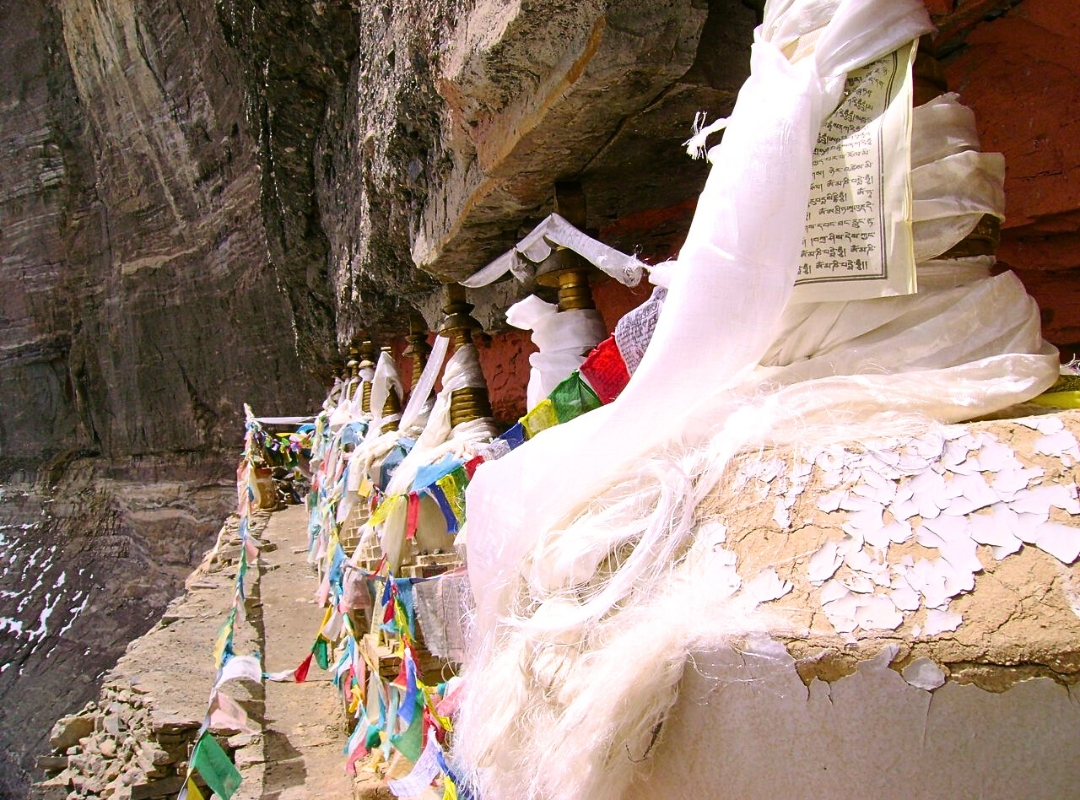
- The Saptarishi Cave is associated with the seven great Hindu Sages who are known as Saptarishis. It is believed that they have meditated in the Saptarishi Cave, and their energy still lingers in the cave.
- Inside the cave, you can see 13 chortens.
- To reach the Saptarishi Cave, you have to climb a wall that is almost 90 degrees vertical. This is the most challenging section of the Kailash Inner Kora route.
Nandi La Pass –
- Nandi Pass elevation is 5,805 meters.
- You cross this pass during the 34 kilometers Inner Kailash Kora. Depending on the pass condition, you may have to use climbing gear to cross it.
- From the Nandi La Pass, the trail descends steeply to the river west of Nandi and brings you back to Serlung Gumba.
Kuberkunda Pass –
- Kuberkunda Pass is a part of the Inner Kailash Kora route.
- The pass elevation is 5,600 meters and offers an outstanding view of the east face of Mount Kailash, along with the Nandi Hill, Asthapath, and the source of the Uma River.
- You cross the Kuberkunda Pass on the way from Dirapuk to Zuthulpuk. The route to Kuberkunda Pass separates from Shivasthal.
Who should attempt Mount Kailash Inner Kora and Outer Kora?
The Mount Kailash Inner Kora and Outer Kora are both physically challenging and require good fitness, health, and determination. However, the Kailash Inner Kora is not suited for everyone as it involves technical climbing and 34 kilometers of walking in one day.
| Criteria | Kailash Inner Kora | Kailash Outer Kora |
Duration | 1 day (more if you add the Kuberkunda Pass) | 3 days |
Distance | 34 kilometers (more if you add the Kuberkunda Pass) | 51 kilometers |
Physical fitness | Excellent fitness and strong stamina and endurance | Good basic fitness and ability to walk long hours |
| Highest altitude | 5,630 meters (18,471 ft) | 5,805 meters (19,045 ft) |
Health requirements | Not recommended to individuals with heart, lungs, or any serious medical condition | Good for travelers with normal health |
Emotional and mental strength | High mental strength is required | Moderate mental resilience is required |
| Spiritual readiness | Deep spiritual intent, discipline, and inner focus | Suitable for pilgrims with devotion and desire for spiritual cleansing |
Suitability for elderly pilgrims | Not suitable for elderly travelers | Recommended for elderly travelers |
Guide requirement | Authorized Tibetan guide | Standard Tibetan guide |
Who should choose it | Highly fit individuals who wants to experience highest level of pilgrimage or interested in exploring the restricted inner valleys of Mount Kailash | First-time travelers, elderly pilgrims, recommended to everyone with good health and basic fitness |
How many Kora should one do around Mount Kailash?
Devotees perform Kora around Mount Kailash to cleanse their mind, body, and soul. It is a highly spiritual practice that is believed to bring you close to the higher energy.
According to ancient Hindu and Tibetan traditions, pilgrims can do a different number of Kora for spiritual merit and liberation. 1, 13, and 108 Koras are mostly done by the pilgrims.
*Note that you do not have to do the multiple Kailash Koras in one trip. Pilgrims do it over multiple years.
*Typically, our Mount Kailash Inner Kora and Outer Kora itineraries involve only one complete Kora around Mount Kailash. However, if you are interested in doing multiple Kailash Kora, let us know. We will plan the itinerary and services as per that.
1 Kora = Cleansing of Lifetime Sins
- Erase the sins of a lifetime
- Even 1 Kailash Kora is considered a life-changing milestone
13 Kora = Nirvana
- Bring pilgrims close to Nirvana, the ultimate spiritual liberation
- Usually done over multiple years
- Each Kora deepens humility, spiritual insight, and connection with the divine
108 Kora = Complete Liberation
- Pilgrims do the 108 Kora of Mount Kailash for Moksha (complete liberation from the cycle of life and death)
- Extremely rare and requires dedication and devotion
- Requires multiple pilgrimages over one’s lifetime
Final words:
The Kailash Kora is not easy. It tests your endurance, mental and emotional strength, discipline, determination, and faith. We hope this blog has clarified the difference between Mount Kailash Inner Kora and Kailash Outer Kora for you.
Whether you do the Kailash Inner Kora or Kailash Outer Kora, it will be a lifetime journey that is destined to change your life. However, given high altitude, fitness and health requirements, and high expenses, you should be mindful while picking one.
If you have any questions or confusion, feel free to contact us anytime. We, Leaf Holidays, specialize in Kailah Yatars. We know everything about Mount Kailash Inner Kora and Kailash Outer Kora. You can travel safely and confidently with us if you choose us as your travel partner.


Need Help? Ask to Travel Expert